databases
(10)
Arjun Narayan and the virtue of doing the hard part once
He learned to program on paper, helped turn database research into Materialize, and then moved into venture capital. Arjun Narayan’s career keeps returning to a practical question: who should have to do the difficult work?

Mike Olson has a different idea of good timing
Cloudera’s founding CEO spent decades helping people make sense of data. These days, his interests run from local news and climate investing to a Berkeley café clock that counts the day differently.

The Cloud With an Exit Door
Appwrite began as a backend its founder could not afford to host. Seven years later, that constraint has become the pitch: take the convenient cloud today, keep the right to leave tomorrow.

The Quiet War To Turn Your Documents Into Software
Coda, Notion, and Airtable all sell the same dream - one place to write, plan, and run your team. Look closer and they are three very different bets on what a document is even supposed to be.

Qian Li
Qian Li is the co-founder and CEO of DBOS, Inc., a Cambridge- and San Francisco-based company turning a once-academic idea into infrastructure: store a program's execution state inside Postgres so crashed apps and AI agents resume exactly where they left off. A Stanford computer science PhD, she co-founded DBOS in 2023 out of a joint Stanford-MIT research project led by Postgres creator Mike Stonebraker and Spark co-creator Matei Zaharia. She was named to the Silicon Valley Business Journal's 40 Under 40 in 2025, won a USENIX ATC Best Paper award for INFaaS, and is a regular voice on systems podcasts and conference stages on durable, observable, scalable software.
Notion
Notion is an all-in-one connected workspace that blends notes, docs, wikis, databases, projects, calendar, and email into a single, modular tool - 'LEGO for software.' Founded in San Francisco in 2013 by Ivan Zhao and Simon Last, it nearly collapsed before its 2016 rebirth and has since grown to more than 100 million users, $600M+ in annual recurring revenue, and an $11 billion valuation, increasingly positioning itself as an AI workspace with built-in agents.

Natalie Vais
Natalie Vais is a General Partner at Spark Capital in San Francisco, where she backs early-stage founders building developer-first tools, platforms, and infrastructure. A former Oracle engineer, Google Cloud product lead, and Amplify Partners principal, she brings rare technical depth to VC - having personally shipped databases and distributed systems before writing checks. Her portfolio includes TigerBeetle, MotherDuck, Polar Signals, and ElectricSQL. While at Google, her team's carbon-monitoring satellite imagery project was named one of TIME Magazine's 100 Best Inventions of 2020.

Rowan Trollope
Rowan Trollope is the CEO of Redis, the ubiquitous in-memory data platform powering real-time applications worldwide. A self-taught programmer who started coding on a Commodore 64 at age 11, he brings over 30 years of technology leadership across consumer products, cybersecurity, infrastructure, and collaboration software. Before Redis, he quadrupled revenue at Five9 and spent years at Cisco reinventing its collaboration business. At Redis, he has repositioned the company from a beloved developer caching tool into a critical AI infrastructure layer, launching semantic caching (LangCache), acquiring real-time data platform Decodable, and steering a controversial but successful licensing pivot that he says has produced record growth.
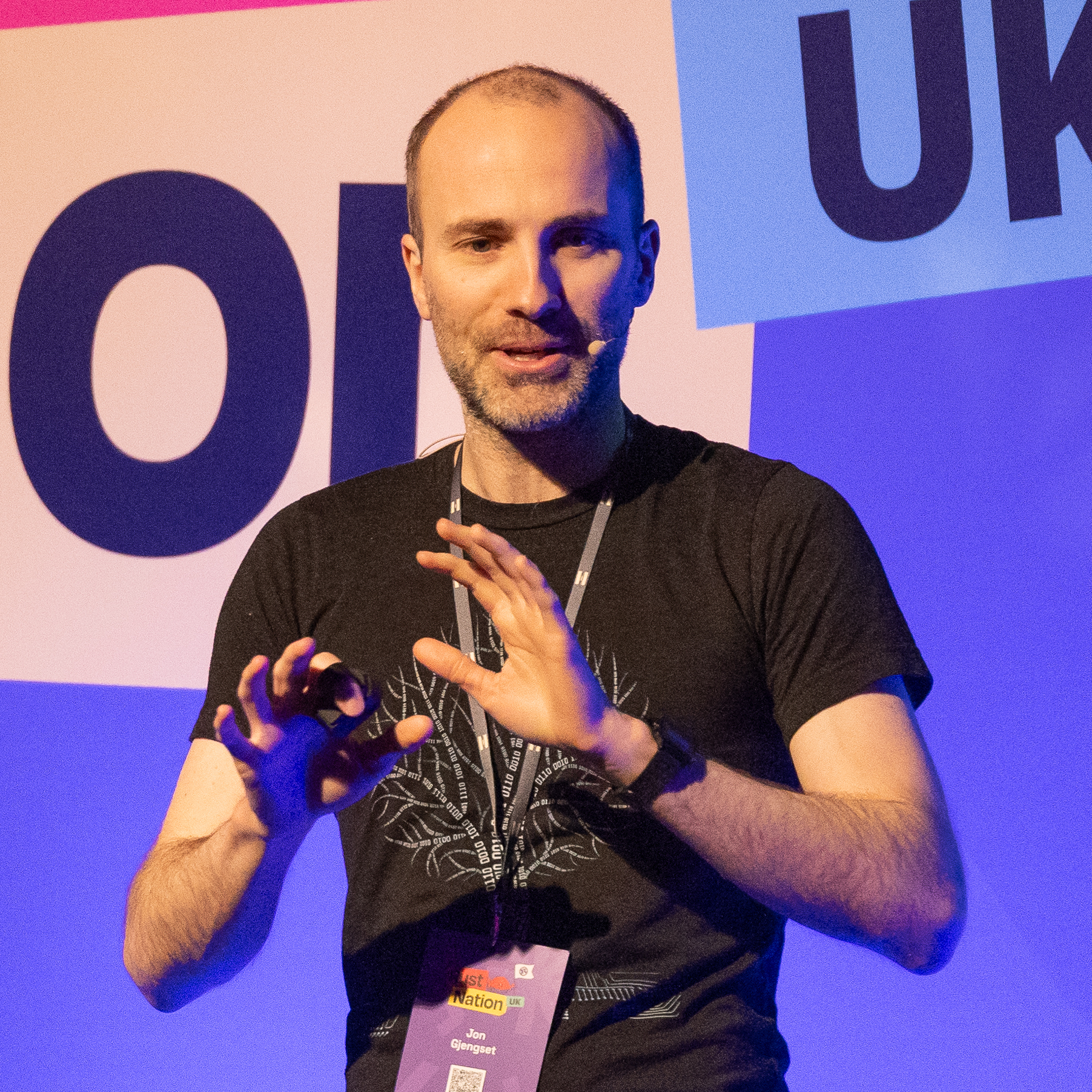
Jon Gjengset
Jon Gjengset is a principal engineer at Helsing, Rust systems programming educator, and author of 'Rust for Rustaceans' (No Starch Press). He holds a PhD from MIT CSAIL where he built Noria, a streaming dataflow database system offering up to 20x performance improvements. A prolific live-coder and YouTube educator since 2018, Jon co-founded ReadySet (a $29M-funded database startup), contributed to the Rust ecosystem, and teaches at MIT's Missing Semester. Based in Oslo, Norway, he is one of the most respected voices in the Rust community.
Railway
Railway is a Platform-as-a-Service (PaaS) and cloud infrastructure company founded in 2020 by Jake Cooper, positioning itself as 'the developer cloud for the AI era.' It lets developers deploy apps and databases instantly with zero configuration — no DevOps, no FinOps, no SecOps required. Starting from zero marketing spend, Railway grew to over 2.68 million developers and penetrated 31% of Fortune 500 companies purely through word-of-mouth. In January 2026 it raised a $100M Series B to challenge AWS and the legacy cloud giants, underpinned by its own proprietary Railway Metal bare-metal data centers.