Co-Founder & CEO / DBOS, Inc.
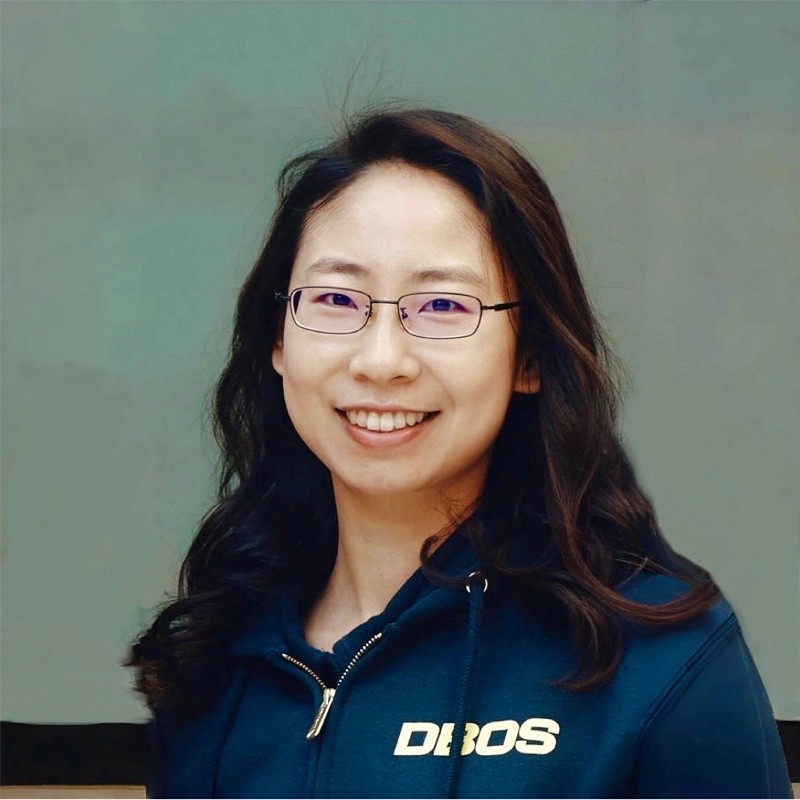
Qian Li
She gave software an undo button by storing a program's memory where the data already lives - inside the database.
She gave software an undo button by storing a program's memory where the data already lives - inside the database.
Picture an AI agent halfway through a forty-step task. It has charged a card, booked a flight, sent two emails. Then the server dies. In most systems, that is a disaster - half the work done, no clean way to know which half. In Qian Li's world, it is a comma, not a period. The program wakes up, reads its own progress out of Postgres, and keeps going from step twenty-one. Exactly once. No double charges.
That single idea - durability as a default, not a bolt-on - is what Qian Li sells. She is the co-founder and CEO of DBOS, Inc., a company with offices in Cambridge, Massachusetts and San Francisco, and a name that has quietly changed meaning. It began as "DataBase-oriented Operating System." Today the team says it stands for Durable, Backend, Observable, Scalable. The pivot in the acronym tells the whole arc: a research curiosity grew up into a product people pay for.
The premise sounds almost too tidy. Most backends keep two things in two places - your business data in a database, and your program's execution state somewhere fragile, like memory or a queue that forgets. DBOS collapses the two. It writes the program's checkpoints into the same Postgres tables that hold everything else. When things break, recovery is not a heroic rebuild. It is a query.
Durable execution is like autosave for your microservices.
Qian Li did not arrive at this from a whiteboard at a startup. She arrived through a decade of systems research. She earned a B.Sc. in Computer Science and Technology from Peking University in 2017, then crossed the Pacific to Stanford, where she picked up an M.S. in 2019 and a Ph.D. in 2023. Her doctoral advisor was Christos Kozyrakis, and along the way she worked shoulder to shoulder with two people whose names are stamped on the foundations of modern data infrastructure: Mike Stonebraker, who created Postgres, and Matei Zaharia, who co-created Apache Spark.
The DBOS project started in 2020 as a joint Stanford-MIT effort. The group built prototypes, wrote papers, and asked an awkward question: what if the operating system's state - processes, files, messages - were just rows in a database you could query, index, and roll back? It was the kind of idea that gets nods at a conference and shrugs in production. Then the students graduated. Instead of letting the work fade into a citation count, Qian Li and her collaborators turned it into a company in 2023.
Her QCon San Francisco 2025 talk carries a title that doubles as a thesis and a dare: "Compiling Workflows into Databases: The Architecture That Shouldn't Work (But Does)." It is a confident thing to say out loud. It is also honest. Plenty of engineers' first reaction to "store your control flow in Postgres" is a raised eyebrow. The talk exists to lower it.
What makes the bet land in 2025 is timing. AI agents are suddenly everywhere, and they are long-running, stateful, and prone to falling over mid-task. The old serverless answer - stateless functions, fire and forget - is a poor fit for a thing that needs to remember it already booked the flight. Durable execution is the missing autosave, and DBOS sells it as a library you import rather than a giant platform you migrate to. Add a decorator, get reliability. The friction is deliberately low.
There is a teacher's instinct under all of this. At Stanford she helped run EE282, the computer architecture course, and CS349D on cloud computing. At Peking University she had taught compiler design and intro to computer systems. She co-organizes the South Bay Systems Club, hunting down speakers and venues so that other people building hard infrastructure have a room to argue in. The through-line is clear: she likes making complicated systems legible.
The recognition has followed the work. In 2021 her paper on INFaaS - a "model-less" inference serving system that picks the right model variant for you instead of making you choose - won the Best Paper Award at USENIX ATC. In 2025 the Silicon Valley Business Journal named her to its 40 Under 40. Her research portfolio reads like a tour of the systems stack: Arachne for user-level threading, INFaaS for serving, Apiary for transactional functions-as-a-service, and R3, a time-travel debugger for database-backed apps. Time travel, it turns out, is a recurring theme - if your state lives in a database, you can rewind it.
DBOS is small - around fourteen people - and that is the point of the story, not a footnote. A tiny team is betting that the right primitive beats a sprawling platform. They have raised $8.5 million in seed funding and shipped Transact in both Python and TypeScript, plus Conductor for managing workflows in production. The wager is that "reliable backend" should not require a distributed-systems PhD to achieve - which is a little ironic coming from someone who has one, and exactly why she is the right person to make it disappear behind a clean API.
Charge the card, send the email, call the model.
Progress is written as a row, beside your data.
In most systems, this is the disaster.
Read the checkpoint, continue from where it stopped.
DBOS keeps execution state and application data in the same database - so recovery is a query, not a rebuild.
Most researchers pick a lane. Qian Li's published work cuts vertically through the systems stack - from how threads are scheduled to how AI models are served to how a crashed program finds its way home.
Arachne · INFaaS · Apiary · R3 · DBOS - bars reflect emphasis, not a benchmark.
B.Sc. in Computer Science and Technology, then heads to Stanford.
Master's in Computer Science; deep into systems and databases.
A Stanford-MIT collaboration led by Mike Stonebraker and Matei Zaharia.
INFaaS, the model-less inference serving system, takes the prize.
The research becomes a company. She takes the CEO seat.
Durable execution as an import; seed funding closes at $8.5M total.
Recognition arrives alongside the stage time.
The architecture that shouldn't work - but does.
DBOS: Durable, Backend, Observable, Scalable.
Durable execution is like autosave for your microservices.
She co-organizes the South Bay Systems Club, recruiting speakers and venues for fellow infrastructure nerds.
Her co-founders include Postgres creator Mike Stonebraker and Spark co-creator Matei Zaharia.
One of her projects, R3, is a time-travel debugger - rewinding state because it lives in a database.
She has taught computer architecture and cloud computing at Stanford, and compilers at Peking University.