construction-automation
(13)
Philipp Herget and the Fine Art of Drawing the Future on Concrete
He began by controlling lasers within nanometers. Now his robots print buildings at full scale. Philipp Herget's career is a study in precision, practical pivots and knowing when the floor is trying to tell you something.
Tom Yeshurun
Tom Yeshurun is the co-founder and CEO of Civ Robotics, a San Francisco construction-technology company building autonomous robots that automate land surveying and site layout. A civil engineer by training who managed a $100 million road project in Israel before founding the company, Yeshurun watched surveyors spend millions marking coordinates by hand in desert heat and set out to automate the task. Civ Robotics' CivDot robots now stake out survey points with roughly 8-millimeter accuracy and mark up to 3,000 points a day, and its technology has been deployed on solar projects representing more than 20 gigawatts of capacity. In July 2025 the company raised a $7.5 million Series A led by AlleyCorp.

Civ Robotics
Civ Robotics builds autonomous ground robots and software that automate the slow, error-prone work of construction layout and land surveying. Its flagship CivDot robots mark thousands of survey coordinates per day at millimeter accuracy - up to 8x faster than traditional survey crews - letting a single operator stake out solar farms, roads, airports and earthworks without specialized surveying expertise. Founded in 2018 and based in San Francisco with roots in Tel Aviv, the company has deployed over 100 robots across 40+ countries and marked more than 10 million coordinates.
Verustruct
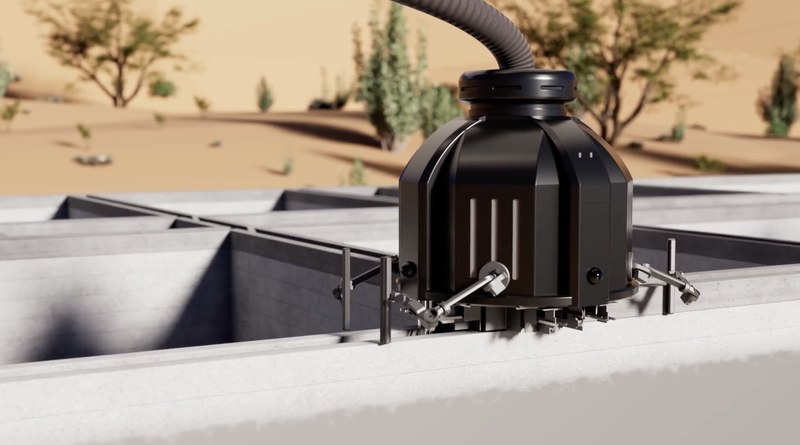
Verustruct is a New Haven-based construction-technology company building a gantry-less 3D printing system to make affordable, sustainable housing at scale. Founded by former SpaceX engineer Nick Callegari, its patent-pending translational slipform printer extrudes load-bearing walls with embedded mechanical, electrical, and plumbing systems, then scales itself up layer by layer, sidestepping the bulky gantry frames that cap the size of most additive-construction projects. Organized as a public benefit corporation, Verustruct aims to cut home construction cost by roughly half and emissions by around 40 percent.
Bobyard
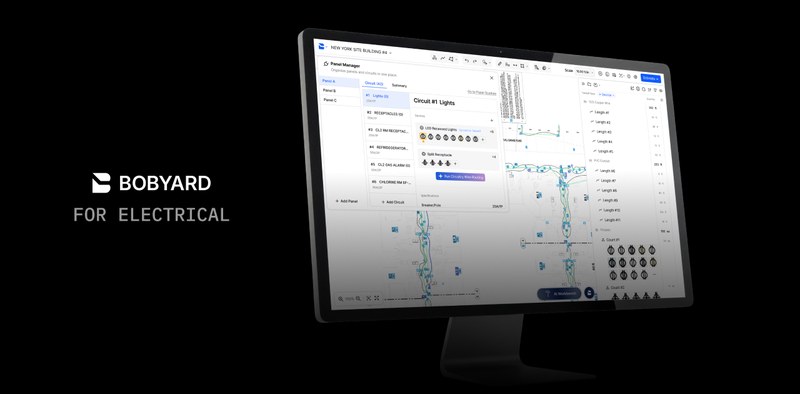
Bobyard is a San Francisco AI company that automates construction takeoffs and estimates. Its proprietary computer-vision and NLP models read blueprints and automatically count symbols and measure areas and lengths, cutting bid-prep time by more than half. Founded in 2023 by Michael Ding, the company started with landscaping - one of construction's least-digitized trades - and has expanded into electrical, finishes, mechanical, and plumbing. It raised a $35M Series A led by 8VC in December 2025.

Nicholas Callegari
Nicholas Callegari is the founder, chief engineer, and CEO of Verustruct, a New Haven climate-tech startup building gantry-less 3D printing robots that print entire load-bearing walls - plumbing, wiring, and insulation included. A former SpaceX structures engineer who helped design the Polaris Dawn spacewalk hardware on the Dragon spacecraft, he traded orbit for the housing crisis, betting that the same first-principles engineering used for spacecraft can cut home construction costs in half. He is a 2026 Forbes 30 Under 30 honoree in Manufacturing & Industry and a Yale School of Management MBA.
Reframe Systems
Reframe Systems is a Massachusetts robotics and AI company building net-zero, climate-resilient homes through a network of small, regional 'microfactories.' Founded in 2022 by three former Amazon Robotics leaders, it pairs proprietary 'pixels to parts' design software with vision-guided robotic workcells to mass-customize modular housing - cutting construction costs by roughly 35% and deploying homes in about 100 days. The company aims to make high-performance housing economically viable and to build one million resilient homes globally by 2045.

Vikas Enti
Vikas Enti is the co-founder and CEO of Reframe Systems, an Andover, Massachusetts startup using robotic microfactories to build net-zero, climate-resilient homes faster, cheaper, and with a fraction of the carbon of conventional construction. A veteran of Amazon Robotics, where he spent roughly a decade helping scale a fleet of more than half a million warehouse robots, Enti left logistics to point the same systems thinking at the housing crisis. He founded Reframe in 2022 with two former Amazon colleagues, raised a $20M Series A in 2025, and is deploying microfactories from Massachusetts to wildfire-hit Los Angeles.
Matt Campbell
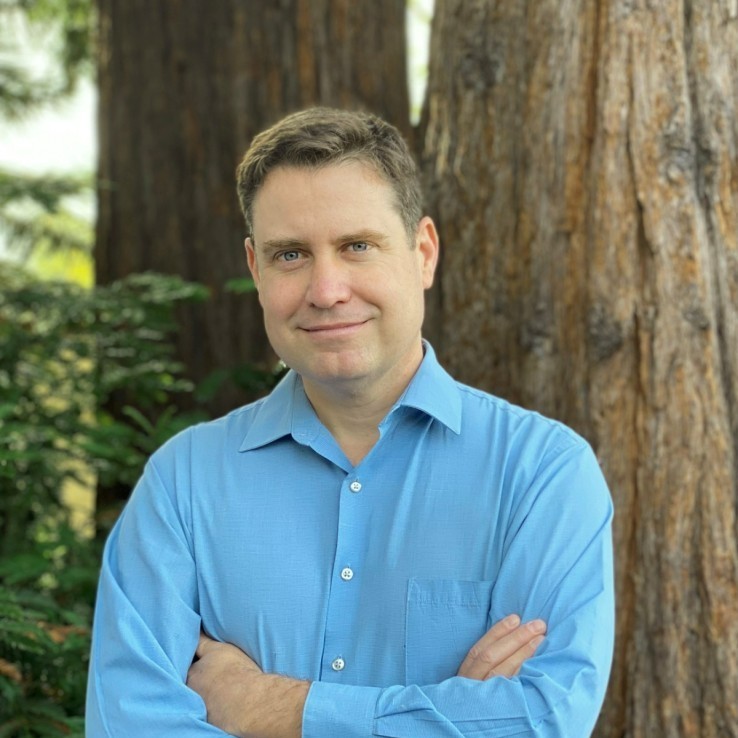
Matt Campbell is the CEO and Co-Founder of Terabase Energy, a Berkeley-based company building the digital and automation platform for utility-scale solar. After 15 years at SunPower working across 200+ projects in 20 countries, he launched Terabase from his basement during the pandemic in 2019 - and within three months had secured an 800 MW project in Qatar. Today, backed by SoftBank Vision Fund 2 and Breakthrough Energy Ventures with $207M raised, Terabase's Terafab robotic assembly line is deploying solar at 2-minute cycle times, targeting 24/7 autonomous construction and a future where solar hits one cent per kilowatt-hour.
Terabase Energy
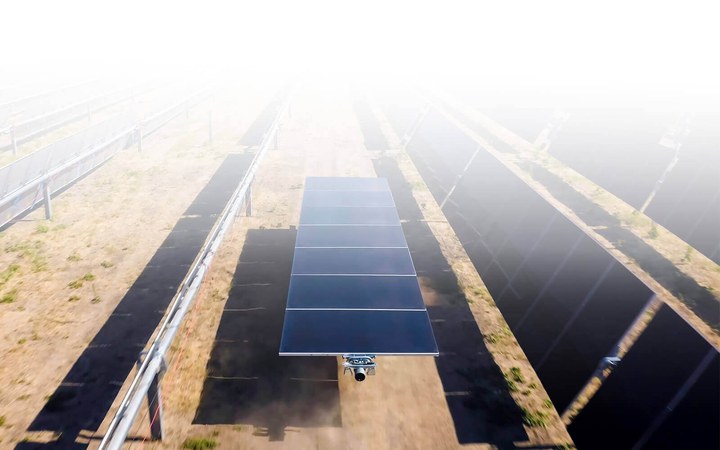
Terabase Energy is a Berkeley, California company building the digital and automation backbone for utility-scale solar construction. Its flagship Terafab automated field factory and Construct software platform are designed to slash the cost and time of building solar power plants at terawatt scale.

Tessa Lau
Tessa Lau is the founder and CEO of Dusty Robotics, a Mountain View-based company that builds autonomous mobile robots for the construction industry. Her FieldPrinter robot uses building information model (BIM) data to print layout lines directly onto jobsite floors with 1/16-inch accuracy, replacing manual chalk-line methods that have dominated construction for centuries. Lau holds a PhD in machine learning from the University of Washington and spent 11 years at IBM Research before pivoting to robotics at Willow Garage and co-founding hotel-delivery-robot company Savioke. She launched Dusty Robotics in 2018, has raised $69.5 million including a $45 million Series B, and has helped contractors print over 100 million square feet of layout across thousands of buildings.
Tom Eliaz
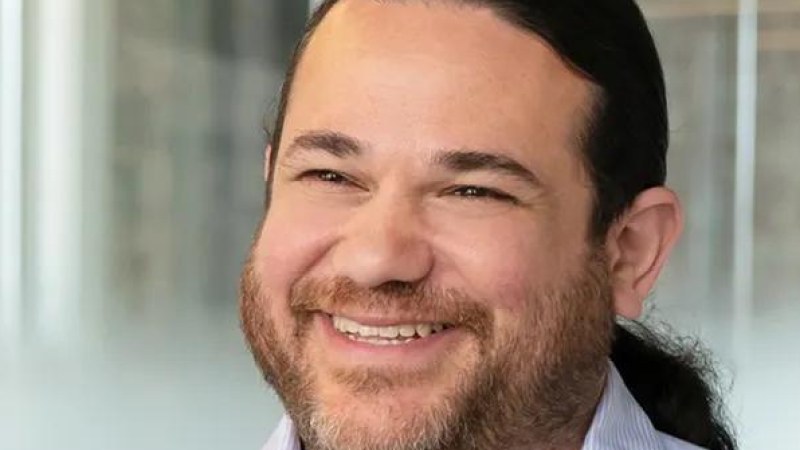
Tom Eliaz is the Co-Founder and VP of Engineering at Bedrock Robotics, a San Francisco-based startup building autonomous systems for heavy construction equipment. With over two decades of software engineering leadership spanning robotics, cloud infrastructure, and AI, he previously led 100+ engineers at Twilio Engage, directed engineering at Segment through its $3.2B acquisition, and was an early cloud platform engineer at Anki. Before Bedrock, he also founded a healthcare technology company. At Bedrock - a $1.75B-valued company that raised $270M in Series B funding in February 2026 - Eliaz applies engineering depth to the problem of retrofitting excavators and heavy machinery with LiDAR, GPS, and AI software to run autonomously on construction sites 24/7.

Banks Hunter
Banks Hunter is the co-founder and CEO of Charge Robotics, a Berkeley-based startup building the world's first fully automated solar construction system. An MIT mechanical engineering alumnus and veteran of medical robotics startup Vicarious Surgical, Hunter co-founded Charge Robotics in 2021 with Max Justicz to solve one of clean energy's most stubborn bottlenecks: the physical, labor-intensive grunt work of assembling a utility-scale solar farm. His company's Sunrise system - a portable robotic assembly line shipped directly to job sites - autonomously puts together 800-pound solar bays and deploys them in the field, aiming to make solar installation as repeatable and scalable as factory production. Backed by Founders Fund, Lux Capital, Energy Impact Partners, and Y Combinator, Charge Robotics has raised over $39 million to accelerate the energy transition.