blue-economy
(7)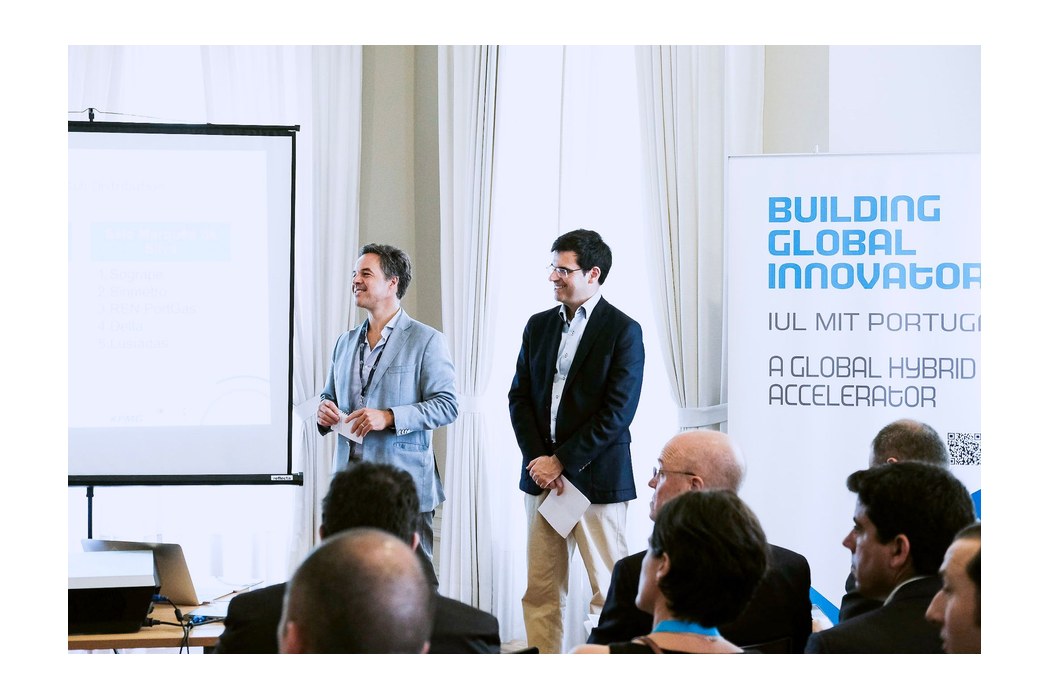
BGI Built a Bridge From the Lab to the Market - Then Put It in a Greenhouse
The Lisbon accelerator began by exporting ambitious founders to Boston. Fifteen years later, it is putting science through a tougher test: will it survive contact with farms, cities, customers and capital?
The ocean has plenty of ideas. TOOL wants them to meet.
It began on an old Oslo ferry. Today, The Ocean Opportunity Lab connects ocean and clean-energy innovators with the people, practical resources and visibility that a promising idea cannot supply itself.
Hatch Blue bets on the hard part of seafood
A fish farm needs more than a clever pitch. Hatch Blue has built an investment business around the awkward distance between a promising invention and something a farmer will actually buy.

The Concrete Company Teaching Seawalls to Grow a Pulse
Ports and coastal cities already have to pour concrete. ECOncrete charges a premium to make that concrete useful to oysters, fish and engineers - then argues the habitat can pay for itself in permits, durability and avoided mitigation costs.

The Fund That Invests in the Cracks Between Food, Oceans and Energy
S2G Investments manages about $2.8 billion across food, oceans and energy - and its whole thesis is that the money should go where those systems meet.

Kevin Decker
Kevin Decker is the CEO of Ocean Aero, the Gulfport, Mississippi company that builds the TRITON - the world's only autonomous vehicle that both sails the surface on wind and solar power and dives beneath it. A 16-year GE veteran brought in at the end of 2020 to turn a Navy-veteran R&D shop into a commercial defense manufacturer, Decker moved the whole operation from San Diego to the Gulf Coast and opened a 63,000-square-foot factory. He is now steering Ocean Aero from handcrafted prototypes toward AI-driven fleets deployed by the U.S. Department of Defense, Homeland Security, NOAA, and offshore energy firms.
Apeiron Labs
Apeiron Labs is a Cambridge, Massachusetts deep-tech company building the Tensor platform - large, low-cost networks of small autonomous underwater vehicles that persistently measure the upper 400 meters of the ocean. By making subsurface ocean data cheap and continuous instead of episodic and expensive, Apeiron sells real-time ocean intelligence as a service to defense, climate, offshore energy, aquaculture, and maritime customers. The company raised a $9.5M Series A in February 2026 and says it has already cut the cost of ocean data roughly 100-fold, with a goal of 1,000-fold.