biomedical-engineer
(9)
Holly Rockweiler Built a Company Around the Problem Everyone Else Called a Niche
She left a comfortable research career to put the patient back in the room. Twelve years, dozens of patents and one pivotal trial later, Holly Rockweiler's method is still disarmingly simple: listen first, then build.

Sona Shah Is Building Medtech for the Hospitals Others Miss
A teaching stint in Kenya and a shelf of idle machines in Uganda changed Sona Shah’s definition of good engineering. Ten years into Neopenda, her playbook starts with context, trust and the unglamorous work after the sale.

Shreya Mehta
Shreya Mehta is the President and CEO of Zenflow, a South San Francisco medical device company she co-founded in 2014 out of the Stanford Biodesign Innovation Fellowship. A biomedical engineer and former FDA reviewer, she spent a decade building the Zenflow Spring System, a minimally invasive, reversible implant that props open the urethra to relieve symptoms of benign prostatic hyperplasia (BPH). She started as CTO before stepping into the CEO seat, closed a $24M Series C in November 2024, and helped guide the company to FDA approval.
Zoar Engelman
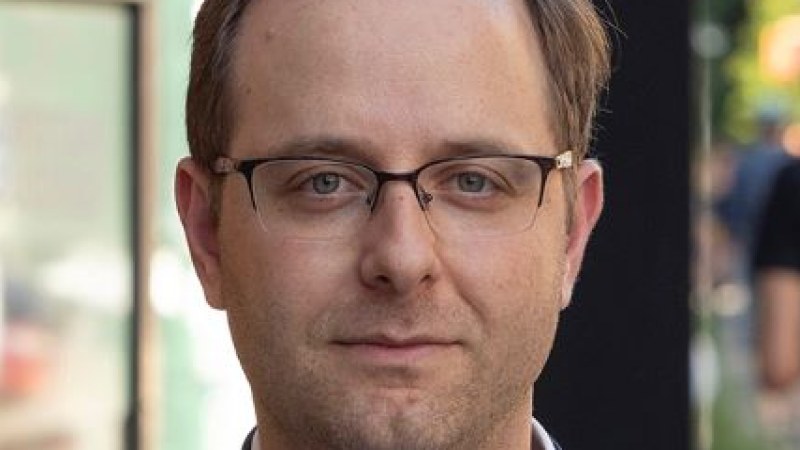
Zoar Engelman is the co-founder and CEO of Axon Therapies, a clinical-stage medical device company chasing a stubborn problem: heart failure with preserved ejection fraction, a condition that has resisted nearly every drug thrown at it. A biomedical engineer with a PhD from the University of Auckland, Engelman spent two decades turning lab ideas into implantable and catheter-based devices, co-founding roughly nine ventures and helping raise more than $150 million along the way. In September 2025 he stepped up from Chief Scientific Officer to CEO as Axon closed an oversubscribed $32 million Series A to advance SAVM, an implant-free procedure that quiets an overactive sympathetic nervous system to rebalance the body's blood volume.

Priya Paul
Priya Paul (Bhutani) is the founder and CEO of RegDesk, an AI-powered regulatory intelligence and management platform for medical device and pharmaceutical companies. A biomedical engineer turned regulatory strategist, she spent years watching life-changing devices stall in regulatory limbo - up to 80% of applications get rejected for reasons unrelated to safety - and built RegDesk in 2014 to compress submissions that once took months into days. She leads the company's product vision and global growth, and RegDesk is a certified Minority Business Enterprise.
Samantha Scott
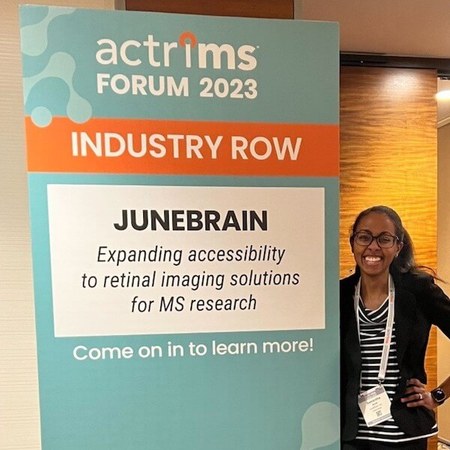
Samantha Scott, PhD is the founder and CEO of JuneBrain, a Baltimore medtech startup building the first wearable, technician-free retinal scanning system. Trained as a biomedical engineer at Stanford and USC, she is turning high-resolution eye imaging plus AI into a way to detect and monitor brain and eye conditions far outside the walls of a clinic. JuneBrain has raised more than $3 million in private capital, won $3 million in NSF grants, holds four issued patents, and is on track for an FDA submission.

Scott Klein
Scott Klein is the CEO of HelpWear, a Toronto-based medtech company building HeartWatch, a medical-grade ambulatory ECG monitor with a dry-electrode design worn on the bicep for extended, comfortable heart-rhythm monitoring. A biomedical engineer with a Notre Dame MBA and roughly 25 years in cardiology medical technology, Klein spent 14 years at Medtronic, then led global marketing and strategy for heart-failure therapies at Abbott and product strategy at Starkey Hearing before taking the helm of HelpWear. He is known in the industry for building and scaling cardiac-monitoring businesses into markets measured in the billions.
Amelia Degenkolb
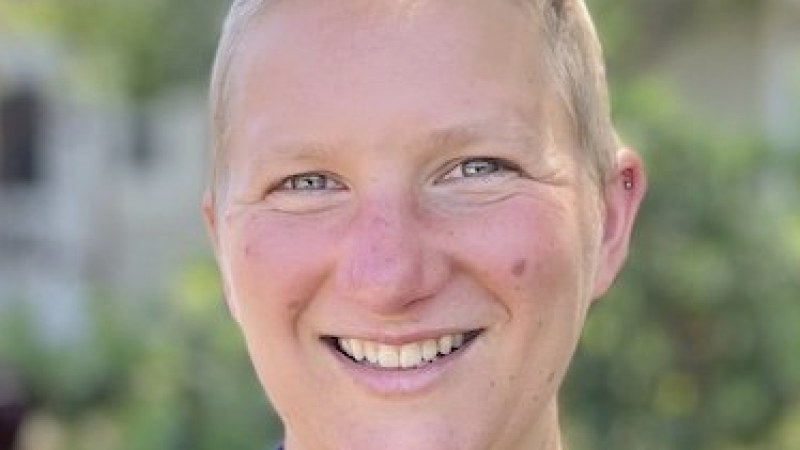
Amelia Degenkolb is the CEO and co-founder of Novocuff, a Mountain View medical device company building the Cervical Control System, a device designed to stabilize the cervix, retain amniotic fluid and prolong pregnancies threatened by preterm premature rupture of membranes. A biomedical engineer who spent seven years as the first employee and lead engineer at Alydia Health, she helped bring the Jada System for postpartum hemorrhage to market before that company's $240M acquisition by Organon. In July 2024 she raised an oversubscribed $26M Series A to fund a U.S. pivotal trial aimed at reducing preterm births, the leading cause of infant mortality worldwide.

Mark Punyanitya
Mark Punyanitya is a New York biomedical engineer turned founder who spent more than fifteen years measuring the human body one MRI slice at a time, then set out to make that kind of imaging cheap and portable enough to put in the back of a truck. As Co-Founder, President and CEO of PhenoMx, Inc. and founder of the Image Reading Center, he turns advanced scanning into quantitative imaging biomarkers for global clinical trials and a 'digital physical exam' for precision medicine and longevity. With 44-plus published papers behind him, he is trying to liberate medical imaging from the basements of academic hospitals and disperse it anywhere, anytime.