autonomous-systems
(14)
The VC Firm Where the Founders Salute First
Justin Nahama and three partners are betting that the discipline that runs toward gunfire also builds companies. Their first fund is oversubscribed, their portfolio has raised over $350 million, and a $50 million second fund is now open.
The Truck Company Quietly Building the Operating System for Tough Work
From fire engines and boom lifts to airport robots and the Postal Service's next delivery van, Oshkosh turns hard jobs into a shared engineering problem. Its century-old trick is making technology travel between machines that rarely appear in the same conversation.
Advanced Navigation
Advanced Navigation is a Sydney-based deep-technology company building navigation and autonomy systems that let robots, ships, aircraft, submarines and spacecraft know where they are when GPS is jammed, denied or simply unavailable. Founded in 2012 by Xavier Orr and Chris Shaw to commercialise AI-based inertial navigation research, it now designs and manufactures fibre optic gyroscopes, MEMS inertial sensors, underwater acoustic positioning and a miniature autonomous underwater vehicle across defense, space, marine, mining and commercial markets. In March 2026 it raised US$110M in Series C funding to accelerate its expansion into photonics, AI and quantum sensing.
Perseus Defense
Perseus Defense is a YC S25 aerospace and defense startup building low-cost, man-portable guided micro-missiles to shoot down small drones. Its Harpe interceptor targets Group 1 and Group 2 drones at a claimed cost of under $10,000 per shot - roughly a 20x reduction versus existing systems - closing the cost gap where a $500 drone can threaten multi-million-dollar assets. Founded by ex-NASA aerospace engineer Jason Cornelius and ex-Boeing autonomy lead Steve Messinger, the company is building an affordable, mass-producible 'Iron Dome for drones' for U.S. defense and homeland security customers.

NODA AI
NODA AI is an Austin-based defense technology company building an AI reasoning engine that orchestrates fleets of autonomous systems across vendors and domains. Founded in 2024 by Marine Corps veterans, its platform lets operators command desired effects rather than individual machines, coordinating mixed fleets of manned and unmanned assets from air to subsurface. NODA raised a $25M Series A led by Bessemer Venture Partners in February 2026, with backing from Booz Allen Ventures, and works with the U.S. Department of War, the UK Ministry of Defense, and defense primes.

ANELLO Photonics
ANELLO Photonics is a Santa Clara, California semiconductor and navigation company that builds SiPhOG, described as the world's smallest high-precision silicon photonic optical gyroscope. By shrinking fiber-optic-class gyroscope performance onto a chip, ANELLO delivers inertial measurement units (IMUs) and full inertial navigation systems (INS) that keep vehicles, drones, ships and robots positioned accurately when GPS/GNSS signals are jammed, spoofed or simply unavailable - across land, air and sea. Founded in 2018 by silicon-photonics pioneer Dr. Mario Paniccia and MEMS/inertial-sensor veteran Mike Horton, the company serves defense, maritime, aerospace, agriculture, construction, mining and autonomous-vehicle markets.

CyberSwarm Inc.
CyberSwarm is a neuromorphic engineering company building brain-inspired, memristor-based hardware that lets machines learn and adapt locally, at the edge, without the cloud. Founded in 2017 by Mihai Raneti and headquartered in San Mateo, California with R&D roots in Ploiesti, Romania, the company is developing a neuromorphic System-on-a-Chip for cybersecurity and energy-efficient AI, positioning its architecture as a new computational layer between conventional digital systems and quantum computing. In May 2026 it raised a $50 million Series A to scale toward commercial deployment across automotive, aerospace, defense, healthcare and robotics.

Duality AI
Duality AI is a San Mateo-based simulation software company behind Falcon, a digital twin platform built on Unreal Engine. Falcon lets engineers create photorealistic, physics-accurate virtual replicas of robots, sensors, and environments, then generate the labeled synthetic data used to train and validate AI vision and autonomy models - closing the gap between simulation and the real world. Founded in 2018 by Pixar graphics veteran Apurva Shah and robotics pioneer Mike Taylor, Duality serves customers including DARPA, the U.S. Army, Honeywell, and P&G.
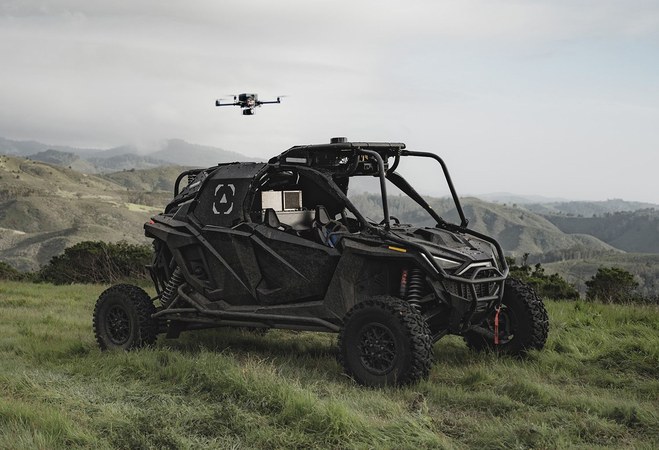
Scout AI
Scout AI is a Silicon Valley defense-tech company building Fury, a Vision-Language-Action foundation model that turns unmanned robots - ground, air, sea, and space - into autonomous agents that perceive the world, understand natural-language commands, and act in GPS- and comms-denied environments. Founded in 2024 by Colby Adcock and Collin Otis, the company raised a $100M Series A in April 2026 (which it billed as the largest defense-tech Series A in U.S. history) after emerging from stealth in 2025 with a $15M seed and early Department of Defense contracts.

HYFIX
HYFIX (HYFIX Spatial Intelligence) is a Santa Clara semiconductor startup building an American-made autonomous systems chip that fuses high-precision GNSS positioning, inertial sensing, flight control, encrypted communications and onboard AI into a single system-on-chip. Emerging from the GEODNET decentralized positioning network, HYFIX aims to give U.S. drone and robotics makers a domestic alternative to Chinese-dominated supply chains, with centimeter-accurate location that resists jamming and spoofing.
Bifrost AI
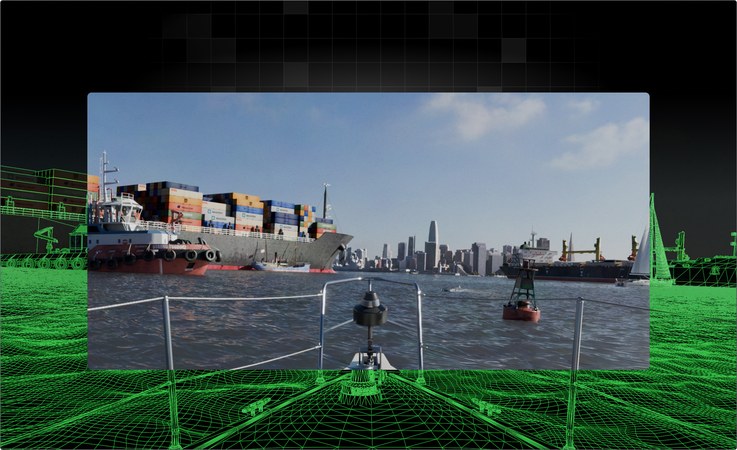
Bifrost AI builds simulation and evaluation infrastructure for physical AI. Its platform generates photorealistic 3D synthetic data and stress-tests robotics and computer-vision systems across thousands of simulated scenarios - weather, sensor noise, rare edge cases - so teams can train and validate models in minutes instead of months. Used across maritime, geospatial, aerial, off-road, industrial, and off-world domains, with collaborators including NASA JPL and the U.S. Air Force. Founded in 2020 and backed by an $8M Series A led by Carbide Ventures with participation from Airbus Ventures and Peak XV's Surge.
Valtec
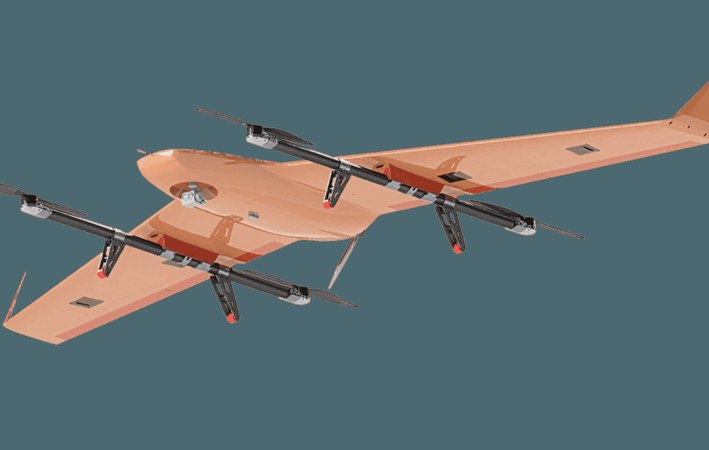
Valtec is a San Diego-founded maritime intelligence company turning ocean data into real-time decisions. Its Larus VTOL fixed-wing hybrid drone launches straight off moving fishing vessels - no runway, no shore infrastructure - and its Fulcan AI vision stack reads the water below for fish, vessels and threats. Built first for commercial tuna fleets in Taiwan and the Philippines, Valtec's pitch is blunt: cut a month at sea down to two weeks, burn less fuel, and see what's happening in waters no one else is watching.
Smack Technologies Inc.
Smack Technologies is a frontier AI lab for national security, founded in 2024 by two Marine Special Operations veterans, Andy Markoff and Clint Alanis. The company builds domain-specific AI models trained through deep reinforcement learning inside proprietary synthetic warfare environments. Its goal is what it calls 'Decision Dominance' - compressing the Orient and Decide phases of the military OODA loop from months to minutes. Two product suites carry the work: Omega, a command-level stack that turns commander intent into executable plans, and Alpha, an edge stack with lightweight models and proprietary hardware for tactical platforms operating in degraded, low-bandwidth conditions. Smack raised $32M in combined seed and Series A funding led by Geodesic Capital and Costanoa Ventures, and has secured seven-figure contracts with the Joint Fires Network and the Marine Corps Warfighting Lab.

Beewise
Beewise builds the BeeHome - a solar-powered, AI-driven robotic beehive that monitors and treats up to 24 honeybee colonies in real time. Founded in Israel in 2018 and now headquartered in San Ramon, California, the company is using computer vision, machine learning and precision robotics to cut annual colony losses from ~40% to under 10%, protecting the pollinators behind a third of the global food supply.