automation
(15)
The Quiet War To Turn Your Documents Into Software
Coda, Notion, and Airtable all sell the same dream - one place to write, plan, and run your team. Look closer and they are three very different bets on what a document is even supposed to be.

85% of Your Customers Still Want a Human. Draw the Matrix.
The automate-everything camp and the automate-nothing camp are both wrong, and most teams have no framework for deciding. The fix isn't a philosophy — it's a matrix: volume against emotional stakes, frequency against how much context a resolution needs.

How Jotform Out-Focused Microsoft in the Form Builder Wars
One is a 20-year-old bootstrapped company that makes nothing but forms. The other is a free feature tucked inside a $200 billion suite. That difference decides which one you should actually use.

Pypestream Wants AI That Performs, Not AI That Pilots
The New York company behind agentic customer-service agents says it now handles more than 50 million interactions a month. Its pitch to enterprises: stop testing AI and start running the business on it.

Why Customer Support Software Is Having an Identity Crisis
SAP, ServiceNow, Gorgias, Kayako, Supportbench and Thena are all chasing the same promise - support that resolves itself. Here is who is actually building it, and who is just bolting AI onto an old inbox.
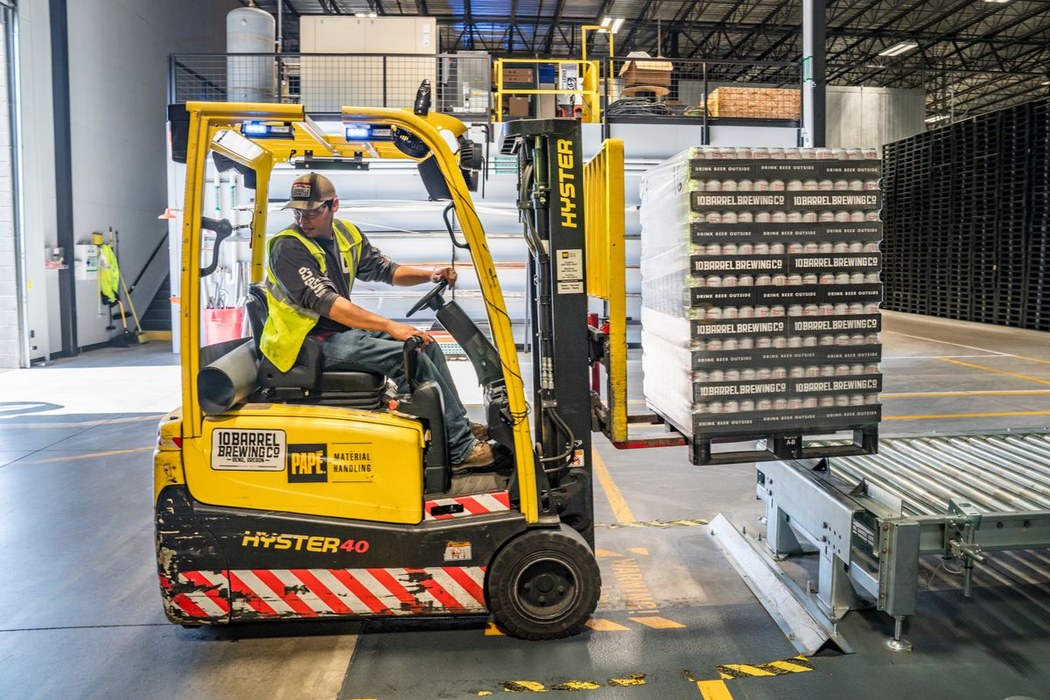
The Robots Learned to Do the Paperwork
An AI workforce for logistics is a system of AI agents that autonomously execute the repetitive administrative work that runs freight and supply chain operations — order entry, quoting, tracking, billing, customs filings and customer service. Pallet's platform deploys these agents across email, voice, documents, APIs and remote desktops, encoding a company's operating procedures so agents can run workflows from quote to cash. The goal is to automate the roughly $1 trillion in annual coordination work that keeps the physical economy moving, freeing human teams to focus on judgment, relationships and growth.

The Bot That Reads the Room: Why Logistics Is Trading Scripts for Judgment
A plain-English breakdown of the difference between AI agents and traditional robotic process automation (RPA) in logistics. RPA runs rigid, rules-based scripts that break the moment a portal button moves or a document arrives in the wrong format; AI agents reason toward a goal, read unstructured email and PDFs, and handle the exceptions that make up the bulk of real freight work. The piece uses Pallet (pallet.com) and its CoPallet AI workforce as a lead example, and surveys other players in the space including HappyRobot, Vooma, and FleetWorks.

Robots in the Real World: Four CEOs on the Machina Stage
At the Machina conference in Paris, All-In host Jason Calacanis sits down with the leaders of four of the world's top robotics companies—ANYbotics, 1X, Boston Dynamics, and Agility Robotics. Across four rapid-fire interviews, the CEOs explain why four-legged 'dog' robots conquered industrial inspection first, why humanoids are finally doing useful work, how teleoperation and internet-scale video data are training the next generation of machines, and where the real money and the real dangers lie—from explosive oil rigs to weaponized robots coming out of China. The through-line: robots are no longer research demos, they're deployed assets measured by ROI, and 'hard takeoff' where robots build robots may be as little as three years away.

100% of Agents Use AI Every Day. Zero Think It's Essential.
UJET's Agent Survey Report, 'The Agent and AI Disconnect,' surveyed 250 U.S. frontline contact center agents at mid-market and enterprise companies to compare AI hype with the daily reality on the call center floor. The findings reveal a striking paradox: while 100% of agents use AI every single day, 78% say those tools are not transformative, 93% are confident they could do their jobs without them, and not a single agent considers AI critical to their success. The report argues that immature, bolt-on AI — especially chatbots layered onto legacy systems — is deflecting customers rather than helping them, leaving agents to clean up failed bot interactions. It closes with a seven-pillar blueprint for turning AI from a liability into a genuine agent co-pilot.

The Quiet Redesign of Customer Service
Customer service is being rebuilt in the background, one conversation at a time. A wave of companies - Cognigy, Parloa, Cresta, UJET, Amazon Connect, Cisco's Webex Contact Center, 8x8 and Vonage - are turning the contact center from a cost you apologize for into software that answers the phone. This is the story of the quiet redesign: who is building it, what changed in 2025 and 2026, and why the hold music is finally getting shorter.

Ryan Petersen on AI, Logistics, and the Future of Flexport
In this episode of Y Combinator's podcast The Light Cone, Flexport founder and CEO Ryan Petersen explains how artificial intelligence is transforming global logistics. Petersen details how AI already saved 2% of Flexport's ocean freight spend while improving transit time 20%, how the company aims to make ocean container shipping 8-10% cheaper, and how AI agents now make phone calls, parse contracts, detect unhappy customers, and automate freight forwarding work. He also reflects on incumbency advantages in AI, his personal 'founder mode' evolution, capital discipline, and a sweeping philosophical vision of what automation means for humanity.
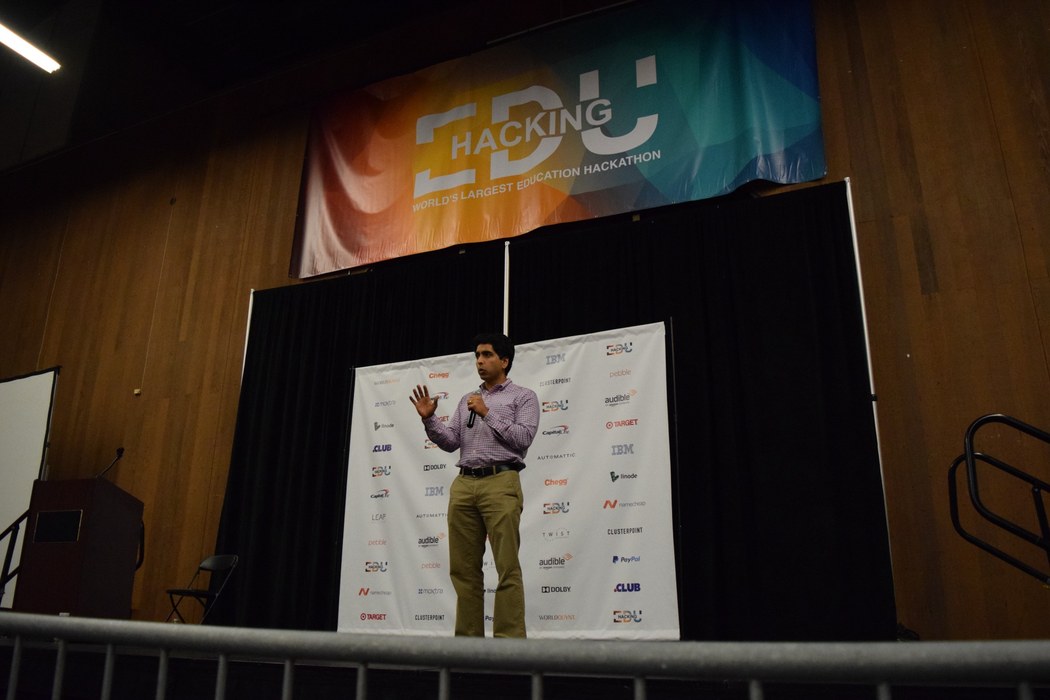
Sal Khan on Job Shock: How AI Will Reshape Work and Learning
In this podcast interview, Khan Academy founder Sal Khan discusses his forthcoming book 'Job Shock' and his growing concern that AI-driven automation will dislocate entire categories of workers—call center staff, drivers, and even software engineers, designers, and product managers—over the next three to five years. He argues that safe jobs are those that lean into human connection (teaching, nursing, hospitality, sales), describes how Khan Academy is transforming internally with AI agents (running a ~$1.2M/year Anthropic bill), and unveils the Constellation Institute, a new accredited program offering a full degree for under $10,000 that emphasizes 'durable skills' like communication, collaboration, creativity, and critical thinking, co-designed with employers such as McKinsey, Bain, Google, Microsoft, Replit, and Accenture.

The $2.5 Trillion Question: Why 95% of Enterprise AI Pilots Fail (and How Supply Chains Beat the Odds)
Sushanth Raman, founder and CEO of San Francisco-based supply chain AI company Pallet, delivers a conference keynote tackling the central paradox of the enterprise AI boom: despite a projected $2.5 trillion in AI spending in 2026, an MIT study finds 95% of enterprise AI pilots fail. Raman argues the failures stem not from weak frontier models but from messy real-world deployments, uncaptured tribal knowledge, legacy integrations, and poor change management. He offers a three-part framework for evaluating AI vendors, explains why building in-house is harder than it looks, and presents three case studies (Lineage, Prism Logistics, and Mallory Alexander) where Pallet drove millions in savings and 99%+ accuracy on tasks like customs filing.
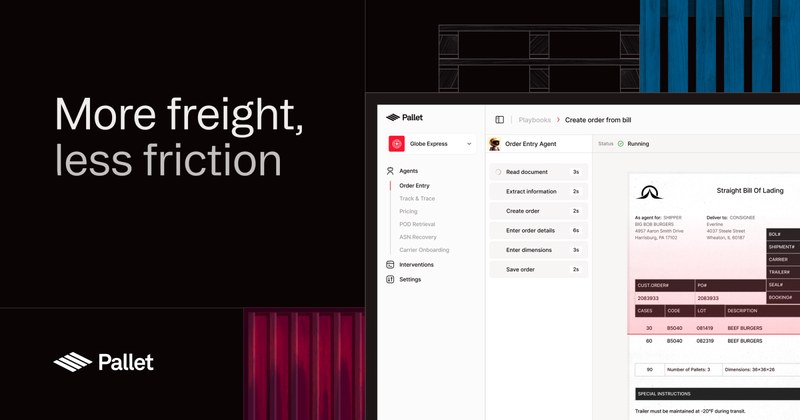
The Agent Factory: How Pallet Forge Turned Six Months Into Six Weeks
On May 14, 2026, logistics AI company Pallet launched Pallet Forge, an 'agent factory' that compresses the build-and-deploy cycle for production-grade logistics AI agents from roughly six months to six weeks. Authored by co-founder and CEO Sushanth Raman, the announcement frames Forge as Pallet's answer to the industry's pilot-to-production gap — citing the MIT finding that only 5% of enterprise GenAI pilots generate measurable P&L impact. Forge works by connecting to a customer's systems (TMS, WMS, ERP, EDI, email, and legacy AS400), encoding operational rules and carrier preferences inferred from historical data instead of hand-written SOPs, and running thousands of simulations to tune agent accuracy automatically. Early proof points include Everest Transportation running on 20,000+ customer-specific encoded memories and Eassons Transport Group hitting 98% touchless processing after going live in 40 days — with subsequent customers onboarded in as little as 48 hours.

Why 95% of AI Agents Fail in Logistics — Pallet CEO Sushanth Raman on TPM Today
On this episode of TPM Today, JOC senior technology editor Eric Johnson interviews Sushanth Raman, founder and CEO of Pallet, an AI-agent company built for the logistics industry. Raman explains why an oft-cited MIT study found that 95% of enterprise AI projects fail — arguing the root cause is missing 'tribal knowledge' and organizational context rather than flashy technology. He details how Pallet captures the undocumented business rules inside freight forwarders, 3PLs and shippers to automate document processing, container tracking, ISFs, billing and air-freight procurement, and lays out how operators should vet AI vendors. The pair also discuss the 'AWSification' of logistics labor, real EBITDA impact, and why, despite the hype, the industry is still very early in AI adoption.