85% of Your Customers Still Want a Human. Draw the Matrix.
The automate-everything camp and the automate-nothing camp are both wrong, and most teams have no framework for deciding. The fix isn't a philosophy — it's a matrix: volume against emotional stakes, frequency against how much context a resolution needs.
There are two loud camps in customer service right now, and they mostly talk past each other. One wants to automate everything and waves containment dashboards as proof it works. The other treats every chatbot as a small betrayal of the customer. They are both arguing about how much to automate. That was never the interesting question.
The interesting question is which. Which specific interactions should a machine touch, and which should it never get near? Most teams have a strong opinion and no framework, so the boundary between AI and human ends up drawn by whoever is most persuasive in the quarterly review. That is a terrible way to decide something your customers feel in their gut.
There is a better way, and it fits on a napkin.
01 / THE FRAMETwo axes, and the corners decide themselves
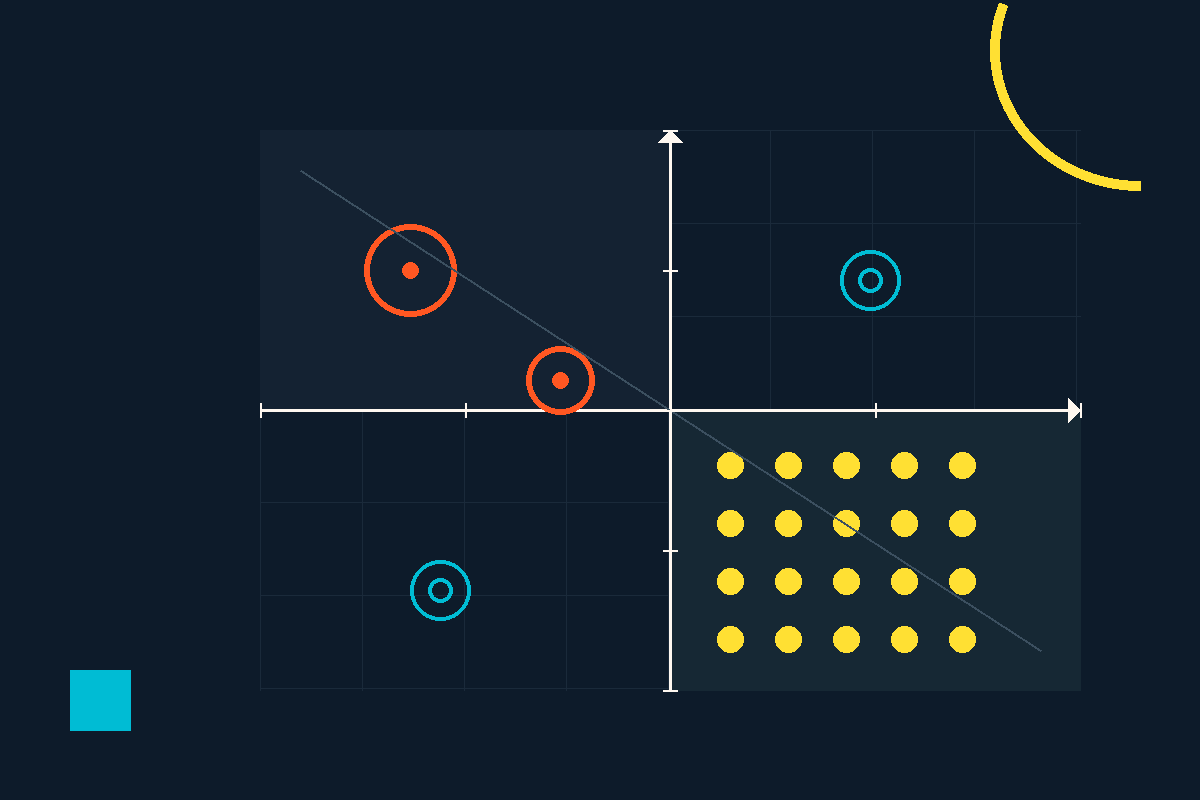
Plot every kind of interaction you handle on two axes. The first is volume: how often does this request arrive? The second is emotional stakes: how much does the customer care about the outcome, and how upset are they when it goes wrong? A companion version swaps in frequency against context — how much history, judgment, and situational awareness a clean resolution actually requires.
Run your ticket types through it and something clarifying happens. Password resets and order status land in the same corner every single time: high volume, low stakes, low context. Billing disputes, fraud, cancellations, and anything where someone is already angry land in the opposite corner: lower volume, high stakes, high context. You don't have to agonize over the corners. They sort themselves.
Billing disputes, fraud, cancellations, upset customers. AI works behind the agent, never in front.
AI opens, human closes. The handoff has to be invisible or you lose them.
Cheap to automate, low downside. Let AI take a swing, route out cleanly if it stalls.
Password resets, order status, scheduling. Speed beats empathy. 60–90% containment is realistic.
The two off-diagonal quadrants are where the actual design work lives, and where teams should spend their meetings. High-volume but high-stakes work — think an outage affecting thousands of accounts — is a candidate for AI to open and a human to close, provided the seam is invisible. Low-volume, low-stakes work is cheap to automate with almost no downside: let the bot take a swing, and route out cleanly the moment it stalls. Treat those two corners as tunable dials, not doctrine, and revisit them as your resolution data comes in.
02 / THE EASY CORNERWhat AI should simply own
The high-volume, low-stakes, low-context quadrant is where automation earns its keep and no one should feel precious about it. Password resets, order tracking, appointment scheduling, simple account lookups. UJET's Virtual Agent connects to backend systems and actually completes these tasks — applying a credit, running an assessment — rather than just answering trivia about them, across voice, web, and mobile in more than 40 languages.
In this corner, the customer wants speed, not a relationship. A machine that resolves the request in nine seconds beats a hold queue every time, and containment rates of 60 to 90 percent are both realistic and genuinely good for the customer.
03 / THE HARD CORNERWhat humans should keep
The opposite corner — lower volume, high emotional stakes, high context — stays with people. Fraud investigations, billing disputes, medical concerns, cancellations, and every conversation that opens with a customer who is already frustrated. Here the objective isn't deflection; it's the relationship. AI still shows up, but it works backstage: pulling case history, drafting documentation, surfacing sentiment, suggesting a reply. It supports the agent; it doesn't face the customer.
AI for the grind. Humans for the gold.
That one line is the whole strategy compressed. If your matrix doesn't reduce to it, you drew the matrix wrong. And the augmentation is not charity — agent-assist tooling has cut Average Handle Time by 27.2% and lifted customer ratings by 20.5%, precisely because it frees the human to do the part only a human can do.
04 / THE TRAPThe metric that hides your mistake
Here is why smart teams still get the matrix wrong: they measure the wrong thing. Deflection and containment count every interaction that stayed out of the human queue — including the ones where the customer simply gave up and left. A ticket can be gloriously "contained" and be a churn event wearing a green dashboard.
Only 14% of customer issues are actually resolved through traditional self-service. Meanwhile 75% of consumers report frustration with AI customer service — usually not because it's AI, but because it was deployed in the wrong quadrant. The fix is to lead with resolution rate — issues genuinely solved to the customer's satisfaction — and demote containment to a secondary diagnostic. Stop keeping score with a number that rewards abandonment.
05 / THE LINEWhy 85% is the whole ballgame
UJET's position is blunt, and it's the boundary condition for everything above: 85% of customers still want a human when things go sideways. That single figure is what makes the emotional-stakes axis non-negotiable. Ignore it and you talk yourself into automating the top-left corner because the volume math looked tempting.
Ask Klarna. The company automated its human layer away, celebrated the efficiency, and then quietly rehired agents in 2025 after discovering that customers value human availability precisely when the stakes are highest. You can learn that lesson from the case study or you can learn it from your own churn cohort. One is considerably cheaper.
Automate the easy corner aggressively. Defend the hard corner just as aggressively.
06 / THE SEAMThe handoff is the entire game
A matrix is only as good as the seam between its quadrants, and the seam is where most deployments quietly fail. The classic disaster is the reset handoff: the customer patiently explains everything to the bot, gets escalated, and then has to explain the whole thing again to a human who's starting from zero. Every repetition is a small tax on the relationship, paid at the worst possible moment.
The model that works carries full context across the transfer — prior attempts, account history, and sentiment travel with the customer, so the agent picks up mid-sentence instead of from scratch. Dynamic routing decides in real time whether a given contact belongs with a virtual or a live agent, and the human inherits the whole story. Draw the matrix, then engineer the handoff. Skip the second step and the matrix is just a slide.
None of this is a compromise between the two loud camps. It's the thing they were both missing. The debate was never automate-everything versus automate-nothing. It was always: put each interaction where it belongs, and make the border invisible. Draw the matrix. Defend the corners. Engineer the seam. The rest is dashboards.