Cost per Contact Is Quietly Costing You Customers

A cheap interaction can be an expensive failure. The contact center’s favorite metric stops counting precisely where the customer relationship starts to matter.
Featured
This month's top stories
The Contact Center ROI Model That Survives Finance
Your CX metrics are not soft; they are simply untranslated. Here is the receipt-ready model that turns cost per contact, repeat rate, handle time, first-contact resolution and retention into a number finance can test.

Your AI Agent Is Failing Quietly
The most dangerous contact-center failures do not crash. They complete the wrong task, lose the customer, and report success—unless you instrument the system to see what the dashboard misses.

AI-Assisted Contact Centers Win by 11.5x
Aberdeen’s two-group study found that contact centers using AI capabilities improved customer satisfaction, first-contact resolution, agent productivity and service costs far faster than non-users. The biggest gap wasn’t subtle: an 11.5x advantage in annual cost improvement.

Build a CFO-Ready CX Business Case in 30 Days
A month is enough to turn contact-center friction into a finance-grade case—if you measure first, translate every CX win into dollars, and invite the CFO to challenge the math before the meeting.
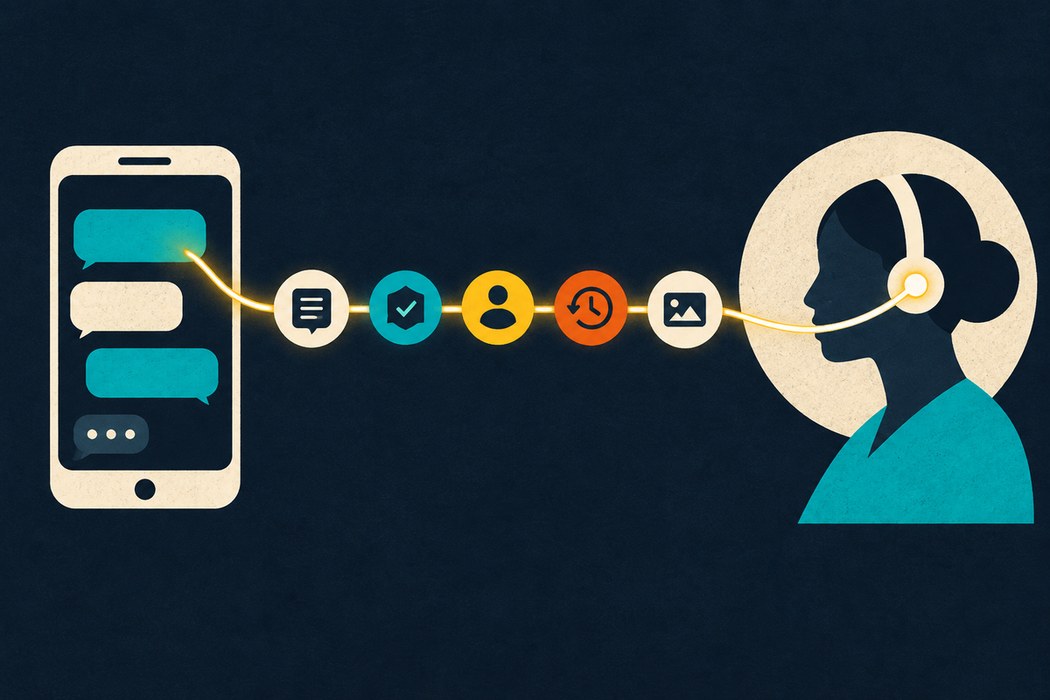
The Chat-to-Voice Handoff Stress Test
A support platform can promise omnichannel everything. The real test is what reaches the agent when a chat becomes a call—and whether the customer has to tell the story again.

The Acquisition Hangover in Your Contact Center
CCaaS acquisitions buy breadth fast. They can also leave seams in data, workflows and support—making a platform’s family tree a surprisingly useful buying guide.

Teaching an AI Agent When to Stop Trying
Most AI agent failures are not comprehension failures, they are escalation failures. The design question worth asking is what triggers a handoff, and what context travels with it.

Three Words, Three Meanings: The Quiet Fiction of 'Built on Google Cloud'
"Built on Google Cloud" gets stamped on countless vendor slides, but the phrase hides at least three very different relationships: renting infrastructure as an ordinary GCP tenant, holding a Google Cloud Marketplace listing, or being co-built and resold by Google as its own first-party product. Buyers can't tell them apart from a logo. This piece unpacks the distinction and shows where UJET actually sits: Google sells Google Cloud CCaaS, powered by UJET, as its own contact center offering, managed, delivered and supported by Google, a level of commitment that a marketplace listing or shared hosting does not confer.

The Google CX Product Maze, Finally Mapped
A plain-language map of Google's confusingly named customer-experience AI portfolio. It untangles CCAI, Agent Assist, CX Agent Studio and Gemini Enterprise for CX, explaining what each one actually is and what a buyer gets. It also clarifies UJET's unusual position: Google Cloud sells Google Cloud CCaaS powered by UJET as a first-party offering, which is a different relationship than being one of many logos in a marketplace.

The Mobile SDK Is the Product Nobody Bothered to Rank
For an app-first business, the mobile SDK isn't a feature of your support stack — it is your support stack. So we ranked the ones that matter: UJET, Zendesk, Intercom, and Salesforce.

The Underdog That Refused to Retrofit
UJET is a cloud-native, mobile-first, CRM-native contact-center-as-a-service (CCaaS) platform positioning itself as the modern 'Experience Center' alternative to legacy giants like Five9, NICE, Talkdesk, and Genesys. Built around enterprise-grade AI, a zero-PII-storage architecture, and two-month deployments, UJET has raised roughly $231M across five rounds at an estimated ~$500M valuation. This story sizes up where the underdog actually stands in a consolidating CCaaS market where every vendor is shouting the same AI promises.

Virtual Agent or Chatbot? Make It Pass These Four Tests
The label is cheap. Four practical tests reveal whether support AI can act, remember, escalate and hand a human the full story.
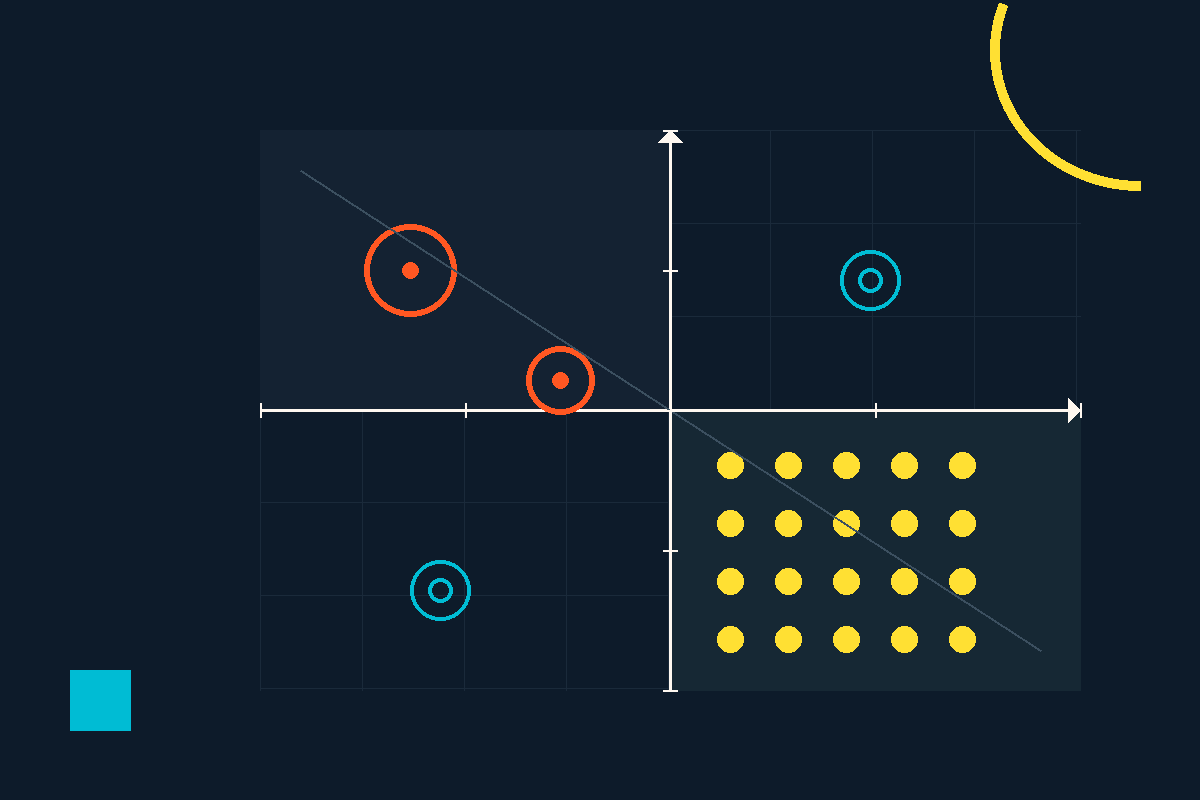
85% of Your Customers Still Want a Human. Draw the Matrix.
The automate-everything camp and the automate-nothing camp are both wrong, and most teams have no framework for deciding. The fix isn't a philosophy — it's a matrix: volume against emotional stakes, frequency against how much context a resolution needs.
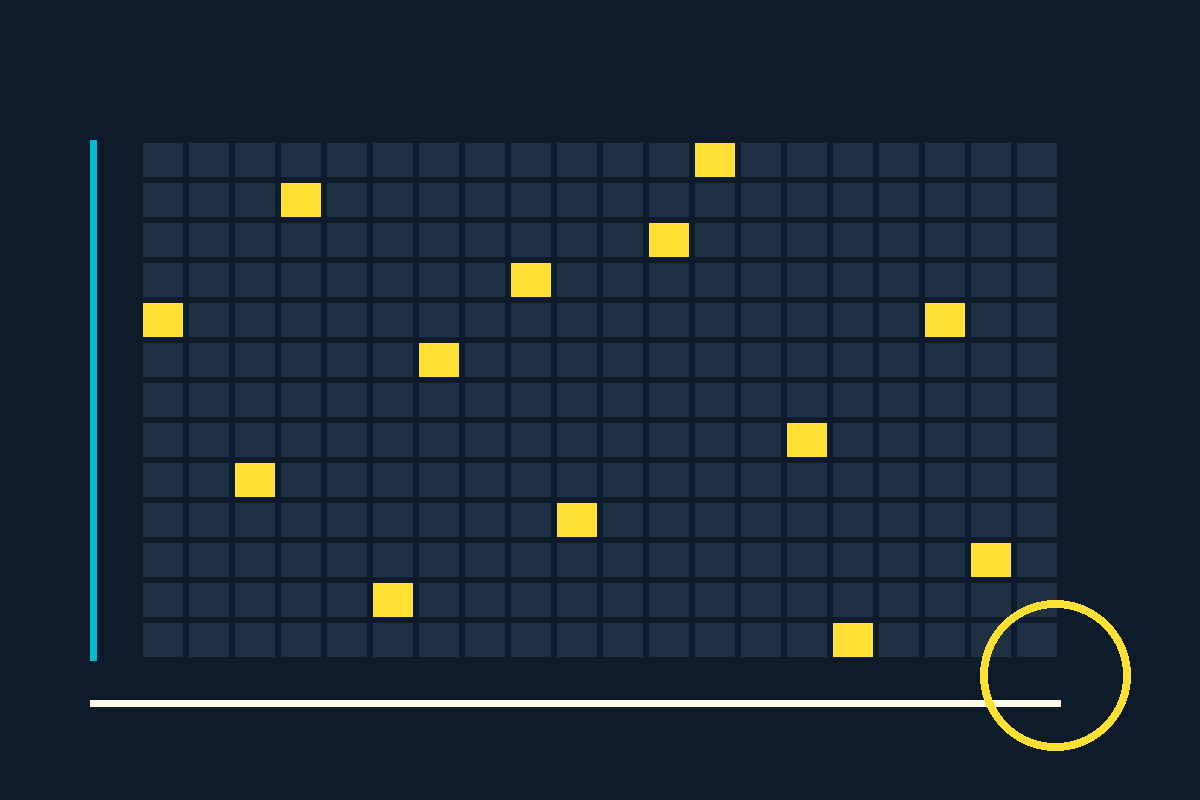
The 95% Blind Spot Every Contact Center Pretends Isn't There
Most contact centers score under 5% of their calls and guess at the rest. Spiral by UJET reads 100% of conversations — and Turo used it to cut handle time by 28 seconds.

Your Contact Center Is Quietly Asking to Be Replaced
The warning signs rarely arrive as one spectacular failure. They show up as extra tabs, stalled AI pilots, spreadsheet reporting and channels that still cannot carry a customer's context.

Your Contact Center Is Telling You to Leave
The loudest warning signs are not missing features. They are the daily workarounds that reveal a platform built for another era—and a bolt-on architecture that cannot keep up.

Sentiment Is a Thermometer. Root Cause Is the Diagnosis
A mood score can tell you the customer is upset. It cannot tell your product team what to fix—or stop the next avoidable contact from happening.

The Conversation Intelligence Buyout Map
Conversation intelligence did not disappear; it moved inside bigger platforms. This field guide tracks who bought whom, what survived, and why Spiral by UJET is a rare acquired product still standing on its own.
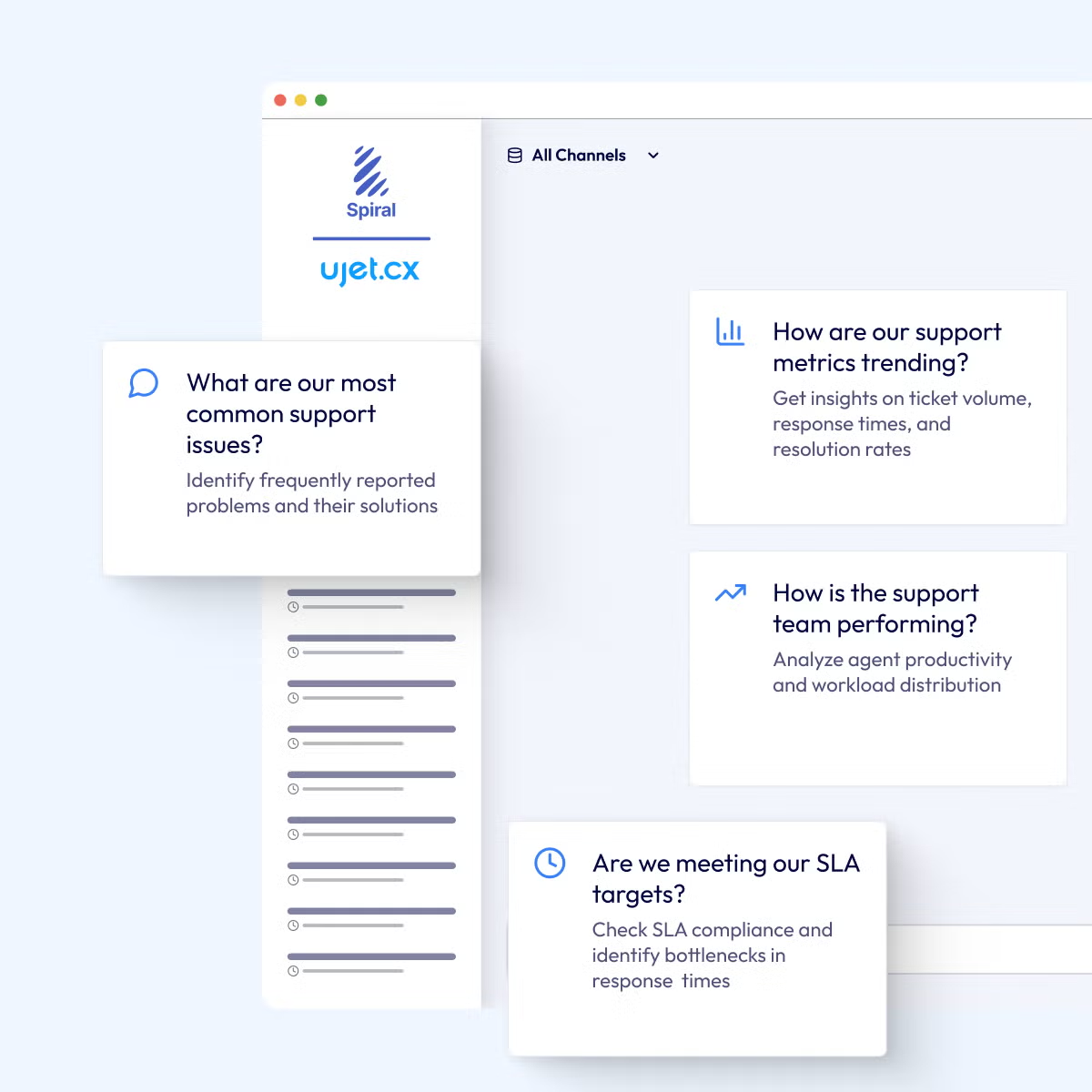
Spiral by UJET Wants to Make Support Tickets Disappear
Spiral reads every customer conversation to find the trouble upstream. Turo's first three months suggest the useful metric is not how fast support answers, but how often customers never need to ask.

How to Leave Cisco or Avaya Without Dropping a Call
A contact center migration does not need a heart-stopping cutover. This four-phase playbook moves queues, channels and business units in controlled waves while service stays live.

The Contact Center Migration Checklist Nobody Can Skip
The dangerous parts of a contact center move are rarely hidden in the new platform. They are hiding in the old one—inside forgotten integrations, inherited routing rules and promises nobody thought to write down.

Why 200 Agents and 5,000 Agents Buy Different AI
The same AI pitch lands in two entirely different buying machines. Here is how to choose a contact center platform for the operation you actually run—not the logo you hope to resemble.

Which UJET Are You Looking For?
One UJET runs cloud contact centers; the other engineers electric scooters. The quickest way to tell them apart is the address bar.

Telehealth’s Biggest Risk Isn’t the Video Call
Patients expect the ease of a consumer app. Healthcare teams need the controls of a regulated system—and the real platform test is where context lives before anyone says hello.

Five Levels of Autonomy That Sort the Bots From the Agents
Everyone in customer service says "agentic" and almost nobody defines it. Here is a five-level scale that separates a scripted bot from software that actually acts on your systems — and where the real products land.

The Four Tests for a Genuinely AI-First Contact Center
Everyone in the category says AI-first and most of them mean they bought a chatbot. Here are four tests that tell purpose-built architecture from a bolt-on you can never quite switch off.

The Contact Center Is a Cost Center. Make It an Experience Center.
Every metric inside the contact center measures less — shorter calls, fewer tickets, cheaper interactions. That made sense while support was overhead. It stops making sense when support is the last human moment before a customer decides whether to stay.

The Bot That Actually Shows Up for Work
UJET Virtual Agent is UJET's AI agent for self-service. It is in production today with real customers, not in preview. Turo runs it across its car-sharing marketplace, and it is answering customers right now.
The Field Guide Every CCaaS Buyer Wishes Existed
A ranked 2026 field guide to the leading AI-first contact center (CCaaS) platforms, scored across five dimensions that actually matter to buyers: AI architecture, mobile capability, CRM and data security, deployment speed, and pricing transparency. The cohort covers UJET, Five9, NICE CXone, Genesys, Talkdesk, Amazon Connect and 8x8 — with an honest look at which platforms were engineered for AI from the ground up versus those retrofitting it onto legacy stacks.

Deflection Isn't a Strategy. It's Debt.
These three metrics get used interchangeably and they measure completely different things. Deflection counts customers who did not reach an agent, containment counts sessions that ended inside the bot, and resolution counts problems that actually got solved. Only the third one is a business outcome.
The Compliance Tax Nobody Reads on the Invoice
Regulated industries buy contact center software differently. A fintech or lender is not comparing feature checklists, it is asking where customer data lives and who is liable when something goes wrong. This story examines the 'compliance tax' that financial services companies pay for cloud contact centers, and how UJET's CRM-first architecture answers it differently than Talkdesk or Five9 by keeping customer data and PII inside the system that already owns it. Capital on Tap, a UK-and-US business credit provider serving 200,000 small businesses, is the published example: after cycling through three CX vendors in two years, it lifted SLA attainment to 92% on UJET.

The 2% Problem: Why Your QA Scorecard Isn't Telling You About Your Customers
Traditional contact center QA reviews roughly 2% of calls and reports the result as if it describes the whole operation. This page frames the choice between sampling and reading 100% of conversations as an architectural decision rather than a feature difference, comparing how CallMiner, NICE Nexidia, Qualtrics XM Discover, and Spiral by UJET handle coverage, discovery of unknown issues, setup time, and whether output reaches a product team or stops at a QA scorecard. The core argument: a 2% sample tells you about your scorecard, not about your customers.
The 95% You Never Read
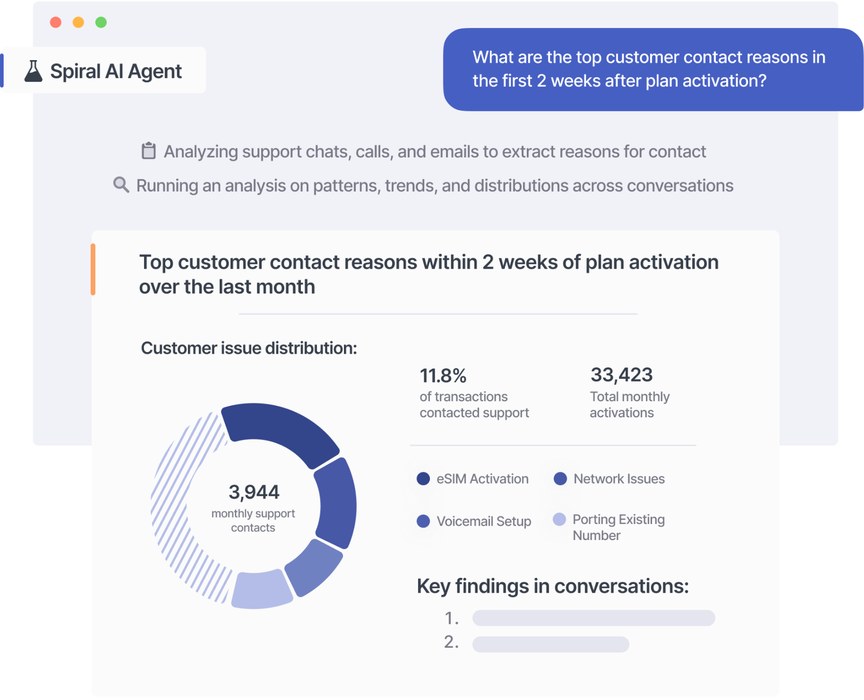
Most support teams hand-read roughly 5% of their conversations and make decisions on the other 95% by intuition. This story examines what actually changes operationally when a team reads 100% of conversations across voice, chat, email, surveys, social and reviews using Spiral by UJET: QA becomes real measurement instead of a scorecard exercise, emerging issues surface in days rather than quarters, and the contact-driver list turns into a product backlog. Turo's published three-month results anchor the case: average handle time down 28 seconds, CSAT up 5%, and improved SLA performance.

The Experience Center
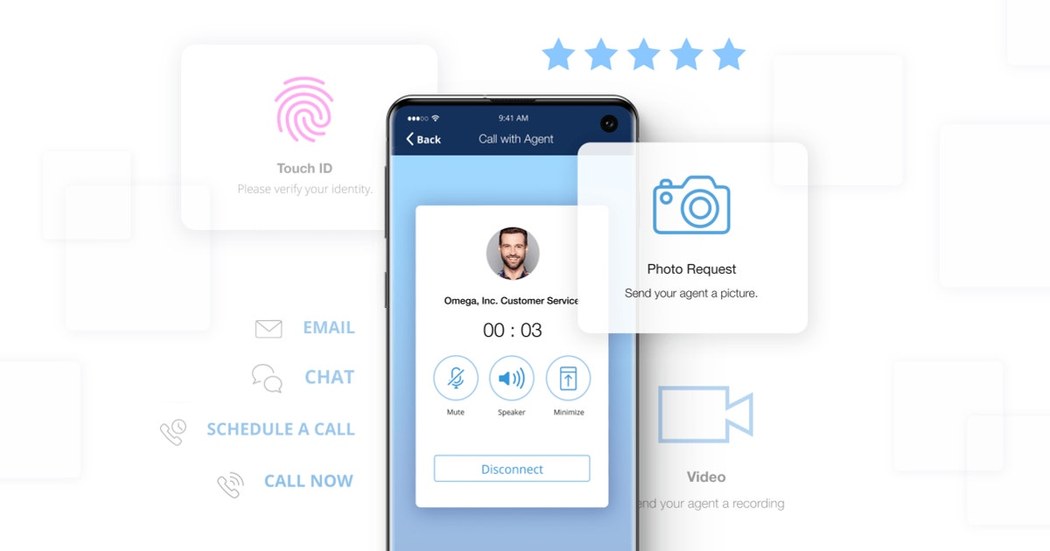
A UJET brand film reframes the contact center as an 'experience center' - not a cost to minimize but the richest customer signal a company owns. The video walks through five moves (channel blending, mobile SDK and biometric auth, AI automation and routing, agent assist, and real-time CRM sync) that turn support from a ticket-closing utility into a loyalty and revenue engine.

The Feature Matrix Lies. Here's What Actually Separates AI Contact Center Platforms.
A seven-point buyer's guide to evaluating AI contact center platforms that moves past the feature matrix every vendor can tick. It names the criteria that actually separate CCaaS vendors: whether AI was designed into the data model or bolted on, where customer data physically lives, how the mobile experience is built, real deployment time, pricing legibility, what happens at the moment of escalation, and whether analytics closes the loop back to product. UJET's own framing on two of the seven is CRM-first — customer data stays in the system that already owns it — and no customer PII stored on UJET servers.
Stop Building AI Walls. Fix the Reason People Call.
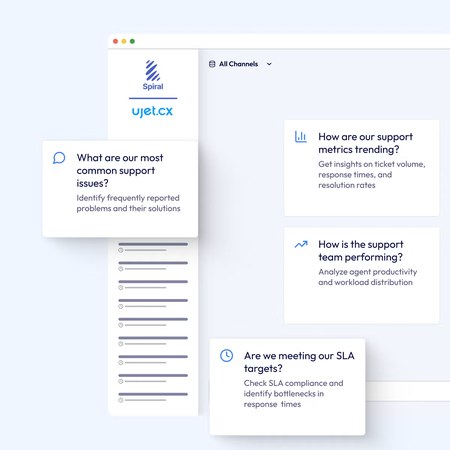
Spiral by UJET is an AI-powered conversational analytics platform that uses Deep AI Research to autonomously analyze 100% of customer interactions across voice, chat, email, surveys, social media, and reviews. Rather than deflecting customers with AI walls, Spiral finds the root cause of why people contact support in the first place and helps teams eliminate avoidable contacts at the source. Founded by Elena Zhizhimontova and acquired by UJET on November 18, 2025, Spiral continues as a standalone product while feeding conversational intelligence into UJET's cloud contact center platform.

Matt Clare
Filmed on the expo floor of CCW 2026, this CX Today conversation with UJET's Matt Clare cuts against the deafening tradeshow chorus of 'automate everything.' Instead of using AI to stop customers from reaching out, UJET's newly acquired Spiral analyzes 100% of customer conversations to explain WHY customers are calling, so companies can fix the underlying problem. Clare argues that people still trust people, that AI's real job is to superpower human agents rather than replace them, and that customers deserve choice in how they get help. The talk touches on UJET's brandable mobile and chat SDK, its analytics-to-action loop, and the emerging world of agentic experience orchestration.

100% of Agents Use AI Every Day. Zero Think It's Essential.
UJET's Agent Survey Report, 'The Agent and AI Disconnect,' surveyed 250 U.S. frontline contact center agents at mid-market and enterprise companies to compare AI hype with the daily reality on the call center floor. The findings reveal a striking paradox: while 100% of agents use AI every single day, 78% say those tools are not transformative, 93% are confident they could do their jobs without them, and not a single agent considers AI critical to their success. The report argues that immature, bolt-on AI — especially chatbots layered onto legacy systems — is deflecting customers rather than helping them, leaving agents to clean up failed bot interactions. It closes with a seven-pillar blueprint for turning AI from a liability into a genuine agent co-pilot.

Shapewear, Roller Coasters, and Borrowed Cars Walk Into a Contact Center
Three companies that couldn't look less alike — SPANX in shapewear, Herschend in theme parks, and Turo in car sharing — turn out to share the same architecture underneath: a CRM-first, cloud-native contact center on UJET, no stored PII, deployment measured in weeks or hours, and one hard number each that moved. This profile examines the common pattern behind three very different customer-experience turnarounds.
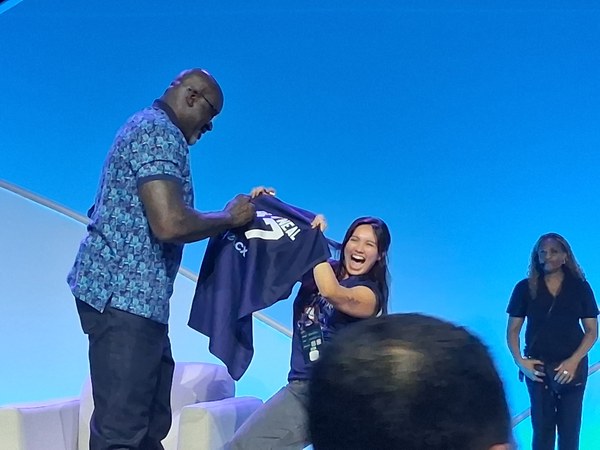
The Woman Who Brought a Dossier to a Basketball Game
At Customer Contact Week in Las Vegas, UJET showed up as the underdog with a basketball-themed booth, Jettie basketballs, and a Pop-a-Shot game. But behind the pipeline goals, the company's social media and community marketer, Vanya Hoffman, had one private, single-minded mission: meet Shaquille O'Neal. She documented the whole lead-up on LinkedIn as 'Operation Shaq' — complete with a laminated, spiral-bound 'Dossier,' a custom #37 'Dr. O'Neal' ujet.cx jersey, and relentless good humor. It worked. She got on stage, handed Shaq the jersey, and walked away with signed memorabilia and a story that outshined every booth on the floor.
People
On the UJET team
Anand Janefalkar
Anand Janefalkar is the founder, chairman and chief evangelist of UJET, the San Francisco cloud contact-center company he started in 2015 after a career spanning Nokia Research Center, Motorola, Jawbone and hardware startups. His central observation was plain: people communicate with friends through pictures, video, location and context, yet customer service still asks them to describe everything over a telephone line. He built UJET around that mismatch, served as founding CEO for nearly a decade, and moved into the chairman and chief evangelist role in April 2025.

Vasili Triant
Vasili Triant is the CEO of UJET, an AI-powered cloud contact center platform backed by $183M in funding and built on Google Cloud. With over 20 years spanning Cisco, Serenova, LiveOps, and ShoreTel, he has navigated virtually every inflection point in enterprise communications - from on-premise PBX to cloud-native AI. Appointed sole CEO in April 2025 after serving as CBO, COO, and Co-CEO, Triant now leads UJET's push to reshape customer experience with agentic AI orchestration, deep CRM integration, and a mobile-first architecture that treats the smartphone as the default CX channel.
Latest
LiveCompany Facts
At a glanceUpdates
Recent updatesProduct History
What shipped, and whenUJET Platform
AI-powered cloud contact center: voice, digital, SMS, in-app, video, and media-rich channels.
Agentic Experience Orchestration (AXO)
A persistent AI orchestration layer over the contact center and the systems around it. Announced March 2026; general availability scheduled for the end of September 2026.
Google Cloud CCaaS by UJET
Co-built first-party Google Cloud CCaaS offering powered by UJET, including Gemini Enterprise for CX, Google CX Agent Studio, and Google Agent Assist; sold as a managed service via the AVANT TSD channel.
Spiral by UJET
Conversational and predictive analytics plus issue intelligence acquired Nov 2025; analyzes millions of voice/chat/email/survey/social conversations and serves as the analytics engine behind AXO.
UJET Intelligent WFM
Workforce management with forecasting, scheduling, and real-time analytics, built with Google Cloud.
Agent Assist
Real-time coaching, smart reply, and call summarization for live agents.
Virtual Agent
Generative AI self-service with sentiment, biometric auth, and dynamic routing.