autoimmune-disease
(26)
The Map Was Never the Medicine
Immunai set out to map the immune system. The harder business was teaching drugmakers what to do with the map - and proving a pattern in cells can survive contact with a patient.
Synthekine and the Art of Asking Less of IL-2
The Menlo Park biotech began with a wide library of immune signals. Its sharper wager now is whether a carefully tuned IL-2 can improve lung cancer treatment without stirring the whole immune system.

The Second Handshake Changes Everything
Dualitas is betting that the most useful thing an antibody can do is not merely bind twice, but force the right two proteins into the same conversation. Roche just paid $36.5 million upfront to test that idea at industrial scale.

Cyrus Sold Protein Software to 120 Drugmakers. Then It Put Its Own Molecules on the Line.
The Seattle spinout made Rosetta easier for pharma scientists, learned from more than 30 partnered discovery programs, and then made a riskier bet: building its own autoimmune drugs. Its story is a useful lesson in when software should become a laboratory - and when that strategy can still fail.
Resolve Therapeutics Missed the Headline Endpoint - Then Built a Smarter Trial From the Miss
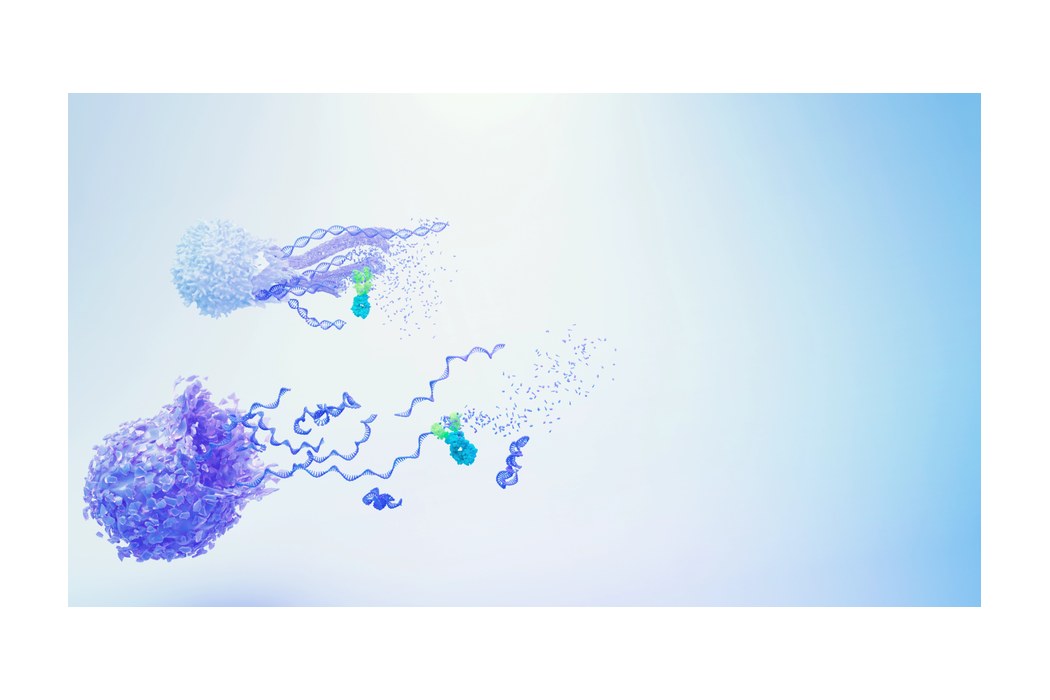
The tiny Miami biotech spent years testing a simple idea: digest inflammatory RNA instead of suppressing the immune system. Its first big readouts were messy - and the useful part was hiding inside the miss.
The Startup Rebuilding the Organ That Quietly Ages You
Most of biotech chases the diseases you can see. Thymmune went after the organ almost no one thinks about - the thymus - and built a way to grow it from stem cells.
Arcellx
Arcellx rebuilt a crucial part of CAR-T therapy with a compact synthetic binder. Its lead treatment is now under FDA review - and the company behind it has become part of Gilead's Kite.
CREATE Medicines
CREATE Medicines is a Cambridge, Massachusetts clinical-stage biotech building in vivo immune programming - therapies that use an mRNA-lipid nanoparticle platform to turn a patient's own T cells, NK cells, and myeloid cells into chimeric antigen receptor (CAR) cells directly inside the body, rather than extracting and re-engineering them in a lab. Formerly Myeloid Therapeutics, the company rebranded in October 2025 as its pipeline expanded beyond myeloid cells and cancer into autoimmune disease and fibrosis. Its repeat-dosable, off-the-shelf approach aims to make CAR therapy cheaper and more scalable than conventional cell therapy, and the company says it has dosed more than 50 patients - among the largest clinical datasets for in vivo CAR to date.

Merida Biosciences
Merida Biosciences is a Cambridge, Massachusetts biotechnology company developing a new class of engineered Fc biotherapeutics that selectively bind and eliminate the disease-causing antibodies behind autoimmune and allergic diseases, while sparing the protective antibodies the immune system needs. Launched publicly in April 2025 with a $121 million Series A, the company aims to treat conditions such as Graves' disease, IgE-mediated allergy and primary membranous nephropathy by clearing pathogenic antibodies and suppressing the B cells that make them - without the broad immunosuppression that limits many existing therapies.
Prolium Bioscience
Prolium Bioscience is a New York-based, clinical-stage biotechnology company developing PRO-203, a bispecific CD20xCD3 T-cell engager designed to deplete disease-driving B cells as an off-the-shelf therapy for severe autoimmune diseases, starting with systemic sclerosis and lupus. Founded in 2025 and backed by RTW Investments, the company in-licensed global non-oncology and ex-Asia oncology rights to the antibody from China's InnoCare Pharma and KeyMed Biosciences, and launched publicly in March 2026 with a $50 million Series A alongside first-patient dosing.

Apeximmune Therapeutics
Apeximmune Therapeutics is a South San Francisco / Burlingame-area biotechnology company developing next-generation antibody therapeutics that harness the immune system to treat cancer and autoimmune disease. Using a proprietary target-discovery platform built on bioinformatic analysis of thousands of tumor RNA-seq transcriptomes, the company has identified more than 30 novel immune targets. Its lead program, AI-306, is a first-in-class antagonist antibody against the novel immune checkpoint AIM-103, and its MEBA platform builds bispecific antibodies that engage macrophages to kill tumor cells. The company closed a $21.3 million Series A in 2025 led by PharmaEssentia.

Axelyf
Axelyf is a Brookline, Massachusetts biotech (with an R&D subsidiary in Iceland) building next-generation lipid nanoparticle delivery systems for RNA medicines. Founded by former Moderna drug-delivery leaders, it pairs a proprietary AXL ionizable-lipid library with an AI model called ANNA to make RNA and gene-editing payloads reach the right tissue with higher potency and less toxicity. In mouse liver studies its AXL LNPs showed roughly 4-5x higher gene-editing efficiency than the LP-01 clinical benchmark at equivalent doses, without evidence of liver toxicity. The company closed $2.6M in seed funding in August 2025 to push its lead autoimmune program and lipid library toward preclinical and non-human-primate studies.

Shennon Biotechnologies
Shennon Biotechnologies is a San Francisco biotech turning immune-cell target discovery from a months-long slog into a same-day job. Its proprietary TCELERATOR platform fuses ultra-high-throughput microfluidics with AI to functionally profile millions of single immune cells in hours, pinpointing the rare T and B cells that recognize cancer antigens. Founded in 2021 by physicist-turned-founder Li Sun, the company is building a pipeline of validated targets for solid tumors and autoimmune disease, backed by a $13M seed round led by DCVC.
T-Cypher Bio
T-Cypher Bio is an Oxford, UK biotechnology company building a pipeline of TCR (T cell receptor) therapeutics for solid tumours and immune-mediated diseases. Spun out of Orbit Discovery in 2021 on technology licensed from the University of Oxford, it pairs a high-throughput, functional bead-display platform with immunopeptidomics, AI and bioinformatics to deconvolute vast T cell repertoires, find disease-specific targets, and identify potent, target-specific TCRs.

WellTheory
WellTheory is a virtual autoimmune care platform founded in 2020 by Ellen Rudolph, Claire Rudolph, and Wallace Torres — all personally affected by autoimmune disease. The company pairs licensed registered dietitians and board-certified health coaches with advanced diagnostic testing to help the 50+ million Americans living with autoimmune conditions reduce symptoms and reclaim their lives. Members follow a 12-month personalized program covering nutrition, sleep, stress, and movement. Clinical outcomes show 92% of members reduce symptoms within four weeks, 85% cut ER visits within 16 months, and average annual healthcare savings of $5,181 per patient. Backed by $33.4M in total funding led by General Catalyst, WellTheory serves both individual members ($175/month) and self-insured employers and health plans like Sentara Health Plans.

Nurix Therapeutics
Nurix Therapeutics is a clinical-stage biopharmaceutical company in San Francisco pioneering targeted protein degradation - medicines that destroy disease-causing proteins rather than merely blocking them. Built on its DELigase discovery engine that harnesses the cell's ubiquitin-proteasome system and DNA-encoded library screening, Nurix is advancing a pipeline of degraders and degrader antibody conjugates for cancer and autoimmune disease, led by the BTK degrader bexobrutideg (NX-5948). The company is partnered with Roche, Sanofi, Gilead, and Pfizer (via Seagen) and trades on Nasdaq under NRIX.

Abcuro, Inc.
Abcuro is a clinical-stage biotechnology company in Newton, Massachusetts developing first-in-class immunotherapies that selectively deplete highly cytotoxic T cells implicated in autoimmune tissue damage and certain cancers. Its lead program, ulviprubart (ABC008), is a monoclonal antibody targeting the KLRG1 receptor, advanced primarily for inclusion body myositis (IBM) - a progressive muscle-wasting disease with no approved treatments - alongside pipeline work in T-cell large granular lymphocytic leukemia and T/NK-cell lymphomas.

DeepCure
DeepCure is a Boston-based biotech that uses AI, physics-based simulation, and automated robotic chemistry to design novel small-molecule drugs for hard-to-treat immune and inflammatory diseases. Founded in 2018 by MIT Media Lab researchers, the company pairs deep learning with a proprietary chemical database of up to 10^18 synthesizable compounds and an in-house automated wet lab, aiming to turn AI-generated molecules into real, testable, first-in-class therapies.

Enthera Pharmaceuticals
Enthera Pharmaceuticals is a clinical-stage biotech based in Milan, Italy, developing first-in-class biologics that aim to do something most autoimmune drugs do not: restore the organ, not just calm the inflammation. Its lead antibody, ebrasodebart (Ent001), blocks the IGFBP3/TMEM219 pathway, a signal that drives apoptosis of intestinal stem cells in the gut and insulin-producing beta cells in the pancreas. The company targets inflammatory bowel disease and type 1 diabetes, two conditions with deep unmet need, and is advancing the program through Phase 1 clinical trials.

HanchorBio Inc. 漢康生技股份有限公司
HanchorBio is a clinical-stage biotechnology company building next-generation cancer and autoimmune therapies on its proprietary Fc-Based Designer Biologics (FBDB) platform. Founded in 2020 by Henlius co-founder Scott Liu, the company engineers multi-target Fc fusion proteins designed to reach tumors that resist conventional PD-1/PD-L1 checkpoint drugs. Its lead candidate, HCB101, is an affinity-optimized SIRPalpha-Fc fusion protein targeting the CD47-SIRPalpha 'don't eat me' pathway, engineered to spare red blood cells and avoid the anemia that sank earlier anti-CD47 programs. With operations spanning Taipei, Shanghai, and the San Francisco Bay Area, HanchorBio is advancing a pipeline across solid and hematologic cancers and autoimmune disease.

HotSpot Therapeutics, Inc.
HotSpot Therapeutics is a Boston-based clinical-stage biopharmaceutical company pioneering a new class of allosteric medicines. Using its proprietary Smart Allostery and SpotFinder platforms, the company systematically identifies 'natural hotspots' - regulatory allosteric pockets the body uses to switch proteins on and off - to drug targets long considered undruggable. Its small-molecule pipeline spans oncology (CBL-B, CBM signalosome/KRAS) and autoimmune disease (IRF5), with its lead CBL-B inhibitor HST-1011 in Phase 1/2 clinical trials.
Immetas Therapeutics
Immetas Therapeutics is a New Jersey biotech building drugs that target the chronic, low-grade inflammation that drives aging and age-related disease - what scientists call 'inflammaging.' Founded in 2018 by drug-development veteran J. Gene Wang and Harvard aging researcher David Sinclair, the company designs bispecific antibodies and other biologics to reprogram the innate immune system, aiming to treat age-related cancers and inflammatory and autoimmune disease. It raised an $11M Series A from Morningside Ventures in 2020 and partners with GC Biopharma on mRNA therapeutics.

Kira Biotech Pty Ltd
Kira Biotech is a Brisbane-based clinical-stage immunology company developing first-in-class antibody therapeutics that retrain the immune system instead of broadly suppressing it. Its lead candidate, KB312, selectively depletes activated immune cells to restore immune tolerance, aiming to treat difficult autoimmune and inflammatory conditions such as rheumatoid arthritis, lupus, type 1 diabetes, and graft-versus-host disease. Built on decades of dendritic-cell research from Australian institutes and led by US rheumatologist Dr Dan Baker, the company launched with a A$20 million Series A in 2019 led by OneVentures and IP Group.

Marengo Therapeutics
Marengo Therapeutics is a Cambridge, Massachusetts clinical-stage biotech reprogramming the immune system from the inside out. Instead of releasing the brakes on T cells the way checkpoint inhibitors do, Marengo's STAR (Selective T Cell Activation Repertoire) platform builds antibody-fusion molecules that target variable regions of the T cell receptor (Vβ) to selectively wake up the specific subsets of T cells that can attack tumors - and remember them. Launched in 2021 with $80M from Apple Tree Partners, its lead drug invikafusp alfa (STAR0602) is in Phase 1/2 trials, has earned FDA Fast Track designation, and is being studied across cancers that no longer respond to PD-1 therapy.

Progentec Diagnostics, Inc.
Progentec Diagnostics is an Oklahoma City company building blood-based biomarker tests and digital health tools for autoimmune diseases, starting with lupus. Its lead product, the aiSLE DX Flare Risk Index, uses an 11-biomarker algorithm to predict a lupus flare up to 12 weeks before it happens, giving rheumatologists a chance to intervene early. Spun out of research tied to the Oklahoma Medical Research Foundation, the company pairs lab science with patient-facing tools like the LupusCorner community to move autoimmune care from reactive to proactive.

Hinge Bio
Hinge Bio is a clinical-stage biotechnology company in Burlingame, California, building next-generation antibody therapeutics on its proprietary GEM-DIMER platform. The platform engineers multivalent, multispecific antibodies that bind their targets cooperatively for dramatically enhanced potency. Its lead candidate, HB2198, is a B cell-depleting agent targeting both CD19 and CD20 with enhanced natural killer cell engagement, now in Phase 1 trials for systemic lupus erythematosus and lupus nephritis. The company raised a $30M Series A led by Point72 in January 2025.