architecture-software
(10)
Robert Yuen and the cost of invisible work
A young architectural designer kept working harder and still lost his job. Robert Yuen’s answer became Monograph: software that helps architects see the business behind the buildings.

BQE Had a Hit Billing App. Then It Bet $25 Million on Architects’ Messy Back Office.
The software company began with a garage-built fix for timecards and invoices. Thirty years later, its sharper idea is that architecture and engineering firms should not need a scavenger hunt to learn whether a project made money.
Vectorworks Bet Designers Wanted Freedom - Now Architects Must Decide What That Freedom Is Worth
A 40-year-old Mac CAD pioneer built one flexible modeler for buildings, gardens and stadium shows. Its real trick is keeping the idea alive from first sketch to final drawing - if a team can stomach the switch and the subscription.

Altaf Ganihar
A geometry researcher met the limits of old design software at Hampi. His response was Snaptrude - a browser-native attempt to make building design collaborative, connected and easier to revise.
Foyr
Foyr is a cloud-based, AI-powered interior design platform whose flagship product, Foyr Neo, lets designers, architects, contractors and students go from 2D floor plans to photorealistic 3D renders and interactive walkthroughs inside a web browser - no heavy CAD skills or high-end hardware required. Founded in 2014 by former Microsoft director Shailesh Goswami, the company positions itself as an all-in-one alternative to stitched-together tools like SketchUp, V-Ray and Photoshop, with a library of tens of thousands of 3D furniture models and rendering that runs in the cloud. Foyr says more than 150,000 creators worldwide use the platform.

Clifton Harness
Clifton Harness is the co-founder and CEO of TestFit, a Dallas-based real estate feasibility platform that lets developers, architects and contractors solve site plans in seconds instead of weeks. A University of Texas at Austin architecture graduate who grew up around his father's development business, Harness spent two years doing site plan test fits at StreetLights Residential before teaming up with his college roommate, software developer Ryan Griege, to automate the repetitive work. TestFit has raised roughly $22 million, led by a $20 million Series A from Parkway Venture Capital, and Harness has become a leading and often provocative voice on generative design in the AEC industry.

Snaptrude
Snaptrude is a cloud-based, AI-native design platform for architecture, engineering and construction (AEC) teams. It lets architects move from a brief to a BIM-ready model inside one connected, browser-based workspace - handling site analysis, space programming, massing, BIM modeling and presentation while staying interoperable with legacy tools like Revit, Rhino and Archicad. Founded in 2017 by Altaf Ganihar and backed by Foundamental and Accel, Snaptrude positions itself as a modern, collaborative alternative to design software largely built in the late 1990s.

Aditazz, Inc.
Aditazz is a Silicon Valley technology company that borrows the automated, rule-based workflows of semiconductor chip design and applies them to the design and construction of complex buildings. Its SaaS platform captures human engineering and architectural expertise as design rules, then uses algorithms and digital twins to generate, simulate and optimize building layouts before a single wall is built. Founded in 2010 by chip designer Deepak Aatresh and architect Zigmund Rubel, the company first targeted healthcare facilities - winning Kaiser Permanente's 'Small Hospital, Big Idea' competition - and has since applied its methods to hospitals, labs, and other infrastructure across the U.S., China and India.

UpCodes
UpCodes is a software company that turns the sprawling, jurisdiction-by-jurisdiction world of U.S. building codes into a single searchable, always-current platform. Founded in 2016 by brothers Scott and Garrett Reynolds, it hosts more than 5 million code sections across 1,700+ state and city codes and roughly 160,000 local amendments, updated thousands of times a month. Architects, engineers, and contractors use it to look up requirements, collaborate on compliance, and - since 2023 - ask questions of Copilot, an AI research assistant fenced into the codes that actually apply to a given project and permit year.
Monograph
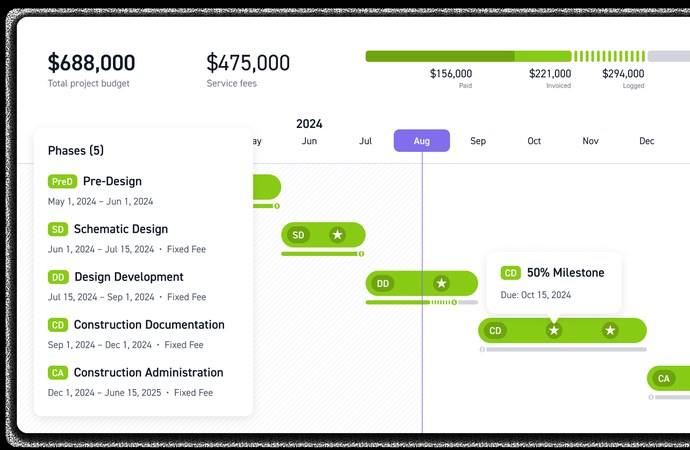
Monograph is a San Francisco-based software company that builds cloud practice-operations software for architecture and engineering firms. Its platform replaces spreadsheets with real-time tools for project budgets, staffing, time tracking, invoicing and profitability forecasting, giving design professionals live financial visibility into their work. Founded in 2019 by three architectural designers, Monograph serves thousands of A/E firms and has helped manage hundreds of millions of dollars in projects.