Robert Yuen was working nights and weekends at a small residential architecture firm in San Francisco. He liked the work. He was putting in the hours. Yet the same complaint kept returning: the projects were over budget. The trouble was that he did not have the information needed to do much about it.
Fees, risks and the measures he should have been watching were not made clear to him. The principals took a month to close the books, then another month to get the report they needed. By the time the numbers arrived, the work had already happened. Eventually, Yuen was fired.
He has told this story himself, years after the event. It makes an awkward opening for a founder’s biography. The person who would help build software for managing architectural practices had experienced the consequences of managing one without timely information. His effort was visible. The business conditions around it were harder to see.
“Work ethic can’t protect poor business practices.”
Robert Yuen
That lesson gives his subsequent career a particular shape. Monograph, the company he co-founded with Alex Dixon and Moe Amaya, puts projects, time and budgets in view. Behind the software is a fairly personal question: how can someone be responsible for a project when the information needed to manage it arrives after the damage?
Before the studio, the family business
Yuen was born and raised in Chicago, the son of immigrants from Southern China. His family worked in Chinese takeout restaurants on the city’s North Side, and he worked there as a boy. His acquaintance with small business began before a studio, a startup or an investor meeting entered the picture.
A restaurant makes the relationship between labor and livelihood unusually plain. There is a customer, a thing to make and a business that must keep operating. Architecture adds longer schedules and more elaborate deliverables, but it retains that relationship. Reading Yuen’s career through his early surroundings makes his later interest in the practical side of creative work easier to understand.
He entered the architectural track at Lane Tech High School and went on to study architecture at the University of Illinois at Chicago. In 2007, he won first place in the Lyceum Fellowship student competition. The prize opened a door that a classroom could only describe: a traveling fellowship.
Architecture studied at street level.
He stretched the opportunity across 22 countries in 10 months, sleeping on couches and occasionally a park bench. It is a wonderfully literal approach to architectural education: inspect the world, then find somewhere in it to sleep. The itinerary was ambitious; the accommodation budget had other ideas.
At the University of Michigan, he earned a Master of Architecture in 2011 and a Master of Science in Digital Technologies in 2012. His digital studies included robotics. The combination put architectural training alongside an interest in what technology could make possible. His professional experience would include firms such as Skidmore, Owings & Merrill, Holabird & Root and Blu Homes.
A client became a partner
The route to Monograph included a project called Section Cut, a digital collection of design references and resources for architects. Yuen was already making something useful to his profession beyond the buildings themselves. A collection of references is a modest-sounding undertaking until one considers how much of design involves finding, evaluating and organizing things worth looking at.
He hired Dixon & Moe to improve Section Cut’s functionality. A client relationship became a closer collaboration, and he became a partner at the agency in 2016. The future founding team had an opportunity to work together before asking others to bet on a company.
Dixon and Amaya brought their own architectural training and growing experience in software. Together, the three worked on digital tools while running an agency. They were close enough to architecture to recognize its recurring operational problems, and close enough to software to try building answers.
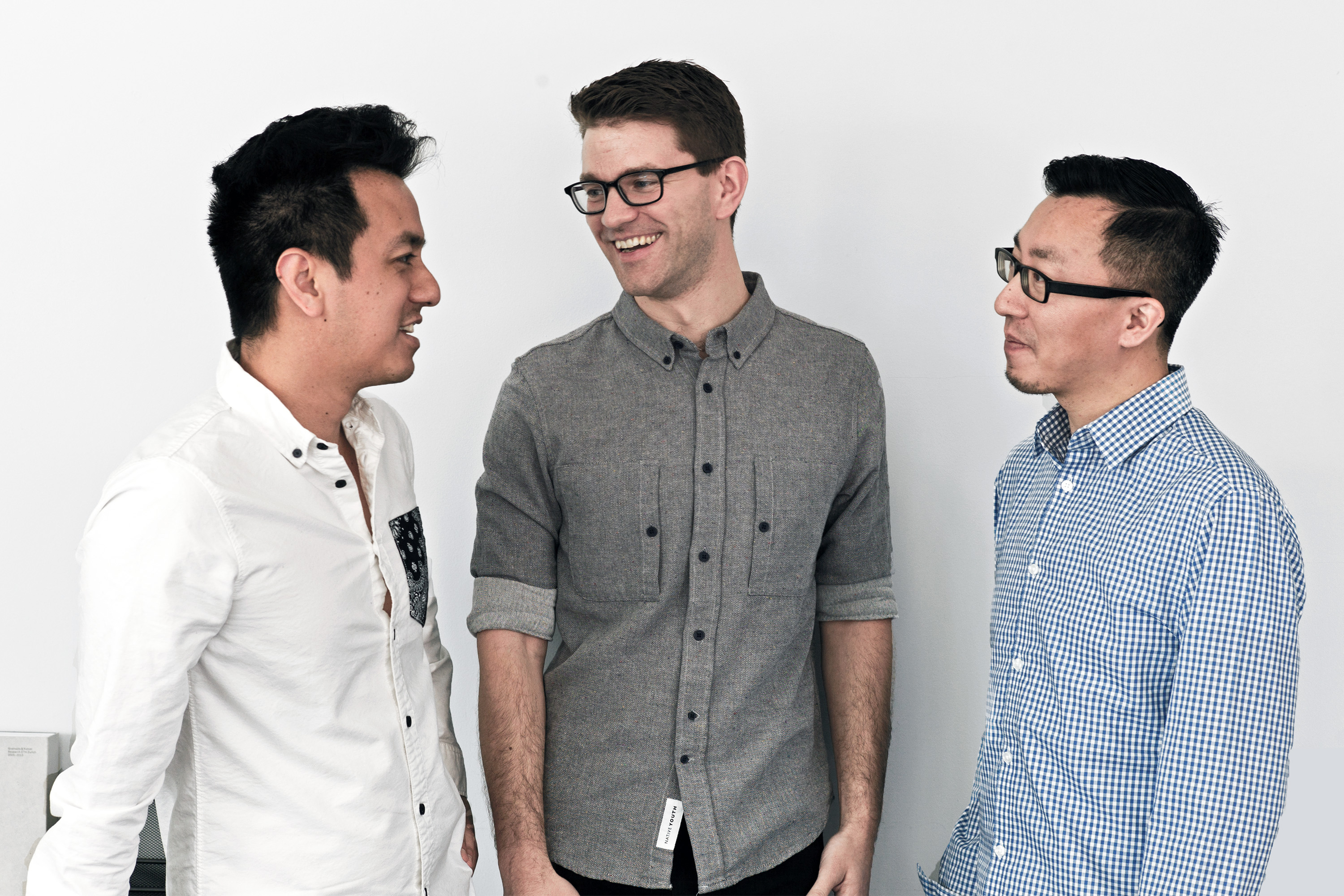
Monograph’s early work included a website-building platform for architects. A polished portfolio is an understandable place to begin. Architecture firms need to show the world what they make. But the founders also encountered questions about what happened behind that public presentation: hours, fees and whether a project was going according to plan.
The company moved toward time tracking and practice management. The path from the website to the timesheet has a certain comic honesty. The website displays the finished building. The timesheet asks what it took to get there. One is more likely to win applause; the other may explain whether the firm can afford the next commission.
The practice-management company launched in 2019. Its founding idea was grounded in work the team understood. There was no need to invent an exotic problem when the ordinary business of delivering architecture supplied enough.
Putting a price on a drawing hour
Time tracking can sound like a bureaucratic interruption to creative work. Yuen’s argument is that time helps a firm understand its work while it is still doing it. Without that view, the first clear account of a project may arrive when the opportunity to adjust has gone.
This concern also appears in his conversations about economic uncertainty, staffing and client relationships. A firm’s plans depend on the work coming in, the people available to deliver it and the fees attached to it. Those are practical conditions for design. Ignoring them does not make the work more creative; it makes the consequences harder to anticipate.
- 01Record the timeWhat did the work take?
- 02See the budgetHow does it compare?
- 03Adjust the planWhat needs to change?
By April 2023, Monograph had more than 800 customers, mostly architecture firms with fewer than 50 employees. That detail matters. Smaller practices have to perform the administrative work of a business alongside their design work, with fewer people available to divide the responsibilities.
Yuen has also worked on making business comparisons accessible through industry reports. In the 2025 architecture and engineering benchmark report, he introduced questions about pay, fees and performance. The invitation was to see how a firm compared with others, rather than make decisions with little sense of the surrounding market.
He made a related point in a 2023 discussion with practice strategist Marjanne Pearson: architects and engineers need context to design, and businesses need context too. A site cannot be understood by looking only at the drawing on the desk. A practice cannot be understood by looking only at its latest project.
There is an architectural habit in that reasoning. Before changing something, understand the conditions around it. The object of attention has expanded from the building to the firm that produces it.
The calendar was part of the design
Yuen’s interest in operations extended to his own company. In a 2020 essay, he described Monograph’s four-day workweek: 32 hours, with new employees arranging their days off with the team. A day off in the middle of the week acquired the pleasing name “mid-weekend.” Wednesday, apparently, could negotiate.
He explained the policy in terms of output. If the necessary work could be completed in four days, he questioned the reason for demanding another eight hours. The founders had considered the working culture when they hired their first employee. The schedule was a choice made early in building the business.
For someone whose earlier professional experience involved nights and weekends, the subject has an obvious resonance. A timesheet can expose how work consumes a fee. A calendar can expose how a company expects work to consume the week. Both deserve a deliberate decision.
Building the company had its own difficult stretches. In a later public recollection, Yuen disclosed that he had spent a period sleeping in the office while raising Monograph’s first round. He had been homeless during that period and had not told many of the seed investors at the time.
He has also described speaking to hundreds of investors in 2019 and hearing repeated refusals. The company raised $1.9 million in its seed round. Those accounts give the familiar phrase “raising money” some texture: conversations, rejection, persistence and living arrangements that did not belong in the pitch deck.
A company continues. A founder changes jobs.
On August 27, 2026, Yuen announced that Monograph had been acquired by Total Synergy. His own time as CEO, he said, had ended in March. The announcement looked back to a whiteboard in the founders’ small San Francisco office and thanked the people who had built the company with him.
His public mentor biography now describes him as an advisor and investor in early-stage companies. It credits Monograph with serving more than 15,000 architects and raising $50 million. Those figures belong to the company’s development; the next part of his work involves other people building theirs.
It is a fitting change of perspective for a career formed through several kinds of making. He has worked inside architecture firms, assembled design resources, joined an agency and helped build a software business. Each move brought him into contact with a different way of organizing work.
The recurring concern is easy to recognize. People need enough information to make useful decisions before a deadline or a budget makes the decision for them. Yuen once learned that lesson through a job he lost. He later spent years trying to put the missing information within reach of the people doing the work.
An architectural drawing makes a proposed building visible. Monograph grew around the less photogenic task of making a practice’s operations visible. For Yuen, that became another thing worth designing.
Continue the conversation
Follow Robert’s work, read his interviews or hear him explain the decisions in his own words.
- Robert Yuen’s website ↗
- Robert on LinkedIn ↗ · Twitter / X ↗
- Monograph ↗
- The Designer Founders interview ↗
- The Second Studio: a long conversation about practice ↗
- Watch: TRXL, “Surprises Are Not Good” ↗
- Watch: the Understory founder interview ↗
- Taking the guesswork out of the architecture business ↗
- Robert’s Elbow Grease mentor profile ↗