ai-robotics
(7)
The 10-Minute Robot Changeover: Southie Autonomy Wants the Line Lead to Run the Machines
Factories do not only need smarter robots. They need robots that can survive Tuesday afternoon - when the SKU changes, the labor roster thins, and nobody has time to call an integrator.

The Lab That Tried to Replace the Web Became a 750-Team Operating System
Protocol Labs started by giving data an address that could survive a broken link. A decade later, it is testing a larger idea: whether an open network can move research from strange prototype to useful company faster than a conventional lab can.

Ati Motors
Ati Motors is an industrial robotics company building autonomous mobile robots (AMRs) that move material inside and around factories. Its Sherpa family of self-driving robots uses 3D lidar, high-precision mapping and AI - the same principles behind self-driving cars - to tug, lift and transport loads from about 500 kg to 4,600 kg without the magnetic tape or fixed guide-paths of older AGVs. Founded in Bengaluru in 2017 and now dual-headquartered with a North American base near Detroit, Ati has deployed robots at 50-70+ manufacturing plants worldwide - including Fortune 500 names such as Hyundai, Bosch, Forvia, Daimler and Airbus - logging over 500,000 autonomous kilometers. The company raised a $20M Series B in early 2025 to expand across North America and APAC.
Tacta Systems, Inc.
Tacta Systems is a Palo Alto robotics startup building 'Dextrous Intelligence' - a smart nervous system that combines proprietary software, hardware and AI to give robots human-level tactile skills and spatial awareness. Founded by serial hard-tech entrepreneur Andreas Bibl (whose previous company LuxVue was acquired by Apple), Tacta aims to let robots sense, adapt and manipulate the physical world with human-like precision and speed, automating factory work and grueling physical labor. The company emerged in 2025 with $75 million in seed and Series A funding.
Proception
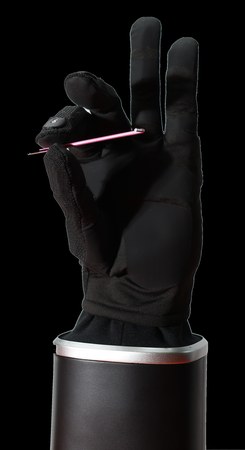
Proception is a Palo Alto and Mountain View robotics company building the dexterous robotic hand that humanoids are missing. Its flagship ProHand 1.0 packs 22 degrees of freedom, tendon-driven fingers and skin-like tactile sensors into a hand designed with input from surgeons - close enough to a human hand that robots can learn directly from human demonstration. A companion sensor glove, ProGlove, captures real human manipulation data at scale to train those movements. Founded in 2024 by former Tesla Optimus engineers Jay Li and Jack Xu, the company raised an $11M seed led by First Round Capital and is shipping its first hands to research labs and robotics companies.
ANSCER Robotics
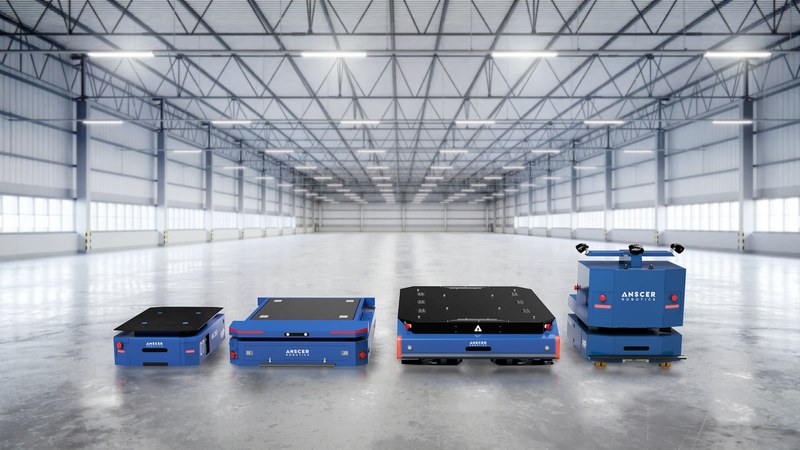
ANSCER Robotics is a Bengaluru-based industrial automation company that builds hybrid autonomous mobile robots (AMRs) blending the smart navigation of AMRs with the heavy-lift precision of automated guided vehicles. Its robots and fleet-management software move materials inside factories, warehouses and dock areas, sold partly on a Robots-as-a-Service model. After a $5.4M Series A in 2026 led by IAN Alpha Fund, the company is expanding from India and Southeast Asia into North America.
Chef Robotics
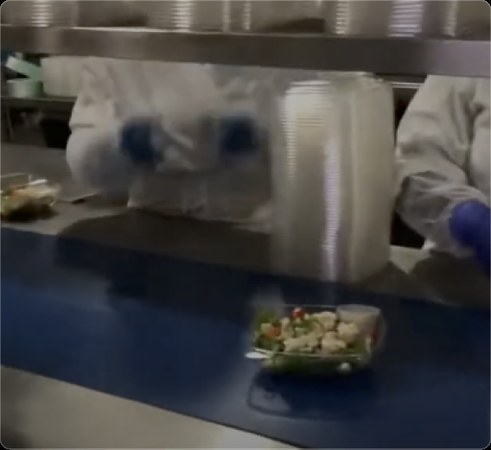
Chef Robotics builds AI-powered robotic arms that assemble meals in food production plants. Its ChefOS platform powers Robotics-as-a-Service deployments at customers like Amy's Kitchen, Sunbasket, Chef Bombay, and Cafe Spice, having helped produce 70+ million servings across North America.