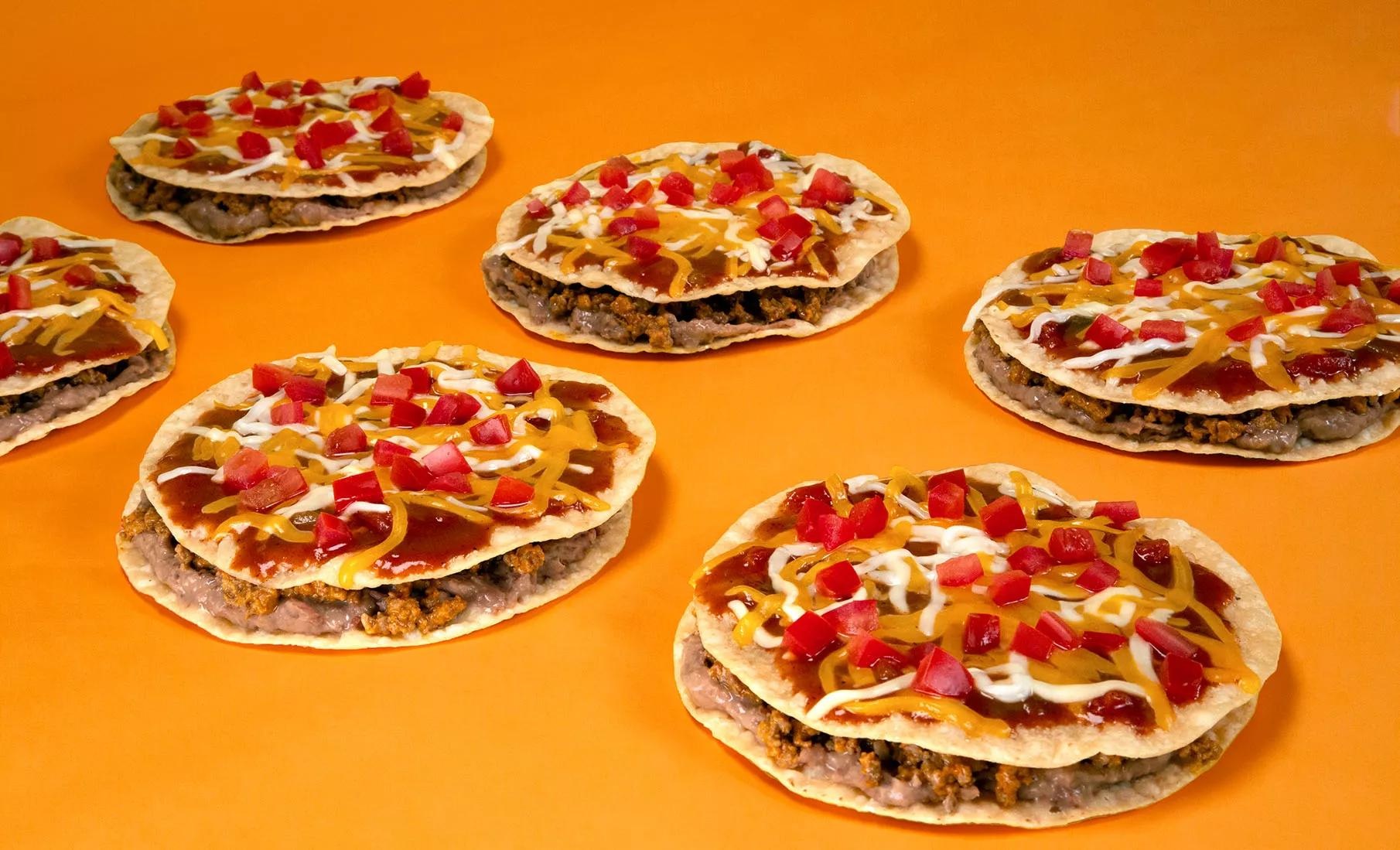
In 2020, Taco Bell removed the Mexican Pizza from its menu. On a restaurant planning sheet, this was a simplification. In the life of a customer who had ordered the same thing for years, it could feel rather more personal. Two crispy tortillas, beans, sauce and cheese had acquired something no ingredient supplier could deliver: a place in someone’s routine.
- Taco Bell sells customizable Mexican-inspired fast food, with frequent reasons to try another order.
- Its advantage joins familiar formats, fan participation and a largely franchised restaurant network.
- The Mexican Pizza comeback exposed a constraint: attention can travel faster than ingredients.
The pizza that would not stay gone
Krish Jagirdar, who organized a petition for its return, described Taco Bell as “a bridge to belonging in American culture.” For children in vegetarian immigrant households, he explained, the restaurant offered access to the fun of American fast food. Remove the beef from a Mexican Pizza and the order could fit into that experience. Its disappearance disturbed a memory as well as a meal.
By April 2022, Taco Bell cited more than 200,000 petition signatures. Doja Cat helped announce the return. The company also worked on operations and ingredient sourcing. This matters: listening to customers still required someone to make the product practical to serve. The advertised starting price was $4.49 at participating American restaurants, with local variation.
The May comeback promptly ran into shortages. Desire had returned faster than supply. Mexican Pizza became a permanent menu item again on September 15. The sequence offers a less tidy lesson than a triumphant marketing case study: customers can change your decision, but enthusiasm does not tell the kitchen how much to order.
“a bridge to belonging in American culture”Krish Jagirdar · Mexican Pizza petition organizer
Familiar ingredients, unfamiliar shapes
Glen Bell opened the first Taco Bell in Downey, California, in 1962. The company’s own history credits inspiration from his neighbors at Mitla Cafe. Franchising followed in 1964. By 1967, there were 100 restaurants. The original insight was to make a Mexican-inspired meal legible within the growing American fast-food system: recognizable, repeatable and convenient.
Today, tacos and burritos sit beside quesadillas, nachos, drinks and specialties such as the Crunchwrap Supreme. There is a pleasingly geometric quality to the menu. Wrap it, fold it, add crunch, put the cheese somewhere unexpected. Doritos Locos Tacos makes a snack brand into the shell itself. Recognition gives the customer a starting point; a different texture supplies a reason to order again.
This places Taco Bell between several alternatives. Del Taco competes within Mexican-inspired quick service. Chipotle competes for a customizable meal. Burger chains compete for the same hurried, price-conscious customer. Taco Bell’s particular territory is the playful combination, supported by drive-thrus, pickup, delivery and an app. For the diner, the problem solved is ordinary and useful: get something quick that can still feel like your order.
familiar format
or texture
reason to try
The customer behind the customer
There is another customer in this arrangement: the franchisee. At the end of 2025, roughly 93% of Taco Bell restaurants were franchised. Operators supply much of the capital and carry the daily work of staffing, preparation and service. The brand supplies the system, menu development and shared marketing, while collecting franchise payments tied to sales.
The scale can confuse a casual reader. Taco Bell’s 2025 system sales were $18.361 billion, including franchise restaurants. Reported division revenue was $3.095 billion, including advertising and service contributions. Those figures describe different flows of money. A customer’s purchase at a franchised restaurant does not all become Taco Bell corporate revenue.
Opening a restaurant is substantial work, too. Taco Bell’s 2025 franchise disclosure estimated $1.86 million to $4.31 million for a new traditional unit. This was an estimated startup range, rather than an earnings promise. A celebrity can help sell tomorrow’s taco; rent, labor and equipment determine whether the operator wants to keep selling it.
Lunch gets a trailer
Cantina Chicken illustrates the next move. Launched nationally in March 2024, the menu put slow-roasted chicken into tacos, a burrito, a quesadilla and a bowl, with ingredients including purple cabbage and Avocado Verde Salsa. Taco Bell explicitly framed the launch around daytime meals. The expertise lies in adding another occasion while keeping enough familiar formats to make the purchase easy.
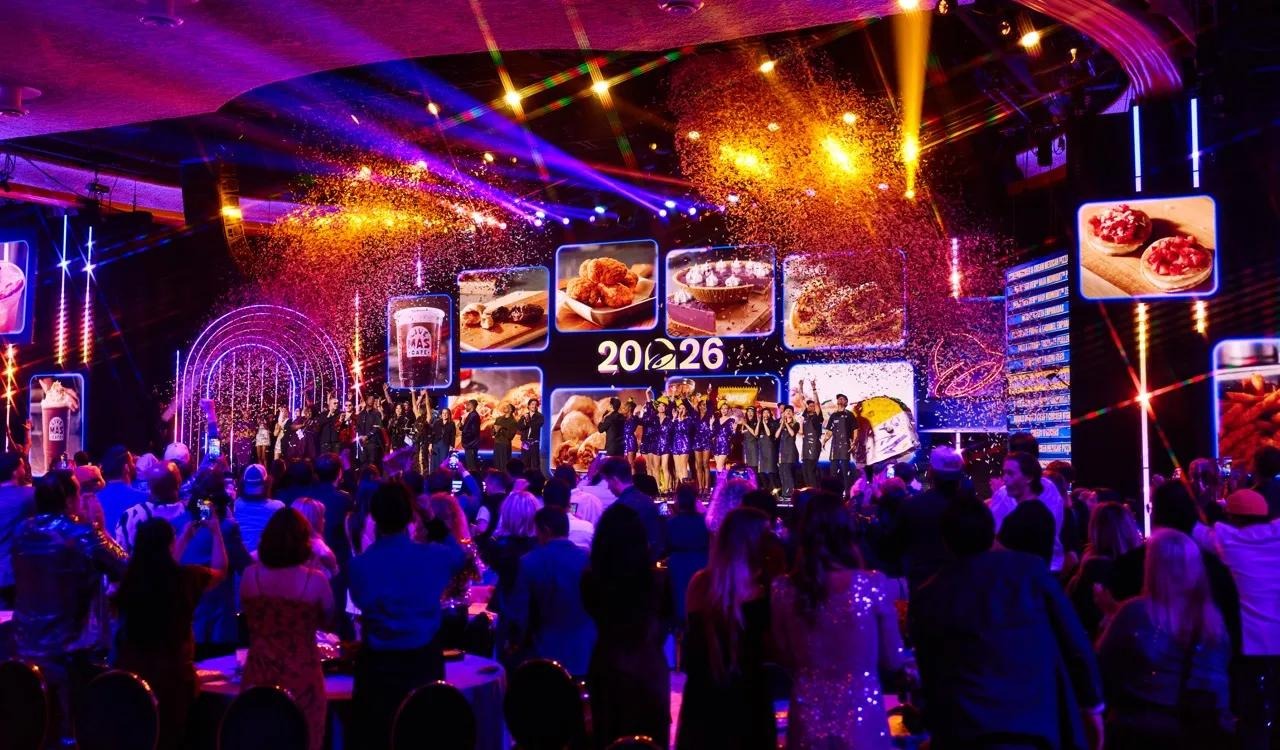
Under Sean Tresvant, CEO since January 2024, the public presentation has grown more theatrical. In March 2026, Live Más LIVE previewed more than 20 menu innovations in a Hollywood Palladium special streaming on Peacock. Vince Staples hosted. Taco Bell had given its product calendar a stage, a cast and a trailer.
The October 2026 Duolingo partnership carried the same habit into sauce packets, with Duo Habanero and language-themed promotions. The rewards app connects such events to orders, early access and limited offers. Meanwhile, the company’s stated principles celebrate creativity and inclusivity, and its foundation supports education. Food, participation and belonging recur across the company’s public identity.
For customers, that participation has practical limits worth understanding. Prices, restaurant hours and promotional availability vary. A vegetarian customization also shares a kitchen with meat preparation. The useful starting point is the local menu: choose a restaurant, inspect the available order, adjust ingredients and compare pickup with delivery. The brand’s inventions may be national news; the meal is always made somewhere specific.
For a business watching from outside food service, this is a helpful distinction. A repeatable format lets customers recognize what they liked last time. A controlled change gives them something new to discuss. The customer can enjoy the surprise without having to learn the entire product again.
Keep the promise at the window
There is a tension here that every growing restaurant chain recognizes. Each new ingredient gives the marketing team another possibility, while asking the kitchen to manage another detail. Taco Bell’s challenge is to keep that exchange worthwhile: enough novelty for the person ordering, enough consistency for the person assembling the meal, and a price that makes another visit seem sensible.
The useful thing to copy is the discipline underneath the entertainment. Keep a recognizable product. Notice what customers defend. Offer a concrete reason to return. Then check whether the restaurant can deliver it. This approach needs repeat demand, workable margins and enough operational consistency to survive the promotion.
It becomes much less persuasive when the product is unavailable, the order takes too long, or the advertised value disappears at checkout. Mexican Pizza supplied that reminder. People had already decided they wanted it. Taco Bell’s next job was to make sure a restaurant could put one in their hands.