Chris Newcomb entered the restaurant business through a side door, wearing none of the usual mythology. He was an out-of-work college student in Oxford, Mississippi, and his father, Don, was a dentist with an entrepreneurial itch. In 1989, Don decided to open a small deli in a converted gas station. Chris was informed that he would be part of it. No restaurant pedigree. No five-year plan. Just a family project called Checquers and the sudden education supplied by a lunch rush.
The name would not last. As the concept grew, the Newcombs wanted distance from the Checkers drive-through chain, so Checquers became McAlister’s Gourmet Deli, named for Chris’s great-grandparents. The business expanded from Oxford into Hattiesburg, Tupelo, and Jackson. Chris worked across operations, design, purchasing, and equipment. Those are unglamorous nouns, which is precisely why they matter. Restaurants may be sold with appetite, but they survive through refrigerator placement, prep time, clean sightlines, reliable suppliers, and a hundred decisions customers never notice unless one goes wrong.
First, learn the people business
Four McAlister’s locations led to franchising, and franchising altered Newcomb’s idea of the job. A restaurant founder can obsess over recipes and branding, but a growing chain is an agreement among people who must keep believing in the system. Employees need work they can take pride in. Franchisees need an operation that behaves as promised. Guests need lunch to be good today, not merely impressive in the investor presentation.
“We’re not just in the food business - we’re in the people business.”Chris Newcomb
The family sold McAlister’s in 1999. Newcomb then did something useful for a future franchisor: he became a franchisee. Beginning in 2001, he operated four Moe’s Southwest Grill locations and served on the brand’s advisory board. Headquarters strategy looks quite different when it arrives as a procedure that must be executed by a real crew in a real store at 12:15 p.m. That chapter gave him the view from the receiving end of the playbook.
By 2004, Newcomb, his father, and longtime collaborator Debra Bryson were ready to start again. Their second concept would take the lessons of McAlister’s and submit them to a practical question: if they could do it over, what would they change? Newk’s Express Café opened in Oxford that year. The name came from “Newk,” a nickname made from Newcomb. A family name on the door is charming. It is also a form of quality control.
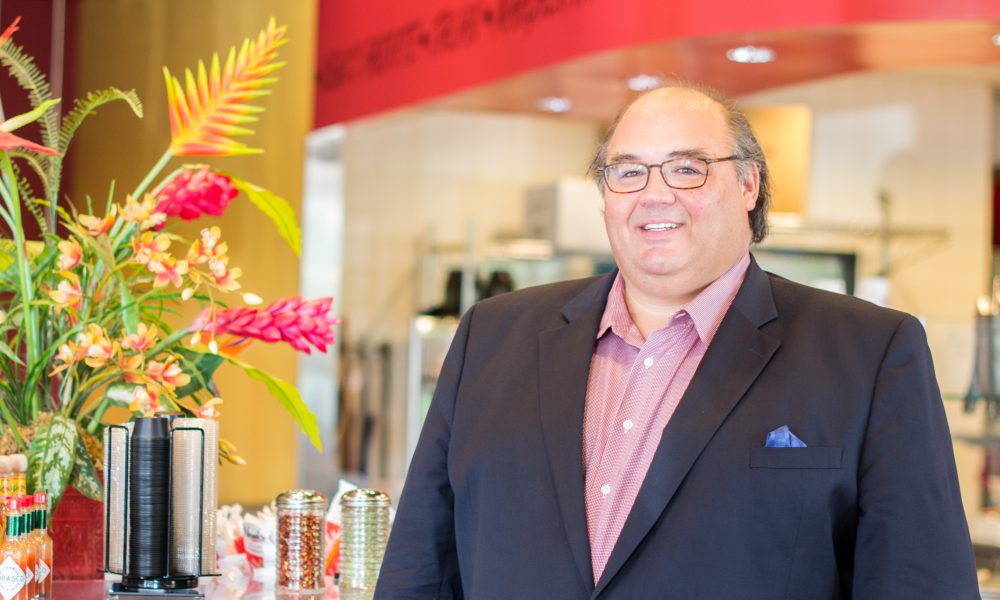
A wall comes down
The most revealing choice at Newk’s was not a sandwich. It was a wall, or rather the absence of one. Newcomb wanted the kitchen exposed. The idea worked in several directions at once. Guests could see food being prepared. Managers could observe the whole operation from the frontline. Employees were not divided into rival geographical camps called front and back. The kitchen became what Newcomb called a stage, with the preparation included in the experience.
The open-kitchen loop
Visibility turns a floor plan into a management tool
This was transparency before the word became a corporate ornament. It also imposed discipline. An open kitchen cannot easily conceal confusion. The same design that reassures a guest keeps an operator honest. Newk’s paired that visibility with preparation choices that demanded actual work: meats grilled or roasted in-house, fruits and vegetables chopped daily, and dressings made from scratch. There were no microwaves or fryers in the format Newcomb described. The promise of freshness had machinery behind it.
Yet complexity is the tax collector of restaurant ambition. In 2010, Newcomb said the menu had roughly 65 items, with many sauces, cheeses, and combinations. His answer was not simply to add. The kitchen could use ingredients already on hand in new arrangements. Culinary range would come through recombination rather than an endless parade of one-purpose inventory. This is menu design as systems thinking: let novelty happen at the plate without allowing chaos to colonize the walk-in.
Curiosity with an apron on
Newcomb’s interest in food did not harden into expertise and stop moving. He has described learning from cookbooks, trend-watching, restaurant visits, cooking schools, and the people around him. His travels included a class connected with chef Thomas Keller at Per Se, time at Blackberry Farm, study at the Culinary Institute of America in Napa Valley, and a pastry class in Paris with his family. His stated culinary influences range from his parents to Emeril Lagasse and Rick Bayless. That is a wide table, as it should be.
“I love to explore what other people are cooking.”Chris Newcomb
The word “explore” is useful. It suggests a founder who treats taste as continuing research, not divine inspiration. Newcomb’s method for a new item was grounded: read recipes, study emerging trends, enter the kitchen, test an idea, and involve the team. The Newk’s Club, for example, took familiar components and adjusted their arrangement with two cheeses and house-made honey mustard. Innovation here is not spectacle. It is the small, commercial art of making a recognizable lunch feel specific.
Collaboration also kept the founder from becoming the lonely oracle of the menu. Newcomb credited the people around him with shaping new dishes and said he wanted their feedback. That instinct connects culinary development to his earlier lesson about the people business. A cook who is invited into the idea has more than an instruction to follow; a manager who understands the purpose can protect it when the restaurant gets busy. Even the customer enters the loop through the visible kitchen and the verdict of a return visit. The useful trick is not consensus on every garnish. It is shortening the distance between inspiration, execution, and response. Good restaurant ideas must travel that route quickly, then do it again hundreds of times without losing their flavor or exhausting the crew.
His personal preferences offer a little relief from the boardroom version of restaurant leadership. In a 2015 interview, Newcomb picked the Newk’s Q with added coleslaw as his favorite order. Away from his own menu, he chose a steakhouse with friends. He spoke of traveling with family and duck hunting. The founder who studied pastry in Paris was also happy with red beans and rice. Curiosity, in his telling, did not require fussiness.
Growth, capital, and the handoff
Newk’s grew quickly enough that opportunity outran its early capital. The company partnered with Sentinel Capital Partners in 2014, a move that supported expansion. By 2019, the chain was reported at 122 restaurants in 15 states. Scale supplied reach and also raised the central difficulty of franchising: a brand must repeat without becoming mechanical, and innovate without making each store invent dinner from scratch.
Growth is not a straight line, and Newk’s later entered a more complicated chapter. Its store count declined from the pre-pandemic peak. FSC Franchise Co., the parent of Beef ‘O’ Brady’s and The Brass Tap, acquired the brand in late 2023. Newcomb moved into the role of strategic adviser and remained a director. A 2025 franchise disclosure document records 95 Newk’s outlets at the end of 2024, with 66 franchised and 29 company-owned.
That handoff is part of the founder’s craft too. Starting attracts more attention, but stewardship after control changes hands may demand a subtler discipline. Newcomb’s title now places him near the long memory of the brand: the reasons behind the open kitchen, the family recipes, the franchisee’s view, and the cultural idea that respect comes before a return visit.
What the second act teaches
The portable lesson in Newcomb’s career is not “start a deli.” It is to treat an operation as a designed human environment. Take down barriers that prevent people from seeing the whole. Keep creativity tethered to what a team can execute. Learn the economics from the other side of the agreement. Make the promise visible. Then keep studying, because yesterday’s good lunch has no legal claim on tomorrow’s appetite.
Newk’s was Newcomb’s chance to return to a familiar category with sharper questions. What had the first company taught him? Where did the work become needlessly complicated? Which wall was literal, and which was cultural? The answers became architecture, recipes, training, and a name personal enough to keep everyone awake.
There is something pleasingly Mississippi about the arc: a dentist opens a deli in an old gas station; the deli becomes a chain; the son sells, learns the franchise business from the store level, and comes home to Oxford to begin again. The whole career turns on a useful kind of appetite. Newcomb kept wanting to know what other people were cooking, how better rooms were run, and what his own team could make next. Lunch, properly examined, became a life’s work.