The first office was a living room. In 1971, Bob Stone started Systems & Methods in the Carrollton, Georgia, home he shared with his wife, Tish. He was teaching business at the University of West Georgia and helping local businesses with accounting and data processing. The work had a useful property: everybody needed it, and few people would mistake it for entertainment.
- SMI combines government payment software with the people who run the operation.
- Its move from food stamps to child support followed a change in how benefits were delivered.
- Prepaid cards, accounting tools and financial education extend the business beyond processing.
Then a local Department of Family and Children Services office brought Stone a management problem. He designed computerized file management to address it. According to SMI’s account, the business eventually reached all 159 Georgia counties, with Stone personally visiting each office. Before there was a national payment business, there was a man going from office to office, learning what needed fixing.
The paper went away. The problem stayed.
SMI began issuing food stamp benefits for Georgia in 1981. Other states followed. But in the late 1990s, the food stamp program’s conversion to electronic benefit transfer changed the business around it. A company organized around one method of delivering public benefits faced an awkward question: what would remain valuable when the method disappeared?
Its answer was child support. In 1999, SMI developed Systems and Methods Automated Remittance Technology, or SMART, and contracted with Missouri and North Carolina for collection and disbursement services. The transferable knowledge was how government money moves, how agencies account for it, and how to serve the people waiting at the other end.

That distinction explains much of the company that exists today. SMI sells an operating capability: technology, payment handling, accounting and customer service fitted to an agency’s requirements. The purchaser is typically a government organization. The person who experiences the result may be a parent checking whether a payment has arrived.
Someone has to open the envelope.
Consider the stretch between receiving a payment and making it available to a family. Mail has to be handled. Information has to be captured. Money has to be posted and reconciled. Records have to be visible to the agency. A question about any of those steps may become a telephone call.
Simplified illustration of SMI’s described services; scope varies by agency.
SMART brings these functions together. SMI describes upfront imaging, integrated scanners, electronic deposits and real-time reporting, alongside call centers and automated telephone service. On its SMART page, it reports processing more than 76 million payments annually at 99.99% accuracy. These are company-reported measures, but they reveal what the business asks customers to value: repeatable execution across a great many transactions.
“We never outsource calls.”SMI, SMART Child Support Solution
That short promise makes the service model unusually tangible. The same SMART page records 51.7 million automated calls and 2.3 million live-agent calls in 2020. Automation and people occupy the same operation. A useful system has to accommodate both the routine inquiry and the question that refuses to fit the menu.
What the government actually buys
There is a price tag attached to this sort of competence. Maryland’s procurement record lists SMI’s original State Disbursement Unit contract at $13,954,831 for five years and three months, beginning in March 2014. The scope included receipts processing, accounting, recoupment and limited customer services. A subsequent two-year renewal option was $5,290,240.
Original SDU agreement · 5 years, 3 months
March 2014-May 2019
Those amounts describe a particular government engagement, with a particular scope and period. They help explain SMI’s business model: agencies contract for technology and the continuing work required to operate it. This is a market in which implementation, reporting and customer service belong in the buying decision alongside the software.
Conduent competes in child support services through its own SDU offering and ExpertPay remittance platform. SMI’s pitch emphasizes agency-specific operations, access to management and continuity of relationships. Buyers still have to examine those claims against their own needs. An organization seeking a simple payment page has a different problem from one procuring an entire disbursement operation.
Family ownership supplies the company’s organizing language. Its leadership page places second- and third-generation Stone family members alongside executives with government and industry experience. The culture page lists charitable donation matching, wellness initiatives and career growth opportunities. These are SMI’s own descriptions of working life. For customers, the practical expression is its promise of consistent contacts and clear routes for escalating problems.
The card is where the family meets the system.
SMI’s smiONE Visa prepaid card puts the receiving side of that operation in someone’s wallet. Its support site says an existing bank account is unnecessary. Users can access funds through a card and app; fees and features depend on the applicable program agreement. The Bancorp Bank, N.A. issues the cards.
In 2021, SMI acquired the PayPerks platform, brand and assets, announcing plans to integrate financial education and rewards into smiONE. The idea connects two different jobs: delivering money and helping someone understand the tools used to manage it. Education becomes part of the product rather than a separate pamphlet.
A new app, an old relationship
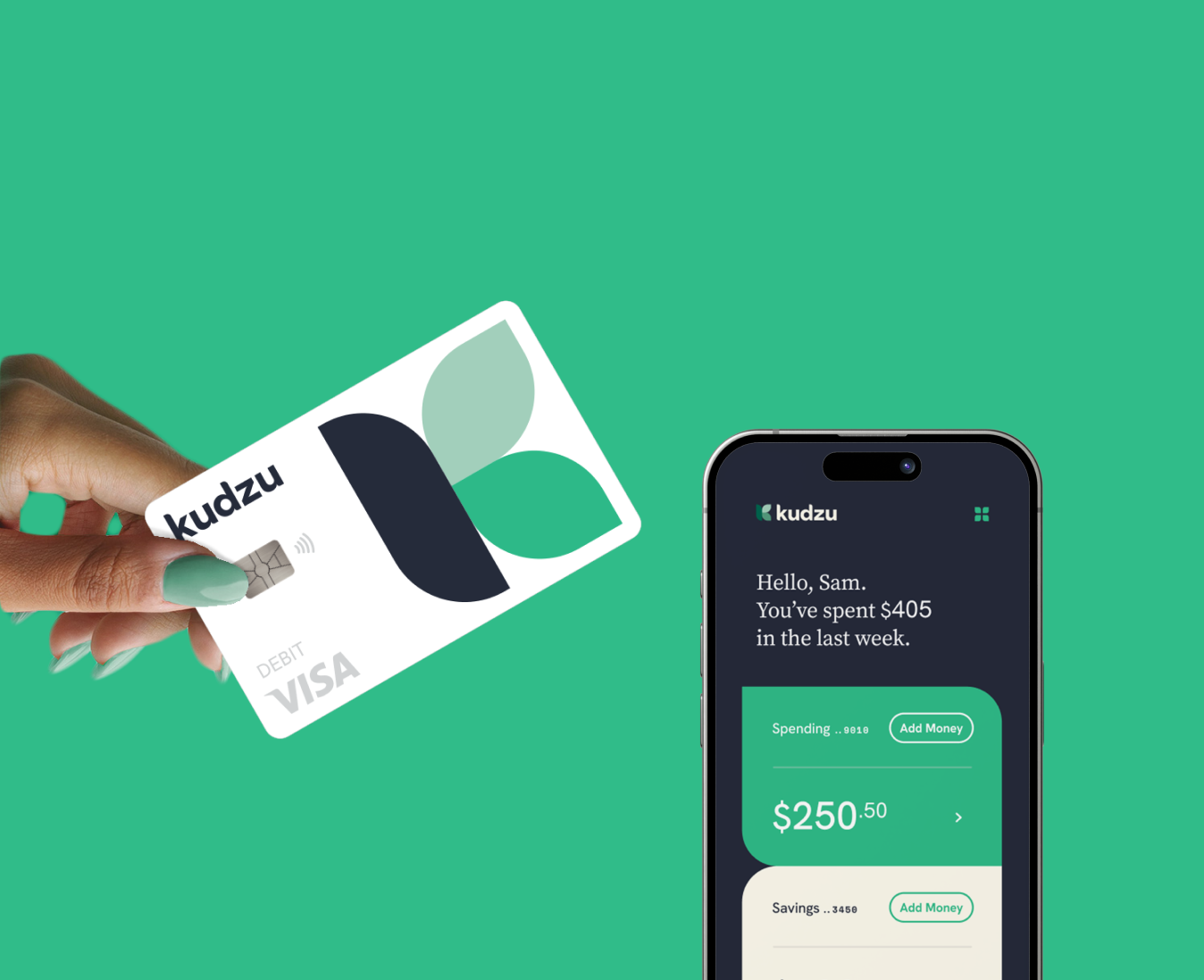
Kudzu, launched in 2023, extends that direction with an online banking app, savings tools and financial education. In June 2024, Kudzu and the University of West Georgia announced a partnership making it a recommended personal finance solution for students. The university where Stone taught had become a route to a new audience. Banking services are provided by The Bancorp Bank, N.A.
Meanwhile, SMILE, SMI’s government accounting system, traces its agency relationship to 1978. The company still has work to do in general ledgers, payroll and reporting. In January 2025, it added former federal child support commissioner Tanguler Gray as executive vice president of operations, bringing public-sector experience into the operating team.
SMILE also shows how much agency software sits outside the public’s view. Employees and vendors can review payment and tax information through a self-service portal. Employees can manage payroll, benefits, travel and leave. Behind those screens are budgeting, asset management and interfaces to other systems. The expertise is in connecting an agency’s financial chores so that people spend less time moving information by hand.
The useful lesson is to know which part of your expertise survives a change in technology. SMI carried its knowledge of agencies and payment operations from paper benefits into child support, cards and consumer finance. Copying that approach takes patient work inside the customer’s process. The living-room business grew by learning where the paperwork got stuck. Its newer products still have to get the money through.