The poles were there. The wire wasn’t. Roy Richards Sr. had a construction business that erected electrical poles, and a grandmother whose house still lacked electric light. According to Southwire’s account, a manufacturer quoted him a three-year wait for wire. His grandmother was 85. The supplier’s timetable made sense to the supplier. To Richards, it was an invitation to enter the business.
- Southwire sells wire, the equipment to make it and tools to install it.
- Its customers include utilities, contractors, distributors and equipment manufacturers.
- Its recurring opportunity: remove the delays around delivering electricity.
On March 23, 1950, Southwire began with twelve employees and three used machines. That origin contains the question that makes the company interesting today: when does an irritating supply problem become a reason to build something yourself? Richards had already figured out how to carry electricity across the countryside. What changed his calculation was discovering that the material connecting those poles could become the limiting factor.
01 / The factory is a product, too
Southwire’s business now stretches across several stages of electrical infrastructure. It makes building wire, overhead conductors, underground utility cable and industrial cable. Its catalog also includes pulling equipment, testers, fittings, temporary lighting and power-management products. A contractor can buy the conductor and equipment for handling it. A utility can buy cable and services for the network it already operates.
But look upstream. In 1963, Southwire introduced its continuous rod system, SCR. Rather than keeping its manufacturing expertise entirely inside its plants, it began selling systems to other producers. Southwire reports that about half the world’s copper rod is made using its technology, and that it has sold more than 100 copper systems worldwide. Those are claims about a production process, not Southwire’s share of finished wire sales.
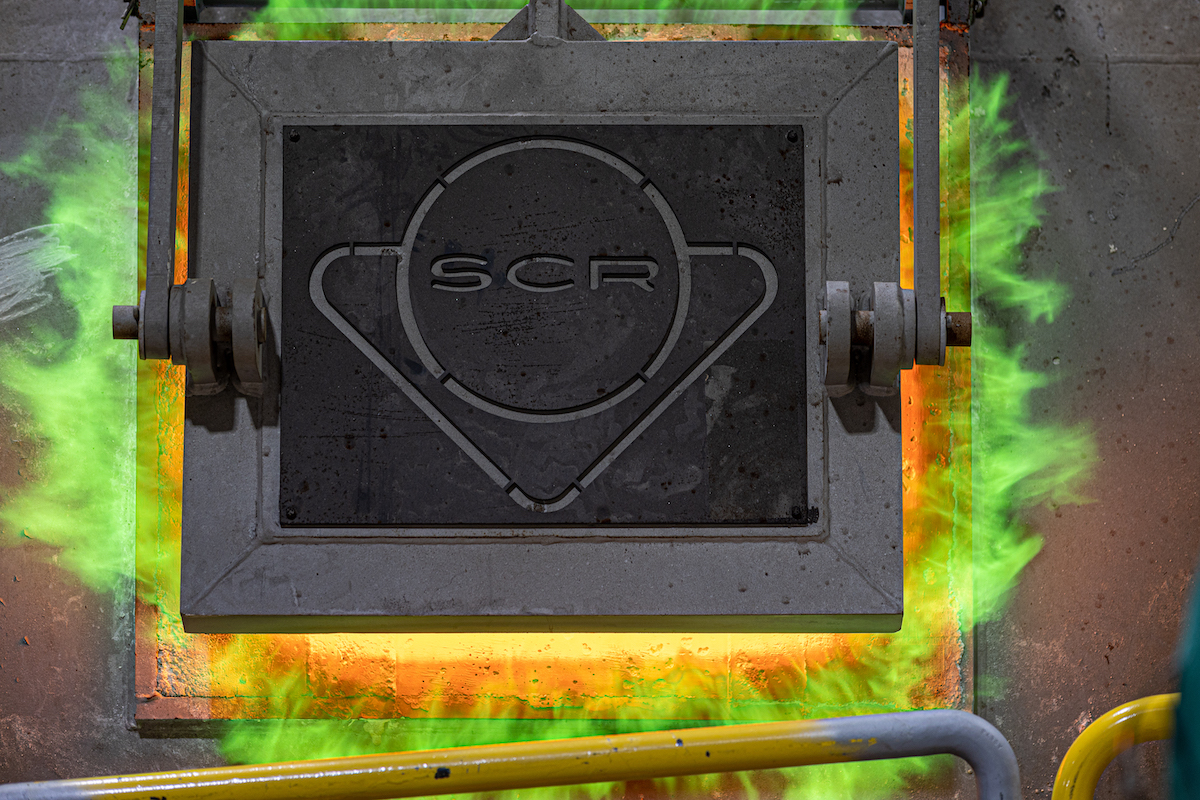
The system includes casting equipment, integrated engineering, training and operational know-how. Primetals Technologies supplies the rolling, shearing and coiling equipment. Here is a useful distinction: Southwire sells its output, but also sells the ability to produce an input. A customer buying a rod mill needs a working production process, including the knowledge required to get it running.
02 / Follow the electrician’s hands
At the other end of the chain, consider the job of pulling cable through conduit. A conductor has electrical specifications. Installing it also involves handling packages, setting up reels and managing friction. Southwire’s NoLUBE SIMpull THHN and XHHW-2 cables are designed to be pulled without separately applied pulling lubricant. Its CoilPAK packages address the handling of bulky spools.
That is a concrete commercial argument: a product’s purchase price is only one part of the cost of using it. Contractors can assess Southwire against labor, handling and installation requirements, alongside cable specifications. CableTechSupport adds engineering assistance. The promise becomes useful when it removes an actual step on an actual job; compatibility, installation instructions and the project’s requirements still decide the purchase.
Southwire earns money from physical products, manufacturing systems and services. Its pricing page directs customers toward project-specific terms and publishes separate schedules for product families. There is no single admission price. An electrician’s purchase and a utility’s cable order belong to different budgets, and metal prices are part of the commercial backdrop.
03 / Sometimes the sale saves the old wire
In 2022, Southwire bought Novinium, a cable rejuvenation specialist. The service addresses aging underground insulation: water intrusion can weaken its ability to withstand electrical stress. Teams inject a silicone-based fluid that moves into the insulation and changes its chemistry. The point is to extend the cable’s working life without excavating and replacing the whole run.
Southwire’s current service page puts the price at one-third or less of replacement cost. Treat that as the company’s service claim, not a universal project quote. For a utility, the attraction includes less digging and disruption. The approach addresses particular insulation problems; it should not be read as a cure for every damaged cable or a substitute for engineering assessment.
“build it big, and grow into it”Roy Richards Sr.’s philosophy, recalled by Southwire executive Will Berry in 2023
04 / New machinery, familiar trouble
Industrial ambition gets expensive. In September 2022, Southwire described a modernization effort exceeding $1 billion over multiple years, covering newer equipment, systems and technology. Its new Carrollton copper rod plant cast its first bar in January 2023. Yet the company’s 2024 sustainability report describes unpredictable downtime at the facility. New equipment had not eliminated the problem of keeping production steady.
The rod plant team worked with Southwire’s AI and business intelligence team to pilot Palantir’s platform. The report says the pilot helped anticipate irregularities and improve machine availability, followed by a launch in late 2024. The practical lesson is narrower than “buy AI”: start with an operational problem, test whether the tool helps operators respond, and expand after the pilot produces useful evidence.
Announced corporate investment in the expansion
05 / The other production line
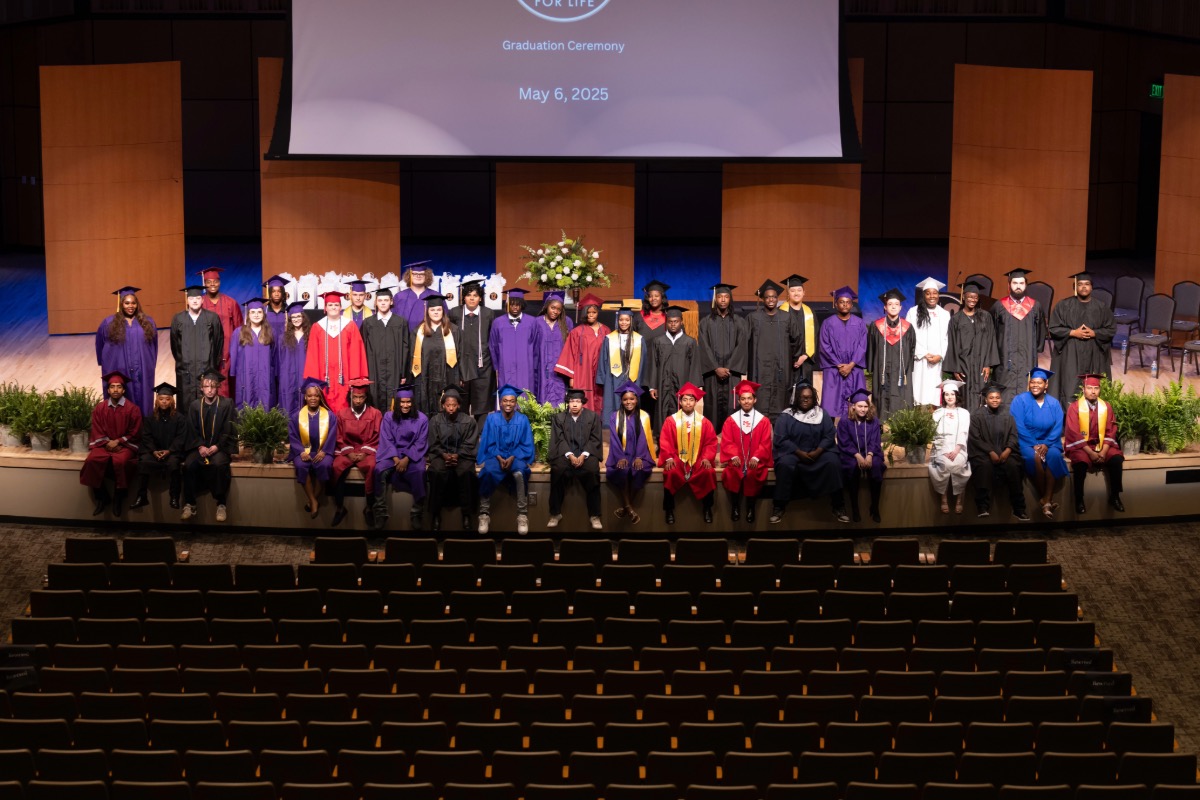
A factory also needs people who can stay and learn. Southwire’s 12 for Life program, established in 2007 with local school systems, combines classroom instruction, work experience and mentoring. By May 2025, the company reported more than 2,500 graduates. That month, 45 students completed the Carrollton program. The stated destination is a diploma and a route into employment, further education or military service.
Family ownership gives this story continuity, though it does not remove competition. Prysmian, including Encore Wire, offers alternatives and is investing in American capacity too. Southwire’s case rests on how well its manufacturing, installation products and services fit the customer’s problem. Breadth earns its keep only when it improves the work.
The spending continues. Southwire broke ground on its Starkville expansion on October 1, 2026: more than $256 million, roughly 380,000 additional square feet and approximately 130 expected jobs. Full capacity is anticipated in 2028. That timetable is the useful closing detail. Electrification requires someone to order equipment, train people and wait for a factory to work. Richards once refused a three-year queue. His company now builds capacity years ahead.
Keep the current flowing
Explore Southwire’s products, engineering help and latest company news.