Consider the laptop. For one person, it is a box to open. For a software organization with 2,300 remote employees in more than 60 countries, it becomes a chain of decisions: which machine, whose configuration, what shipping route, which customs rules, and who retrieves it when the employee leaves. Sycomp’s case study describes an open-source computing company confronting precisely that problem. Its internal IT team wanted more time for employees. The laptops were consuming the attention.
- Sycomp combines IT engineering with international procurement and delivery.
- Its work spans employee devices, data centers, cloud storage and security.
- The useful lesson: measure the handoffs that a product specification leaves out.
That is a revealing introduction to a business usually described with a long list of technical nouns. Cloud. Networking. Storage. Security. Sycomp operates across all of them. But its distinctive proposition becomes clearer when you look at the gaps between them. A device must reach a person. A rack must reach a building. Data must reach a processor. Something has to make the connection work.
01 The warehouse is part of the system
Founded in 1994, Sycomp grew from a regional IT reseller into a global IT services and logistics provider. Founder and CEO Michael Symons came from the United States Marine Corps, according to the company’s ESG report. The business he leads now deals with problems whose vocabulary includes both parallel file systems and import duties.
Inside its integration process, engineers configure systems, rack equipment, cable it, label it and test it before shipment. Logistics specialists handle international documentation and delivery. Doing this preparation before equipment reaches its destination moves some troubleshooting into a controlled environment. The idea is straightforward: solve what you can while the people and parts are still together.
- 01DesignDefine the workload
- 02IntegrateConfigure and test
- 03DeliverClear the border
- 04SupportKeep it working
Gilead Sciences offers a named example. Sycomp dates its relationship with the biopharmaceutical company to 2017, describing work across cloud, infrastructure, networking, security and storage. Gilead needed international sourcing and deployment alongside protection for sensitive operations. Buying those capabilities through one partner offers a way to coordinate decisions that would otherwise fall across separate suppliers.
The physical footprint grew with that proposition. In May 2025, Sycomp announced seven additional country locations and more than 50% greater warehouse capacity in the United States and Asia. The expansion release described investment in eight integration centers. Those facilities are part of the service being sold: places where complicated purchases become deployable systems.
02 The expensive chip that waits
Now move from a shipping box to a graphics processor. In September 2025, Sycomp published an account of work for an unnamed AI research and development organization. The customer wanted evidence that Google Cloud storage could keep its GPUs supplied with data. The purchasing question concerned compute. The engineering question concerned everything feeding it.
Sycomp used IBM Storage Scale, a five-node C3 storage cluster with Hyperdisk Balanced volumes, and a single A3 Ultra compute instance. Its account reported 97% GPU utilization in an MLPerf Storage v1.0 test using the Unet3D dataset. It also reported 23 GiB/s sustained throughput. Read the figures together: the same article listed an initial requirement of at least 24 GiB/s per node.
GPU utilization
Sycomp-reported result
The account reports successful benchmark status, but that does not make every stated target identical to every result. For an infrastructure buyer, the discrepancy is useful. Ask for the workload, configuration and acceptance criteria. Then decide which measurement matters to your application. A utilization percentage on its own cannot answer that question.
A separate project with Google Cloud and IBM reported 1.2 terabytes per second of storage throughput in 2025. That larger number belongs to a different setup. Sycomp’s storage platform also reached Google Cloud Cluster Toolkit, where deployment blueprints help automate provisioning. The practical product is a repeatable way to assemble storage infrastructure around demanding workloads.
03 A bill is part of the architecture
Sycomp’s commercial model spans technology resale, engineering projects, logistics and continuing managed services. Its position is between the manufacturers and cloud platforms that supply components and the enterprise teams responsible for an operating system of people, equipment and applications. Customers can buy help building that environment and help running it afterward.
In January 2026, Sycomp added Cloudability from Apptio, an IBM company, to Intelligent Cloud+. The program covers AWS, Google Cloud and Microsoft Azure. Spending forecasts and Kubernetes cost allocation sit alongside migration planning and governance. Intelligent Observability+ adds visibility into infrastructure health and performance. Flimp, a named customer, described adopting that monitoring after five years with Intelligent Cloud+.
The economic logic is easy to follow. Equipment carries a purchase price; idle equipment carries one too. Delayed deployments consume staff time. Cloud capacity continues generating bills. Evaluating a partner therefore means comparing the full cost of delivery and operation, including internal coordination, against the proposed service scope.
04 Follow the handoffs
“make it easy to do business with customers and partners around the world.”
MIKE SYMONS / CEO
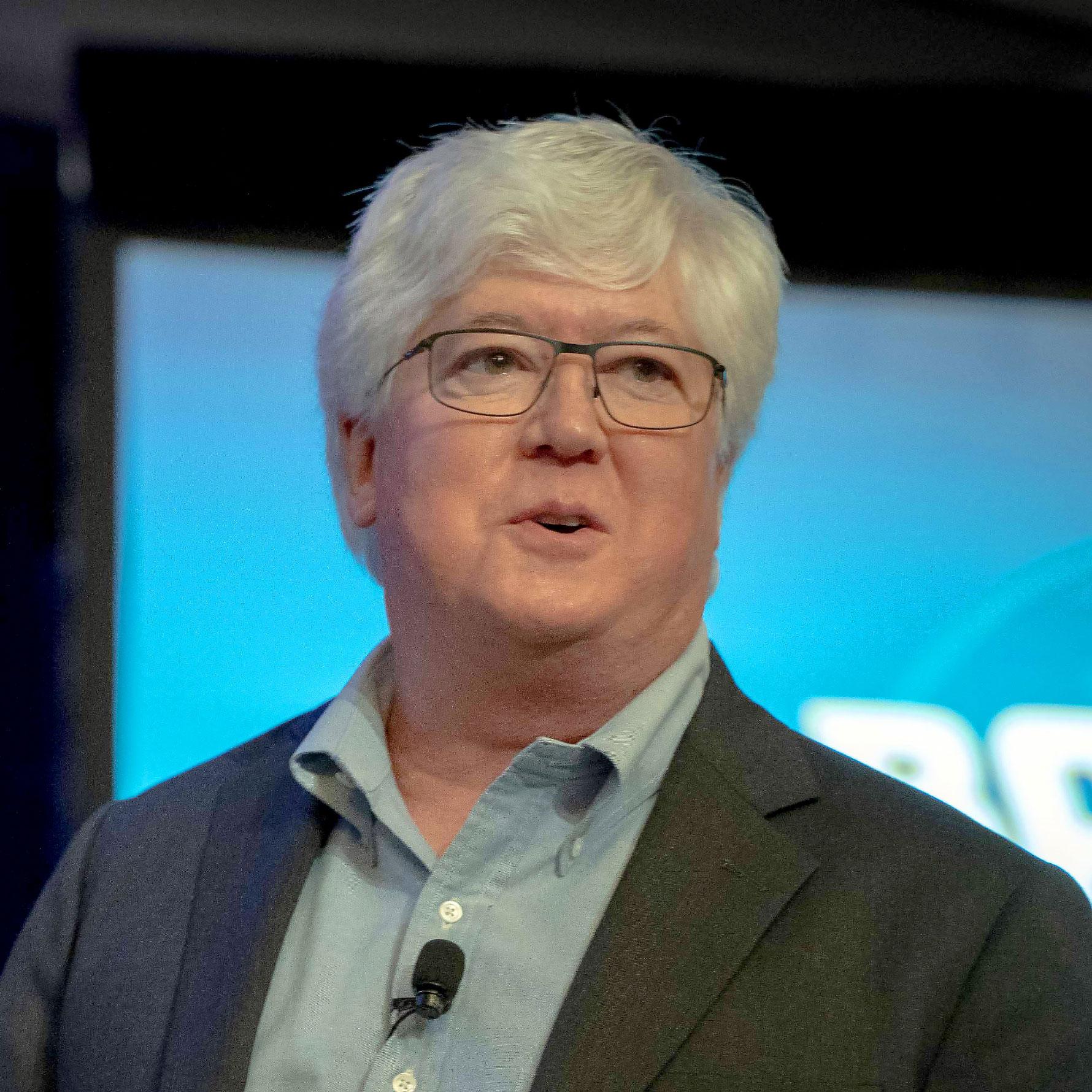
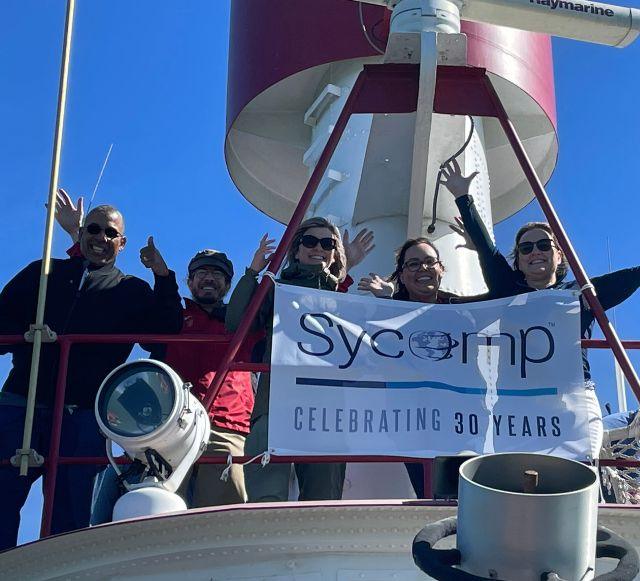
Sycomp’s people page gives CEO Mike Symons a modest-sounding ambition: making business easier across borders. The photographs are less solemn. One shows employees aboard a boat holding a banner celebrating 30 years. Even an infrastructure company occasionally takes the infrastructure out for a sail.
The approach fits organizations with cross-border operations, distributed employees or workloads requiring specialist integration. A simple purchase at one location may offer fewer coordination problems to solve. Likewise, an AI application with different data access patterns needs its own testing. Scale and complexity create the reason to bring in this kind of partner.
The lesson is available even to readers who never hire Sycomp. Trace the route from purchase to useful work. Identify who owns each transition. Test before shipping; benchmark before scaling. The next improvement may sit in the unglamorous space between two things you already bought.