Andy Roddick had a flight to catch and an iPhone he could not find. Swupnil Sahai had a tennis app to pitch. The two problems met in a locker room in Texas, where Sahai had arrived with James Blake and found himself among Roddick, John McEnroe and Jim Courier. For a tennis fan, this was an improbable place to be discussing software. For a software founder, a missing phone was a manageable interruption.
Blake tried calling it. The phone was on silent. Sahai suggested Find My iPhone, which could make the device sound anyway. Roddick recovered his phone. Sahai later joked that the rescue might have helped sell him on the founder. Roddick and Blake became investors in SwingVision. Even a business built around artificial intelligence can benefit from knowing which button to press.
The encounter captures a recurring feature of Sahai’s career: the distance between an impressive technical idea and the small thing somebody needs right now. His ambition was to bring detailed match analysis to ordinary tennis players. Getting there would involve a watch, a doctorate, autonomous vehicles, an old roommate and a great deal of looking at a ball.
Three majors and a watch
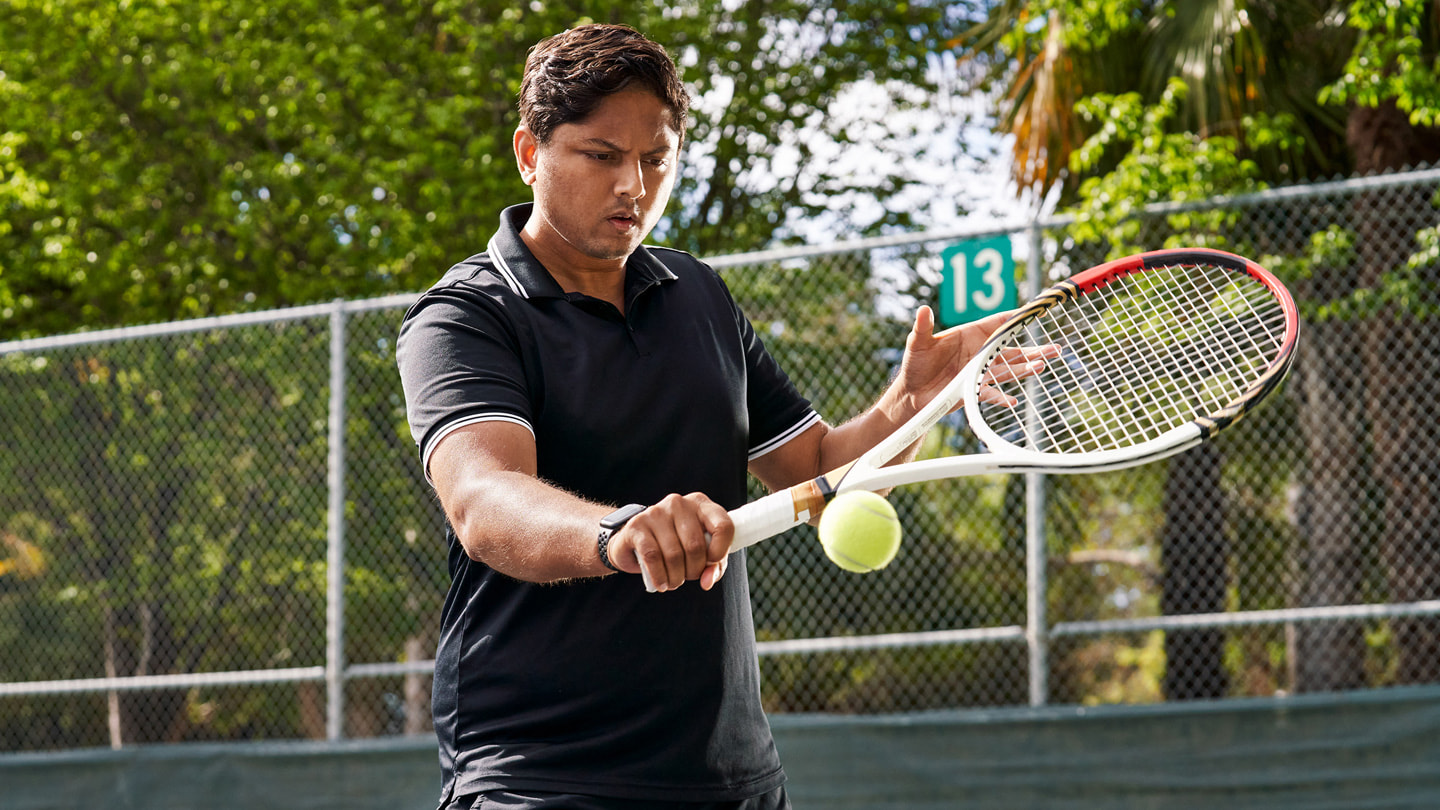
Sahai grew up in the Bay Area, where his father helped introduce him to tennis. He played on his high school team and kept playing through Berkeley. The game remained a companion while the academic work became increasingly elaborate. He graduated in 2013 with honors in applied mathematics, statistics and economics, plus a minor in Chinese language and culture. One major apparently left too many boxes unticked.
At Columbia, he pursued a statistics doctorate with Andrew Gelman and Tian Zheng as advisors. His research reached into computational Bayesian statistics and applications in astronomy and sociology. These were questions about extracting useful information from complicated observations. Tennis supplied a more immediate question: why could he see so much information about a professional’s match and so little about his own?
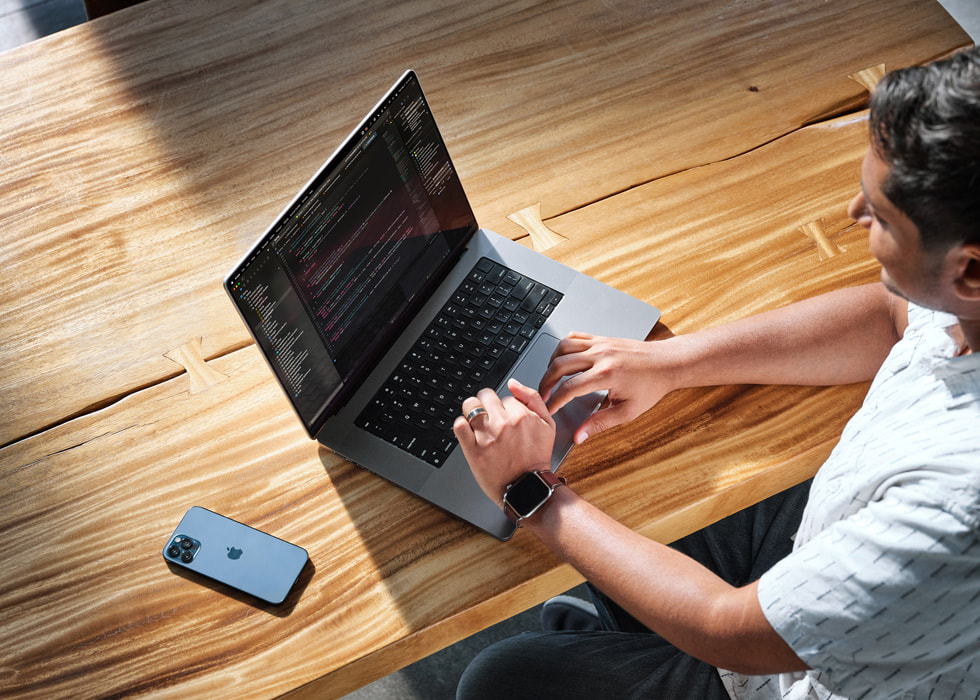
The Apple Watch gave him somewhere to begin. He taught himself Swift during graduate school and recruited Richard Hsu, his Berkeley roommate and fellow tennis enthusiast. Swing, their watch app, arrived in 2016. A computer on the wrist could keep score and use motion sensors to examine a swing. It was a modest enough project to attempt alongside the rest of his life.
“I was building in Xcode on day one.”
Swupnil Sahai, recalling learning Swift
His account of learning the language is unusually cheerful for a story about software development. He kept staying up later because he enjoyed the work. There was no need yet for a sweeping declaration about changing sport. He played tennis, wanted better feedback and had found tools with which to experiment. Hsu eventually became SwingVision’s co-founder and chief technology officer.
When the camera joined the game
At Tesla, where Sahai worked on Autopilot computer vision from 2017 to early 2019, the objects were cars and pedestrians. His work involved estimating and tracking three-dimensional objects from camera images. Watching a tennis ball required a different application of related ideas. A phone camera could potentially observe the match, giving the app information that a wrist sensor could never see.
The practical attraction was the equipment already in a player’s pocket. SwingVision could use one elevated phone to collect footage and analyze play. The engineering challenge was fitting that work onto the device. Models had to run efficiently while the camera recorded a fast-moving game. A clever result on a development computer still had to survive the trip to the court.
At one point, that trip almost stopped at a conversion step. The team had a trained model but could not get it working properly after conversion into the format used on iPhone. They spent weeks searching for an answer. The eventual correction was one line of Python. Sahai’s recollection includes the fear that the company might fail over it. Software can be economical with its punctuation and extravagant with everyone’s time.
SwingVision launched on the App Store in November 2019. In 2023, it won an Apple Design Award in the Innovation category. The award belonged to an app that had grown from scorekeeping into video analysis, highlights and line-call review. Sahai had found a way to connect his day-job expertise with the pastime that kept drawing him back outside.
A classroom of 1,287
For several years, the company shared his attention with another demanding audience. Sahai lectured at Berkeley from August 2019 to May 2024, teaching Data 8: Foundations of Data Science. In spring 2024, the course listing recorded 1,287 enrolled students. Explaining statistics to that many people gives the word feedback a different scale.
students enrolled in Data 8, co-taught by Sahai and Muhammad R. Khan
The teaching record adds something useful to the founder’s portrait. Alongside the work of extracting information from video, he was doing the work of introducing students to data. The two activities share a practical demand: the result has to make sense to someone who did not build the method. A player wants to know what to practice. A student needs to understand why a conclusion follows.
His university biography also makes room for travel, hiking and tennis. That last item hardly needs advertising. The company’s origin depends on his continuing participation in the sport. He could look at a feature as its developer and then return to the court as someone expected to set it up, play a match and decide whether the information helped.
The calendar is part of the product
Asked about entrepreneurship, Sahai has described himself as “pretty introverted and risk-averse.” He did not start with a lifelong intention to found a company. The watch project became more substantial as users asked for things it could not yet do, including automatic scorekeeping. His computer vision experience made some of those requests look possible.
The early funding experience was less encouraging. He recalled venture investors doubting both the technical challenge and the size of the tennis opportunity. Roddick and other angels helped finance the work. In October 2023, SwingVision announced a $6 million Series A led by Authentic Ventures, with participants including Lindsay Davenport, Alison Riske and Rohan Bopanna. Tennis players had become part of the company’s financing history as well as its audience.
Some lessons arrived through smaller experiments. The team tested extending its trial from 14 days to 30. A customer could download SwingVision immediately, but needed an actual tennis session to experience it. The longer trial improved conversions, Sahai said. The calendar mattered because the app’s value depended on getting outside with another person. A tennis partner is a surprisingly influential participant in a software trial.
Let the coach see what happened
By October 2025, Sahai was describing a further change in how people used the recordings. Players traveling to tournaments sent footage to coaches back home. Coaches watched the match and wrote notes in separate documents, pointing students toward particular games and points. It worked, with a good deal of jumping between a document and a video.
SwingVision’s coach reviews brought those pieces together. Comments and screen recordings could sit alongside the footage, with feedback directed toward a player’s chosen concerns. The feature followed behavior that already existed. Players had shown that they wanted a coach to see the match even when the coach could not be there.
For Sahai, this extends the original wish for better information. A shot map can show where balls landed. A coach can help decide what to do about it. Recording and interpretation become parts of the same exchange, and the person offering feedback can be somewhere else. The tennis court still needs two players. The conversation afterward can travel.
First, find the court
The next problem sounds almost comically physical after all that computer vision: point the phone correctly. Sahai demonstrated a motorized Swing Stick prototype in 2025. The idea was to let the mount rotate and find the court, reducing the cycle of lifting it onto a fence, checking the angle, bringing it down and trying again.
In March 2026, he reported months of personal testing of the second-generation mount. The same update described more than 600,000 shots recorded by padel beta testers and work on a ball-tracing effect. Those were development updates, with dedicated padel tracking still described as forthcoming. They show where he was spending his attention: more sports, useful video and fewer awkward minutes before play.
His earlier wish was simple enough to recognize from a sofa: give an everyday player some of the understanding available during a televised match. Following it took him from a watch screen to camera models, from Berkeley lecture halls to a locker room full of champions. Now some of the work concerns the angle of a phone on a fence. That seems a fitting place for Sahai to be. The court is booked. Everyone would quite like to start.
Continue off court
Find Sahai, explore the app, or hear the longer conversation.