A tennis court can be an unhelpful teacher. It gives a beginner an enormous rectangle, a small ball and plenty of opportunities to retrieve that ball from somewhere embarrassing. Court 16 starts with a different question: how much court does this particular player need? At its Long Island City club, the answer can change with the illuminated lines beneath a glass floor. The architecture participates in the lesson.
- The idea: scale the court to the learner, then build toward harder play.
- The offer: kids’ academies, adult coaching, pickleball, camps and practice sessions.
- The catch: membership and instruction are separate purchases; formats differ by club.
That question explains a business now spread across seven listed clubs in three states. Court 16 occupies a particular corner of the racquet-sports market: indoor, coached, family-friendly and deliberately approachable. For parents, it offers a structured route into tennis. For adults, it offers instruction without requiring an accomplished backhand at the door. Weather is removed from the scheduling committee.
A grandfather’s court, reconsidered
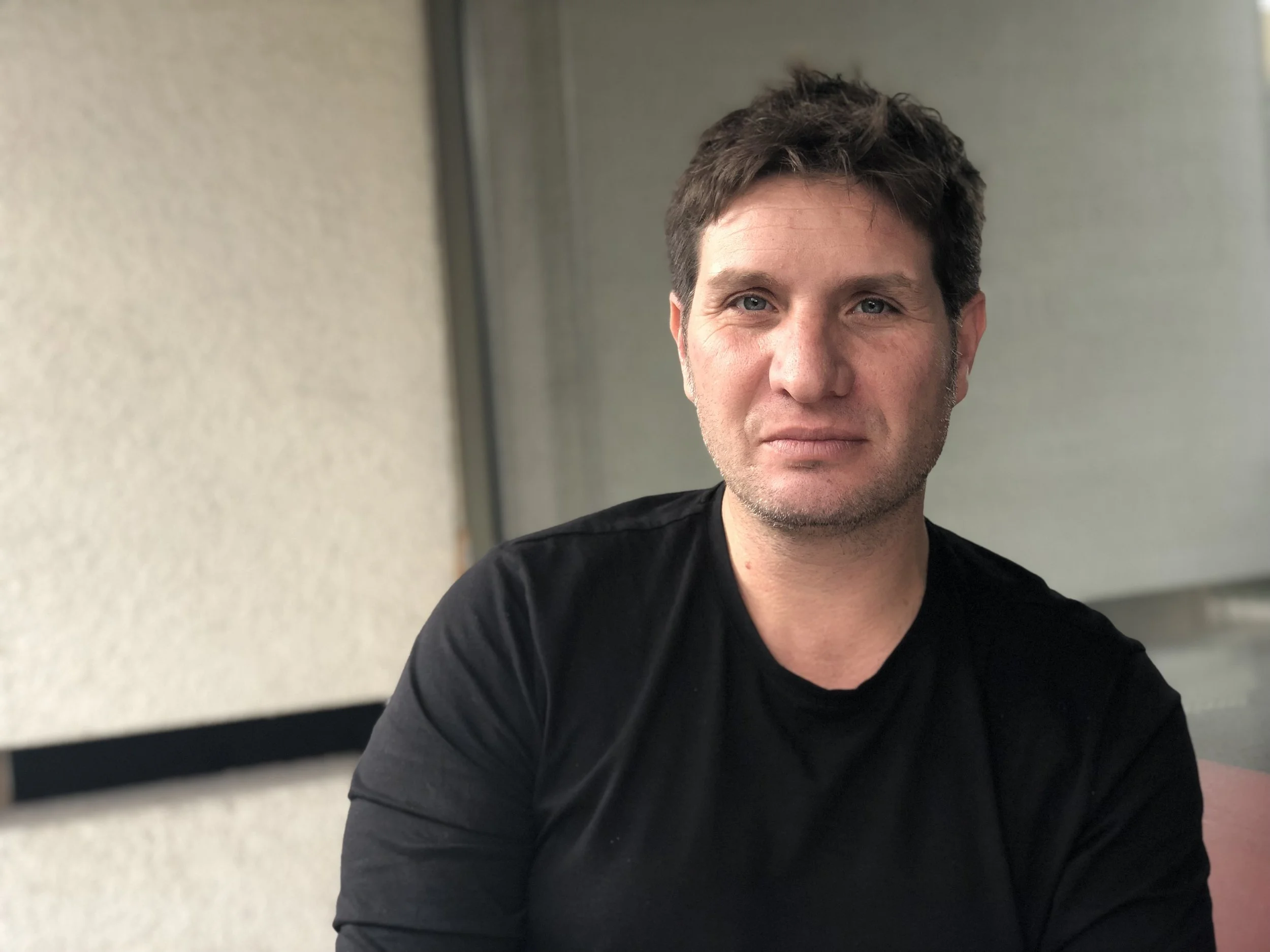
The name comes from Brussels, where co-founder and CEO Anthony Evrard played on court number 16 with his grandfather. The company opened in Brooklyn’s Gowanus neighborhood in 2014. Its early audience was children, and its first home was a warehouse. The founders were trying to preserve the pleasure of that childhood encounter while adjusting the surroundings to a different city and a different learner.
Evrard’s partners include Romain Aubanel, co-founder and COO, and Chilean architect Matias Honorato Torrealba, co-founder and Chief Design Officer. The combination matters. A tennis school needs coaching knowledge; a tennis school inside unconventional buildings also needs someone who can make the space teach. Honorato’s account of the design process begins with walks around New York and an interest in a playful community setting.
The lines were getting in the way
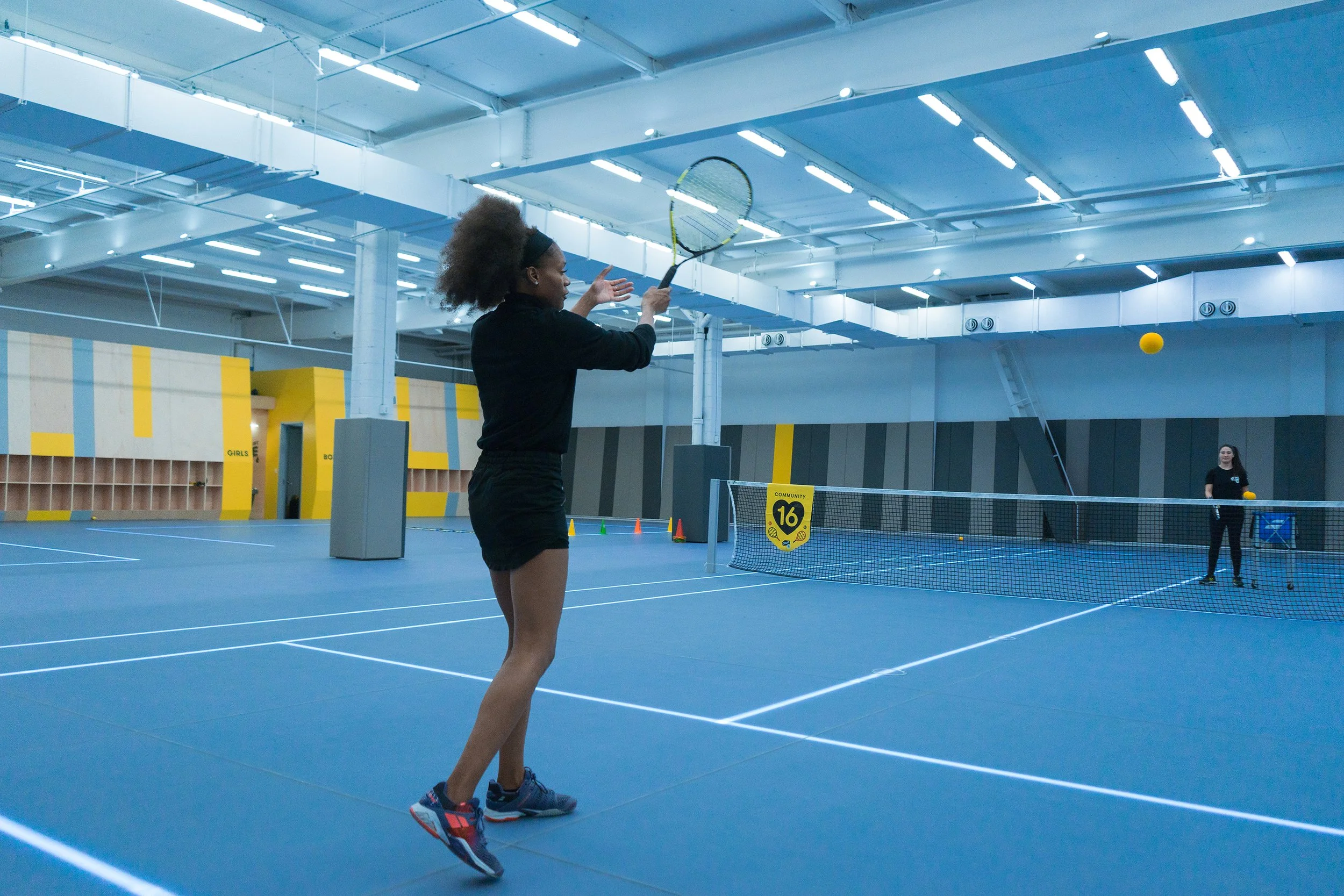
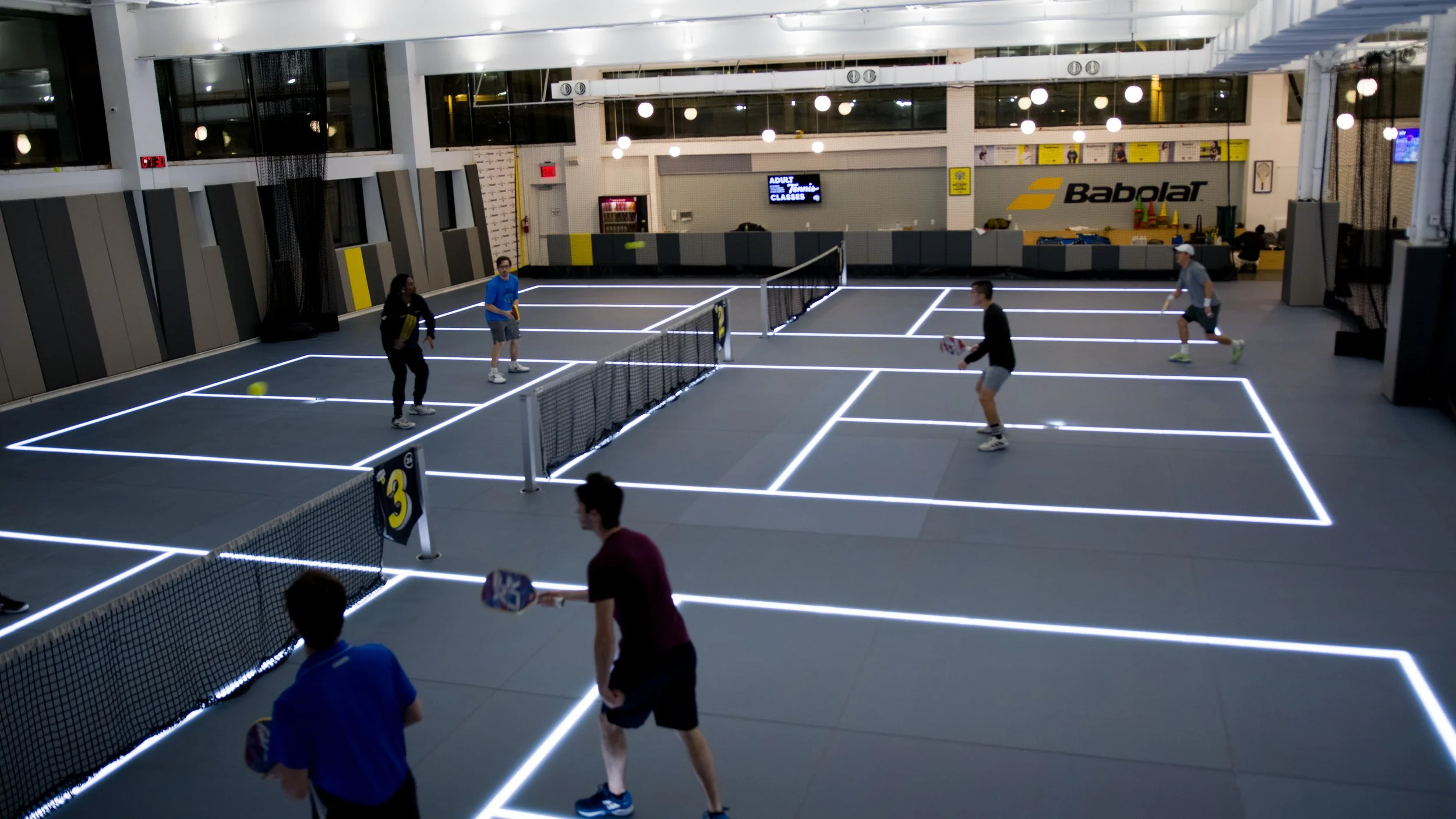
For the second club, in Long Island City, the design problem became specific. Different lessons and sports needed different boundaries on the same floor. The team considered laser traces before settling on LEDs beneath glass. That facility opened in 2018. Its adjustable markings made the court a configurable teaching surface, rather than a permanent instruction to play one particular way.
Small courts themselves are an established teaching tool. Court 16’s distinction lies in assembling the courts, curriculum, coaches and club atmosphere into one service. Its academy groups children by age and ability, with coaches adjusting placement as they progress. Published group ratios are five students per coach on 36-foot courts and six on 60-foot courts. Progression is part of the product.
Illustrative length comparison. Available sizes vary by location; Downtown Brooklyn provides a full-size court.
The company eventually left its original Gowanus space and expanded into Downtown Brooklyn and the Financial District. Downtown Brooklyn added room for juniors to advance to a full-size court. This is the practical limit of shrinking tennis: a smaller rectangle can help someone begin, but players seeking regulation match experience eventually need the larger one.
The parent who changed the timetable
One revealing change came from a customer. In an Authority Magazine interview, Evrard recalled a parent suggesting adult classes during children’s programming. The club acted, and she became a longtime ambassador. The opportunity was hiding in the waiting time. A parent already making the trip could become a player, too.
“A parent once suggested offering adult classes during kids’ programming.”Anthony Evrard, co-founder and CEO
Today, adults can take private, semi-private or group tennis lessons. Pickleball adds clinics, open play and rentals, with non-members welcome. Ball-machine sessions offer another route: repeat a stroke while a coach observes, or practice solo. Court 16 advertises an average of more than 300 balls in a 30-minute private training session. That is its stated repetition figure, rather than a measured promise about improvement.
Its video offering uses Save My Play and automated removal of downtime to review action. The useful distinction is between repetition and feedback. A machine can keep supplying balls; a coach still has to help a player decide what to change. For a beginner, convenience and attention may matter more than the volume alone.
The entrance fee is only the beginning
Court 16 sells annual memberships and charges separately for instruction, camps and rentals. Its public Manhattan pricing sheet lists a $650 single adult tennis membership and a $500 single-child academy membership. A single adult group session is listed at $58, or $52.20 for members. Those are published examples, with rates varying by club and subject to change.
Single adult tennis membership. Membership unlocks benefits and preferred rates; it does not cover unlimited instruction.
The model suits people who value scheduled coaching, indoor access and a nearby community enough to pay for them. Public courts and independent instructors remain alternatives. Experienced players should check court dimensions and programming before booking. A club organized around learning and shorter formats will not suit every competitive player’s practice needs.
A ball you can hear
Adaptation takes another form in Sound of Tennis, launched in 2015. The program uses audible foam balls, smaller modified courts and tactile lines for blind and visually impaired athletes. The Court 16 Foundation reports 114 coaching hours for 15 adult participants in 2019. Newton’s club page now describes a no-fee version of the program in Massachusetts.
There is a lesson here that other educators can copy: identify what prevents participation, then change that condition. Court size, fixed markings, waiting parents and visual assumptions each suggest a different intervention. The method requires suitable equipment, coaching and space. Simply making a room cheerful will not supply those things.
The small-court idea travels
USTA Ventures announced an equity investment in December 2024, pointing to Court 16’s ability to bring tennis into atypical urban properties. Historical database entries report $1.3 million in seed funding and a $1.2 million Series A; the USTA announcement disclosed no amount. Babolat has partnered with the club since 2014, tying equipment expertise to the learning environment.
Philadelphia opened in 2025. Newton followed in 2026, and Allston became the seventh club that summer. The expansion gives the original question more places to be tested. Before asking someone to master tennis, Court 16 asks what would make the next rally possible. Sometimes the answer is a coach. Sometimes it is a smaller court. Sometimes it is a ball that makes a noise.