EST. 1977 - America's first co-ed gym 135,000+ members & counting 27 clubs across 10 West Coast campuses KKR-backed expansion sprint underway Now in the Pacific Northwest: 425 Fitness acquired Fitness - Sports - Family - Hospitality 4,000+ associates from SF to Seattle EST. 1977 - America's first co-ed gym 135,000+ members & counting 27 clubs across 10 West Coast campuses KKR-backed expansion sprint underway Now in the Pacific Northwest: 425 Fitness acquired Fitness - Sports - Family - Hospitality 4,000+ associates from SF to Seattle
The Bay Club Company
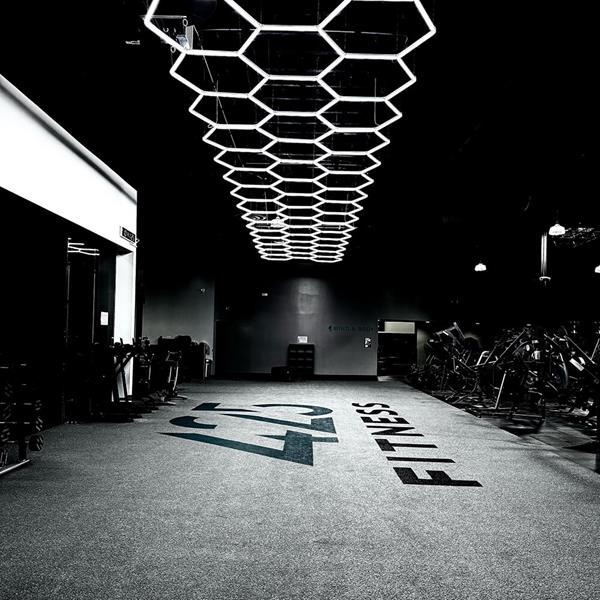
EXHIBIT A: A Bay Club floor, where the membership card buys you a community, not just a locker. The bet, in one frame.
Company Profile / Active Lifestyle

The Bay Club Company

It opened the country's first co-ed gym in 1977. Half a century later it is still arguing that a gym was never the point.

San Francisco, CA Founded 1977 135,000+ Members KKR-Backed

A membership card that opens a campus, not a turnstile

On a weekday morning in San Francisco, a member walks into a Bay Club and faces a small problem of abundance. Tennis or squash. A swim or a spin class. Drop the kids at Kids Camp, take a meeting in the cafe, book the spa for later. The treadmill, that lonely monument to obligation, is somewhere in the building. Almost nobody is rushing toward it.

This is the The Bay Club Company in 2026: a membership-based active lifestyle and hospitality company that operates a growing collection of resort-inspired clubs along the West Coast. Twenty-seven of them, organized into ten regional campuses stretching from the Bay Area down through Los Angeles and San Diego, and now up into the Pacific Northwest. The community runs past 135,000 members, staffed by more than 4,000 associates. The company calls its operating philosophy the four points of focus: fitness, sports, family, and hospitality.

Notice what is missing from that list. Nobody leads with weight machines.

"Bay Club's comprehensive approach is founded on four points of focus: fitness, sports, family, and hospitality." - The Bay Club Company, on its own operating model
1977
Founded
27
Clubs
135K+
Members
4,000+
Associates

The fitness industry has a retention problem it would rather not discuss

Most gyms make money on the gap between what you intend and what you do. You join in January, swipe in twice, and the membership quietly funds someone else's barbell. The business model, stripped of its kombucha and motivational lighting, often rewards the absent customer.

Bay Club's wager was that this arrangement is fragile. A membership built on guilt churns. A membership built on belonging renews. If a club becomes the place where your kids spend the summer, where you actually play tennis with the same four people every week, where you book dinner and a massage in the same app, then the renewal question stops being a question. The treadmill never had that kind of hold on anyone.

"A membership built on guilt churns. A membership built on belonging renews." - The central tension of the active-lifestyle model

The catch, of course, is that belonging is expensive to build. Courts, pools, golf, childcare, dining, and spa do not fit inside a strip-mall footprint. You need real estate, programming, and a professional staff who remember your name. It is a slower, heavier business than racking up dormant memberships - which is precisely why so few competitors attempt it.
Start with the gym nobody else would build

The original bet arrived in 1977, when the flagship Bay Club opened in San Francisco as the nation's first co-ed gym - a fairly radical proposition for the era, when fitness floors were largely sorted by sex. The names of the original founders are not part of the public record, but the founding instinct is legible in the building itself: a club designed as a shared social space rather than a private grind.

That instinct compounded. Under Matthew Stevens, who has served as President and CEO since September 2008, the company stopped describing itself as a chain of gyms and started describing itself as a portfolio of campuses. Stevens, a Cornell-trained hospitality figure, frames the goal less as fitness and more as connection - cultivating, in his words, a sense of belonging that positions Bay Club as a lifestyle company rather than a place you reluctantly visit.

"His vision is not just to create spaces for fitness and leisure, but to cultivate belonging and connection among members." - On Matthew Stevens, President & CEO since 2008

Five decades, told in five moves

1977

The first co-ed gym

Bay Club San Francisco opens as the nation's first co-ed fitness club - a social space disguised as a gym.

2008

Stevens takes the helm

Matthew Stevens becomes President and CEO, reframing the company around fitness, sports, family, and hospitality.

2018

KKR comes aboard

Private equity giant KKR backs the company, fueling a capital-intensive, acquisition-driven growth strategy.

2024

135,000 strong

The community crosses 135,000 members across ten West Coast campuses, with 4,000+ associates.

2025

Into the Pacific Northwest

Bay Club acquires 425 Fitness (Bothell, Redmond, Issaquah), formalizing a Washington Campus and aiming for 50+ clubs.

Seven reasons to keep your membership

The portfolio is built so that no single program carries the whole relationship. Tire of one thing and there are six more keeping you in the building. That redundancy is the point.

Fitness

Personal training, assessments, cycling, yoga, pilates, and group exercise - plus virtual classes for the days you can't make it in.

Racquet Sports

Tennis, squash, racquetball, and a fast-growing pickleball scene, with leagues, tournaments, and instruction.

Aquatics

Pools, lessons, and swim evaluations - the kind of programming that turns a summer into a habit.

Golf

A golf portfolio including Boulder Ridge, Fairbanks Ranch, and StoneTree Golf Club, with instruction and tournaments.

Family & Kids

Kids Camp, childcare, and family programs that quietly turn one membership into a multi-generational one.

Hospitality

Dining, spa, steam rooms, recovery centers, concierge service, and event spaces for private occasions.

The Campus

It all sits inside regional campuses, so a single membership can travel across multiple clubs.

The numbers behind the belonging argument

A philosophy is only as good as the renewal rate, and here the business has been voting with its capital. Backed by KKR since 2018, Bay Club spent the following years buying rather than building - folding regional operators into its campus structure. In June 2025 it acquired 425 Fitness, three clubs in the greater Seattle area (Bothell, Redmond, and Issaquah), planting a flag in the Pacific Northwest alongside PRO Club and Harbor Square Athletic Club to form a new Washington Campus.

The stated trajectory is steep. The company has signaled it expects to reach at least 50 clubs and over 200,000 members, up from roughly 135,000 at the end of 2024. Revenue figures vary by source - public estimates range from around $200 million to upward of half a billion dollars annually - but the direction of travel is not in dispute.

Members: where they've been, where they're going

Approximate member counts, Bay Club community (company-stated figures)
2024
135K
Target
200K+
Source: company-stated targets reported June 2025. "Target" reflects the stated 200,000+ goal, not a guaranteed result.
"By the end of 2025, Bay Club expects at least 50 clubs and over 200,000 members - up from roughly 135,000." - Reported June 2025, on the KKR-backed growth sprint

Selling membership in a place, not access to equipment

Strip away the courts and the cafes and the mission is unfashionably simple: make a club that people actually want to belong to. The company has organized internally around what it calls a four-quadrant playbook, launched a diversity task force, and built its culture around member recognition - the unglamorous work of remembering who you are when you walk in.

It is, admittedly, a less scalable idea than an app or a row of treadmills. You cannot ship belonging overnight. But that friction is also the moat. The competitors who could most easily copy the four points of focus - Equinox, Life Time, the country-club operators - mostly choose one or two and leave the rest. Bay Club's wager is that the whole set, under one roof, is harder to leave.

"You cannot ship belonging overnight. That friction is also the moat." - On why the model is hard to copy

The campus model, exported

The expansion sprint is the real tell. If Bay Club were merely a regional luxury operator, it would stay put and protect its margins. Instead it is buying its way across the map, testing whether the campus idea travels - whether a model honed in San Francisco can land in Seattle, and then in the Mountain and Desert cities it has openly named as next.

The skeptic's question is fair: does belonging scale, or does it dilute the further you stretch it? Every acquisition is a small experiment in that question. So far the company is betting the answer is yes, and KKR is funding the bet.

Back on that weekday morning in San Francisco, the member still faces the same small problem of abundance - tennis or squash, swim or spin. What has changed since 1977 is that the same choice now exists in twenty-seven buildings across the West Coast, and may soon exist in fifty. The treadmill is still in the building. It is still, mostly, ignored. That was always the plan.

Share this profile

Interviews & club tours

Search results for the company's CEO podcast updates and club tours - handy if you'd rather see the campuses than read about them.

Profile compiled from public sources including bayclubs.com, GlobeNewswire, Athletech News, PE Hub, CB Insights, and PitchBook.
Figures such as revenue, member counts, and club totals are approximate and reflect company-stated or reported estimates as of mid-2025.