TeachMe.To
01 / Who They Are NowA two-sided marketplace that bet on humans
Walk into a park in Austin on a Saturday morning and you can probably spot it: a man in his late forties, in clean sneakers he bought yesterday, learning to serve a pickleball at the hands of a coach he found four taps ago on his phone. He paid with one tap. He reviewed her with two. He'll be back next Saturday. That tiny, slightly absurd, deeply human scene is TeachMe.To's entire thesis.
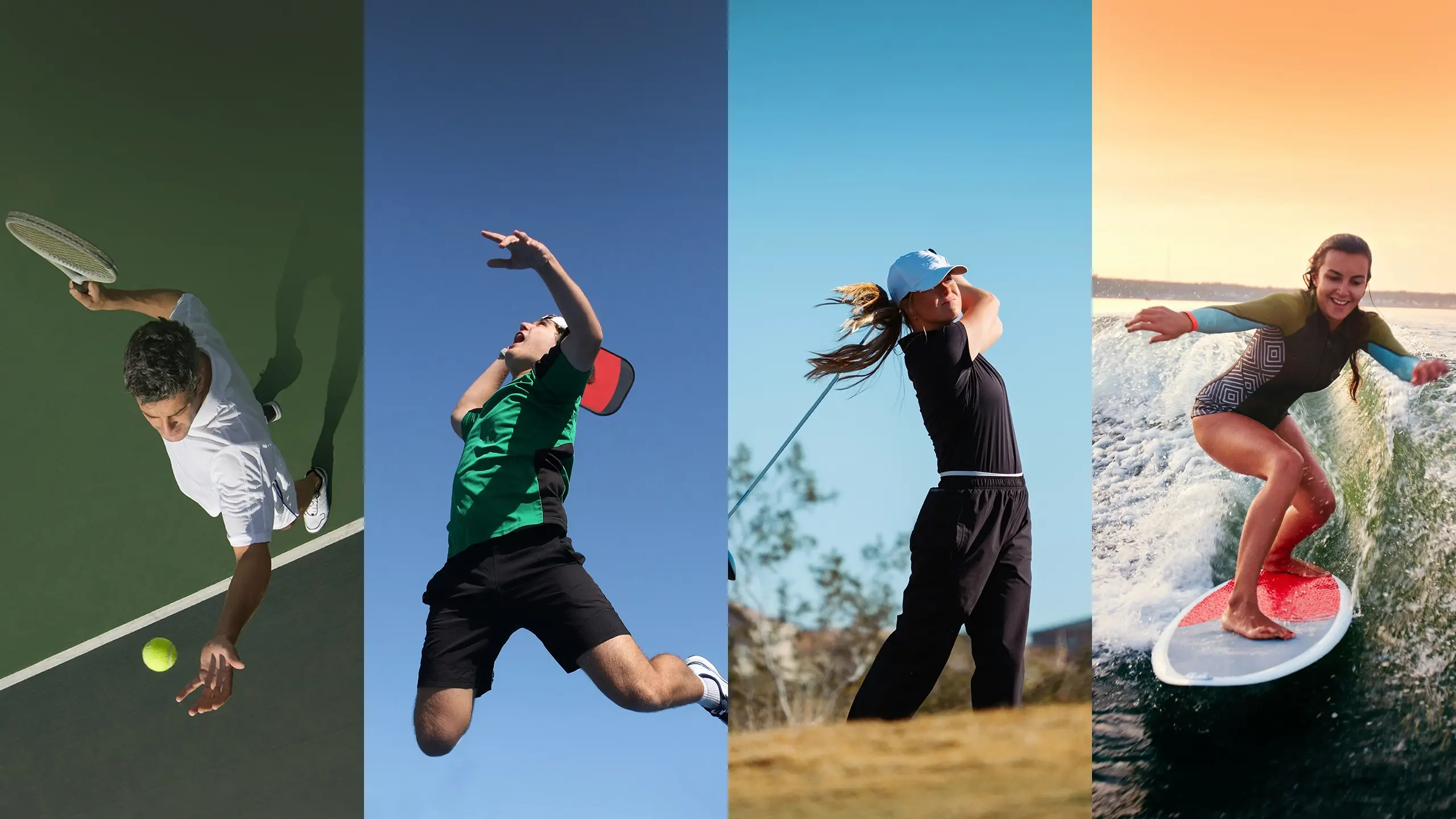
The company is, in technical terms, an in-person lesson marketplace. In practical terms, it is the connective tissue between adults who finally admit they want to learn something and the patient, often-overlooked instructors who can teach them. Golf. Tennis. Pickleball. Music. Yoga. Soccer. Roughly sixteen categories and counting, in dozens of US metros, with about 250 lessons changing hands every day.
The pitch sounds quaint in a year where every other deck has the word "agent" on slide three. TeachMe.To is the un-AI startup: the one where the product is a real human standing on real grass at a real time. The irony is that this is exactly why investors keep writing checks.
02 / The Problem They SawAdults are bad at being beginners
The market for learning a new skill is enormous, fragmented, and embarrassed about itself. Coaches advertise on flyers stapled to oak trees. Studios run on group texts. The friend-of-a-friend tennis pro takes Venmo on Tuesdays and cash on Saturdays. Anyone who has tried to book a one-off guitar lesson knows the routine: three phone calls, two unread emails, one ghosting, and a quiet decision to "try again next month."
That friction is the problem. Not the lack of coaches - America has plenty of qualified ones. Not the lack of demand - the wellness industry is a small country. It's that nothing sits in the middle. No Airbnb for skill. No DoorDash for the swing coach down the block. The on-ramp to in-person learning is paved with sand.
If you wanted to learn golf in 2021, the easiest first step was usually buying clubs you didn't need. If you wanted a coach, you asked the guy at the driving range. He may or may not have been a coach.
TeachMe.To's founders looked at that on-ramp and saw a marketplace shape. Coaches who would rather teach than answer DMs. Students who would rather pay than negotiate. A booking flow, a review system, a payment rail, a guarantee. The boring building blocks that turn a hobby into a habit.
03 / The Founders' BetAn in-person bet, in an obviously-online year
Tyler Maloney has started, by his own count, eight companies. He'll tell you this is the one he's staying with. He runs the place as CEO from San Diego alongside co-founder Nick O'Brien, who is now President and COO after years as the company's first CEO. The team behind them is a quiet roster of marketplace alumni - Airbnb, DoorDash, Yelp, Instacart, Pinterest - people who already know what an unbalanced two-sided market feels like at midnight.
The bet they're making is contrarian without being cute. While the rest of the industry was racing to put AI tutors in every browser tab, TeachMe.To raised a $2M pre-seed in 2023 to do the opposite: put more humans in more parks. Sam Altman wrote a check into that round - which is itself a small joke worth enjoying. The man most associated with AI is also bullish on the company built on the premise that you can't ChatGPT your way into a tennis backhand.
By 2025, the bet had aged well. $10.5M total raised. Interplay led a $3M Seed+ extension in September of that year. Bling Capital and 1984 Ventures kept stacking. None of the press releases used the word "agentic."
04 / TimelineThe receipts
05 / The ProductOne booking flow, sixteen skills
From the outside, TeachMe.To looks like a search box and a calendar. From the inside it is the same plumbing every two-sided marketplace eventually has to build: identity, reviews, payments, a fraud team, a refund policy, a customer support inbox, and a thousand small editorial decisions about how to rank a coach who is great but new against a coach who is fine but busy.
A student lands on the site, picks a skill, picks a zip code, and gets a directory of vetted coaches with profiles, lesson videos, real reviews, and a button labeled book. The first lesson is free, which makes it harder to talk yourself out of trying. The second is on you, which makes it likelier you'll show up. The third becomes a habit, which is the entire point.
06 / The ProofA chart, because somebody asked
The story TeachMe.To investors keep telling is a flywheel one. Coaches don't need a website. They need students. Once students show up - reliably, weekly, with payment that clears - coaches stop using the platform and start defending it. The numbers below are the public ones, and they bend in the right direction.
Funding Cumulative, by Round
Press has noticed. Coverage runs through TechCrunch, the Wall Street Journal, CNBC, Fortune, Business Insider, and Fox. None of the stories are about the technology. They're about the people in the parks - which, again, is the entire thesis.
07 / The MissionMake beginnings easier than they have any right to be
Adults are bad at being beginners. Not because we lack curiosity - the search bar histories of America say otherwise - but because the first lesson, the first humbling, the first I have no idea what I'm doing, is the hardest part. TeachMe.To's mission is to shrink that first step until it fits inside a phone screen and a Tuesday evening.
The grander version is more interesting. If you make the on-ramp to in-person learning easy enough, more adults take it. More adults taking it means more coaches make a living teaching. More coaches making a living teaching means more parks, courts, garages and living rooms become small classrooms. The compounding effect is a country with slightly more people who picked up a hobby in their forties and stuck with it. Which is, by most measures, a country with slightly more joy in it.
08 / Why It Matters TomorrowThe most human startup in a year that forgot
There is a version of 2026 where the most-funded companies are all racing to remove people from the loop. TeachMe.To is racing the other direction. It is hard to think of a more counter-cyclical bet. It is also hard to think of one with cleaner unit economics, because nothing softens a customer's heart toward a marketplace quite like the moment a real instructor watches them hit their first clean shot.
Back to that park in Austin. The man with new sneakers has been at it for nine weeks now. He no longer needs to look at the app to know his coach's name. He brings his own paddles. He bought one for his wife. They are going on a pickleball vacation in May, which is an actual thing he says out loud now, without irony. TeachMe.To did not teach him pickleball. His coach did. TeachMe.To just made it easier than any other Saturday option in the calendar - and that, in the end, is the entire business.