A tennis ball travels too quickly for diplomacy. It clips the far edge of a white line, or appears to, and two otherwise civilized adults become rival schools of epistemology. One saw chalk. The other saw daylight. On television, a small parliament of cameras settles the matter. On a public court, the evidence used to vanish before the argument began.
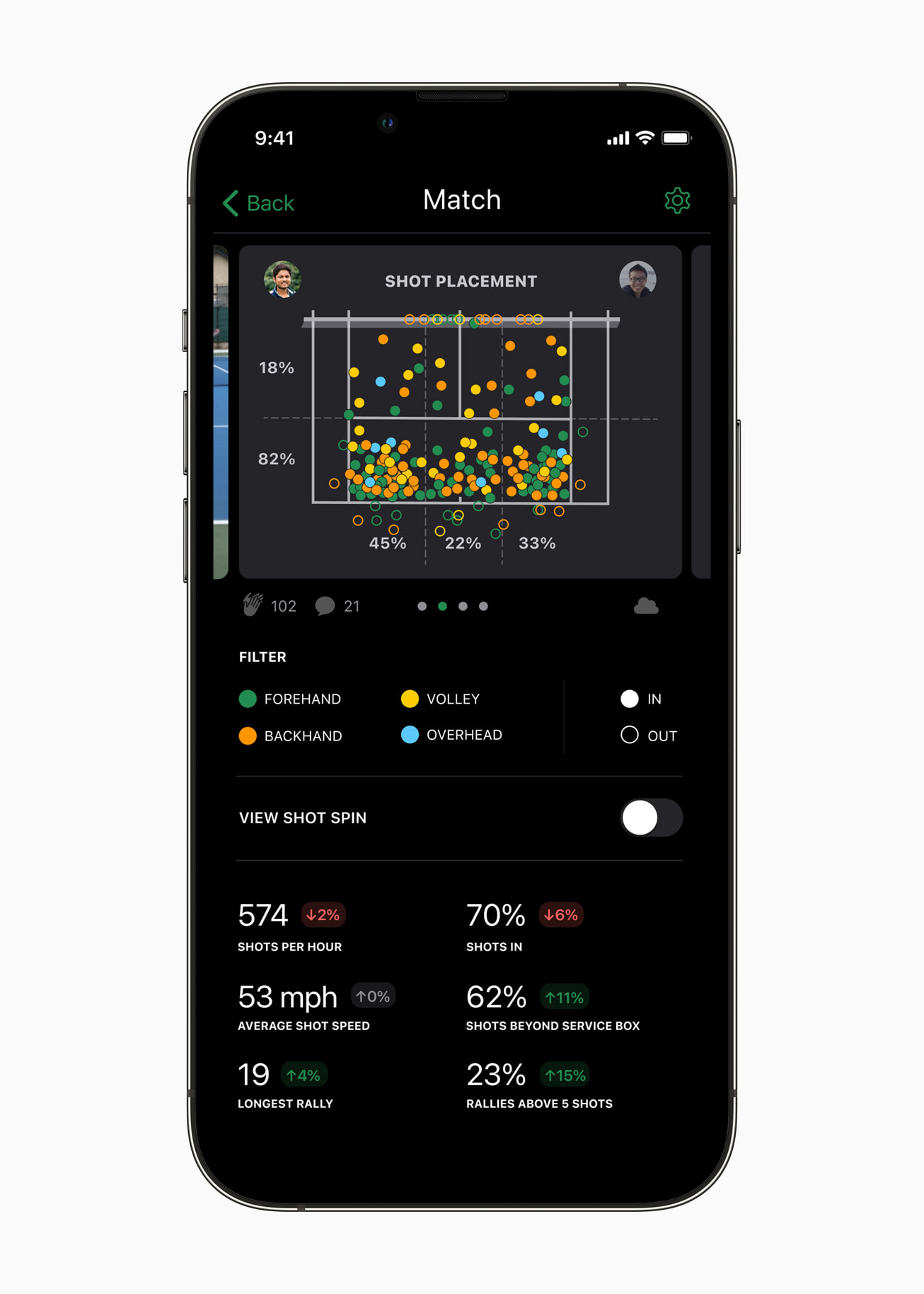
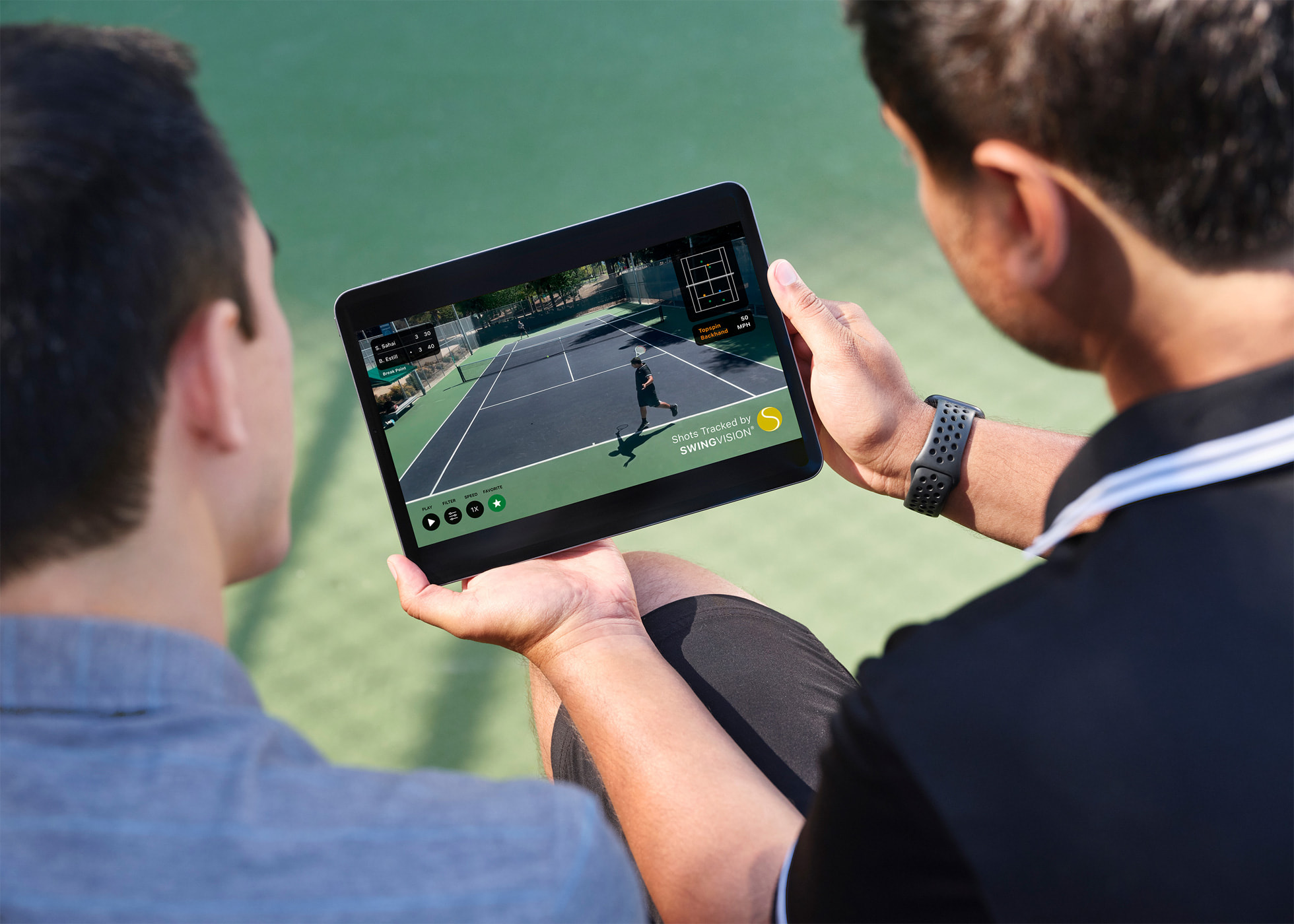
SwingVision put a witness on the fence. Mount an iPhone or iPad behind the baseline and the app records the session, recognizes the court and players, follows the ball, keeps score, measures pace and placement, removes the long stretches in which nobody hits anything, and assembles highlights. With an Apple Watch, a player can challenge a call and inspect the replay. Afterward, the match is no longer a vague recollection of a backhand that felt heroic. It is a searchable file.
The expensive answer was the clue
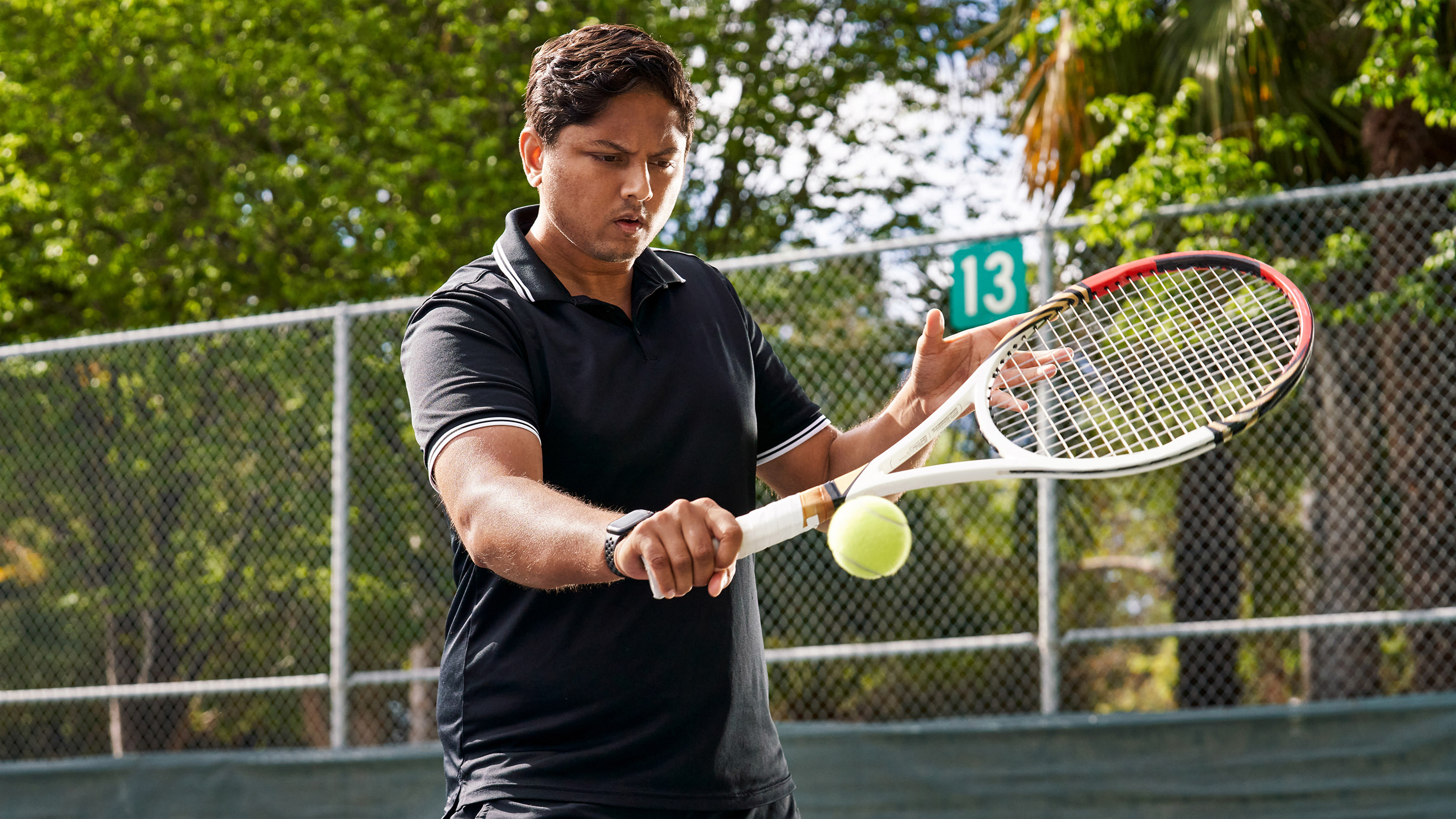
Swupnil Sahai grew up playing tennis in the Bay Area, studied at Berkeley, and later worked on 3D object tracking for Tesla’s Autopilot team. The connection was almost impolite in its neatness. A car must infer the path of small moving things from cameras. So must a tennis analyst. Yet, as Sahai told Apple, the camera systems then available to players could cost around $10,000 per court and use ten cameras. The technology knew plenty; it simply lived in the wrong tax bracket.
The first version of the idea was smaller. When Apple Watch appeared in 2015, Sahai imagined using its sensors to understand a swing and keep score. He taught himself Swift and released a side project called Swing in 2016. Richard Hsu, his former Berkeley roommate and hitting partner, joined him. Hsu had worked as an engineer at LinkedIn and the AI startup Accompany. In November 2019, the pair launched SwingVision as a full iOS product.
This was less a clean pivot than a widening of the camera aperture. A watch could describe the wrist wearing it. A camera could describe the point: the ball, both players, the bounce, the score and the empty seconds between rallies. Apple’s Neural Engine made it possible to process that video on the device, in real time, without asking a distant server to make every decision. SwingVision drew a line early, Sahai has said: the demanding vision work would happen on the phone, not in the cloud.
“The same techniques and principles I was using on the job could help me level up on the tennis court.”Swupnil Sahai, describing the leap from autonomous driving to tennis
Sell the film after removing the waiting
The cleverest feature may be the least glamorous: deletion. Raw match video is mostly ritual - ball collecting, towel finding, small negotiations over score. Few amateurs return home eager to scrub through ninety minutes of it. SwingVision detects the rallies and cuts the dead time. Once the footage becomes watchable, the company can layer on shot speed, depth, heatmaps, automatic scoreboards, slow-motion line challenges and clips formatted for sharing.
That stack serves several buyers at once. Recreational players want evidence and entertainment. Juniors and parents want a record of progress. Coaches want footage arranged point by point rather than a long, unlabeled file. College teams want repeatable analysis and livestreams. Clubs get Swing Court, a permanent kiosk-and-camera arrangement that removes the ritual of mounting a personal phone. Developing professionals can inspect practice sessions that happen far from stadium systems.
A subscription to the second look
SwingVision is free to try and paid when the player wants fewer limits. The current US App Store lists Pro at $179.99 a year. It unlocks detailed analysis, scoring, full-court line calls, exports and cloud storage. Max raises recording time to 60 hours a month and adds 4K video, strategy insights and sharing with a family group. Swing Sticks supply the fence mount; institutional plans and Swing Court carry the model into teams and facilities.
By 2025, company fundraising materials reported more than $4 million in annual recurring revenue, 20,000 paying subscribers and over 100 college teams. SwingVision says more than 200,000 players and coaches now record tennis and pickleball sessions each month. Its archive had passed one billion shots across one million hours of play. Those are company-reported numbers, but their direction explains a second business hiding inside the first: a consumer app can become an observatory of amateur sport.
In 2026, SwingVision used more than 250,000 recorded sessions to examine the ladders of amateur tennis. One finding has the satisfying cruelty of good data: second-serve percentage barely changes between NTRP 3.0 and 4.5. It sits around 70 percent. What changes is speed. The safer serve is not necessarily the better serve; it may merely be an underpriced risk. This is the point where the product stops being a camera and begins to resemble an argument.
Its moat is a deliberate inconvenience
PlaySight, Wingfield, Baseline Vision, Zenniz and Hawk-Eye approach the court with dedicated hardware or controlled installations. That can bring multiple viewpoints, stable geometry and the authority required by formal competition. SwingVision’s difference is precisely that it asks less of the court. One consumer camera makes it portable, cheap and globally distributable. Processing on-device lowers latency and reduces reliance on connectivity. It also ties the experience tightly to Apple silicon.
The endorsements are unusually well matched to the claim. Tennis Australia invested and named SwingVision an official player and ball-tracking app, as did Britain’s LTA and the US Intercollegiate Tennis Association. Andy Roddick, James Blake, Lindsay Davenport, Alison Riske and Rohan Bopanna joined the investor list. Apple gave the product its 2023 Design Award for Innovation. A $6 million Series A led by Authentic Ventures in 2023 funded work on tournament officiating, remote coaching and expansion into pickleball and padel. A later community round closed in 2025 with about $2.08 million from 654 investors.
The bargain has weather
One camera is also one point of failure. The app needs a clear, stable view near the center of the court. A hot day can throttle a phone; release notes now explicitly mention high-temperature stability and warnings when audio feedback switches off. Long recordings consume battery and storage. Older devices may struggle. Android players remain outside the main recording experience. Even under ideal conditions, the company’s stated 97 percent accuracy for close line calls is not the same proposition as a redundant stadium system.
A recent iPhone or iPad, 60 fps, high centered placement, a stable mount, clear lines and tolerable weather.
Poor sight lines, heat, low storage, old hardware, formal rules that prohibit the setup, or players who only need plain video.
Use hardware customers already own, then spend product effort on the tedious step - trimming - that makes the clever analysis usable.
On-device AI works when the platform has enough compute and customers accept its ecosystem. The constraint can also become the ceiling.
The International Tennis Federation granted SwingVision player-analysis approval in 2025, but approval comes with specified operating conditions; Apple Watch pairing, for example, is allowed recreationally but not in competition under that report. That distinction matters. SwingVision does not erase the difference between a phone and Hawk-Eye. It asks how often an amateur actually needs Hawk-Eye, and what becomes possible during all the other hours.
What the phone changed
The first lesson is economical: a compromised tool that travels can create more value than a perfect tool bolted to someone else’s court. The second is editorial. SwingVision did not merely collect video; it decided what to omit. By turning waiting into clips and clips into data, it made review habitual. The third is technical: keeping inference on the device made latency, privacy, connectivity and cloud cost part of the product design, not afterthoughts.
There is a small social consequence too. The phone behind the baseline changes the tone of a disputed call. It does not guarantee peace - tennis players have always been inventive with certainty - but it gives memory a competitor. For most customers, that may be enough. They are not purchasing a broadcast control room. They are purchasing the right to look again.