A Stanford-trained lawyer and an entrepreneur without a bachelor’s degree arrive at the same conclusion: there is a perfectly serviceable entrance to the technology industry that people keep walking past. Someone has to sell the software. In 2017, Joel Scott and Rahim Fazal founded SV Academy around that observation. Their company would prepare newcomers for sales jobs and help employers judge people whose résumés might otherwise disappear into the wrong pile.
- The work: prospecting, sales conversations, and the tools behind a software sales team.
- The route: a short live bootcamp, then a paid 90-day residency with coaching.
- The distinction: training is tied to hiring and continues after someone starts work.
The missing introduction
Fazal’s biography helps explain the choice. He grew up in government housing, skipped an undergraduate degree, and eventually built Involver, a company acquired by Oracle. Scott brought experience running operations at Hewlett Packard Enterprise. Both knew the commercial side of software. Both understood how much an introduction could accomplish for somebody standing outside it.
The obstacle they chose was specific. An employer wants evidence that a beginner can do the work. A beginner needs an employer willing to let them begin. Teaching a sales vocabulary addresses part of that circle. SV Academy adds practice, screening, employer connections, and coaching once the learner has a job. The proposition is especially relevant to career changers and people underrepresented in tech.

First, find the vacancy
The company’s current employer process starts with the job. SV Academy works out the desired candidate profile, sources applicants, conducts internal interviews, and sends a shortlist. The employer interviews candidates and makes the hiring decision. Selected applicants then enter the intensive training stage before their first day. That order gives the lessons a destination.
Its expertise lives in the small actions that make sales development work: finding a relevant prospect, writing a useful cold email, asking questions, handling objections, and recording activity in a customer relationship management system. Current materials name Salesforce, SalesLoft, Outreach, and ZoomInfo. Role-plays and simulations let learners practise before a customer is on the other end.
Then: ongoing career support. Selection and employer matching still apply.
The live pathway is advertised as a 10-day bootcamp followed by a 90-day paid residency. That second stretch matters. A new hire can understand an exercise and still struggle with a live call. Weekly mentoring, additional sessions, and conversations with managers create opportunities to correct mistakes while the person is actually doing the job.
Free is a difficult word to sell
For learners, SV Academy advertises zero tuition. The unusual price creates its own sales problem. In a December 2019 interview, Scott described prospective applicants asking, “What’s the catch?” Overcoming their initial doubt, he said, was “the hardest part.” People who have encountered expensive promises reasonably want to know where the bill will land.
“What’s the catch?”
The question prospective learners asked Joel Scott, 2019
Historically, the answer was the hiring company. Reporting published in early 2020 described employers paying $12,000 to $15,000 per hire. A $9.5 million Series A announced in 2019, led by Owl Ventures, financed expansion. Bloomberg Beta, Kapor Capital, Rethink Education, Strada Education Network, and Uprising also participated.
Live residency pathway
Reported in 2020
September 2020, not today’s quote
Today’s public materials require careful reading. The learner page says employers fund the program. The employer FAQ advertises no retainers, placement or conversion fees, or subscriptions. Those statements leave the present commercial arrangement unclear. A hiring manager should get the current agreement. An old per-hire figure is a piece of company history, not a usable quote.
A classroom with another entrance
The live program is only one route. In September 2020, Salesforce and SV Academy launched a five-course Sales Development Representative Professional Certificate on Coursera. It incorporated Salesforce’s Trailhead content, conversational selling, portfolio preparation, and sales technology. Its launch price was $49 a month. That separately priced certificate should not be confused with tuition-free residency training.
For someone exploring a career, the distinction is useful. Self-paced coursework offers a way to investigate the work and practise its language. A hiring-linked program adds selection, employer interviews, and a supported transition into employment. Completing an online certificate does not, by itself, mean a company has agreed to hire you.
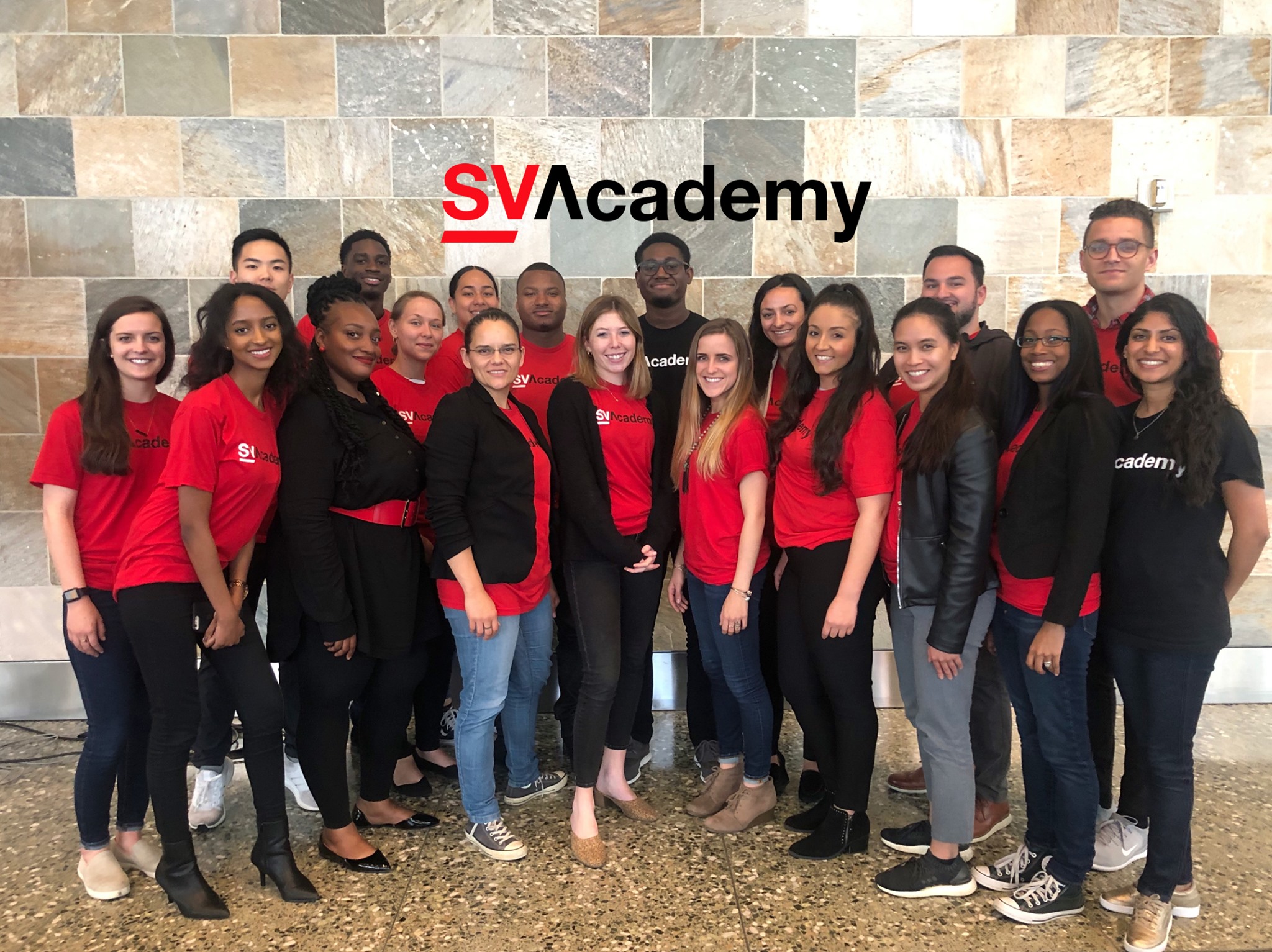
The handoff is the product
SV Academy sits between vocational education, recruiting, and sales enablement. Employers receive screened candidates and onboarding help. Learners receive instruction and a route toward experience. The overlap is its point. Vendition offers a related path into sales employment; direct applications and independent courses are other alternatives. SV Academy competes on how well those pieces connect.
The organization has also changed leadership. In March 2024, it announced Michael Colonnese as CEO and said it had helped launch more than 2,500 graduates’ tech careers. In January 2025, its Dialed In podcast opened with a conversation between Colonnese and Fazal. An April 2026 announcement added ZoomInfo certification for learners.
What a hiring manager can borrow
The useful lesson is a sequence: define the work, observe candidates practising it, and keep teaching after hiring. A manager could copy that sequence without copying the company. Replace a vague demand for experience with a concrete exercise. Give a beginner feedback on an actual sales conversation. Make the first months a period of development.
There are practical conditions. Someone has to want the kind of work being taught. Employers need real vacancies and time to support new hires. Online instruction does not make the eventual job remote. And SV Academy’s current learner FAQ explicitly says placement is not guaranteed. The appeal is the effort to connect preparation with opportunity, one hiring decision at a time.