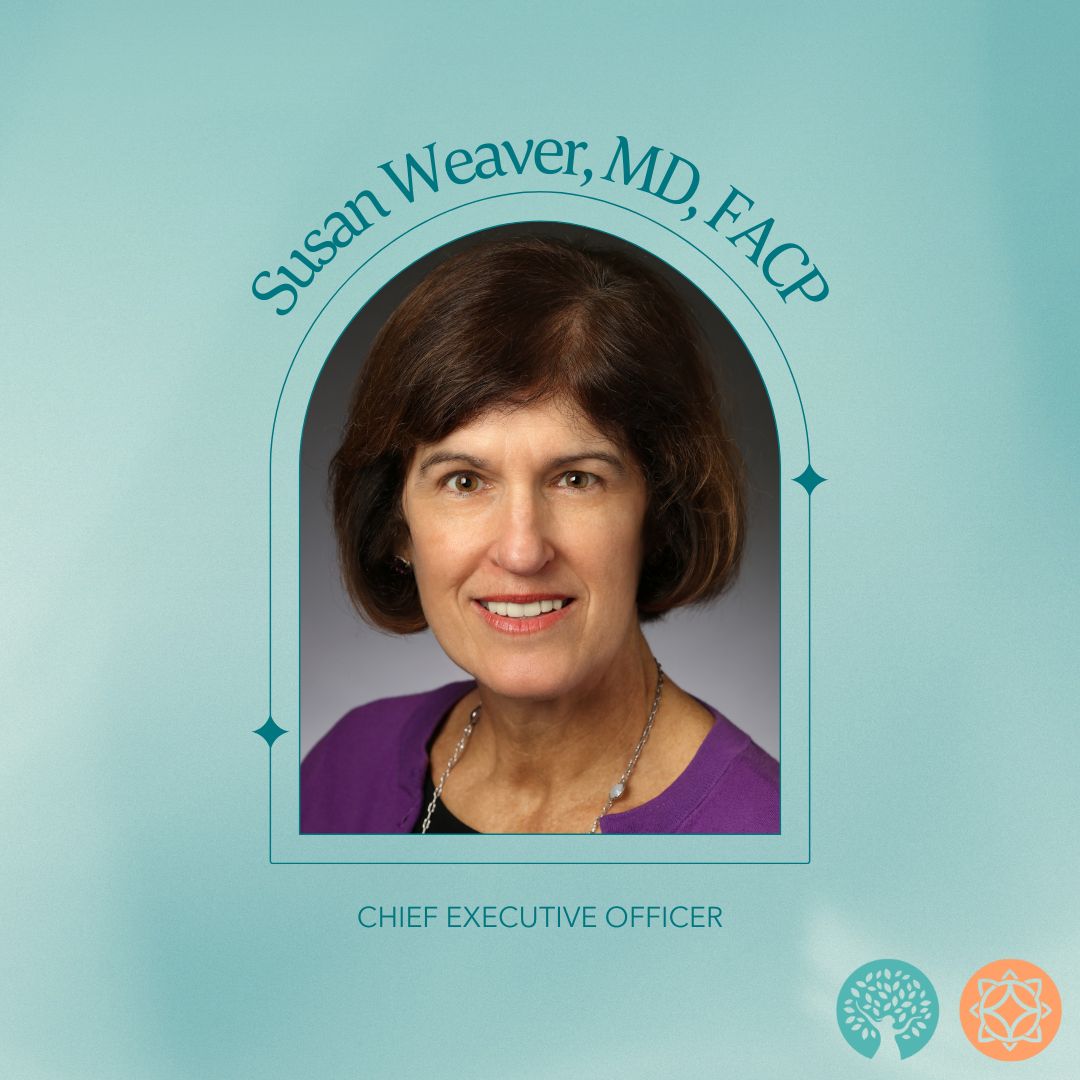
In November 2022, Susan Weaver was preparing to exchange one title for another. She was Kepro’s president and chief executive. Under an announced merger with CNSI, she would become president of the combined business, while CNSI’s Todd Stottlemyer would serve as chief executive. Both would have seats on the board. For Weaver, the next chapter involved sharing authority inside a company assembled from two different organizations.
There is a useful business story in that change of stationery. A chief executive’s career is often presented as an uninterrupted ascent, each title a little grander than the last. Weaver’s route has involved several kinds of responsibility: founding a consultancy, running companies, participating in acquisitions and serving as a director. The work changes with the seat. So does the distance between a decision and the people who carry it out.
The merger closed in December 2022. The Acentra Health name followed in 2023. Weaver’s connection to that business continues through its board, while her later career has also taken her into an advisory role at Frazier Healthcare Partners. To understand how she arrived there, it helps to follow the businesses, rather than simply collect the titles.
A founder, before Kepro
Weaver earned a bachelor’s degree in psychology at Duke University and returned to Duke for her doctorate. Her subsequent professional training took her to Boston. The early geography of her career thus includes two university cities, followed by a substantial stretch of executive work in North Carolina. Her later responsibilities would extend across organizations with national operations.
Between 2009 and 2012, she held executive positions at WakeMed. She then joined Blue Cross Blue Shield of North Carolina, where she worked from 2012 to 2015 and finished as chief medical officer. Those appointments placed her inside established institutions. In 2015, she founded Transformation Health Partners and became its president. A consultancy of her own added a different entry to an otherwise institutional résumé.
By 2016, she had moved into the chief executive’s role at C3HealthcareRx. She stayed until July 2018. During her leadership, the company doubled in size and expanded its licensing footprint to 13 states. Those are concrete changes in operating scale, although the headline number needs care: the public account describes company size, without specifying a revenue figure. A percentage is most useful when its meaning survives the telling.
An arrival with someone else in the corner office
Kepro’s September 2018 announcement of a new chief executive contained another appointment further down the page. Weaver had joined as president in August. Joel Portice was taking the chief executive’s job. Her Kepro career therefore began inside a division of responsibilities, before she went on to hold both the president and chief executive titles.
That sequence matters because the combined title can flatten the story. A later biography can make an executive appear to have arrived fully installed at the top. The contemporary announcement shows the intermediate step. Weaver joined a management team already being reorganized for its next phase, with Kepro backed by Apax funds, which had invested the previous year.
In November 2020, Kepro added Jay Toth as chief growth officer. His appointment brought another executive into the work of expanding the business. Weaver’s public comments emphasized his record of producing results. The appointment is a reminder that growth has an organizational chart. Someone has to build the relationships, organize the effort and turn an ambition into a responsibility with a name beside it.
Two transactions, five months apart
On May 3, 2021, Kepro announced that it had acquired substantially all the assets of IMEDECS. It was an asset acquisition, a detail easily lost when transactions are reduced to a list of company names. Weaver described the fit in terms of shared values and expertise. The deal added to Kepro’s existing portfolio, rather than introducing a wholly unrelated business.
In August, Kepro announced an agreement to buy eQHealth Solutions. That company brought a cloud software offering, eQSuite, alongside its services business. The announcement described how the acquisition would expand Kepro’s technology portfolio. For a company already built around people and processes, software represented an additional capability to offer clients.
The acquisition closed on October 1. Agreement and completion are separate milestones; in this case, they were a little over a month apart. The distinction is small on a career timeline and substantial in a transaction. One records an intention backed by an agreement. The other records the arrival of the acquired business inside the organization.
Taken together, these announcements give the expansion years a shape. IMEDECS in May. An eQHealth agreement in August. Completion in October. Weaver was leading a company adding capabilities in successive transactions, with all the administrative and managerial obligations such additions imply. The press announcement gets a date. The work gets a calendar.
- 03 MAYIMEDECS asset acquisition announced
- 26 AUGeQHealth agreement announced
- 01 OCTeQHealth acquisition completed
The unglamorous machinery of management
Expansion also put attention on the workforce. In March 2022, Kepro created a chief human resources officer role and appointed Sherrie Artman Crittle. The remit covered employee relations, recruiting, compensation, benefits and HR systems. This was an executive appointment devoted to the mechanisms through which people join, remain in and work within a growing company.
For an outside observer, a new acquisition is easier to picture than a revised reporting structure. Yet the second may determine how comfortably the first can be absorbed. Creating the role gave these responsibilities a place on the executive team. It also made visible a part of company building that rarely receives the same attention as the purchase agreement.
Weaver’s discussion of inclusion at Kepro showed a related interest in governance. She described the need to establish a starting point for measurement and move the work to board level. Penny Thompson chaired the board committee established in December 2020, while Melissa Leigh led the executive effort. The structure gave the initiative named owners.
“The commitment at Board level helped achieve buy-in,” Weaver said. The observation is practical: employees could see where the responsibility sat. Her account linked an aspiration to a governing body, rather than leaving it as an informal undertaking. It is one of the clearer glimpses of how she talked about managing change.
“The commitment at Board level helped achieve buy-in.”
Susan Weaver, discussing Kepro’s inclusion initiative
One business, two sets of experience
By the time the CNSI merger was announced in November 2022, Kepro had been through these additions to both its portfolio and leadership team. The next transaction changed the frame again. Kepro would become part of a combined enterprise backed by Carlyle, bringing its own experience alongside CNSI’s work in large systems implementation.
Weaver spoke about the opportunities for employees to broaden their skills and advance their careers. That is a distinct way to describe a merger. Alongside ownership and executive appointments, there would be people whose working lives now intersected with colleagues from another company. Combining an organization also combines its possible career paths.
Both the McLean and Nashville locations were to be maintained. The new name would come later. Corporate combinations have a conspicuous public moment, but the announcement itself acknowledged continuity as well as change: two offices, two leaders on the board and a rebranding still ahead. Acentra Health launched in 2023, giving the joined business a shared name.
The view from the director’s chair
Weaver’s board work predates that merger. She joined the Addus HomeCare board in October 2016, while she was running C3HealthcareRx. Her executive and governance careers consequently overlapped. She was carrying direct responsibility for one business while participating in oversight at another.
At Addus, her listed responsibilities include chairing the nominating and corporate governance committee and serving on the compensation committee. These assignments concern how leadership is selected, how the board operates and how people are rewarded. They put her in the territory where the design of an organization becomes a set of formal decisions.
AdaptHealth’s 2026 proxy also lists her as a director, with compensation and corporate compliance and governance committee memberships. The latest filing dates her board service to 2018. Taken alongside her Acentra seat, the appointments show a career that now includes several vantage points on corporate decision making.
There was a public conversational role, too. In June 2022, an industry forum in Park City listed Weaver as moderator for a keynote conversation with Rubicon Founders chief executive Adam Boehler. A moderator’s assignment is to make someone else’s thinking accessible. It is a useful companion to the more familiar picture of the executive delivering the answers.
Experience gets a different job description
In May 2024, Weaver joined Frazier Healthcare Partners as a senior adviser. Frazier’s current biography also lists board positions at BioMatrix and Effective School Solutions. Her work had moved further toward advising and oversight, drawing on a career spent inside organizations of different sizes and structures.
Between Acentra and Frazier, she also completed a six-month interim chief executive assignment at another Apax portfolio company. The interim qualifier is revealing in a straightforward way. It describes a defined period of responsibility, a reminder that an executive career can include a short assignment alongside appointments that last for years.
Seen across those changes, Weaver’s career offers a particular account of company building. There are founding documents, executive appointments, purchases, a merger and committee seats. Each leaves a different kind of record. Together they trace the movement from running an operation to helping determine how several operations should be governed.
The Acentra chapter belongs inside that longer story. Weaver arrived at Kepro as president, later led it as chief executive, and became president of the merged business before continuing as a director. The titles mark the transitions. The more interesting thread is the succession of decisions about what a company should add, whom it should appoint and how it should organize the responsibility that follows.
Follow the next chapter
Explore Weaver’s LinkedIn profile, her Frazier biography and her Acentra board profile.