On August 2, 2020, Frank Fangliang Zhang was explaining how a company could become less dependent on its founder. GenScript, the business he had co-founded eighteen years earlier, was introducing a rotating chief executive system. Its first appointment was Patrick Liu, an executive who had spent eleven years inside the organization. Zhang would move to the CEO position at Legend Biotech, the company that had grown within GenScript. There was a new job for the founder, and a new arrangement for the people he was leaving in charge.
The question from an analyst was practical: would the same small group of managers take turns? Zhang answered in terms of organizational strength. Senior executives would acquire experience across different responsibilities. Leadership would be developed within the business. His ambition was a company whose future rested on a team. For someone who had spent so long at its center, this was an interesting thing to say aloud.
Founders tend to occupy a disproportionate amount of space in corporate stories. Their names make convenient handles for organizations containing thousands of decisions and people. Zhang’s story offers a useful complication. He has been a scientist, a co-founder, a chief executive and a chairman. Each position asks something different of the person holding it. The difficult part is knowing when another person should take the chair.
Three degrees, then seven years in industry
Before the companies came a long education. Zhang received a Bachelor of Engineering from Chengdu College of Geology in July 1984 and a Master of Science from Nanjing University in July 1987. He later earned his doctorate at Duke University in September 1995. The institutions trace a route from western China to Nanjing and then North Carolina, well before his businesses acquired an international footprint.
From 1995 to 2002, he worked at Schering-Plough. His scientific work earned the company’s Presidential Award in 2001. This was the apprenticeship immediately preceding entrepreneurship: years spent doing research inside an established organization, learning the demands of industrial science before trying to organize a business around it. The company founder arrived with technical experience already accumulated.
There is a temptation to treat a doctorate as decorative lettering after an executive’s name. Here it belongs inside the plot. GenScript began in gene synthesis, serving other researchers. Zhang had inhabited the world of those customers. He understood it as a working environment before encountering it as a market. That connection helps explain the particular business he chose to build.
- 1984Chengdu
Engineering - 1987Nanjing
Master of Science - 1995Duke
Biochemistry PhD
Selling the tools for someone else’s discovery
GenScript was founded in New Jersey in 2002. Zhang’s early commercial idea drew on a familiar observation: American shops were full of goods manufactured in China, yet biotechnology appeared less represented. He and his partners saw room for a scientific business connecting the two countries. The starting point was a small operation, rather than a fully assembled international enterprise.
The business supplied synthetic genes. An account of its early development describes Zhang considering the California Gold Rush: the businesses selling tools could prosper alongside the people searching for gold. In his field, the tools were materials other scientists needed. Supplying them meant participating in many research efforts without having to own every eventual discovery.
Around two years after its founding, GenScript began operating in Nanjing. The city already had a place in Zhang’s life through his master’s degree. It also offered a pool of scientific talent. New Jersey and Nanjing became parts of the same business, linking customers, laboratories and production across a considerable distance.
In June 2009, GenScript announced a $15 million investment led by Kleiner Perkins Caufield & Byers’ China Fund, with TBIG Healthcare as co-investor. The financing also brought new directors to the board. Growth now involved an additional constituency: investors with money at risk and a formal voice in the organization. A founder’s decisions were acquiring a wider audience.
One measure of the service business arrived in 2012, when GenScript reported that more than 2,300 journal articles had referred to its products and services during the previous year. These were company-reported figures, but they show how Zhang’s business counted its usefulness. Other researchers’ work contained traces of the tools it supplied. The supplier was often a supporting character in someone else’s scientific paper.
The management problem arrives wearing a lab coat
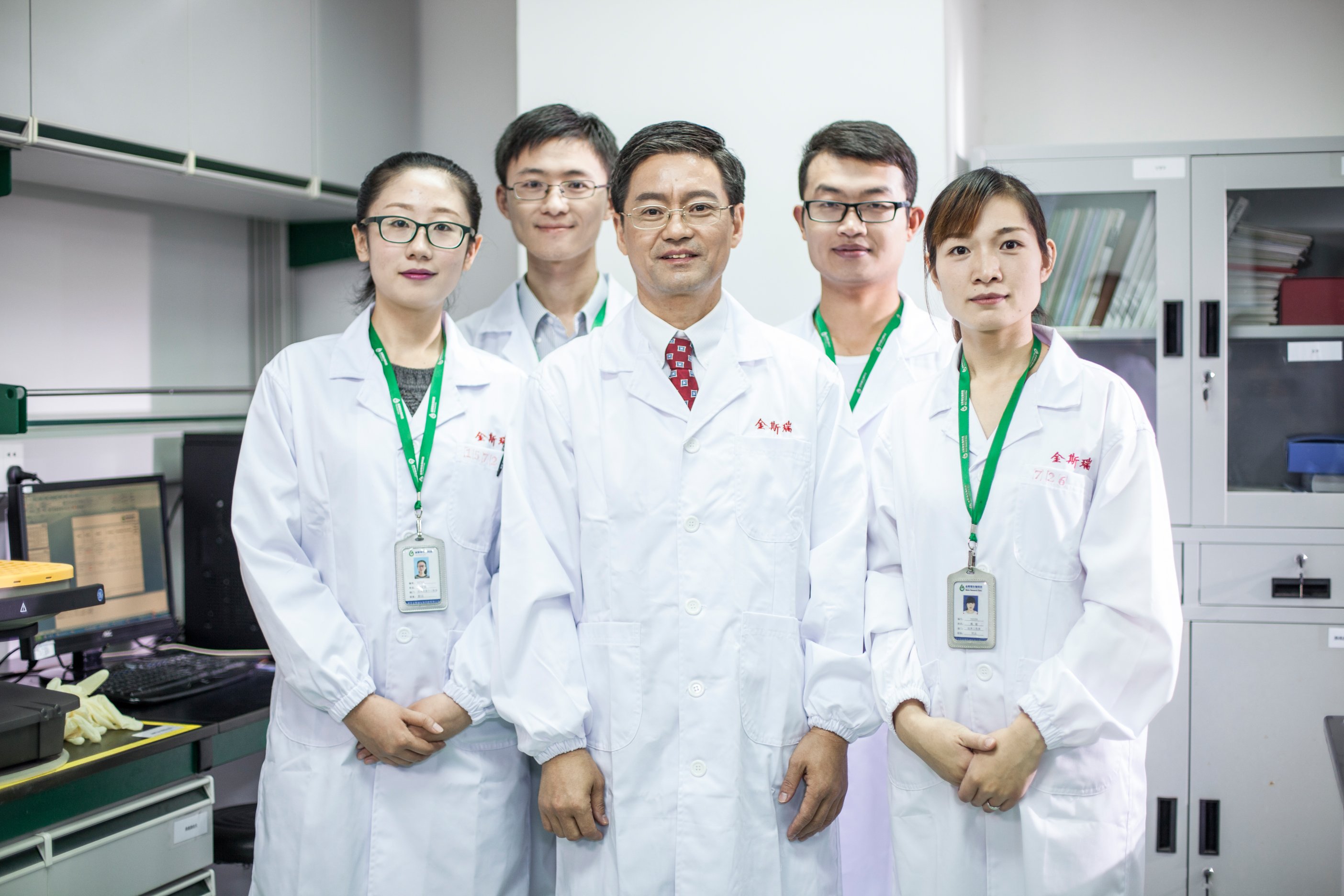
The change in scale created a different kind of work for Zhang. In a 2019 interview, he recalled having only one person report to him in his previous position. By then, GenScript employed about 2,600 people. He described a steep learning curve in people management. Expertise at the laboratory bench had accompanied him into business; experience managing a large workforce had to be acquired along the way.
His discussion of employees was concrete. He wanted people to see opportunities to improve and grow within GenScript, and pointed to advancement programs as part of that effort. He also spoke about suppliers, including the importance of paying them promptly and fairly. These are modest details for a founder profile. They are also details that determine whether another organization wants to work with yours again.
“We are very focused on the long-term,” he said. Long-term thinking can sound comfortably abstract until it reaches a payment deadline, a delivery schedule or an employee wondering whether to leave. Zhang’s account connected the idea to those everyday relationships. A business built for repeat customers needs reasons for people on both sides of an order to keep returning.
“Any delays are just not acceptable in our business.”Frank Zhang, 2019
A second company inside the first
GenScript listed in Hong Kong in 2015. Legend’s history has two beginnings worth keeping separate: the early scientific project, which the company dates to 2014, and the founding of the subsidiary attributed to Zhang in 2015. The project had initially occupied a room described as roughly the size of a freight elevator. Corporate genealogy rarely provides such a useful unit of measurement.
Legend subsequently acquired its own financing and public identity. It began trading on Nasdaq on June 5, 2020, under the symbol LEGN. The offering was priced at $23 per American depositary share, with approximately $423.8 million in gross proceeds. The amount describes capital raised by the company, before offering expenses. It is a corporate financing milestone, not a measure of Zhang’s personal wealth.
The offering also changes how to read his move that August. Legend had become a separately listed company with its own shareholders, board responsibilities and public reporting. Zhang’s transfer from GenScript’s CEO position put him inside that newer organization at an early stage of its life on the market. The parent business was simultaneously giving more responsibility to an experienced internal executive.
In the same August discussion, Zhang said he intended to divide his time roughly equally between China and the United States so that he could interact with both teams. International business, in that account, still required a person moving between places. An organizational chart could connect the offices instantly. Getting people to work together required considerably more attention.
Approximate gross proceeds at pricing.
18.425 million ADSs × $23 each.
The interruption, and the return
His tenure as Legend’s CEO lasted from August to September 2020. That September, Zhang came under residential surveillance during a Chinese customs investigation. In November, Legend announced that he had been formally arrested and had resigned from its board, effective November 22. The investigation concerned suspected import and export violations. At the time of the resignation announcement, no charges had been filed against him.
The resolution belongs beside the interruption. On May 2, 2022, GenScript was informed that the procuratorate had completed its examination and decided not to bring charges against any entity or individual. Zhang returned to GenScript’s board that month. In August 2022, he was elected chairman of Legend’s board. In December, his GenScript position was redesignated from non-executive to executive director.
These dates resist the smooth upward slope often imposed on entrepreneurial careers. His responsibilities changed abruptly, and later changed again. The account is more useful with those turns left visible. A company’s continued existence, the founder’s absence and his eventual return are separate events. Collapsing them into a tale of uninterrupted ascent would lose much of what makes this career distinctive.
Board resignation follows
Returns as Legend chairman
Board selects a new CEO
By 2026, the work is choosing who leads
Today Zhang chairs Legend’s board and remains a co-founder and executive director of GenScript. At GenScript, his committee responsibilities include strategy, risk management and ESG, as well as data security and geopolitical resilience. The vocabulary is a considerable distance from his early scientific work. It describes the obligations that accumulate when a business crosses borders and grows beyond its original team.
In April 2026, EY named Zhang and GenScript CEO Sherry Shao as New Jersey finalists in its Entrepreneur Of The Year program. The joint recognition is a useful detail: the co-founder and the current operating leader appear together. The business still has its original entrepreneur, while its daily leadership belongs to someone else.
Zhang’s public writing in May 2026 emphasized consistency of execution, transparent reporting and disciplined delivery across countries. Those concerns connect with the supplier relationships and customer focus he discussed years earlier. Reaching another market adds a location to a business. Reproducing dependable work there adds a much harder obligation.
On September 15, 2026, Legend appointed Ingrid Zhang as CEO following a board-led search. Speaking as chairman, Frank highlighted her operational discipline and experience running complex global businesses. The founder who had once taken the CEO job was now explaining the board’s choice of another executive to hold it.
His career leaves an unusually practical question hanging over the founder story: what have you built that other people can keep running? Zhang’s answer has developed through scientific services, internal promotions, public listings and board appointments. The work has moved from conducting research to organizing people who conduct it, and then to choosing the people who lead them. The founder remains in the room. There are more chairs around the table.