A degree ought to be a useful thing to pack for a trip to graduate school. Suryanarayanan Paneerselvam took his mechanical engineering education from Chennai to the University of Wisconsin-Madison and discovered how much learning remained. He had studied the subject. Applying it, at the level his new surroundings demanded, was another undertaking. Years later, that uncomfortable distance would become the organising idea of his business.
Paneerselvam, usually called Surya in accounts of Skill-Lync, had graduated from St Joseph’s College of Engineering. In Wisconsin, he encountered Sarangarajan V Iyengar, another mechanical engineer navigating the demands of postgraduate study. Sarangarajan helped Indian students catch up. Surya saw the possibility of taking that help back to students in India, before they had to discover the same problem abroad.
The early experiment was small enough to understand without a spreadsheet. On a visit to his former college, Surya brought teaching videos made by Sarangarajan. Thirty students received three months of training. He later said all thirty found work in their specialisations. The college invited them to teach more. Before there was a venture-backed company, there was a lesson, a group of students and a reason to try again.
A respectable job to explain away
Surya’s career in the US gave the educational idea an industrial setting. At Cummins, he worked as a product engineer on crankcase ventilation for medium- and heavy-duty engines. His work included leading the development of a crankcase filtration system. These were specific engineering problems, with components, constraints and consequences. An engine is an unusually unaccommodating examiner. It has little interest in how elegantly you have revised the textbook.
His first taste of entrepreneurship had come at Wisconsin through an online delivery service. That earlier venture offered an introduction to the moving parts of a startup. Cummins offered something different: experience of product development inside an established engineering business. The education company that followed would draw on both worlds, selling an online service whose usefulness depended on what engineers could actually do.
Leaving a US engineering job required a separate explanation at home. His mother had completed Class X; his father was a graduate. For his parents, an engineering career in America represented a considerable achievement. In a 2022 recollection, Surya described the difficulty of explaining that he wanted to leave it and return to India to start a business. Their hesitation gives the decision its proper scale. He was walking away from something his family had good reason to value.
The classroom after the working day
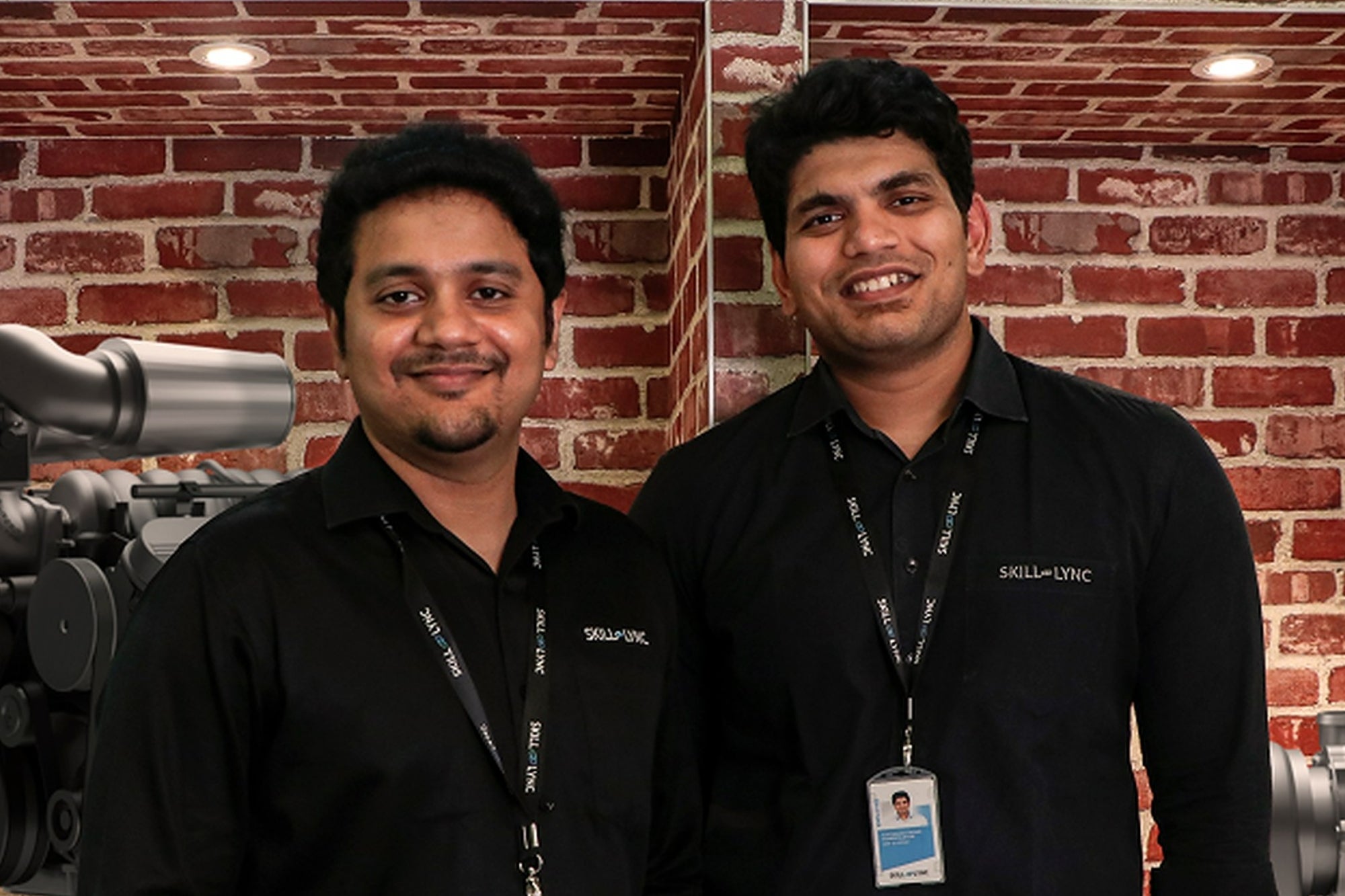
For a time, the founders kept their engineering jobs and taught after hours. Surya worked at Cummins; Sarangarajan worked at Convergent Science. Lessons travelled through videos and live online sessions. By 2015, their teaching effort had reached about 300 students across 12 institutions in Tamil Nadu. Skype served a purpose that an expensive campus might otherwise have served: it put a teacher within reach.
The early courses included MATLAB and Python for mechanical engineers. That choice captured the founders’ interest in the intersection of engineering knowledge and usable software. Their students already had a discipline. The teaching added ways to work within it.
In 2016, Surya returned to India. The venture passed through an earlier identity, EdXengine, before the formal Skill-Lync launch in 2018. Those dates describe different stages of the same effort: teaching, returning, then building an organisation around the teaching. The business developed over several years, in successive practical decisions.
Selling through colleges brought its own difficulty. A successful year did not necessarily mean a renewed agreement. Institutions also wanted classroom delivery. The founders moved towards selling directly to learners, experimenting with live online classes and recorded lessons. Their engineering problem now included distribution: how to make a course accessible without depending on a college’s annual decision.
A portfolio with something in it
Skill-Lync’s proposition became visible in the work students were expected to finish. Recorded instruction was combined with support and projects using engineering software. A learner’s output could become a portfolio to show a recruiter. The company worked with industry specialists to develop coursework around tools including MathWorks products, Ansys, CONVERGE and GT-Suite.
In an April 2023 interview, Surya described a training model of roughly eight months, with learners spending 400 to 600 hours using tools and completing at least 40 projects. These were his description of the programme, rather than a universal account of every student’s experience. Still, they explain the unit of progress he wanted to sell: hours of application, ending in work someone else could inspect.
The distinction matters for a founder trying to connect education to employment. A certificate can be listed in a line. A project invites questions. What did you model? Which assumptions did you make? What happened when they changed? The appeal of the portfolio lies in giving that conversation somewhere concrete to begin. It also gives a training provider a demanding promise to fulfil.
Another experiment moved the work earlier in a student’s education. In July 2020, Skill-Lync announced its Professional Semester-Assist Program, or PROSAP. Students could take a project-based technical course each semester alongside their undergraduate degree, choosing a direction such as automotive design, computational mechanics or electric vehicles. Surya’s stated aim included reaching students in smaller cities. The programme addressed the same gap from a different point in the timetable: begin building practical work during college. It also allowed room for students to try different areas before deciding where to specialise. The portfolio could develop over the years of the degree, rather than becoming an urgent assignment after graduation.
Electric vehicles make the argument tangible
Electric vehicles offered a particular application for Surya’s approach. In 2020, Skill-Lync introduced an eight-month programme in electric vehicle design and simulation. Its curriculum covered controls, battery management, power electronics and motor design, using tools such as MATLAB and Simulink. Software partnerships helped provide access to the tools students needed.
Surya described the course balance as 40 percent theory and 60 percent application in a tool. The precision of that split is revealing. He was arguing for a relationship between fundamentals and practice, with enough time on each for a student to connect them. He also spoke about updating modules as the field changed.
“Our course has 40 percent theory; 60 percent is on applying the course work in a particular tool.”
Surya, discussing the EV programme in 2020
By October 2022, he could point to an object larger than a laptop screen. A team of ten students and technical engineers had built an in-house, full-scale SUV prototype called Lyncer S1. Surya described the purpose as giving students experience of making a real product. An SUV is a fairly conspicuous piece of coursework. It also fits the educational argument: give the lesson enough physical presence that the student has to contend with it.
More capital, a wider assignment
Skill-Lync joined Y Combinator’s Winter 2019 batch. In August 2021, it announced a $17.5 million Series A led by Iron Pillar. Y Combinator and Better Capital participated, alongside new investors including Flipkart co-founder Binny Bansal, Sai Krishnamurthy and Rashmi Kwatra. Funding brought a network as well as money. Surya wanted access to expertise that could help the company develop its alternative approach to engineering education.
The assignment widened again in November 2022 with the announcement of Skill-Lync’s acquisition of Crio.Do. Crio concentrated on computer science and digital careers; Skill-Lync had concentrated on core engineering disciplines. Crio would remain an independent brand, with its founders continuing to run the business.
The two businesses shared an interest in learning through practical work. Bringing them together extended the range of careers the group could address. It also changed the scale of the undertaking. The founder who had once needed a college to agree to another set of lessons was now helping assemble a group of education businesses.
The promise comes under pressure
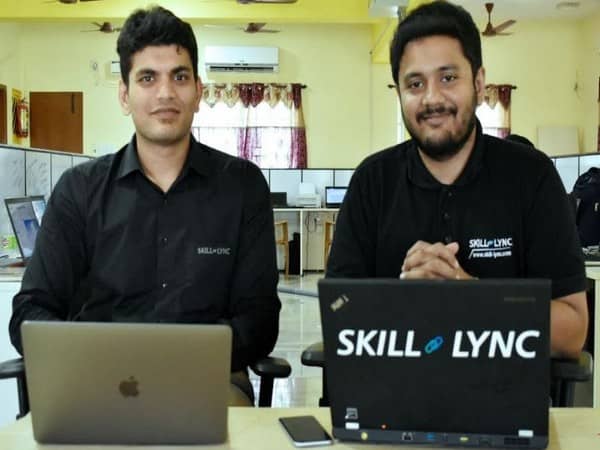
Expansion was followed by retrenchment. In April 2023, Skill-Lync confirmed layoffs and said it was moderating growth expectations, slowing some projects and consolidating operations. Surya described changes to delivery and a reduction in organisational hierarchy. Further job cuts followed in July. For a business built around improving employment prospects, cutting its own workforce was a difficult turn.
Students also challenged the company’s promises. In August 2023, students alleged that job and internship commitments had gone unmet and questioned information used in loan applications. Those were allegations. Surya’s response was that the lending agreement was between the student and lender, and that Skill-Lync was not a party to that contract.
These disputes belong in an account of his work because employment was central to the proposition. A learner paying for a course needs instruction, support and accurate expectations about what follows. The founders’ original diagnosis of an educational gap does not settle those questions. Running the business means answering for the experience of people who trusted it with their next career step.
The work after the degree
In 2022, Surya described an aspiration to develop Skill-Lync from a provider of complementary skills into an alternative platform for engineering education. The ambition went beyond helping someone through a single hiring round. He wanted a larger place in the way engineers prepared for work.
As of October 2026, Skill-Lync’s website continues to centre its offer on engineering tools, projects and placement support, including courses in simulation, electric vehicles and embedded systems. The vocabulary is close to the problem Surya encountered in Wisconsin: a student has learned the subject and still needs practice applying it.
His story gives that problem a human scale. There is a graduate arriving overseas, an engineer teaching after work, a son explaining his return home, and a founder responsible for a much larger organisation. The recurring assignment is to make education useful beyond the examination room. A degree marks a completion. Surya’s career has been spent working on what ought to happen next.