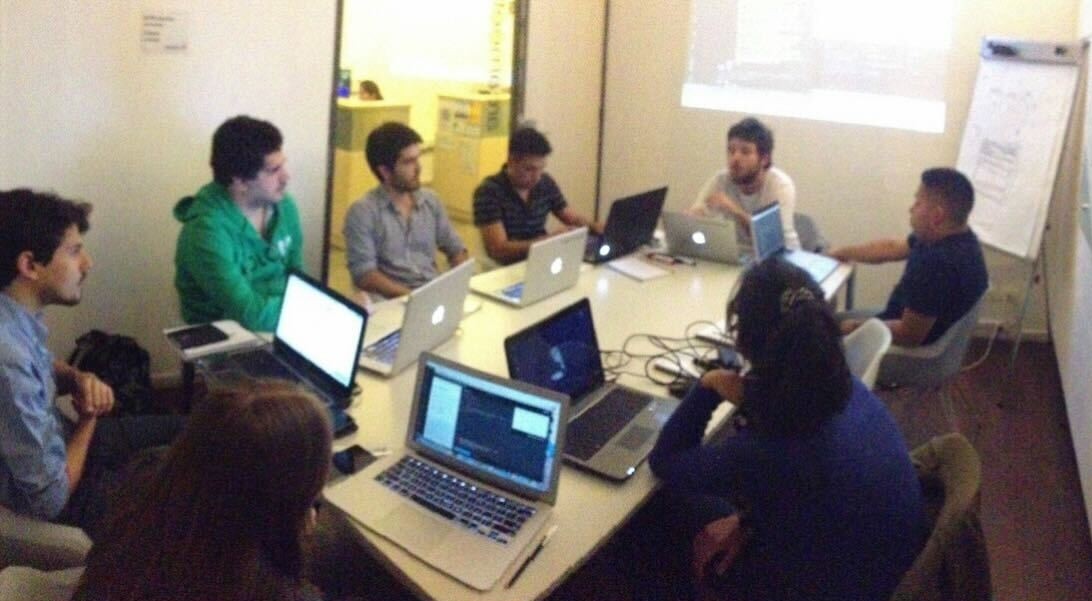
Six students were enough to begin. Christian Patiño remembers renting coworking space by the hour, building websites with WordPress and handing out flyers at universities. The first customers arrived through that unromantic machinery. There was no elaborate master plan, he later recalled. There was a room, a course and the considerable business of persuading somebody to walk through the door.
The details are pleasingly physical for a company now associated with online education. A flyer has to be handed over. A room has to be rented. A person has to turn up. Coderhouse began with the same small test faced by any school: would someone trust the people at the front enough to sit down and learn?
Today Patiño is the co-founder and CEO of an education business that reports helping more than 500,000 students. Coderhouse joined Y Combinator's Winter 2021 batch, raised a $13.5 million Series A that year and expanded across Latin America. Yet the early classroom remains a better place to understand him than the funding announcement. His original problem was unusually personal. He wanted to learn programming and found the experience wanting.
A business graduate looking for a different classroom
Patiño was born in the United States, raised in Venezuela and is based in Argentina. His professional story took shape in Buenos Aires. He graduated in business administration from UADE and had a conventional working routine: a job, an eight-hour day, the outline of a sensible career. He wanted to make something of his own in technology.
There was an awkward preliminary requirement. He needed to know how to program. He tried learning, including through recorded videos, and was dissatisfied. In an early account, he also described attending a Buenos Aires institute whose teaching left him disappointed. The proposed technology entrepreneur had encountered a problem before he had managed to build his intended product.
His response was to create a place where he would have wanted to study. He dated the beginnings to late 2013; Coderhouse dates its start to 2014. That distinction fits the distance between conceiving an undertaking and opening its doors. He teamed up with a secondary-school friend, Nahuel Lema. Each put in $5,000 of savings.
An education company is a curious answer to the wish to become a technology entrepreneur. It puts the founder among the very people whose confusion he understands. Patiño's origin gives his later insistence on accompaniment a practical basis. He had already discovered that access to information and the experience of learning could feel very different.
The school moved before the world did
For years, Coderhouse operated in person. Early expansion took it beyond Argentina, including Uruguay and Chile. By 2016, Patiño had participated in Start-Up Chile and the business had opened offices there. The school was testing whether an idea born in Buenos Aires could travel.
The decisive change came in 2019, when Coderhouse moved to live online teaching. Patiño later described the timing as fortunate: the transition happened roughly five or six months before the pandemic. When classrooms elsewhere were forced to improvise online operations, his business had already begun learning how to run them.
It is tempting to make that chronology sound like prophecy. Patiño himself called it luck. The move addressed a more ordinary ambition: reaching students across a region without requiring them to share a physical classroom. Online delivery removed the journey to the building. Keeping classes live preserved an appointment with other people.
In April 2021, he explained why that appointment mattered. A fixed time and fixed days gave students a responsibility to connect; teamwork made the course harder to abandon. Coderhouse was also developing internal software to monitor its teaching operation. At that time, he described almost 1,000 teachers and tutors supporting more than 10,000 daily learners.
Those are historical figures, but the argument remains legible. A course competes with the rest of a student's day. A calendar invitation can be a small piece of educational infrastructure. The luxury of watching a lesson whenever one likes also includes the luxury of putting it off indefinitely.
The economics of someone answering your question
Patiño's model tries to reconcile two desires: a price students can afford and enough attention to help them continue. In a 2021 conversation, he described cohorts of around 100 people, with tutors supporting groups of 15 to 20. The class could operate at one scale while assistance happened at another.
That arrangement makes the tutor an essential part of the design. A lecturer can present an idea to a large group. A learner stuck on a project needs a response to a particular problem. The distance between those tasks explains why adding more seats alone cannot settle the question of educational quality.
Coderhouse's subject list widened beyond programming to design, marketing and data. The range reflects several kinds of student: someone supplementing university studies, someone developing a business and someone preparing to work in another field. The same platform can serve them, though the thing each hopes to leave with differs.
Patiño also emphasized instructors who practice what they teach. In 2022, he pointed to programmers at Mercado Libre and Rappi teaching part time. Their value lay in working daily with the subjects discussed in class. He wanted students to hear from people who were using the tools outside the classroom.
There is a sensible modesty in that proposition. A digital course can become outdated; a working practitioner can encounter the change before a syllabus catches up. The teaching still has to be clear, and the student still has to do the work. But the classroom has a connection to the place where those skills will be used.
per tutor15-20
per tutor15-20
per tutor
Seven years before the venture cheque
Coderhouse spent its early years building with its own resources. Patiño has described remaining bootstrapped until late 2020. In his account, learning the business and keeping initial fixed costs low came before seeking the kind of capital intended to accelerate it.
Y Combinator brought Coderhouse into its Winter 2021 cohort. That year the company raised a $13.5 million Series A led by Monashees, with Reach Capital participating. Its backers also included entrepreneurs behind other technology businesses. The capital changed the resources available to a company that had started by renting rooms.
The relationships mattered alongside the money. Coderhouse's public investor roster includes Nubank founder David Vélez and Vercel founder Guillermo Rauch. Patiño had named Rauch as someone he would like to hear interviewed in 2021. A founder building a school was entering a network of people who had already wrestled with building other kinds of companies.
In December 2021, Patiño joined Endeavor's entrepreneur network. His selection involved advice on growth strategy and introductions to investors, as well as work on his pitch. Among the people who accompanied the process were Emergence Capital's Santiago Subotovsky and Globant co-founder Guibert Englebienne.
There is an agreeable symmetry here. The founder who sold access to teachers sought teachers of his own. Running a growing business gives a person a fresh collection of things to learn. An investor meeting may look rather different from a coding class, but both can expose the limits of what one knows.
New countries, then a new toolset
Coderhouse launched in Mexico in 2021 and Brazil in 2022. It offered 50 courses in 2022, followed by the introduction of CoderFlex in 2023 and a stronger commitment to that methodology in 2024. The business kept revising how students would study as its reach widened.
By January 2025, Patiño described operations across Latin America, as well as Spain, Portugal and the Spanish-speaking US market. He reported more than 350,000 students trained at that point. His stated priorities included strengthening Argentina, Mexico and Brazil, while Spain offered a route into Europe.
He was also arguing for AI knowledge within existing disciplines. The audience extended beyond people building AI systems. A professional working in marketing or design would need to understand how the tools applied to their own work. Alongside technical skills, he emphasized creativity, problem-solving and communication.
Patiño now describes AI agents being built into the campus to give students feedback, practice and support. Coderhouse calls its 2026 direction Coder 4.0, describing more personalized learning and frequently updated content. These are the company's announced direction and product ambitions, rather than a promise that every learner will achieve a particular result.
The teacher survives the upgrade
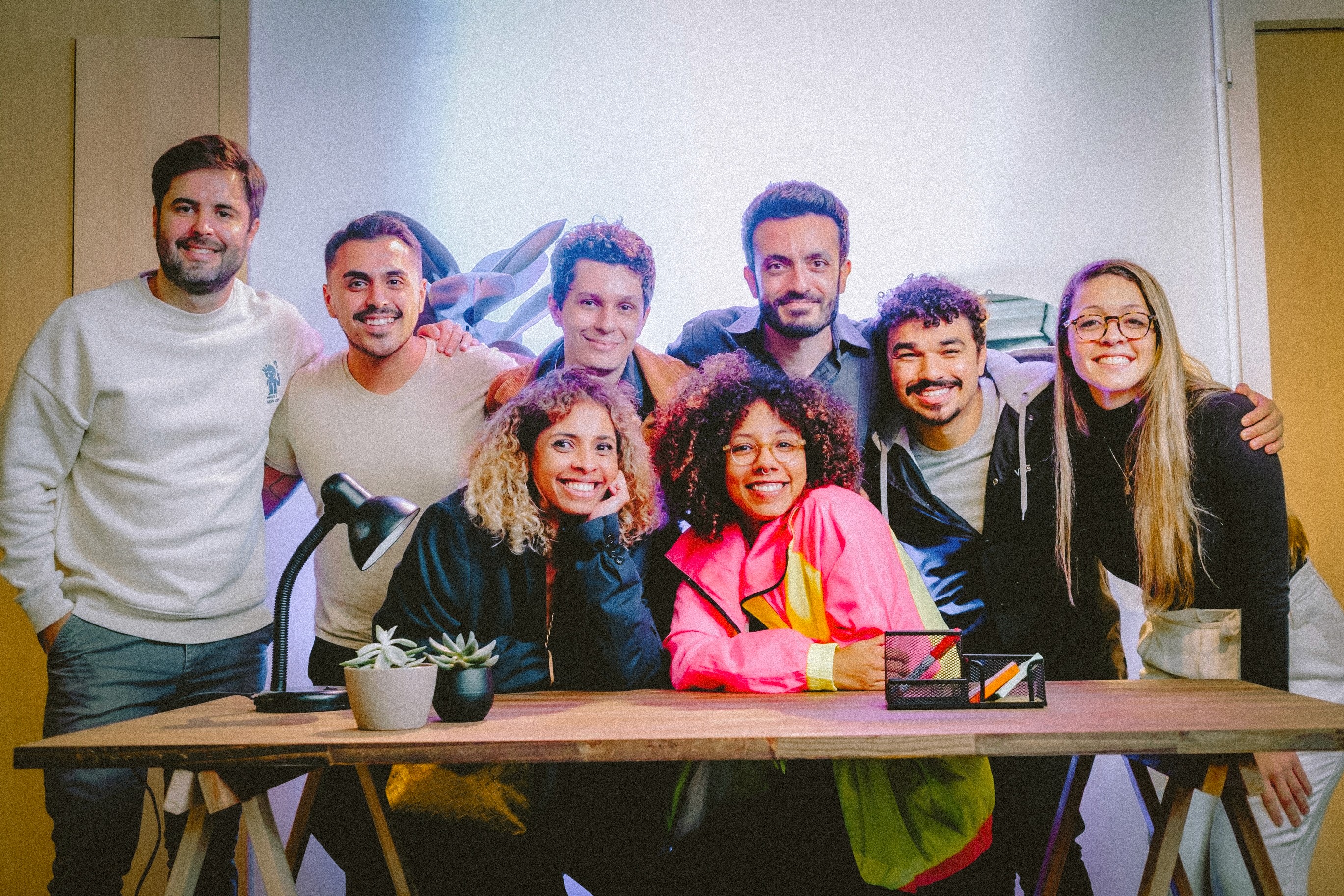
In August 2026, Patiño returned to the human part of his model. A Coderhouse report put AI at more than 20,000 students and identified it as the company's leading educational vertical. The same report said 63% of learners highlighted teachers and tutors as the strongest part of their experience.
Company-reported figures describe the business's own view of its students. They also reveal the argument Patiño is making at this stage: increasingly sophisticated subjects strengthen the case for experienced people helping learners through them. Adding AI to the campus leaves him with the old question of how to provide useful attention at scale.
He put the commercial reasoning plainly: the human factor is an investment. For a founder selling digital education, that is a commitment with consequences. It gives teachers and tutors a place in the economics of the product, rather than treating their time as an inconvenience to be engineered away.
“El factor humano no es un costo, es una inversión.”Christian Patiño, August 2026
The early room and the newer AI tools belong to the same continuing experiment. How much can a school grow while keeping help close enough to use? Patiño's answer has changed in its machinery: coworking rooms, live online cohorts, tutor groups, software, agents. The student with a question remains recognizable. So does the founder who once needed a better place to ask his own.
Follow the classroom further
Continue with Christian’s conversations, public profile and Coderhouse’s own history.
Christian Patiño on LinkedIn ↗Coderhouse ↗Watch: Startupeable interview, 2021 ↗Startupeable episode notes ↗Y Combinator company and founder profile ↗Endeavor: joining the network, 2021 ↗Interview: his plans for AI and expansion, 2025 ↗Teachers and AI learning, August 2026 ↗Coderhouse’s history and photo archive ↗Coderhouse on Instagram ↗Coderhouse on X ↗Coderhouse on Facebook ↗Coderhouse on YouTube ↗Coderhouse on TikTok ↗