Promega had a problem that more advertising could not automatically solve. Its agency knew advertising. Promega knew the science. According to Supreme Optimization’s account, the arrangement kept pulling the client’s own scientific expertise into campaign development. The outside partner still needed someone inside to explain the product.
- Scientists help shape the keywords, content and campaigns.
- Customers buy help with advertising, websites and the systems behind them.
- The useful lesson: match marketing to the buyer’s actual task.
That is a revealing place to begin. A life sciences supplier is selling to people whose purchasing decisions may depend on a particular method, instrument or experimental constraint. A persuasive sentence can still be scientifically unhelpful. Supreme’s proposition is to put people who understand those distinctions inside the agency.
01 Someone who has ordered the reagents
Founder Sheldon Zhai had worked in a University of Wisconsin-Madison laboratory before starting the business in 2015. Later, working as a busboy in Los Angeles, he wanted more income and flexibility. His first SEO engagements cost $500 a month. The deliverable was legible: help a client appear when someone searched for a relevant term.
His early laboratory experience supplied a useful perspective. He had ordered the kinds of products his future clients needed to sell. Today, Supreme advertises a team including 65-plus Ph.D. scientist-marketers, alongside developers, designers and marketing specialists. Scientific familiarity has become a hiring strategy.

02 Two channels, two different jobs
For Promega, Supreme separated discovery from purchase intent. LinkedIn promoted whitepapers and webinars; Google Ads reached people making more specific searches. Scientific copy, keyword research and repeated testing supported the work. The interesting decision was assigning each channel a purpose.
Supreme reports LinkedIn webinar leads costing $20-$30 each and a 50% reduction in Google Ads cost per conversion. Those are campaign results, not today’s agency fees. Nor is a webinar registration equivalent to a sales-qualified lead. Keeping those categories separate makes the numbers useful.
“Having Ph.D.-level scientists develop our campaigns has been a wonderful experience.”
Kevin Pellerin · Promega
Testimonial published by Supreme
The lesson travels beyond biotechnology. Put an educational offer in front of someone still learning. Make the next action clear for someone ready to evaluate a product. Then measure the action you actually wanted, rather than celebrating every click equally.
03 The sale hiding behind a tab
DWK Life Sciences presented a different puzzle. DURAN, WHEATON and KIMBLE lived across three brand websites. Product information was difficult to find. Supreme interviewed customers, examined analytics and rebuilt the shopping experience around clearer categories, filters and navigation.
One detail deserves attention: product specifications became visible instead of sitting behind tabs. Someone comparing laboratory equipment could scan the information needed to judge suitability. The agency reports revenue rising 49%, sales leads 53% and traffic 73%. These are its reported project outcomes, with no reporting period specified.
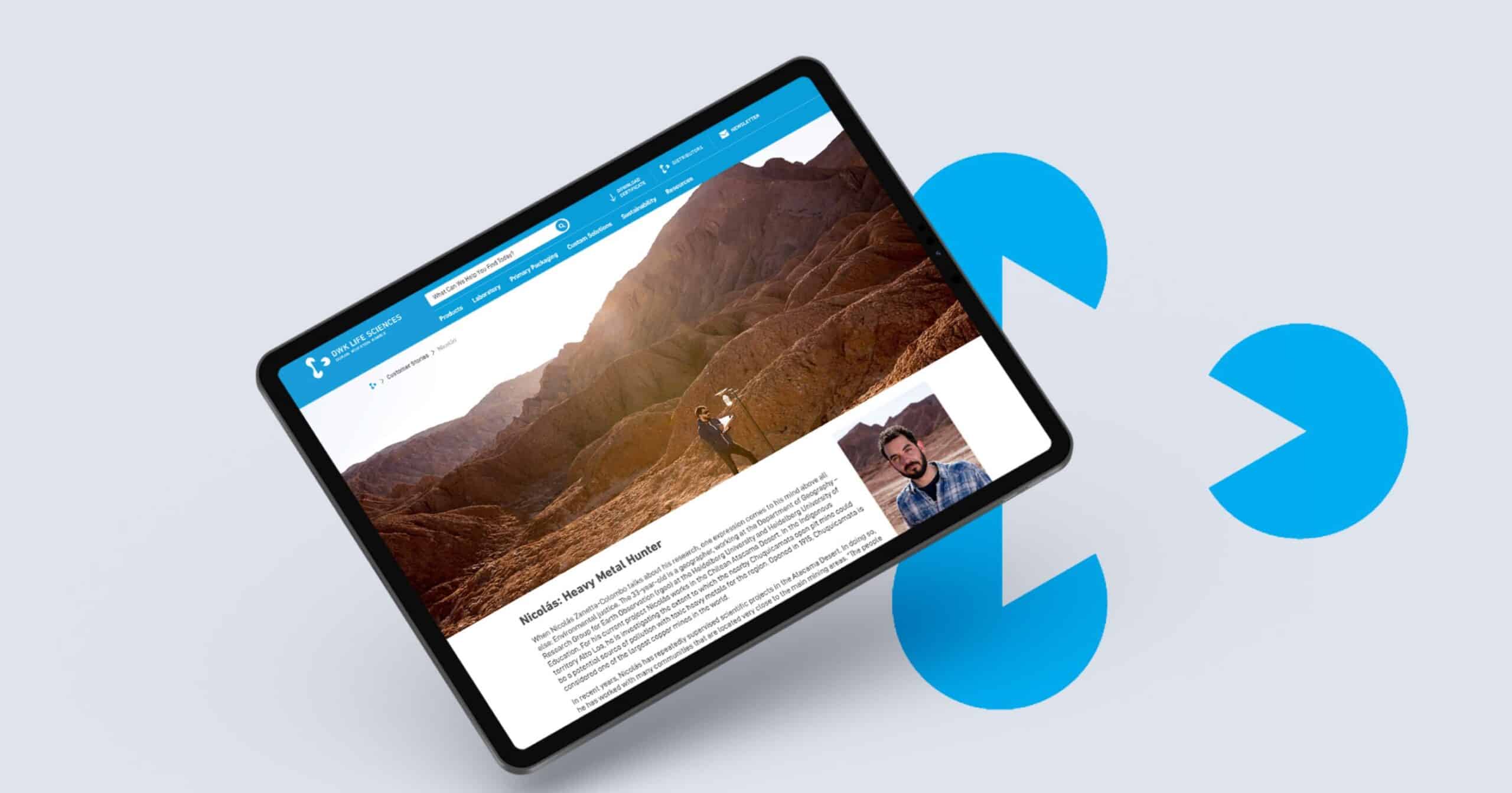
A prettier website alone would leave that purchasing problem intact. Here the commercial work included making technical information easier to retrieve.
04 An agency with plumbing skills
This helps explain Supreme’s breadth. Its customers span scientific tools, biotechnology, pharmaceuticals, medical devices and healthcare. They can commission positioning, scientific content, advertising, websites, marketing automation and analytics. Public examples also include Advanced Cell Diagnostics, MP Biomedicals and Unchained Labs.
The business combines specialist marketing services with technical delivery. BigCommerce lists Supreme as an agency partner handling commerce and integrations with product, customer and enterprise systems. Funnel lists its measurement expertise. Those connections matter when an appealing campaign leads to a product catalogue that must also work.
Recognition has followed specific work: the MaxCyte website revamp won the 2024 Internet Advertising Competition’s Best Biotechnology Website award. It is a concrete achievement in a market where agencies often sound interchangeable. Supreme’s position rests on the combination of scientific understanding and execution across the buying journey.
For a customer, the engagement can therefore reach beyond commissioning ads. A launch might need new messaging, a usable product page and a connection between the inquiry form and the sales team. Those are different disciplines, but the customer experiences them as one journey. Supreme sells work across those disciplines; the buyer still needs to define which parts require outside help.
05 Growth found the spreadsheet
The agency’s own operations offer a less polished, more useful story. Software supplier Operating describes staffing plans spread across spreadsheets, with information copied from HubSpot and Harvest. As the team expanded, that arrangement consumed time and limited visibility.
Connecting the systems reportedly reduced a weekly data-updating task from three hours to 15-20 minutes. Team leads could see upcoming projects and allocate people themselves. The integration also exposed budget overruns. Expertise still needed a workable schedule.
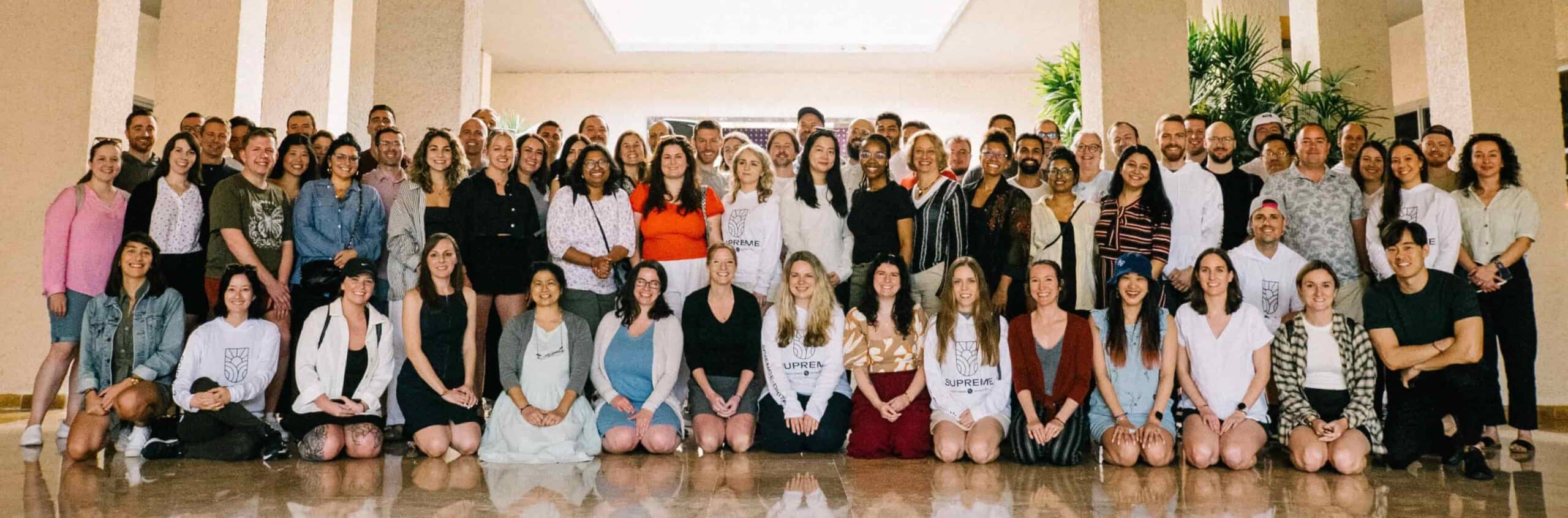
Supreme describes a remote-first culture built around ownership, curiosity and feedback. Its overview says employees can challenge established processes. The staffing example shows why that permission matters: an adequate process can become the next bottleneck.
06 More capacity. Then a different toolset.
Trinity Hunt Partners announced a majority investment in March 2023. Zhai later described waitlists and demand for capabilities such as public relations as reasons to seek a growth partner. Clarity Quest joined that June, widening the offering toward healthcare technology and communications.
In February 2026, parent Supreme Group publicly launched Supreme Intelligence. The platform brings together data, content and analytics; the current FDE+ offering embeds experts to configure agents and workflows. Its model adds managed delivery and platform licensing to the services relationship.
The commercial arrangement matters too. Supreme’s terms describe monthly or annual platform subscriptions, with additional charges possible for custom workflows, premium features and usage. A buyer evaluating AI should distinguish access to the platform from the people configuring it and the work delivered through it. The historical SEO fee belongs to a much earlier business.
The boundary remains consequential. Supreme’s terms require independent review of AI outputs and describe compliance features as assistive. Approved information and accountable reviewers still have work to do.
For buyers, the practical starting point is a defined problem: an audience the team cannot reach, specifications customers cannot find, or a handoff that keeps failing. Ask how the work will change and which outcome will be measured. The method suits technical buying journeys; it offers less obvious value where scientific knowledge is peripheral. Copy the diagnostic discipline before copying the channel mix.
That also means treating a reported result as a question worth investigating. A lead has value only in relation to its quality, acquisition cost and eventual use. A scientific credential helps establish understanding; the commercial test is what that understanding changes for the customer.