Sumit Jain went to work at Oracle one morning without intending to leave. By half past ten, he had resigned. There are tidier ways to begin a business career, with spreadsheets and a reassuringly laminated plan. Jain’s version had a colleague on the telephone the next day. Lalit Mangal had resigned too. Two engineers suddenly had rather more time to discuss their ideas.
Jain had grown up in Khatauli, Uttar Pradesh, studied computer science at IIT Roorkee and graduated in 2006. His recollection of leaving Oracle, told years later, contains the uncertainty that polished founder biographies tend to remove. He would study technology and the market. If he could not start a company, he could join a startup. The next job description was still being written.
Thirty minutes, then a billiards lesson
Oracle had given him something useful before he left: experience making software serve a particular purpose. In the enterprise management team, he worked on a full-stack application that would let the sales team demonstrate a proof of concept to clients. Code had an audience, and the audience needed to understand what it could do.
He also found an unconventional debugging tool in the cafeteria: billiards. When a difficult problem refused to cooperate, he played. He later recalled finding solutions and making friends around the table. The detail is appealing because it makes room for an engineer who could take a problem seriously without remaining solemnly attached to a chair.
His stated lesson from that first job was that people at any level could inspire others. He named Mangal as a friend who had inspired him, and whom he had inspired in return. That exchange would become more consequential than an ordinary workplace friendship.
“No work is big or small”
Sumit Jain, reflecting on his early career, 2015
The neighbours were already there
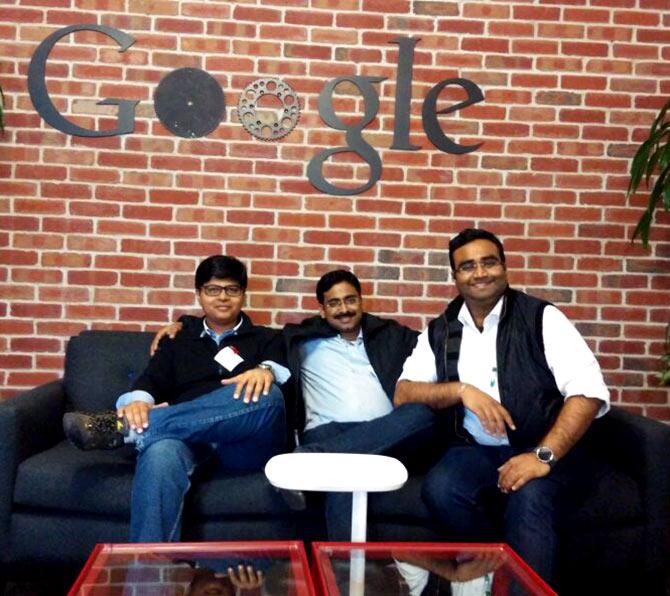
In 2007, Jain, Mangal and Vikas Malpani started CommonFloor. The initial observation was disarmingly domestic. People could spend years living in the same apartment community while scarcely knowing one another. They also shared problems. Owners, residents and association committees needed somewhere to exchange information and organise the business of living together.
CommonFloor gave those overlapping interests a common platform. Over time, its remit included finding, buying, selling and renting homes, alongside tools for managing an apartment community. The person searching for a property and the resident dealing with the building’s accounts could arrive with different needs and still belong in the same business.
That breadth explains something about Jain’s work. A property transaction has an obvious finish line: someone gets the keys. An apartment community carries on the next morning. CommonFloor’s proposition extended into the life that followed the transaction, where neighbours still needed information, services and a way to speak to each other.
A company is allowed to have a personality
The division of labour mattered. CommonFloor’s team description placed Jain in charge of strategy and business, Mangal over product design and development, and Malpani over the community-management operation. The same description called Jain a party lover who brought fun into the company’s work culture. Strategy, apparently, could survive a little merriment.
When Jain spoke to aspiring entrepreneurs in 2015, he emphasised the fit between co-founders. Complementary skills mattered. His own company offered a fairly practical example: business, engineering and communities were related jobs, but they asked different things of the people doing them.
Google Capital became an investor after the CommonFloor founders met its team at a Tiger Global conference. In January 2015, Jain described plans to use data to help property buyers make informed decisions. Many buyers were making an expensive choice without being real-estate experts. The product’s job was to make that imbalance easier to navigate.
He also spoke about profits as the eventual purpose of a business, while treating outside funding as a way to grow. The distinction would return in later ventures. Quikr acquired CommonFloor in January 2016. Jain left roughly a year later, taking his experience into another kind of network.
CommonFloor
Opentalk
Graphy
Test Prep
A second start, with the microphone on
After CommonFloor, Jain travelled through China looking to meet people unlike himself. His next venture, Opentalk, reflected an interest in getting beyond familiar social circles. It connected people through voice conversations, using interests as a starting point. A network could introduce you to someone outside your usual company.
He built it with Ashwani Jain, an IIT batchmate who had been CommonFloor’s director of strategy. The app launched publicly in July 2017. By March 2018, Sumit was reporting 400,000 downloads across 50 countries. Those were his figures at that moment, a snapshot of a young product finding listeners and speakers.
Opentalk offered connections around professional interests, hobbies and learning. Practising English was one use. The ambition was to make knowledge accessible through conversation: people often know things that never become a published lesson. A voice app offered another route to that experience, provided the right people could find each other.
The team was small. In 2018, Jain described five people working on the business and said he was not rushing to raise venture capital. He compared money to fuel for a car. The pleasure, in his telling, lay in driving. After an exit, he was back to working out what a new product should become.
A creator needs more than a following
Graphy began in 2020 with a different experiment. Unacademy introduced it as a product for stories, ideas and original content combining video, audio, images and quizzes. Jain was part of a separate founding team alongside Sushil Kumar, Shobhit Bakliwal and Fiona Leong. The early question concerned the form learning material could take on a screen.
The business subsequently centred on helping educators and creators build their own online offerings. That meant courses, live sessions and the practical machinery needed to sell knowledge. For a creator, producing the lesson is one task. Getting a website, collecting payment and giving learners somewhere to return are several more.
In October 2021, Graphy acquired Spayee for $25 million. Spayee supplied tools for customised courses, websites and mobile apps. Its formats included video and audio tutorials, documents, quizzes, assignments and live classes. The acquisition brought an existing set of tools and customers into Graphy’s plans for the creator economy.
Spayee
Course tools · $25m acquisition
Scenes
Community management · terms undisclosed
Scenes followed in June 2023. Founded by Varun Mayya, Abhinav Arora and Shashank Udupa, it was a community-management platform. Jain was Graphy’s co-founder and CEO when he announced the deal. His explanation emphasised expanding Graphy’s offerings and reach as it grew internationally.
Seen together, the two purchases describe a business extending beyond the course itself. Spayee addressed building and delivering the educational product. Scenes brought community software. There is a familiar shape here: people arrive for a specific purpose, then need reasons and tools to continue interacting. CommonFloor had encountered that question around a home. Graphy encountered it around expertise.
The founder becomes the operator
Jain’s relationship with Gaurav Munjal had begun before Graphy. CommonFloor had acquired Munjal’s earlier venture; Jain later became an early angel backer of Unacademy. Their roles kept changing. An acquisition created a connection, an investment continued it, and eventually Jain joined the business himself.
In August 2023, Unacademy elevated him to partner. Munjal described the position as equivalent to a co-founder who had joined later. In September 2025, Jain was formally named CEO of the test-prep business. Munjal credited his contribution to unit economics and the learner experience, putting financial discipline and the customer in the same sentence.
There had already been a smaller financial milestone at Graphy. In January 2023, Jain announced that it had turned EBITDA positive in December. That was a claim about one month, rather than a declaration of full-year profitability. Keeping the period attached to the number makes the achievement useful: it describes a particular operating result.
The operator’s work is less photogenic than the launch. It involves the relationship between what a product promises, what customers experience and what it costs to provide. Jain’s move into test preparation put that work at the centre of his role.
A logo recognised at the airport
In May 2026, his departure from full-time Unacademy operations was announced, with June 30 set as his last operating day and an advisory role afterward. Munjal credited him with building Graphy and helping the offline business become profitable. Another change of role had arrived in a relationship that had already contained several.
Jain’s own retrospective offered a more personal measure of the work. Travelling in an Unacademy T-shirt, he remembered being approached at airports by CISF personnel who recognised the logo. They told him they had used Unacademy to prepare for their examinations. A corporate symbol had become an introduction between strangers.
That memory brings the story back to its recurring interest: people finding each other through something useful. An apartment platform. A conversation. A course. After all the companies and changing titles, the airport encounter has the satisfying scale of an ordinary conversation. Someone recognised the shirt, walked over and had a story to tell.