Before Submittable managed grant programs, it managed rejection. Michael FitzGerald was a novelist and web developer in Missoula, Montana, tired of the shabby ritual of sending work to magazines by post or email and then wondering where it went. His co-founders, filmmaker Bruce Tribbensee and musician John Brownell, knew the same problem in different costumes. They made a list of things that annoyed them, picked creative submissions, and spent nine months building a social network called Submishmash.
It looked like a marketplace: writers on one side, publishers on the other, opportunity in the middle. There was only one inconvenience. Neither side showed up. The team had fake publishers and fake users in a product FitzGerald later described with cheerful brutality. A two-sided network needs supply and demand at the same moment. Three founders in Montana had neither.
Then FitzGerald started calling publishers. The conversations changed the unit of value. Publishers did not want another social network. They did want relief from manuscripts scattered across email accounts, envelopes, attachments, homemade forms, and spreadsheets. So the founders began cutting code. The glamorous marketplace shrank; the useful workflow remained. Submishmash became software publishers would pay for, then Submittable in 2012.
We started with the poorest customers you could possibly imagine - poetry magazines.Michael FitzGerald, co-founder
The form is the front door. The business lives in the hallway.
Calling Submittable a form builder is like calling an airport a waiting room. Yes, organizations can create a no-code application, ask eligibility questions, collect documents, and accept submissions. But the expensive mess begins after the applicant presses the button: assign reviewers, hide sensitive fields, flag conflicts, score consistently, verify identity, communicate decisions, sign agreements, track budgets, send money, collect reports, and explain the whole process to an auditor six months later.
That workflow now serves state and local governments, foundations, nonprofits, universities, and companies. Programs range from scholarships and awards to emergency relief and community investment. Through Bright Funds and WeHero, which came with the 2024 acquisition of WizeHive, the portfolio also covers workplace giving, donation matching, volunteering, employee resource groups, and organized volunteer experiences.
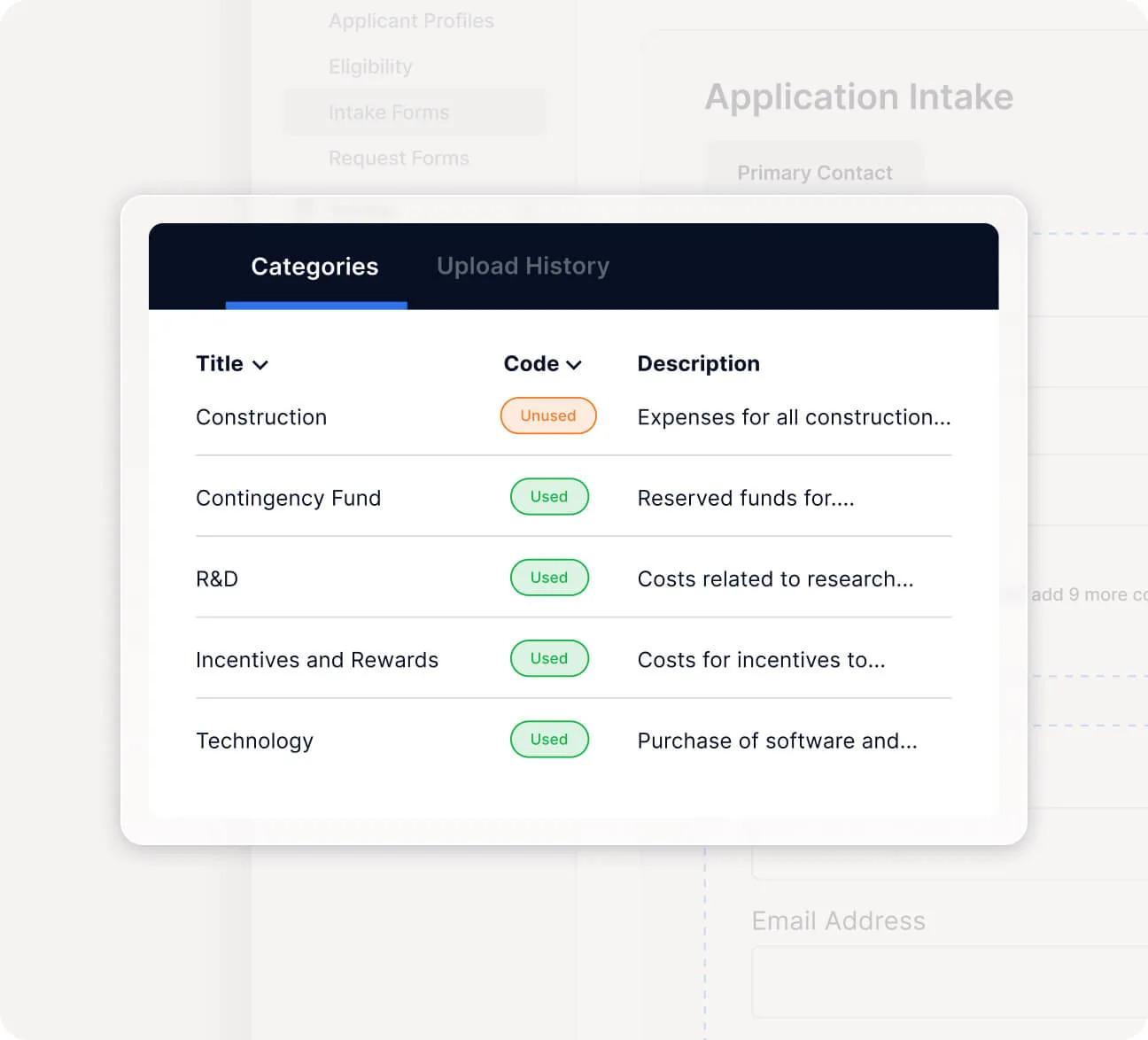
The buyer is the organization running the program; applicants generally create free accounts. Direct pricing is custom. A current AWS Marketplace listing gives the useful public anchor: $22,500 for a 12-month Professional package and $47,500 for Premium, before any privately negotiated variation. The price rises with capacity, features, implementation, integrations, and service. This is not casual form software. It is vertical SaaS for processes where mistakes cost staff time, money, trust, or all three.
Boring software gets exciting when the deadline belongs to a governor.
The pandemic showed what the product was for. Montana had $1.25 billion in federal relief funding and needed to move old paper-based processes online in weeks. Submittable helped the state launch 18 emergency grant programs. In a separate frontline-worker program, Submittable and U.S. Bank processed more than 1.2 million applications in 45 days, automatically checked eligibility, distributed $500 million, and prevented at least $2.2 million in fraud. At the peak, the system handled more than 40 applications per second.
The human stakes hide inside administrative details. One state education department had staff manually reading tax documents for a scholarship program. A transcription error denied an eligible child funding; families waited weeks while fewer than three full-time employees worked through records. Automation was not a nicer dashboard. It meant extracting the right data, removing thousands of hours of repetitive work, and reducing the chance that a typo became somebody else's bad year.
Submittable reports that in 2025 its customers offered 28,931 programs, welcomed 1,184,594 applicants, conducted 4,418,785 reviews, and managed $4.37 billion. Lever for Change has used the platform for 16 open calls that distributed $2.6 billion. The Tennessee Board of Regents cut the time to launch a new program from roughly a week to about an hour. These are company case studies, but the pattern is consistent: the product earns its keep by compressing coordination.
Keep the workflow. Change the noun.
The durable idea was never "literary publishing." It was configurable intake plus group judgment. Change manuscript to scholarship application, editor to external reviewer, acceptance to award, and the data model still works. That let Submittable follow the same workflow into markets with larger budgets and sharper compliance needs without abandoning the applicant experience learned from writers.
Its competitors now include Foundant, Blackbaud, Fluxx, AmpliFund, SmartSimple, SurveyMonkey Apply, OpenWater, and Good Grants. At the cheap end, the enemy is still the improvised bundle of Google Forms, spreadsheets, email, and a heroic operations manager. Submittable's difference is breadth around the decision: applicant-friendly intake, no-code program setup, multi-stage review, permissions, fraud controls, agreements, funds management, reporting, implementation, and technical support.

The 2024 WizeHive deal pushed the company further into a suite strategy. WizeHive added another grant platform; Bright Funds added workplace giving; WeHero added managed volunteer experiences. Submittable said the combined customer base approached 6,000 foundations, corporations, and public entities. Integration is the hard part. Customers were told active subscriptions would be honored while the company worked toward one grants solution and one employee giving and volunteering experience.
Product work in 2025 and 2026 reflects the enterprise turn: granular custom roles, reimbursement workflows, DocuSign status and completed documents inside the product, enterprise data sharing, redesigned analytics, and new navigation meant to support parallel award cycles. ReviewAI applies criteria to high volumes of applications; planned natural-language analytics aims to let administrators question their data in plain English. AI may save time, but in grantmaking the real requirement is legibility: a human still needs to know why money moved.
Delete the network. Invoice the pain.
The Submittable playbook
- Start with a workflow you have personally suffered through. Familiar irritation contains useful product detail.
- If a marketplace stalls, ask which side has urgent pain and an actual budget. Sell that side a tool.
- Expand by reusing the workflow, not by chasing unrelated audiences. Manuscripts, scholarships, and grants all require intake and judgment.
- Move upmarket by owning what surrounds the core action: permissions, payments, compliance, reporting, and support.
- Make the external user experience part of the sale. Grantmakers look competent when applicants do not need a manual.
This playbook has limits. It works when adjacent markets share enough structure that the product bends without breaking. It fails when every new vertical demands a separate data model, sales motion, regulatory regime, and support team. It also depends on a buyer who feels the cost of disorder. A three-person arts group receiving 40 applications once a year may reasonably prefer a form and spreadsheet. A public agency running 35 programs with outside reviewers, protected data, payments, and audits has a different equation.
It fits when...
- Multiple programs or review stages repeat
- Applicants need a clear, accessible experience
- Payments, permissions, and audit trails matter
- Manual errors carry public or financial risk
It does not when...
- One low-volume form solves the job
- The annual contract exceeds the pain removed
- No one owns implementation and process design
- The workflow changes completely every cycle
The cost comparison is less about software seats than labor and consequence. Imagine four administrators spending a combined 25 hours each week chasing attachments, re-keying payment data, reminding reviewers, and rebuilding status reports. At a blended loaded cost of $50 an hour, that is roughly $65,000 a year before counting an ineligible award, a missed deadline, or a painful audit. A dedicated platform does not erase the work, and implementation has its own cost, but it can move people from clerical reconciliation to program design. If the same team spends only two hours a week on the problem, the arithmetic flips. The spreadsheet wins.
That is also where Submittable sits in the market. It is above generic forms and lightweight databases, beside specialist grant-management suites, and below the kind of custom system a federal agency might commission. Its expertise is translating policy into repeatable workflow without asking each customer to become a software team. Eligibility becomes branching logic. A review committee becomes roles, assignments, concealed fields, scores, and conflicts. A grant agreement becomes a signature trail. A finance meeting becomes a budget view. The platform's value is not that any single feature is impossible to reproduce. It is that reproducing the complete chain with six tools creates seven handoffs, and every handoff is a fresh place for data to wander off.
Submittable's cultural language is unusually aligned with its market. It is a public benefit corporation and says its mission is to accelerate the missions of organizations doing social-impact work. Employees have received company funds to direct to nonprofits, while the business supports volunteering, in-kind donations, and community grants. The sentiment is attractive; the more meaningful test is whether the software helps a small program team answer applicants faster and move money with fewer mistakes.
Fifteen years after the empty social network, Submittable has arrived at a less fashionable but sturdier place. It is infrastructure for decisions. A novelist sends a story, a student requests a scholarship, a business applies for relief, an employee donates to a food bank. On the other side, someone must decide, document, pay, and explain. The company made a business out of that unglamorous middle. Its original marketplace fantasy disappeared. The queue turned out to be the product.