The tortilla came first. Before Siete was a billion-dollar acquisition, it was an almond-flour answer to a family problem: Veronica Garza had changed her diet and missed the foods she grew up eating. Her family turned that answer into a business. Eventually, the business needed something its founders could not make in a kitchen: experience building a much larger company.
- Stripes backs consumer and technology companies through growth equity.
- Its offer pairs money with recruiting, operating advice, and introductions.
- The founder’s question: which specific obstacle will this partner help remove?
Siete found that partner in Stripes. A $90 million minority investment, announced in 2019, would support product development, distribution, and hiring. In January 2025, PepsiCo completed its purchase of Siete for $1.2 billion. Those figures make a pleasing before-and-after. The interesting business lesson is tucked between them.
The tortilla test
Stripes is a New York growth equity firm founded by Ken Fox in 2008. It buys stakes in consumer and technology businesses and supplies practical help alongside capital. The portfolio includes Vuori, Island, Ramp, and A24. Former investments include On, monday.com, and Siete. A shoe, a browser, a tortilla: the shopping basket looks eccentric until you examine the selection rule.
The firm calls itself a product-led growth investor. The proposition is that people’s attachment to a product can travel beyond its first audience. An investor can then help assemble the people, distribution, and processes needed for that journey. This is a useful way to read the portfolio, although affection alone tells you little about the price worth paying.
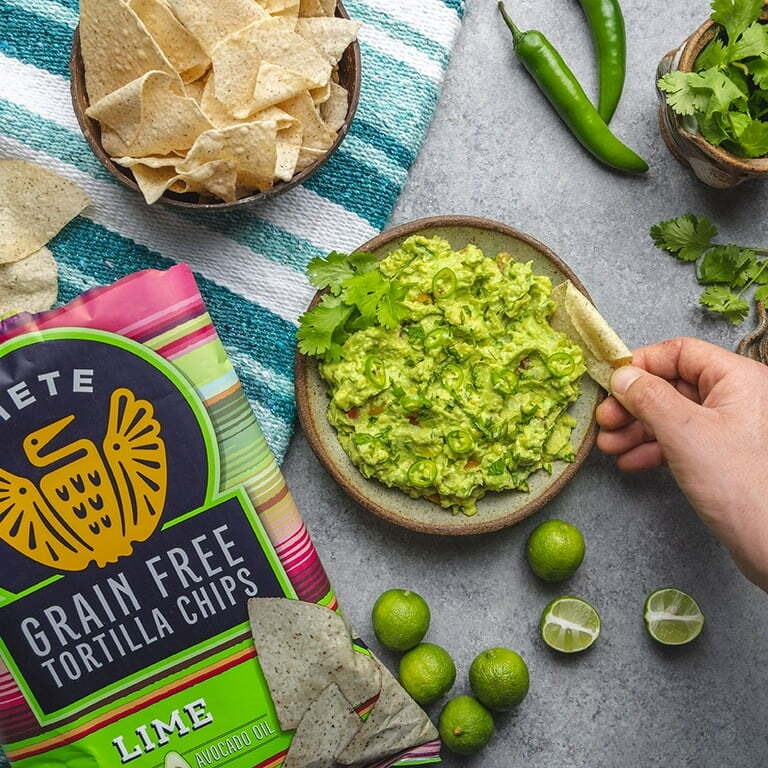
Miguel Garza’s explanation of choosing Stripes was refreshingly practical. Speaking to Inc., he recalled the family recognizing that none of them had built a billion-dollar food business. In his Taste Radio interview, he described a relationship developed over time, with alignment on what they wanted to build. The decision turned on complementary experience and trust.
The first constraint in that account was the team’s experience of the next stage. For a founder, that distinction matters. A funding pitch becomes more useful when it identifies the missing capability: a distribution executive, a new category, a credible plan for reaching the next customer.
A shoe, a cookie, a spreadsheet
Fox’s background helps explain the unusual combination. Before Stripes, he invested in and ran businesses including SmartWool and NetQuote. He also co-founded Internet Capital Group. Consumer products and technology were already part of his working vocabulary before they became the firm’s paired investment territories.

Consider On. Stripes dates its investment to 2017 and describes helping the Swiss running brand expand in US retail and e-commerce, meet prospective hires, and make introductions for Asia. On completed its IPO in 2021. These are identifiable jobs in a company’s expansion. They also give a prospective founder something concrete to ask about.
Then consider monday.com. Stripes led its $50 million financing in 2018. The company said it already served more than 35,000 paying teams and would use the money for international operations and product development. Demand existed. Expansion required a larger organization around it.
Levain brings the argument back to the counter. Stripes partnered with the bakery in 2018. Operating partner Sharon Rothstein, formerly Starbucks’ chief marketing officer, serves on its board. Levain co-founder Connie McDonald put the emotional requirement plainly:
“I felt the brand and the bakery was going to be safe with them.”Connie McDonald / Co-founder, Levain
Safety is a revealing word. Expansion can put the thing customers love under strain. More locations, more employees, and more channels create more opportunities to change the experience. A founder evaluating an investor has to decide whether the proposed growth preserves the reason the company has customers at all.
Island supplies a software example. Stripes describes using its security network to introduce the enterprise browser company to prospective customers. That gives the service model a testable shape: an introduction to someone who understands the product and might buy it. A founder can ask how closely those introductions fit the sales process, and how much preparation the operating team provides.
Read the cheque carefully
There are two sides to Stripes’ business. Entrepreneurs receive capital and support. Investors in its private funds provide the money and seek investment returns. Adviser disclosures describe investments encompassing minority growth stakes and buyouts. The economic relationship comes with ownership, governance, and eventual liquidity considerations.
Transaction language matters. In November 2024, Stripes and General Atlantic co-led an $825 million investment in Vuori at a $5.5 billion valuation. The announcement specified a secondary tender offer. That structure gives existing holders liquidity; the headline amount should not be mistaken for fresh cash entering the company, or for Stripes’ individual cheque.
The same care applies to Siete. Its $1.2 billion purchase price is the value of the acquisition, not a disclosed Stripes payout. Calculating the firm’s return would require its ownership and other transaction details. A successful company sale and a particular fund’s realized return are different measurements.
The portfolio is also moving deeper into AI infrastructure. In August 2026, chip company Etched named Stripes among investors in a $700 million round led by Jane Street. Its stated purpose was accelerating production after shipping its first rack. Here, the next constraint involves factories and supply chains.
Ask for the next introduction
Stripes’ Scale Team covers go-to-market, talent, finance, operations, and research. Its approach page lists more than 100 advisors and council members. For a founder, the useful test is specific: who will help hire the next leader, evaluate a market, or introduce a plausible customer? Ask how the work will happen.
General Atlantic, Summit Partners, TSG Consumer Partners, and Insight Partners offer alternative routes, depending on the business. General Atlantic is also a Vuori co-investor. Founders are choosing a working relationship within an overlapping market of capital and expertise.
The lesson travels further than the portfolio. Identify the next constraint before shopping for money. If demand remains uncertain, expansion capital can magnify that uncertainty. If a founder’s preferred pace conflicts with a fund’s need for liquidity, good chemistry will not settle the disagreement. Start with the product people want. Then choose the partner whose experience matches the company it needs to become.