Steven Roth wanted a tenant out. The tenant, inconveniently, possessed a lease. At 1540 Broadway, Virgin Megastores occupied retail space that Roth thought could earn considerably more. Efforts to buy its way out went nowhere. So Vornado and Stephen Ross’s Related helped buy Virgin’s American retail operation. Some landlords change the locks. These two changed the ownership of the shop.
Roth later told the story with evident pleasure, teasing Ross about their shared appetite. Beneath the joke was a characteristic maneuver: enlarge the transaction until the obstacle becomes something you can own. In Roth’s world, the business on the sign and the value under the building often tell different stories.
That distinction runs through a career stretching from suburban discount stores to Manhattan office towers. It also helps explain why a conversation about him can turn, without much warning, from a shopping center to a Broadway opening or a patch of land that refuses to become what everyone expected.
The shop was only the beginning
Born in Brooklyn, Roth attended DeWitt Clinton High School in the Bronx, then Dartmouth, graduating in 1962. Business school followed at Tuck in 1963. The education gave him credentials. His subsequent work suggests a more particular interest: the difference between what something was called and what it might be worth.
With David Mandelbaum and Russell Wight Jr., he built Interstate Properties, a partnership buying and operating shopping centers. The early geography was suburban. Roads, parking and retail sites provided the raw material. Manhattan’s skyline would come later; the habit of examining the ground had already formed.
Vornado arrived with an identity problem that suited him. It operated Two Guys, a struggling discount chain, and carried a name inherited from a fan business. Roth and his partners accumulated shares and fought for control, prevailing in 1980. Closing stores and letting their space to others turned the company toward property.
By the early 1990s, Vornado had assembled more than 50 shopping centers. Its conversion to a real estate investment trust in 1993 formalized the change. The merchandise had gone. The addresses remained, now supporting a different business model. It was a profitable transformation with an unsentimental premise, and the store closures carried a cost for employees.
“We were born retail developers, but early on we learned about mining.”
Steven Roth, 2004 shareholder letter
A department store with another future
Alexander’s offered another version of the puzzle, this time with Manhattan land in the middle. A department store could occupy an address whose potential value extended well beyond the business at its counters. Roth’s investment grew into a long contest over that possibility. The chain closed in 1992; its properties had a further life ahead.
The former flagship at Lexington Avenue and 59th Street eventually became the Bloomberg Tower and One Beacon Court development. Getting there took patience of a kind that can look, from outside the boardroom, remarkably like inaction. Roth understood the accusation and did not much care for its wording.
Speaking at Columbia in 2010, he explained the wait with unusual economy: “I wanted the price to go up. A lot.” It is a sentence almost entirely free of the ceremonial vocabulary that usually accompanies a developer’s intentions. There is no urban renaissance in it. There is a price, and a preferred direction.
He also admitted that buying cheap had sometimes proved less rewarding than buying quality. The admission complicates the caricature of a bargain hunter who never revises his views. A low entry price is useful. It still leaves the question of what kind of asset one has bought.
What survives when the original business disappears?
Learning to build with steel
The move into Manhattan required people as well as properties. Attorney Stephen Lindenbaum recalled Roth’s determination to learn a different scale of development. After an encounter, a retainer check arrived, accompanied by a note establishing the new relationship. Roth had a direct way of turning an introduction into an appointment.
In 1996 he recruited Michael Fascitelli from Goldman Sachs, where Fascitelli had led the real estate practice. A company rooted in shopping centers was adding the financial and operating experience for a larger Manhattan presence. The familiar story of the solitary property genius becomes less convincing when one looks at the hiring.
Roth’s authority endured through changes in title. Chairman since May 1989, he served as CEO until May 2009 and returned to that role in April 2013. His work also extended to Alexander’s and industry leadership at Nareit. Long tenure gave his preferences time to become visible in the portfolio.
Waiting has a street address
Patience is easier to celebrate after the building opens. Before that, it can become a public argument. Boston’s former Filene’s site supplied an unhappy example. Construction stopped in 2008 when financing could not be secured, leaving a hole in Downtown Crossing and a dispute that outlasted several seasons of assurances.
Mayor Thomas Menino criticized Vornado’s handling of the property. Permits became part of the confrontation. For neighboring businesses, the delay was a fact of daily trade, rather than a line in an investor’s calculation. An empty site occupies a remarkably large amount of civic attention.
In 2012, Millennium Partners reached a deal to take the lead, with Vornado assuming a more passive role. The episode belongs beside the successful transformations. It shows the distance between controlling an asset and delivering a place people can use. Cities have limited enthusiasm for being asked to admire an investment thesis through a construction fence.
The apartment, the garage, the argument
Roth’s negotiations also supplied New York’s property business with entertainment. At 220 Central Park South, a garage lease controlled by Gary Barnett’s Extell complicated Vornado’s plans. The dispute took two years to settle. Extell eventually surrendered the lease and sold a neighboring parcel and air rights in a transaction totaling $194 million.
The resulting residential development became a significant part of Vornado’s record. By the 2023 shareholder letter, reported sales at 220 Central Park South had reached $3.268 billion, with more than 98 percent sold. Those are sales figures, rather than a measure of Roth’s personal wealth; the distinction matters.
His attitude toward residential development could be entertainingly ambivalent. He complained that an apartment sold years earlier at One Beacon Court was being offered again for much more. A buyer making money ought to be a developer’s excellent advertisement. Roth could also see the money he had left behind.
The commuter in the investment thesis
The Penn District gives his long view a larger canvas. Vornado’s holdings around Pennsylvania Station comprise roughly nine million square feet across buildings and land sites. PENN 1, PENN 2 and the Farley Building put offices near the journeys that bring workers into Manhattan. The location supplies the everyday logic beneath the development ambition.
In his 2023 letter, Roth argued for high-quality offices with amenities and transportation access. The argument has a landlord’s obvious interest behind it. It also makes a specific claim about what tenants will pay for: a useful location, a better building and reasons to come inside.
His company has used long agreements to reshape other properties too. In May 2025, New York University took a 70-year master lease covering 1,076,000 square feet at 770 Broadway, with a $935 million prepaid lease payment. Vornado retained the retail condominium occupied by Wegmans. Once again, the arrangement mattered as much as the outline of the building.
Park Avenue, in three signatures
On October 21, 2026, the next large commitment became concrete. Vornado announced the closing of the 350 Park Avenue joint venture with an affiliate of Ken Griffin and Rudin, alongside a Citadel anchor lease and a $3.3 billion construction loan. Construction was underway.
The ownership divides 60 percent to Griffin’s affiliate, 36 percent to Vornado and four percent to Rudin. Citadel’s lease covers 1.05 million square feet. Foster + Partners designed the planned 66-story tower. Those agreements give the project a tenant and financing; completing the building remains work ahead.
For Roth, it extends the wager on Manhattan offices in a form that is unusually easy to inspect. There is an address, a partnership and a signed commitment from an occupier. The old questions from the shopping-center years survive at a different altitude.
Three owners. One address. Venture closed October 21, 2026.
A different sort of opening night
The family offers another way into the story. Roth’s wife, Daryl, is a Broadway producer; their son Jordan also built a career in theater. Property and performance share an appetite for openings, though the audience is entitled to leave a theater rather sooner than most commercial tenants.
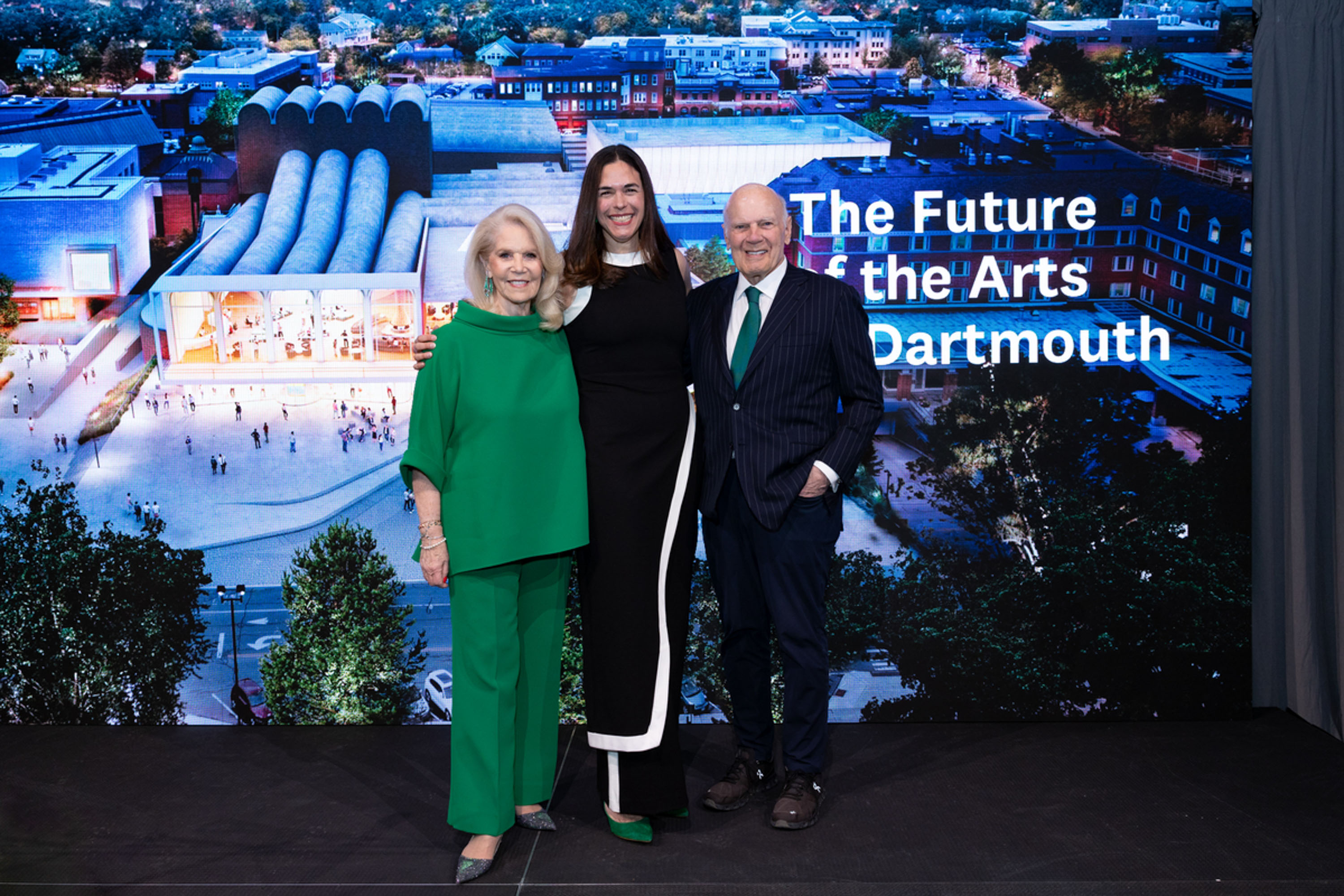
In April 2024, Dartmouth announced a $25 million gift from Daryl and Steven toward the Hopkins Center for the Arts transformation. The college connection reaches back to his arrival as an undergraduate in 1958. He later served as a trustee, chaired its finance committee and received an honorary degree.
Their support has also included professorships and the Roth Center for Jewish Life. At the Lincoln Center celebration, former trustee chair Bill Helman brought out a Roth bobblehead. A little irreverence seems a suitable tribute for someone whose public remarks have so often resisted the solemnity of his occupation.
Roth’s record contains stores closed, sites delayed, towers built and rooms made available for art. Taken together, they describe a life spent deciding what an address could become. The question has occupied him for decades. On Park Avenue, another answer is under construction.