A furnished apartment has a peculiar talent for looking finished. There is a bed, a sofa, perhaps a plant doing excellent unpaid work in the photographs. Then someone opens a laptop. The table is too small. The connection falters. The room has been prepared for a visitor whose main occupation is visiting. Steve Satoru Naito has spent years taking that distinction seriously.
The Anyplace co-founder and CEO builds housing for people whose working lives travel with them. His subject is the gap between being able to work from a different city and being able to do it comfortably on Tuesday morning. Freedom has a glamorous vocabulary. Its daily requirements are considerably more domestic: a useful desk, a clear video call, a rental that does not demand a year of your life.
Naito knows the gap from both sides. He left Japan after university to pursue a company with an international reach. He also became the customer who kept moving and resented the machinery of every move. Those two experiences eventually met in Anyplace. The ambition was large; the irritation was wonderfully specific. Someone still had to arrange the electricity.
A movie, an economics degree, and a departure
He was born in Kofu, in Japan’s Yamanashi Prefecture, in 1990. His family ran a small business dealing in woodworking machinery. Basketball occupied his school years. At Rikkyo University, where he studied economics, another pastime involved visiting tsukemen restaurants around Ikebukuro. The future housing founder first had a fairly well-developed interest in where to eat.
Then he watched The Social Network. The film’s account of Facebook stirred an interest in entrepreneurship and Silicon Valley. A movie can supply the destination while being decidedly vague about the luggage. Naito began moving toward that destination through a startup blog, launched while he was still a student, and internships at Tonchidot and East Ventures.
Those internships put him near people building and financing technology companies. Reporting for TechCrunch Japan gave him another useful skill: asking founders to explain themselves. Before he had a company to sell, he had a reason to request a conversation. It was a modest credential, but one that could survive a flight across the Pacific.
After graduation he moved to San Francisco. He has described arriving with little English, little money, and no local friends. The desire to build something global was already there. The practical problem was finding a way into a community where everyone seemed to know someone. His response was to do work that made introductions possible.
The interview was the introduction
Naito conducted more than 100 interviews as he built relationships in the Bay Area. After some of those conversations, he invited the interviewee to a sushi dinner. The professional introduction had a second act. There is a certain efficiency in bringing people together over something they would happily have done anyway; dinner also gives a conversation permission to wander.
The reporting left a public trail. In June 2016, he interviewed Y Combinator partner Kat Manalac for a piece aimed at Japanese startups. It examined what founders from outside the United States could gain from the accelerator and its community. The questions belonged to a reporter, but the subject was close to home: how does someone arriving from elsewhere find a place to begin?
The following month, an interview with 500 Startups partner Marvin Liao addressed the accelerator’s international approach and its San Francisco program. Naito was learning about the institutions around him while explaining them to readers in Japan. Publishing gave the exchange a useful symmetry. He could ask for someone’s time and return something that other people could use.
That habit of seeking company has continued. Years later, he publicly praised the founder community Hampton for answers about running a startup that he would not find through a search engine. The early interviews and the later recommendation suggest the same practical preference: when the question is difficult, find someone who has lived through it.
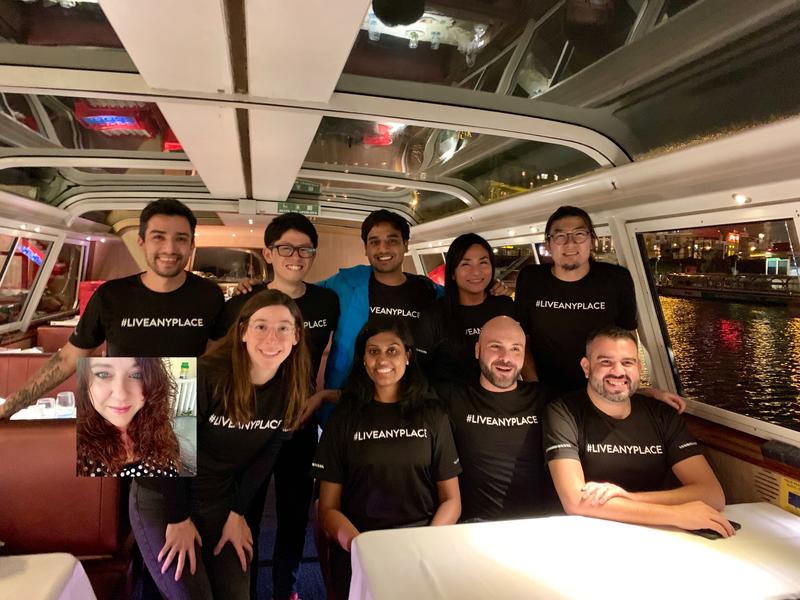
At Anyplace’s first company meetup in Amsterdam, the team photograph made that preference visible. Naito described a ten-person company already spanning several nationalities. The matching shirts said #LIVEANYPLACE; the gathering supplied the human part. A business organized around living in different places still had good reason to get everyone into the same one.
The trouble with a one-year promise
Repeated moves gave Naito a problem he could describe without a slide deck. A conventional apartment required a long commitment, furniture, and utility arrangements. Departure meant undoing much of the same work. Each address came with its own administrative sequel. He wanted the simplicity of booking a hotel, with the flexibility to stay and live.
Anyplace launched in 2017. Its early form connected customers with professionally managed hotels, serviced apartments, and coliving properties for monthly stays. Bookings and payments happened online. The unit of choice was a month rather than a conventional annual lease. The company could help a person settle somewhere without asking that person to predict the next twelve months.
By August 2019, the business had accommodated more than 500 customers in partners’ properties and raised a $2.5 million seed round. Naito identified supply as a pressing difficulty: desirable properties were already booked, and customers were waiting. Demand was encouraging, but demand cannot hand anyone a key. The available rooms had to keep up.
He was also already thinking beyond the booking. In 2019, he described a fully remote team spread across different countries and a belief that changes in working life would change what people needed from housing. Anyplace’s staff were participating in the arrangements their product was meant to support. The company had an unusually convenient group of potential test users.
“I think the housing rental experience will only become more flexible in the future.”
Steve Satoru Naito, 2020
In 2020, Naito described housing as one of the barriers preventing people from changing how they lived. A remote job could remove the commute while leaving the lease entirely intact. His forecast was that renting would become more flexible. The next challenge for Anyplace would be making that flexibility useful during the working day.
A room with a working day inside
Anyplace Select put the workspace at the center of the accommodation. The equipment list included a height-adjustable desk, an ergonomic chair, a 34-inch monitor, a professional microphone, and fast Wi-Fi. Even the green screen and docking station had places on the list. This was furniture selected for the hours between breakfast and dinner, when a traveler might be earning the money that paid for the stay.
In January 2022, Anyplace announced a $5.3 million Series A led by GA Technologies, with backers including LAUNCH Fund, Jason Calacanis, East Ventures, and Keisuke Honda. The investment supported more furnished apartments designed for work. Naito reported that Select had reached a $1 million revenue run rate within seven months. That figure described a pace of revenue, rather than a completed year’s receipts.
The change required a different kind of responsibility. A marketplace can assemble options; an operator has to make the room deliver. Anyplace moved toward leasing apartments and furnishing them itself, placing more of the experience under its control. In his account of the shift, Naito returned to a frustration he knew as a traveler: an accommodation listing could promise somewhere to stay while leaving the work environment to chance.
Seen this way, the desk is a useful explanation of his business judgment. If the customer must still solve the work setup after arrival, part of the original problem remains. Taking responsibility for the equipment makes the promise more concrete. It also means someone has to select it, install it, and answer when something fails. The idea acquires a screwdriver.
The numbers arrive with obligations
The October 2023 funding announcement put another figure beside the product: $10.27 million, comprising $8.27 million in equity and $2 million in debt. LAUNCH Fund led the equity round, and its president, Michael Savino, was set to join the board. The distinction matters. A dollar invested for ownership and a dollar borrowed both enter a business, but they carry different obligations.
The founder’s public writing runs alongside that effort. On Medium in February 2024, he addressed the significance of Japanese startups attempting to build in the United States. The concern extended beyond his own company: he wanted more Japanese founders to see the Bay Area as a place where they could work and contribute. The reporter’s bridge between two audiences was still in use.
A return trip with something to bring
In May 2026, Anyplace announced a collaboration with Daito Trust Construction to expand housing prepared for remote work in Japan. The initial pilot was in Tokyo’s Minato Ward. It paired furnished living spaces and high-speed internet with professional work setups and support intended for international residents. The company Naito had built abroad was bringing its operating approach back to Japan.

Daito’s own announcement named the first property as Luxudear Shiba Koen, a residence managed by its group. The collaboration was part of a Tokyo Metropolitan Government program matching corporate venture capital with smaller companies and startups. The plan was to test resident needs and operating results before further expansion. A return to Japan came with a pilot, partners, and work to measure.
Naito described the collaboration as a bridge between the United States and Japan, the two places that had shaped his entrepreneurial life. That description gives the expansion a personal weight. He once crossed the Pacific to get closer to people building companies. Now the company he co-founded was part of the reason for crossing back.
June brought a different kind of return. Daiwa Shobo published his first book, シリコンバレーによろしく, on June 17, 2026. It borrowed the name of his startup blog and recounted his American entrepreneurial experience. The chapters move through departure, experimentation, setbacks, and the value of acting with others. His years of asking questions had become material for telling his own story.
In a September 2026 conversation, Naito set his own company inside a wider ambition: he wanted more Japanese people to build globally, and a future in which going to Silicon Valley felt like a step along the way. He hoped his experience could help someone else begin. That gives the book and the housing business a shared concern with arrival: what makes a new place possible for the next person?
There is an appealing modesty in the object at the center of all this: a room ready for someone else. A global company can be discussed in funding rounds, expansion plans, and board appointments. Its customer still arrives carrying a bag, with work waiting. Naito’s original irritation survives inside the larger enterprise as a practical question: how much can be ready before that person gets there?
The film supplied an ambition. The moves supplied a job to do. Between them came the interviews, the meals, the experiments, and the people willing to help. Today the office equipment is visible in the apartment photographs. Behind it is a founder who learned, quite literally, that going somewhere new gets easier when someone has made a little room.