Steve Potash began with a lawyer’s complaint: the books were useful, but they made him do too much of the work. Rules, forms, reference volumes - all that carefully assembled knowledge sat on paper while computers offered the prospect of doing something more with it. In the early 1980s, he started automating his Cleveland law practice. The experiment would eventually become a business that helped put borrowed books on millions of screens. Before the library reached your phone, there was an attorney trying to improve his working day.
“People started calling me the PC lawyer,” he recalled. It is a title with the pleasing specificity that corporate biographies tend to lose. Potash had studied journalism at Ohio State, then law at Cleveland State. His professional life included commercial legal work, service as special counsel to Ohio attorneys general and work as an acting municipal judge. He understood documents as things people needed to use. Making them electronic offered a way to search, adapt and work with their contents.
A book with somewhere else to go
The early products were professional tools, including electronic law books developed with West Publishing. Delivery meant floppy disks and, later, CD-ROMs. These were years when digital publishing could still arrive in a physical package. Potash worked with publishers and experimented with document assembly: software that could help turn stored information into usable forms. The glamorous language of disruption would have been rather overdressed for the occasion. There was work to finish, and a computer might help finish it.
In 1986, he and his wife, Loree, co-founded OverDrive in Cleveland. Her presence matters to the story. Loree was a librarian as well as an attorney, with experience at Case Western Reserve University’s law school library. Later, her work at OverDrive included publisher relations, human resources and marketing. A business connecting books, permissions and institutions had two founders whose professional lives already crossed those boundaries. The origin becomes more intelligible when both of them are in the frame.

The name came with a gear change
OverDrive’s name has a less solemn pedigree than its literacy mission. Potash’s young software business had used the name TurboSoft. Then a law firm challenged its use on behalf of Borland, whose software products used the Turbo brand. Potash decided he needed another name. A lawyer can appreciate a legal argument while preferring not to finance the entire conversation.
He has described sitting in a leased Nissan Maxima, looking at the gear selector and noticing a button marked overdrive. The word suited software intended to make work faster and more efficient. He adopted it for the product and the company. His interest in cars had already supplied the earlier name and imagery for early logos; now it supplied an exit from a troublesome piece of correspondence. Corporate naming can be an elaborate business. Sometimes the answer is beside the driver’s seat.
Cleveland was a place to start - and stay
Potash’s attachment to Cleveland outlasted the difficulties of raising money for a local software startup. His mother, a Holocaust survivor and orphan from Poland, had made her life there. He connected the city with the opportunities his family received. Moving to a recognised technology centre was never the only imaginable answer to building a digital business.
That local starting point led to a particularly apt early customer. In January 2003, OverDrive announced an agreement to supply downloadable ebooks to Cleveland Public Library. The planned service would let patrons read on computers and handheld devices without remaining online. Today, taking a digital book away from a connection sounds unremarkable. At the time, portability was part of the proposition being explained.
The library card supplied a familiar relationship. The delivery mechanism was changing. A patron could encounter the public library through a device while still borrowing from an institution supported by the community. This was an appealing meeting of old habits and new machinery: borrow a book, take it away, return to ordinary life. The software had to make that sequence feel sensible.
- 1986Steve and Loree
co-found OverDrive - 2000Digital content
distribution hub - 2003Cleveland library
download agreement - 2026CEO becomes
chairman
The invisible work inside a borrowed book
By 2000, Potash had launched the digital content distribution hub now known as OverDrive Marketplace. There was another kind of work alongside the catalogues and commercial agreements: helping the industry agree on how an electronic book should function. He was a founding member of the Open eBook Forum, later renamed the International Digital Publishing Forum, and contributed to the EPUB specification.
A file standard is unlikely to provoke the same affection as a favourite novel. Readers tend to notice formats when something fails to open. Yet agreements about how books are packaged digitally make it easier for publishers and reading systems to work together. Potash’s career includes this quieter side of the trade: the collective arrangements underneath the experience, where competitors and partners need enough common ground to keep the book moving.
The company’s services now include Libby for library reading, Sora for students and Kanopy for streaming video. In June 2026, OverDrive put its reach at more than 80,000 libraries and schools in 115 countries. Those figures describe the company’s network at that date. Behind them are separate institutions, purchasing decisions and readers with different reasons for opening an app.
1986-2026
June 2026
His international work has included building publishing and library connections in China. In a 2024 interview, he discussed English-language reading there as both a commercial opportunity and a means of cultural exchange. It is a useful detail in a story rooted so firmly in Ohio: books can carry local businesses into conversations a long way from home, without requiring the founder to abandon the place that gave him his start.
Permission has its own waiting list
A digital book can be delivered quickly. The arrangements governing its delivery take more patience. Libraries buy access under publisher licensing terms, which can include limits on time or use. Those terms affect budgets and availability. An attractive app cannot, by itself, settle the question of how a publicly funded institution should pay for repeated access to a commercially published book.
Potash has spent years arguing for arrangements that serve libraries while also working for authors and publishers. In a 2021 blog post, he playfully wondered whether the Mars rover might find a satisfactory digital lending model on another planet. On Earth, he described practical options including simultaneous access and payment tied to circulation. The humour carried an admission: satisfying every party remained unfinished work.
The practical negotiations continued. At Digipalooza in 2025, he and OverDrive’s product team discussed changes intended to help librarians manage purchasing and budgets, including greater visibility into cost-per-circulation options. Such details rarely become the public face of a technology company. For the people trying to stretch a collection budget, they belong close to the centre of the conversation.
The reference desk gets a thank-you
When Steve and Loree addressed Cleveland State’s graduating law class in May 2023, they became the first alumni couple to give the school’s commencement address together. Steve’s advice began simply: “First, prioritize relationships.” He described learning that completing a transaction or winning a matter did not exhaust the value of an encounter. Each exchange offered a chance to build trust.
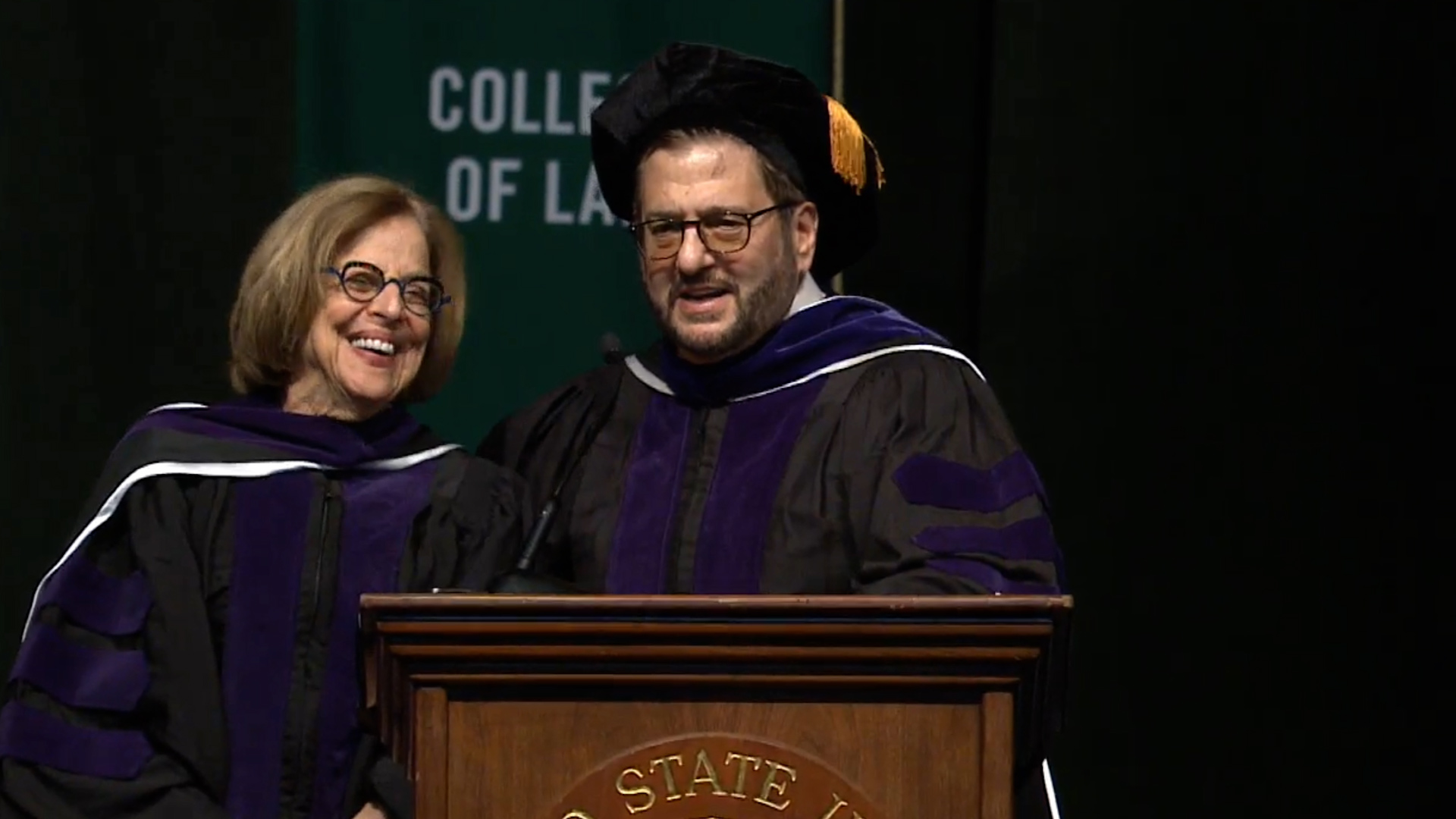
He spoke about stopping at reference desks to thank librarians and educators. The courtesy fits the business: these are the people whose daily work gives a reading platform its setting and purpose. He also urged the graduates to defend access to books and information. Legal training remained part of his public identity, decades after the electronic law books.
The family’s giving follows related interests. Believe in Reading, funded by the Steve and Loree Potash Family Foundation, supports nonprofit programmes that teach and encourage reading across age groups. Their $500,000 challenge for the American Library Association’s 150th anniversary campaign added another mechanism: matching gifts to draw other donors into supporting libraries. Advocacy here comes with a grant application and a funding commitment as well as a speech.
A new chair, the same unfinished work
In 2026, after forty years as CEO, Potash became chairman. Marc DeBevoise took over as chief executive. Potash’s brief includes advising on strategy, advocating for libraries and schools, and helping develop the OverDrive Foundation. The change gives him more room for literacy work while retaining a role in the company he and Loree founded.
“today’s progress happens incrementally.”
Steve Potash, June 2026
He remained a public participant in the questions surrounding digital publishing. In October 2026, he returned to CSU Law to keynote its IP+ Conference, discussing the route from legal practice to entrepreneurship and issues in digital library licensing and intellectual property. The law books have followed him into a rather different working life.
There is room for other kinds of learning, too. Potash took up the accordion and was invited to play at a friend’s wedding in Paris. It is an agreeable footnote for someone whose business has spent decades helping people find something worth their attention. A new instrument asks its own modest question: will you keep practising? Potash’s professional history suggests considerable tolerance for work that takes time. The chairman’s title leaves him with plenty still to do.