The first animal anyone researched on PebbleGo was a hippopotamus. It was 2009, and a Minnesota children’s publisher was trying a particular experiment: give beginning readers a research database of their own. A hippo was an excellent opening customer. Interesting to look at. Easy to wonder about. Rather harder to spell.
That small distance between wanting to know and being able to find out explains much of Capstone. A child can have a sophisticated question and an elementary reading level. The publisher’s business lives in the space between them.
- Children’s books, interactive eBooks, and PebbleGo research subscriptions.
- Built for elementary learners; bought by schools, libraries, and districts.
- The useful trick: support reading inside the act of finding something out.
A publisher learns to wait
The modern Capstone dates itself to 1991, following the Coughlan team’s acquisition of an existing business in December 1990. A contemporary account in Connect Business Magazine describes a financially troubled predecessor, unfinished books, and an unusual response: the new owners completed the work, then paused to study the market. Publishing ramped up again in 1992.
The distinction matters. This was a company learning which readers it should serve. By 2004, Publishers Weekly described its emphasis on struggling and reluctant readers, including children learning English. A forthcoming nonfiction graphic line would put history into another readable form. The topic could stay ambitious while the route into it changed.
“I’m a reluctant learner. I have to be inspired.”
Bob Coughlan · Capstone owner
The reading support is inside the research
PebbleGo translates that publishing instinct into software. Children move through visual categories, open short articles, listen to narration, and follow highlighted words. A glossary helps with unfamiliar vocabulary. Tabs divide a subject into manageable pieces. The interface gives a learner several ways to enter the same material.
Its elementary audience also has somewhere to go next. PebbleGo serves K-2+ learners; PebbleGo Next addresses grades 3-5+. Capstone’s August 2025 update added Next Animals, with more than 150 articles, and Spanish content for older elementary students. The progression follows children as both their reading and their questions develop.
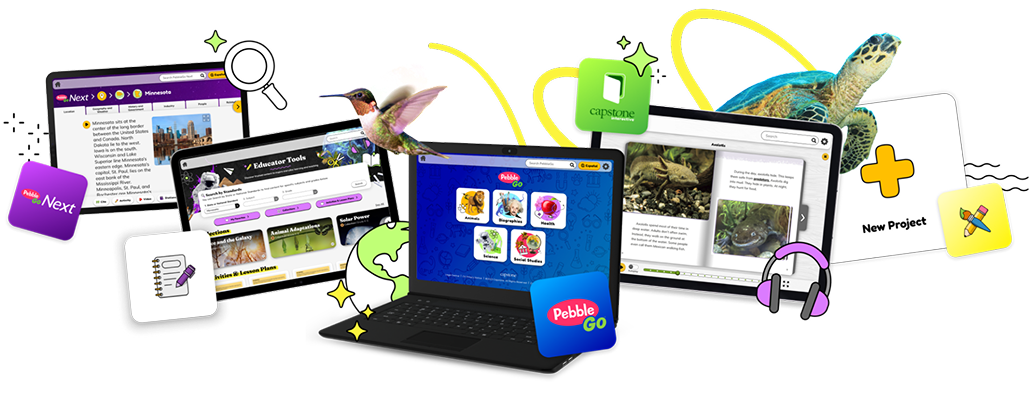
The difference from a general web search is the prepared material. Someone has selected the subjects, written for the age group, and built support around the text. Against school-budget alternatives such as Britannica School, World Book Online, and Scholastic’s digital resources, Capstone’s case rests on that elementary focus and its connection to a print publishing list.
Reading has an afterlife
A classroom investigation usually needs an ending. Children make a report, explain an idea, or show classmates what they learned. In September 2021, Capstone acquired Buncee, the digital creation and collaboration tool. The purchase connected its content business to the work students produce after reading.
PebbleGo Create now sits alongside the research resources. Capstone Interactive supplies narrated eBooks with word highlighting. Educator Tools adds another layer: collections, activities, and planning materials for the adult arranging the lesson. In February 2026, Capstone announced ten new collections covering subjects including history, money, engineering, and the water cycle.
This gives the company two audiences at once. The child needs an inviting next click. The teacher needs materials that fit a topic, reading level, and available time. Good educational content must survive both tests.
The price of a smaller search space
Capstone earns money through book sales, eBook purchases and subscriptions, and institutional licenses. Its official pricing page asks buyers to request a quote. A published consortium offer makes the scale more concrete: Vita-Learn listed PebbleGo Premier K-5+ at $1,949.35 annually for the 2026-27 term.
Vita-Learn’s published 2026-27 Premier K-5+ consortium offer.
Vermont eligibility, institutional membership, a July 15 order deadline, and a 75-school group threshold applied.The package included research databases, educator and creation tools, an eBook bundle, and a $250 print credit. That buying route depended on eligible Vermont institutions aggregating orders on time. The lesson for a purchaser is practical: check consortium access before comparing a negotiated package with a direct quote.
There is a larger version of the same arrangement. In June 2026, Minitex announced additional PebbleGo modules for Minnesota, supported by one-time legislative funding. Access can be organized above the individual classroom. Before buying, a librarian should check what a state or regional service already provides.
There is still a book on the table
The software can obscure the publisher. In 2018, A Different Pond, written by Bao Phi and illustrated by Thi Bui, received a Caldecott Honor. Capstone’s Fall 2026 list brings the pair together again for Ride / Đạp Xe, a bilingual English-Vietnamese picture book about learning to ride a bicycle.
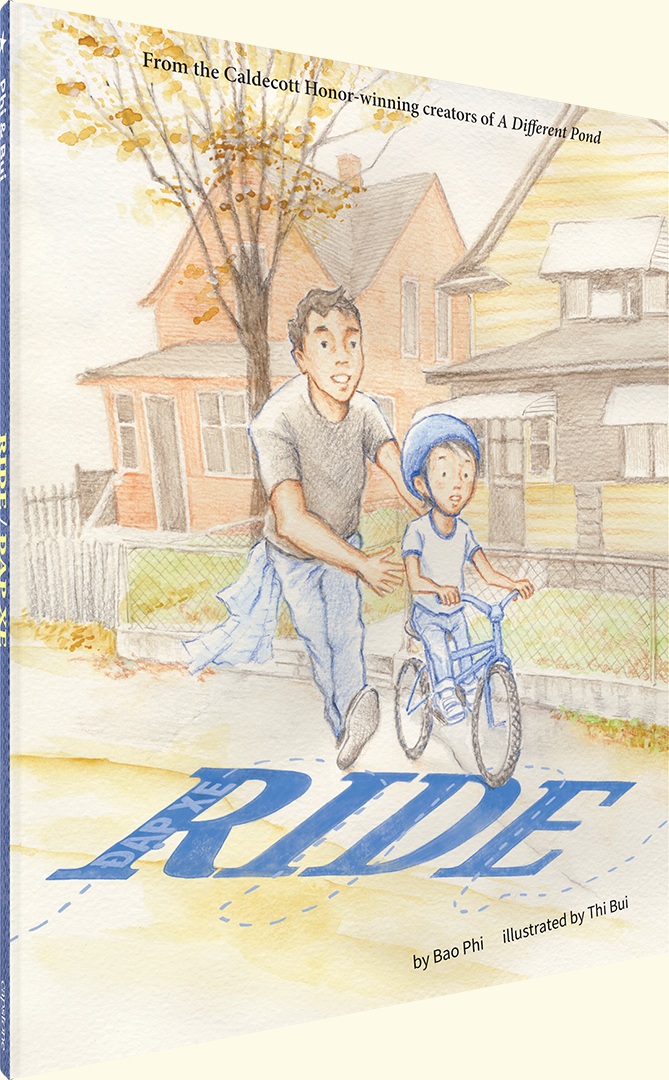
The connection is editorial rather than technological: find a subject a child can care about, then make the telling accessible. A database article and a picture book ask different things of their creators. Both depend on knowing the reader.
The newest question has a boundary
Capstone’s current Ask PebbleGo pilot carries that approach into AI. Its help center says the tool generates answers from PebbleGo and PebbleGo Next articles and supplies references. It is designed to return “Answer Not Found” when the collection cannot support a response.
That boundary also defines its limits. Ask PebbleGo currently supports English, and Capstone acknowledges unexpected responses can occur and recommends educator supervision. A bounded collection cannot answer every question. Schools still need to judge content coverage, language needs, and how the tool fits instruction.
For someone building a product, the copyable idea is wonderfully concrete: watch the step where an interested user gets stuck. Supply help there. For Capstone, that might mean a spoken word, a picture, or a question that leads to an article. A child’s curiosity has already done the difficult work of showing up.