Consider the distance between finding a good science video and teaching a good science lesson. Someone must check the standard, choose where to pause, devise an activity and work out whether the children understood. The video may last four minutes. The preparation has no such convenient limit. Discovery Education has built its business in that gap. Its most interesting product is the work surrounding the moment a child looks up and pays attention.
- Schools buy curriculum, teaching resources and adaptive practice.
- Acquisitions added Mystery Science, Pivot Interactives and DreamBox.
- The test is whether those tools fit a teacher’s actual day.
The expensive part comes after “play”
The company traces its roots to United Streaming in 2001. Discovery acquired United Learning in 2003; the Discovery-branded education division launched in 2004. The original proposition was wonderfully practical: searchable educational video, organized around what schools needed to teach. A television library became more useful when a teacher could find the relevant few minutes.
Today, Discovery Education sells schools and districts a much broader collection. Experience supplies cross-curricular lessons and multimedia. Techbook products provide curriculum. DreamBox supplies adaptive practice. Professional learning helps educators use the materials. The expertise spans content production, subject-specific instruction and software that responds to student work. The customer buying the contract is often a district. The person deciding whether it matters is the teacher opening tomorrow’s lesson.

Buy the lesson. Bring the distribution.
Its expansion has a financial history. In 2018, Francisco Partners invested $120 million for a controlling stake. Clearlake Capital became majority owner in 2022, with Francisco Partners retaining a minority holding. These were ownership transactions, distinct from the subscription revenue schools generate.
Meanwhile, Discovery Education bought teaching businesses. Mystery Science joined in 2020, in a transaction EdSurge reported at approximately $140 million. Pivot Interactives and DoodleLearning followed in 2022. The DreamBox Learning acquisition closed in October 2023; its price was undisclosed. The purchases assembled a portfolio spanning elementary investigations, interactive science and personalized math and reading.
The Mystery Science deal offers a particularly useful clue. Its co-founder Keith Schacht told EdSurge that reaching the next stage required district relationships. A product could win teachers and still need help reaching school systems. Discovery Education supplied established sales and distribution. The lesson for another business is straightforward: distribution can be a capability worth buying, just as much as software.
Science
DoodleLearning
Learning
One classroom, several different jobs
The names can obscure the distinctions. Mystery Science begins with questions and guides elementary pupils through investigations. Pivot Interactives lets learners analyze recorded physical phenomena, manipulating experimental parameters and measuring what happens. These products put a question and an investigation around the image.
DreamBox Math serves a different need. Its K-8 program adjusts instruction as students work and gives teachers information about their progress. A child can receive targeted practice while a teacher supports another group. DreamBox Reading addresses foundational literacy; Reading Plus sits elsewhere in the literacy portfolio. Buying one does not make the others redundant.
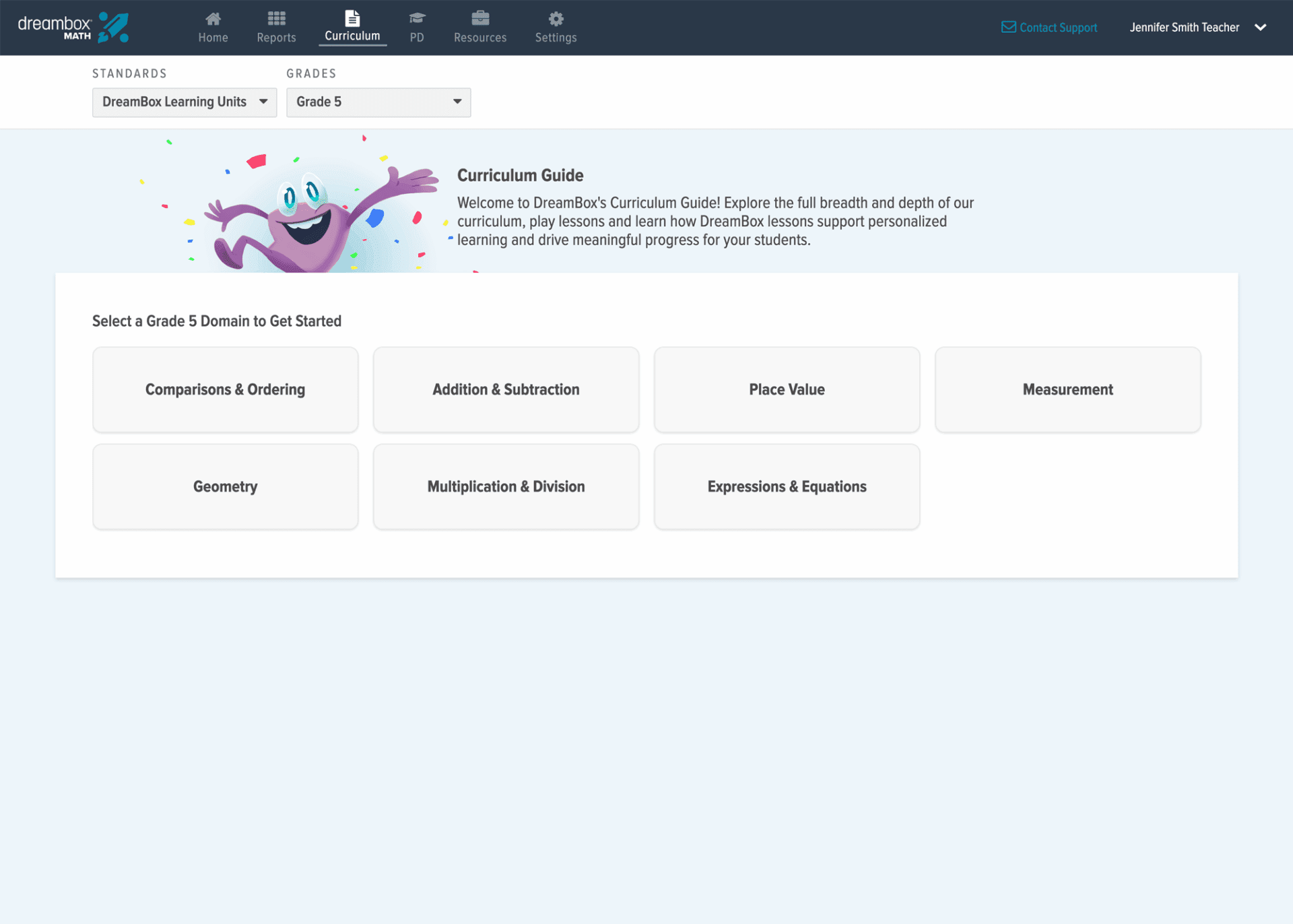
That breadth puts Discovery Education between familiar market categories. Curriculum buyers might also consider Amplify or Savvas. Adaptive-practice buyers might examine IXL or i-Ready. Multimedia shoppers have BrainPOP and PBS LearningMedia. These are alternatives for particular jobs, rather than interchangeable versions of one product. Discovery Education’s pitch is that several jobs can live within one supplier relationship.
The business model follows those distinctions. Schools and districts license curriculum and software, while individual offerings have their own purchasing arrangements. A buyer has to compare the scope of a license, the support included and the time needed to launch it. A single price for “Discovery Education” would conceal those differences. For a school leader, the useful cost calculation includes staff preparation and implementation alongside the invoice. Consolidating suppliers can simplify purchasing, but the classroom still needs a clear purpose for each product.
There is another route into classrooms: corporate partnerships. Programs with organizations such as Trane Technologies and CVS Health offer resources at no cost to educators. Industry access makes careers and applications tangible. It also makes editorial judgment part of the teacher’s task: examine whose perspective frames the topic and what the lesson leaves outside the picture.
The distance between access and use
A license creates the possibility of learning. Classroom routines determine what follows. DreamBox’s teacher guide recommends at least five completed lessons weekly, estimating 30-60 minutes for K-2 and 60-90 minutes for older grades. Those minutes must come from somewhere. The teacher still needs devices that work, a schedule and a reason to use the resulting information.
“Teachers don’t have to go to multiple resources for each subject”Lisa Delacey · Manchester, NH
Company-published educator testimonial
This makes a modest purchasing question surprisingly powerful: what will a teacher stop doing because this tool exists? If the answer is another search, another worksheet assembled from scratch or another awkward transfer of assessment results, the value becomes concrete. If implementation simply adds another destination to visit, the time-saving argument weakens.
Discovery Education’s September 2026 research with Hanover Research illustrates why access deserves scrutiny. Among more than 1,000 surveyed educators and students, administrators reported weekly career learning far more often than students did. It is a company-sponsored survey, rather than an evaluation of its products. Still, the perception gap is an excellent reminder to ask learners what actually reaches them.
Who reports weekly career learning?
Meet teachers where the tabs are open
The recent announcements suggest a response. In July 2026, Discovery Education and Renaissance announced an agreement to bring Science Techbook assessment items into DnA and SchoolCity. In August, Discovery announced a Gemini-powered chat interface inside its Google Classroom add-on. Selected districts were to test it through a fall feedback program, retrieving licensed resources through ordinary-language requests.
The same month, Mystery Writing became available across K-5, adding kindergarten and first-grade lessons that move from drawing to labeling to sentences. Its sequence runs from an engaging hook through explicit teaching and scaffolded practice to independent writing. The evidence requires careful reading: the announcement describes an ESSA Level IV logic model, which establishes a research-informed rationale. It does not establish the causal impact of a completed effectiveness trial. A district can appreciate the teaching design while asking for evidence that matches the claim being made.
These are small, consequential design choices. Bring the material into the system already open. Give a teacher a useful next step. Let curiosity begin with a question, then provide enough structure to carry it through a lesson. That is a practical ambition for education technology - and a demanding one to deliver before the bell.