Jane Hileman went looking for books in flea markets and library sales. The destination was a classroom in Southwest Philadelphia; the requirement was something a child might actually want to read. Before American Reading Company had a national business to manage, its founder had this wonderfully physical problem: finding enough good things to put into children’s hands.
There is a certain indignity in asking a child to love reading while offering a choice so poor that an adult would demand a refund. Hileman’s early work took access seriously. She wanted books within reach, at a manageable level of difficulty, with room for children to choose. The practical arrangements mattered as much as the invitation.
Decades later, she faced another question about access: who would own the company she had built? In 2022, American Reading Company became entirely employee owned. Between those two episodes lies a working life spent arranging the conditions in which other people could do more.
A book within reach
Hileman’s connection to education included Penn’s College for Women, class of 1972, and its Graduate School of Education, class of 1973. By February 1998, she was teaching in the graduate school and working with Philadelphia schools. Her 100 Book Challenge had children accumulating reading achievements and wearing gold medals, sometimes several at once. Modesty, for once, could wait until after the next book.
She distrusted the assumption that difficulty itself made reading useful. Her alternative placed considerable responsibility on the adults: assess the reader, supply suitable books, and help the child move forward. Enjoyment had a job to do. A book that interested its reader offered a reason to return tomorrow.
The idea traveled. In fall 1998, a Baltimore pilot supported by the Abell Foundation brought the challenge into ten schools. Training and 28,000 books accompanied the launch. The design combined a daily half hour of independent classroom reading with books to take home, adult coaching, and recognition for effort.
By January 1999, the pilot had expanded to 132 classrooms and 2,725 students. These were early implementation figures, rather than a verdict on every future classroom. They nevertheless show the scale of the undertaking: a reading idea required a supply system, training, and daily habits that could survive the school timetable.
The classroom grows beyond its walls
At the heart of Hileman’s approach was the match between reader and book. The American Reading at Home account of her work describes selecting texts for both a child’s interests and stage of reading development. That pairing gives the teacher two questions to answer. Can this child read the book? And is there something here worth the child’s attention?
In September 2011, ARC opened its home-reading business to parents, grandparents, caregivers, and homeschoolers. The materials included books and coaching resources, extending an established part of its school work to families whose children might attend other schools. Hileman treated the evening reading routine as part of the same undertaking.
A school can create a reading period. A household must fit reading around the rest of life. Offering families guidance acknowledged that difference. The person sitting beside a young reader deserves more help than a solemn instruction to be supportive. Even good intentions appreciate some instructions.
Hileman also wrote curriculum that gave children something to investigate. A kindergarten biology summer unit, copyrighted in 2011, carries her writing credit. Its four-week design brings early reading and writing together with studying the living world. Children are invited to learn about animals while learning how to put their observations into language.
The combination matters to the story of its author. Hileman’s work included the details of what a child might study on a particular day, alongside the larger business of supplying schools. A curriculum has to meet both scales: the district’s requirements and the attention of the person at the small desk.
Her authorship also extended to assessment. With Gina Cline, she coauthored the 2017 Independent Reading Level Assessment, a 452-page framework for continuous improvement. It organizes reading development across a progression of skills and standards, helping teachers establish a starting point, choose texts, decide what to teach next, and monitor progress.
A framework of that size sounds formidable. Its everyday purpose is quite specific: give a teacher a clearer next move. The reader choosing a book and the adult planning instruction need different kinds of information. Hileman’s career increasingly concerned the system that could put both in the same classroom.
The teacher takes the meeting
Moving into business gave Hileman another setting for thinking about opportunity. In a 2006 account, she described daily goal meetings cascading through ARC’s departments, along with conversations about employees’ personal ambitions. People were expected to participate in deciding how the work would improve.
She also had a compact explanation for profitability:
“No margin, no mission.”
Jane Hileman · 2006
The line belongs beside the books rather than in a separate moral compartment. An organization that intends to keep supplying classrooms has bills to pay. Her account joined employee development to the financial demands of keeping the enterprise running. It is a teacher’s concern with progress, now accompanied by a balance sheet.
By March 2017, ARC described a staff of 200 full-time employees and 85 new jobs created that year. Its published benefits included a $15 hourly minimum, profit sharing, and an on-site Spanish immersion nursery with sliding-scale charges. These were concrete decisions about what working at the company should involve.
The building had its own part in the story. ARC announced that its headquarters had been powered entirely by solar energy since the preceding June. A publisher’s concern for the future could, it turned out, include a look at the roof.
Those are dated details, not a claim that every workplace arrangement has remained identical. Today, ARC describes an open-book approach to company finances, employee learning groups, and annual home libraries for employees’ children. The presence of books in the benefits package has a pleasing consistency. In this business, the product apparently follows people home.
A wider circle around the reading table
Hileman’s work brought her into conversation with researchers as well as customers. In December 2012, she led a gathering of ARC’s Academic Advisory Board. Participants included Richard Allington, Pedro Noguera, and Irvin Scott, bringing perspectives on reading, educational equity, and school improvement to the company’s discussions.
The gathering suggests an important demand of her role: a founder with classroom experience still needs other people’s questions. As a business grows, the distance between a decision and its effect on a pupil can grow too. Inviting educators and researchers into the conversation offers a way to keep examining the work.
Earlier that year, ARC hosted a discussion of education for African American and Latino boys. At its conclusion, Hileman presented a $5,000 scholarship to Philadelphia graduate Emilio Garcia, who was heading to Penn State. A day spent considering a national problem ended with help for a particular student.
Representation in the books themselves also became part of her public position. In a May 2021 statement, Hileman described ARC’s responsibility to work with publishers on materials that reflected students’ histories and cultures. She connected the company’s choices of curriculum and books to the children who would encounter them.
That concern adds another dimension to the original question of fit. A book’s difficulty can be assessed. Its subject, characters, and assumptions can also affect whether a reader feels invited into its pages. Hileman’s stated ambition extended to the experience of belonging in the world that classroom materials present.
Who gets the next chapter?
Eventually, Hileman had to plan for a company that would continue beyond her leadership. Her daughter Gina had worked in roles ranging from warehouse duties to curriculum writing. Long-serving colleagues had their own histories in the business. A change of ownership would reach well beyond the person signing the agreement.
A 2026 interview-based account records that ARC considered outside buyers and received multiple nine-figure offers. Hileman worried about preserving the company’s culture and purpose. The number on an offer could be read quickly; the consequences required rather more attention.
Employee ownership offered a route forward. In July 2022, ARC transferred its stock into an Employee Stock Ownership Plan. The transaction combined seller financing and bank debt. Hileman could arrange her succession while the people already doing the work gained an ownership stake through the plan.
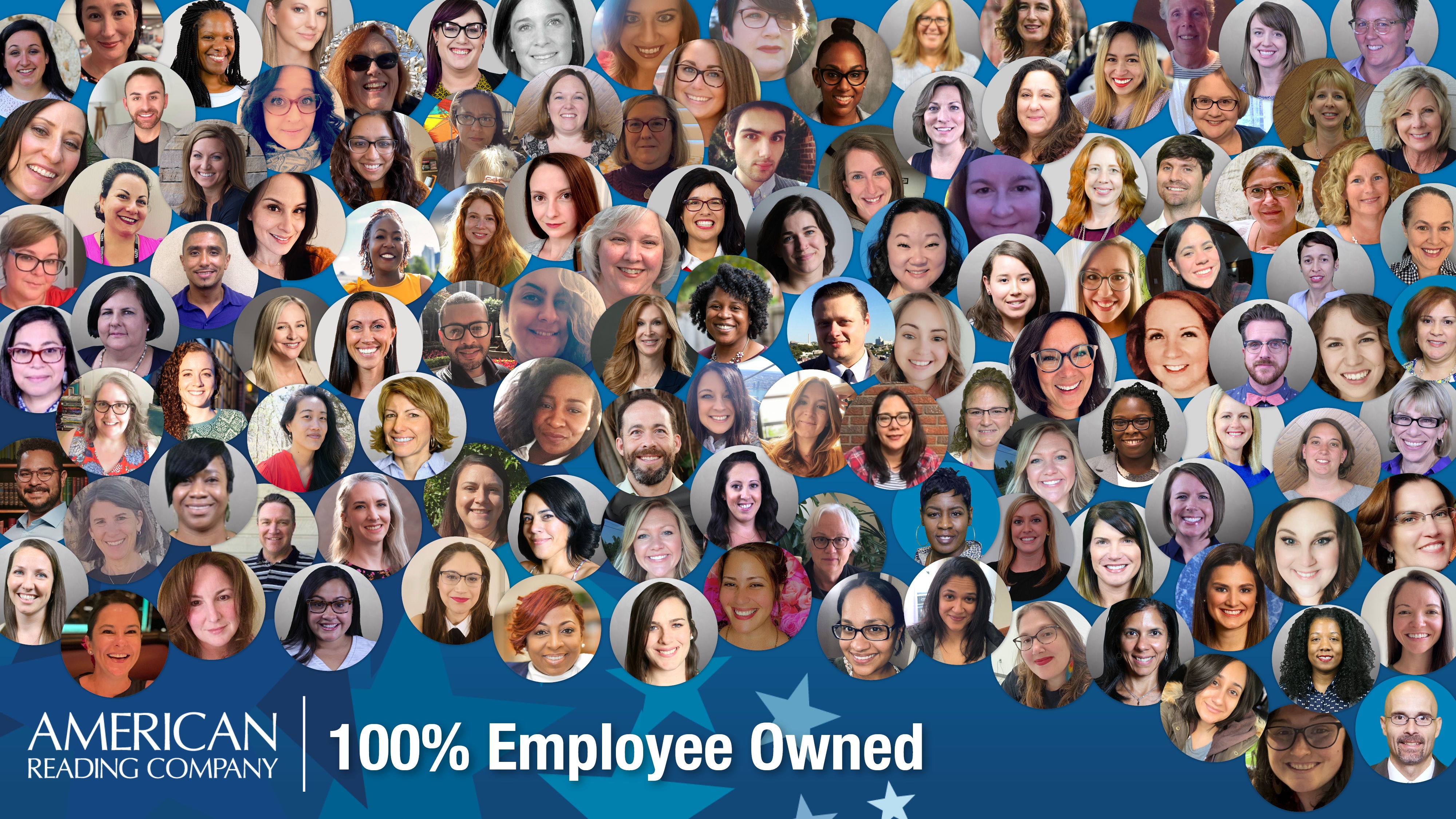
At the time of the transition, Hileman pointed to colleagues whose careers had changed inside ARC: a former vice principal leading supply chain work, and a receptionist who had become chief operating officer. Her examples gave the ownership announcement a human scale. These were people whose abilities had already helped shape the enterprise.
Employee owned through an ESOP
A succession decision with a place for the people already there.In January 2026, ARC announced Meredith Liben as Hileman’s successor on its board. The founder’s story had reached another handover. What continued was an organization with its own employees, customers, responsibilities, and reading work still to do.
The distance from a flea-market book hunt to an ownership transaction is considerable. Yet both ask an unexpectedly similar practical question: what must be put within someone’s reach so they can take the next step? Hileman spent her career answering it in classrooms and at work. The next chapter now has other hands to turn the pages.