At a fuel pump, the customer has already made one decision: stop here. The next decision is less certain. Go inside? Buy breakfast? Return tomorrow? PAR Retail has built a business in that interval, where a necessary purchase might become a habit. Its work is software, payments, and loyalty programs. Its subject is the hurried person who would rather finish the errand.
- The business: loyalty and commerce technology for convenience and fuel retailers.
- The revealing result: CEFCO’s enrollment rates rose 115% after a program relaunch, according to PAR’s case study.
- The useful idea: make joining easy, then earn the next visit.
The phone number that did the work
CEFCO, then operating more than 200 locations in the South, wanted more people in its rewards program. The familiar digital bargain was getting in the way. A retailer wants a customer relationship; the customer gets another download and another task. For someone standing beside a fuel pump, that can be a poor exchange.
Stuzo, the company now called PAR Retail, helped relaunch CEFCO Rewards with enrollment through a mobile phone number. Customers could join at the pump’s PIN pad, at the store checkout, or on the website. The important change happened before anyone received a personalized promotion: fewer things stood between interest and membership.
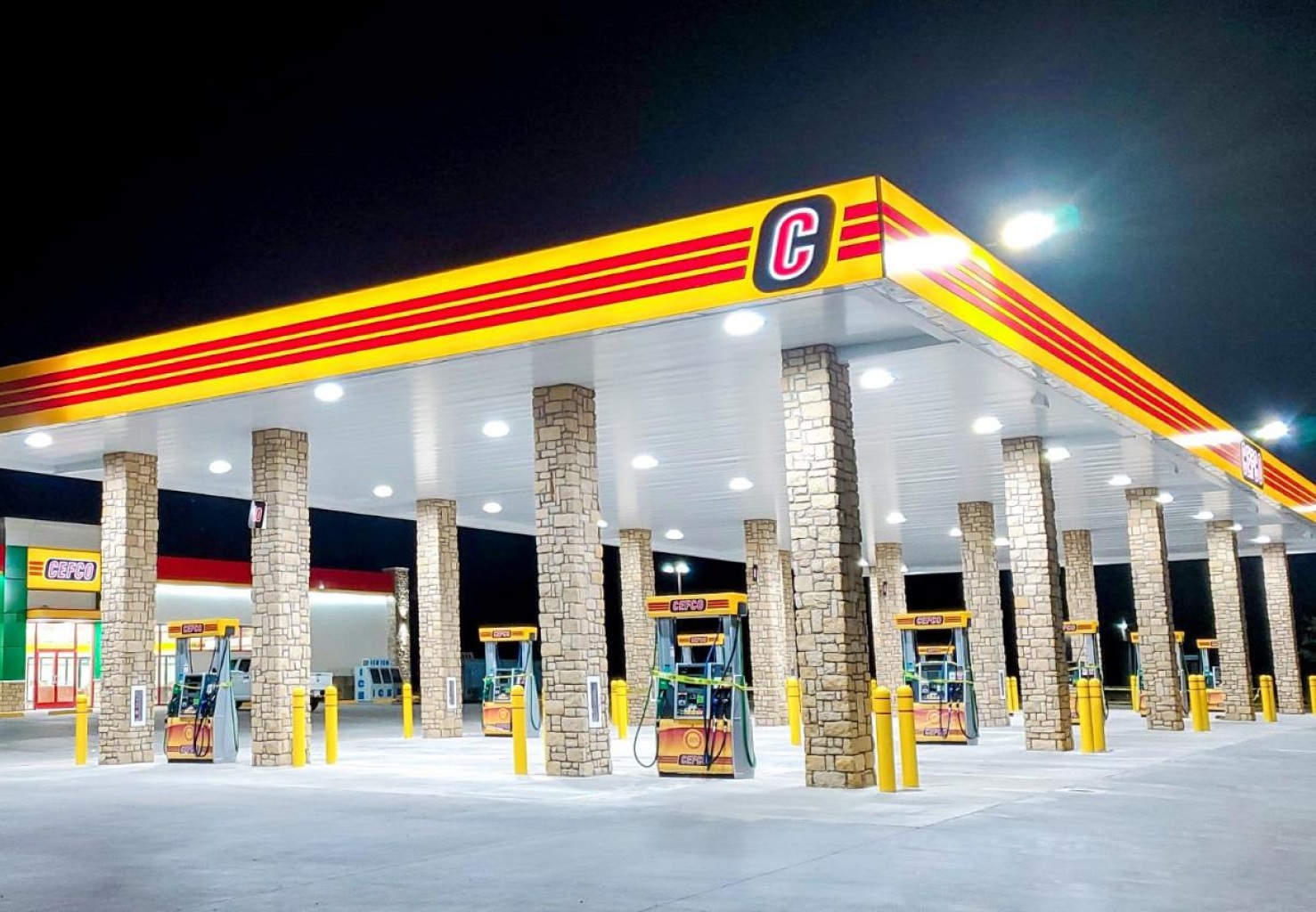
PAR’s case study reports that, within the first 60 days, enrollment rates increased 115%, active membership increased 243%, and daily transactions showed an 80% incremental lift compared with the previous program. Those are the supplier’s reported results from a relaunch, rather than a controlled experiment isolating one form field. Still, they put a useful question on the table: how much of a loyalty problem begins with asking too much, too early?
A smaller first step.
A larger reported response.
Before the pump, there was Facebook
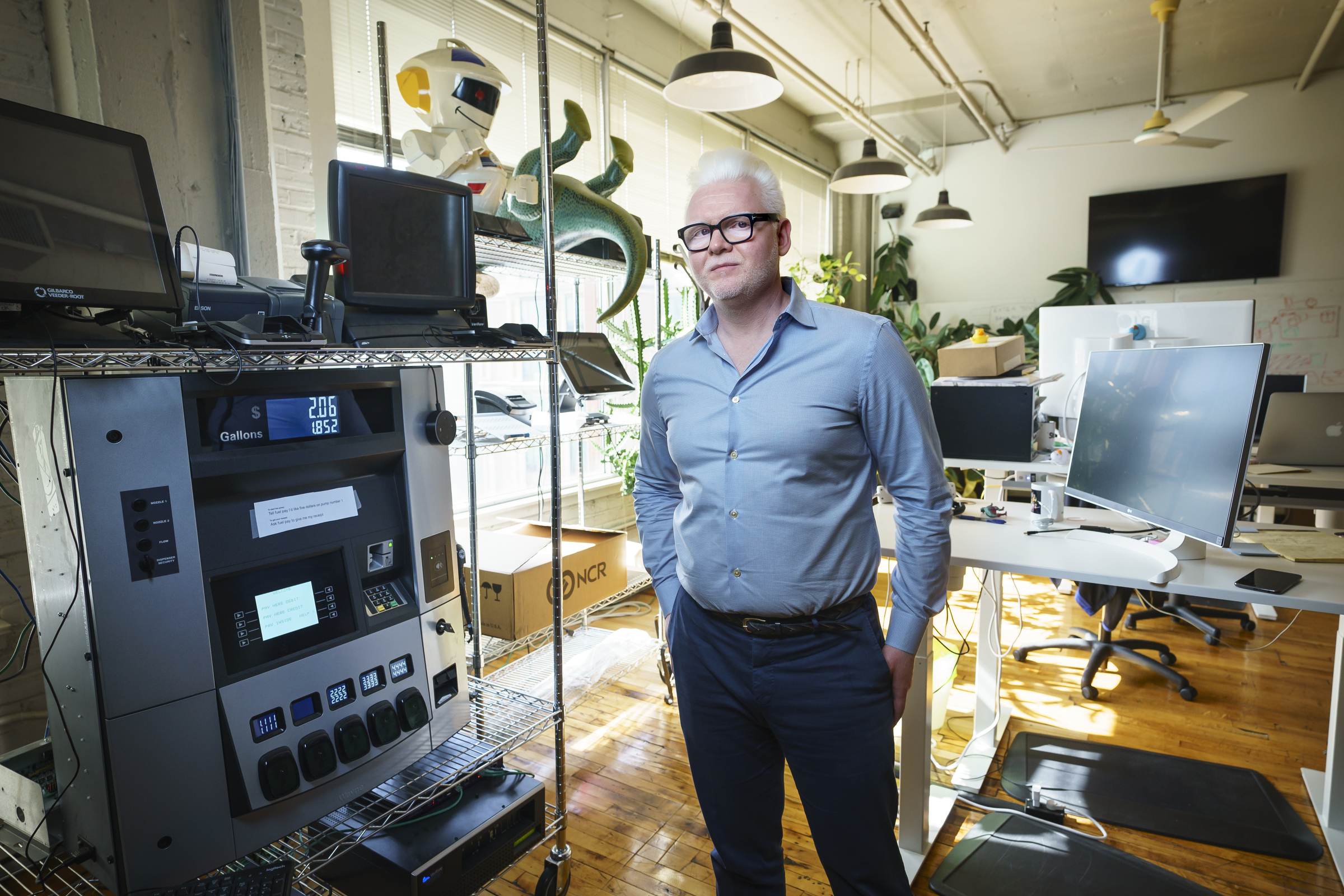
Gunter Pfau started Stuzo in 2007 while studying at Temple University, building on the newly opened Facebook Platform. In a 2014 interview, he described financing the start with $60,000 in credit-card cash advances and $60,000 from his parents. There was development work for big brands, a sale in 2010, and a management buyback in 2013. Convenience retail was a destination reached through years of building digital experiences.
By 2017, Stuzo was packaging reusable mobile-commerce tools for fuel and convenience operators. The stated problem was practical: custom applications took too long and cost too much. In 2018 it publicly launched Open Commerce, connecting services from different providers through shared infrastructure and a central management interface. Payments, loyalty, and customer experience could be coordinated rather than commissioned as separate islands.
Outside money presented another design problem: confidence. Technical.ly reported in 2021 that a Fortune 20 customer had asked whether a self-funded Stuzo could invest as heavily as funded competitors. Pfau had thought it could. The question made him reconsider how customers assessed the company’s capacity. Longshore Capital Partners invested that year, for an undisclosed amount. A customer’s concern helped change the financing strategy.
A way to remember the next purchase
The product names once made a tidy sequence: Activate for loyalty, Transact for contactless commerce, Experience for customer-facing digital channels, and Retailer Connect for corporate-to-retailer programs. Today’s PAR Retail offering also includes branded apps, marketing automation, program management, and tobacco loyalty tools that connect retailer discounts with manufacturer funding.
Its payment capabilities support mobile purchasing and remote pump activation, with a gateway that accommodates different processors. That matters because a fuel retailer’s customer experience crosses physical equipment and software systems. A reward that works in an app but disappears at checkout creates work for customers and staff. Integration expertise is part of what the retailer buys.
- 01RecognizeJoin with a phone number
- 02RespondPresent a relevant offer
- 03LearnConnect the purchase
PAR calls its approach Wallet Steering: use purchase behavior to find opportunities for additional visits or spending. Offer Intelligence adjusts promotions to individual behavior; surveys can fill gaps that a receipt cannot explain. A customer buying fuel may have quite different reasons for skipping the food counter than another customer making exactly the same purchase.
The newer Touchpoint System brings that reasoning onto store screens. Its modular hardware supports loyalty extension, self-checkout, and made-to-order food ordering. Shoppers can identify themselves with a phone number and discover offers before reaching the main till. PAR’s 2026 writing on identity resolution extends the same argument to purchases that would otherwise remain disconnected from known customer profiles.
The $190 million reason to connect it all
PAR Technology acquired Stuzo in March 2024 for approximately $190 million in cash and shares. Its transaction presentation described more than $40 million in annual recurring revenue, a subscription measure rather than annual accounting revenue. That summer, Stuzo and Punchh’s convenience-store platform came together under the PAR Retail brand. PAR was extending its restaurant technology business into an adjacent retail market.
For retailers, the commercial model combines recurring software with services and payment capabilities. Implementation and ongoing program work matter alongside the technology. Alternatives include Paytronix and PDI, both offering overlapping loyalty and engagement tools. PAR’s pitch rests on its fuel-and-convenience specialization, connected systems, and explicit outcome guarantees. Buyers still need to examine the applicable contract, integrations, and economics.
“Customer loyalty is an outcome and not an input”
Gunter Pfau / The Philadelphia Inquirer, 2020
In July 2026, Jacksons selected PAR Retail to evolve Let’s Go Rewards across more than 300 locations. The announcement emphasized keeping a familiar experience while improving personalization. The lesson is available beyond fuel retail: remove unnecessary enrollment work, then measure whether offers change behavior. The arithmetic weakens when discounts reward purchases that would have happened anyway. Software also depends on a store people want to revisit. The next stop must still be earned.
Follow the next stop
Explore PAR Retail’s website, the CEFCO case study, and the Jacksons announcement.
Read the founder interviews
The early Facebook years · Loyalty, culture, and physical retail · The decision to take investment · PAR’s acquisition disclosure