Attila Kecsmar helped choose the angle of the lights. At Antavo’s office in Szeged, his attention extended to carpet tiles and electrical sockets, the sort of decisions a chief executive might reasonably hope somebody else would make. He worked on the space with the building’s owner. The office received a 2018 Office of the Year award. Software was his business; apparently, the floor plan was also his business.
That detail makes a useful introduction to the co-founder and CEO of Antavo AI Loyalty Cloud. A company biography can hurry through investment rounds and customer names without allowing its subject to become recognisable. Here is somebody you can picture: a person concerned with where the plugs go. In a business selling something as intangible as customer loyalty, the sockets are reassuringly specific.
There is a practical streak running through Kecsmar’s career. He has built software for clients, helped turn campaign tools into a loyalty platform, and spoken publicly about management methods that failed before they worked. His story has the shape of a repeated question: how do you build something useful enough that people keep using it?
A classroom with an extra language
His education included teacher training in technology and computer science at the University of Szeged. During an Erasmus stay in Turku, Finland, he studied Finnish in classes taught through English. His English needed work, too. He carried a vocabulary notebook everywhere. Learning one language had acquired an entrance requirement: learn another.
He later credited his practical training with teaching him to solve problems. It is an appealingly ungrand origin for a technology executive. Before product roadmaps and international customers, there was the business of figuring out how things worked. His later economics studies were unfinished. The business itself was already making demands on his time.
Before Antavo, Kecsmar worked in web and application development. His earlier company, INFINITIUM Studio, put him in the familiar position of the capable supplier: deliver the project, then look for another customer. The work could be useful and still leave its maker dissatisfied with the rhythm. Completing something did not secure the next piece of business.
The customer after the customer
He wanted to develop a product that people used continuously. That aspiration sounds modest until you compare it with the everyday economics of a project business. A finished website is a completed obligation. A software product has to justify its place again and again. Repeated use becomes part of the design brief.
The personal partnership developed alongside the commercial one. Kecsmar and Zsuzsa had known each other since their teenage years. Later, with Zsuzsa studying and working in radio, the possibility of making a marketing video brought them together again. The video never materialised. They became business partners and spouses. As abandoned production plans go, it had consequences.
Antavo was founded in London in 2012. Its early product helped businesses run promotional campaigns, including social-media competitions. Kecsmar brought a development background; Zsuzsa brought marketing and communications experience. Gabor Csarnai was another co-founder. The company’s beginnings required different kinds of expertise to meet around the same product.
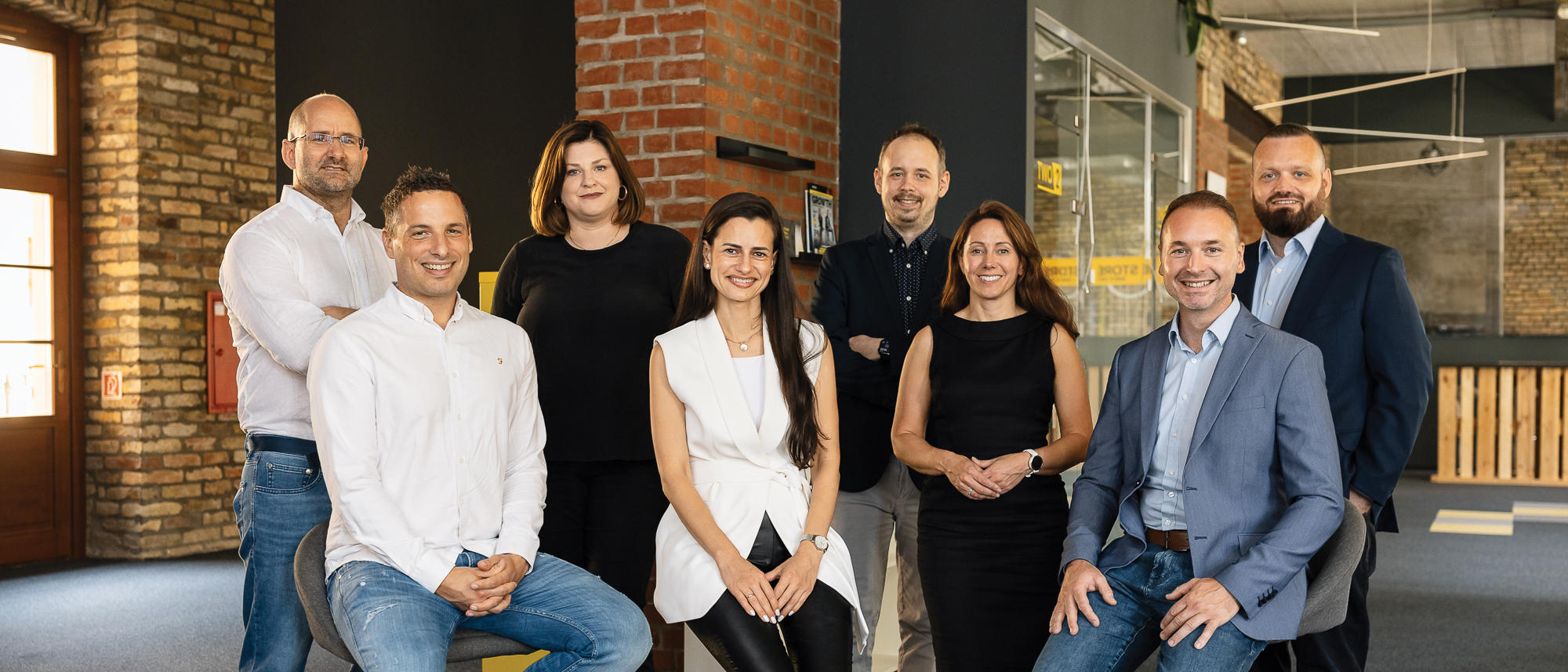
Moving to London helped the founders build connections. The cost of living there also encouraged a return to Hungary while they put money back into the business. Szeged remained an important base. The geography mattered: international customers were the ambition, but an international business still needed somewhere affordable to do its work.
The first product addressed campaigns. Campaigns, however, stop. For somebody searching for continuous use, that was an awkward discovery. Antavo’s move toward loyalty took shape in the middle of the decade, with Kecsmar describing stages of the change in 2015 and 2016. The product began serving a longer relationship between brands and customers.
- 2012Campaign toolsHelp a brand run a promotion.
- 2015-16Loyalty technologySupport the relationship between purchases.
- 2024Planner + Timi AIHelp teams plan and operate programs.
Giving the marketer the controls
The shift asked more of the software. A promotion can be a bounded event. A loyalty program has to accommodate customers over time, across stores, websites and phones. It needs rules, rewards and ways to change them. An ambitious marketing idea is of limited use if implementing it requires an extended queue for developers.
Kecsmar has repeatedly emphasised the ability of marketers to run programs without calling on IT for every change. Antavo’s no-code tools and API connections express that preference. The appeal is practical: the person responsible for the customer relationship gets more control over the machinery supporting it. The developer’s work is partly to make the developer less necessary for routine decisions.
As Antavo moved toward enterprise clients, the company itself changed size. By January 2022, Kecsmar described a team of more than 80, following years when it had been closer to 20 or 30. The customer roster included BMW, BrewDog and Kathmandu. These were different organisational demands from those of the earlier campaign business.
Antavo reported threefold year-on-year run-rate revenue growth for 2021. In November 2022, it announced a €10 million Series A led by Euroventures, alongside Lead Ventures, iEurope, Innovation Nest and private investors. The money was intended to support product development and international expansion. A company built to earn repeated use had acquired a larger set of expectations.
Company-reported, year on year
9 November 2022
There was less glamorous work underneath. Antavo announced ISO 27017 certification in September 2022, adding to its security credentials. A loyalty platform holds customer information; enterprise buyers need grounds for trusting the supplier. Creativity sells the possibilities. The operational details help make those possibilities acceptable to a large organisation.
The work of expanding involved revisiting assumptions about sales, too. An early approach relied on flying staff from Budapest to serve large international customers. The company later described the limits of that model and the importance of local relationships. Being able to sell software abroad and being organised to support customers abroad were separate tasks.
Another lesson concerned how much consulting belonged inside a product company. Antavo had spent time helping prospects develop loyalty strategies, sometimes only to see a decision-maker reject the plan. It moved that work toward partners and concentrated its own effort on the technology. The choice put a boundary around the business Kecsmar had wanted to build.
Try the management system again
Kecsmar’s account of learning to manage is refreshingly untidy. In a public post about objectives and key results, or OKRs, he admitted repeated failures to introduce the framework. These are the goals and measurable outcomes used to coordinate teams. A tidy acronym can make an organisational change sound easier than the people doing it find it.
“I failed at this not once, not twice...but three times!”
Attila Kecsmar, on implementing OKRs
He initially wondered whether the framework was at fault. He kept trying, and said they eventually worked it out. The anecdote offers a more useful account of persistence than a smooth retrospective does. Sometimes persistence includes changing the way you attempt the thing. The first version of a management practice can require revision as surely as a first version of software.
He has also questioned the neat dividing line between a startup and a scaleup. Antavo could become larger while retaining the willingness to act and iterate that belonged to its beginnings. That is a stated ambition, rather than a settled organisational achievement. Coordinating a bigger company while preserving initiative is work that continues after the new label arrives.
The leadership around him grew, too. Antavo appointed investor and business mentor Zoltan Vardy as chairman in March 2023. Kathryn Wright joined as chief of staff that September and later became chief operating officer. Kecsmar’s product interests now sat inside an organisation with more explicit structures for managing growth and collaboration.

Who remembers the regular?
In 2024, Antavo introduced Loyalty Planner and Timi AI. The planner addressed the work of turning a loyalty strategy into a program design. Timi was presented as an assistant able to explain concepts, help with workflows and summarise member histories. The product ambition was extending into the work surrounding the loyalty engine.
There was a corresponding investment in the less visible parts of the product. In September 2024, Antavo described receipt-scanning integration, allowing shoppers to access loyalty rewards for purchases made through third parties. A customer can buy a brand’s product without buying directly from the brand. Supporting that ordinary complication makes the promise of a continuing relationship more credible.
That direction fits Kecsmar’s long-standing concern with making software useful to the people operating it. The task begins before a program launches and continues as customers use it. A planning tool and an assistant each attempt to remove some friction from that work. Their value depends on what a team can accomplish with them.
By October 2025, his public message emphasised helping brands create lasting customer value and improve margins through smarter engagement. Internally, he urged attention to “impact, not just output”. The phrase is short enough to fit into a meeting. Making it influence the meeting’s decisions is the longer assignment.
The question developed again in September 2026, when he discussed loyalty in a marketplace increasingly influenced by AI assistants. If software helps people decide what to buy, brands have to consider how their customer relationships survive that mediation. His emphasis was on recognition, relevance and understanding customers, alongside the data needed to support those relationships.
That remains his view of where the market is going. It also brings his career back to a familiar concern. He once wanted customers who continued to use the product after the immediate project was finished. He now helps brands work on the reasons their own customers return. The tools have changed; the next visit still has to be earned.
Follow the conversation
- Antavo
- Kecsmar on LinkedIn
- Kecsmar on X
- Antavo loyalty blog
- The early company interview
- The Szeged beginnings
- Inside the Szeged office
- Antavo’s €10m round
- The management experiment
- The 2025 conversation
- Listen: AI and loyalty, September 2026
- Watch: Antavo Keynote 2024
- Listen: Zsuzsa and Attila’s founder story