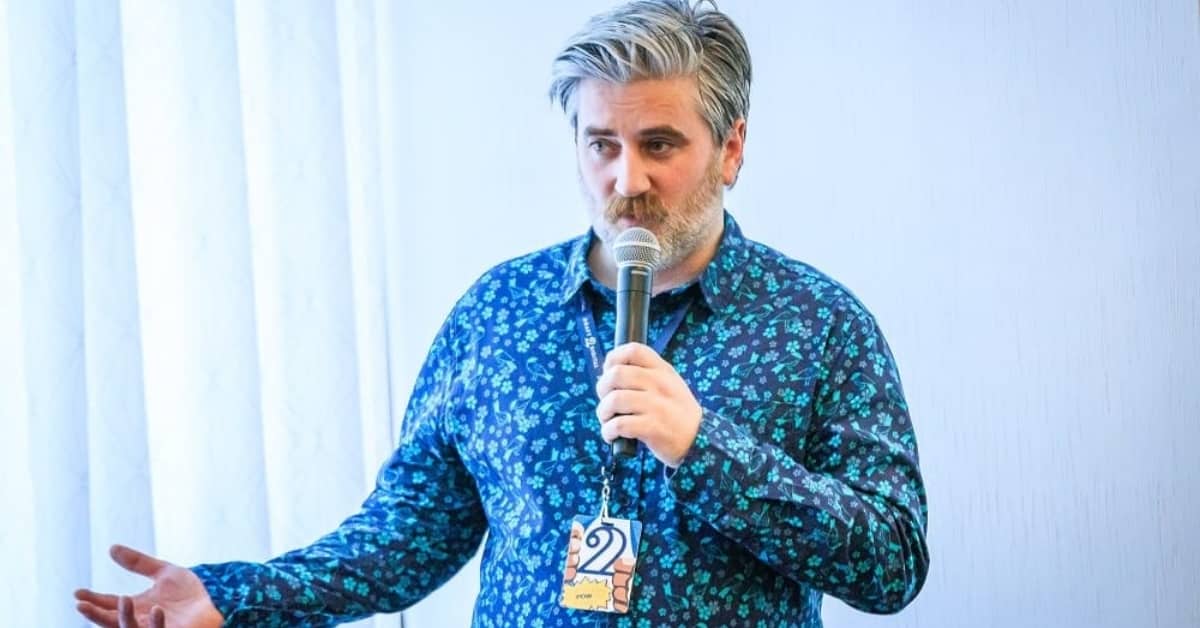
"I wasted 18 months chasing agents before I started self-publishing. I wish I'd made the leap sooner."
Gaughran's writing life has been geographically restless. Each city seems to have coincided with a new phase of the work.
The book that started it all. How to self-publish and why you should. Now available completely free - because that's the kind of move he makes.
How to get noticed and sell more books. The follow-up to Digital, covering the mechanics of visibility in an algorithm-driven market.
A marketing guide to the reader journey. Maps the psychology of how a stranger becomes your biggest fan - and what happens at each stage.
The definitive guide to BookBub advertising. Currently the highest-rated book in his catalog. Earned a 4.69 average from over 300 raters.
Demystifying the world's largest book retailer - its algorithm, its quirks, and how to navigate it without losing your mind or your royalties.
A marketing guide to author platform. Given free to newsletter subscribers because "blogs don't really sell books - but email lists do."
South American Wars of Independence. Two brothers torn apart. A slave running for his life. A disgraced British sailor seeking redemption. Features Jose de San Martin.
Based on the true story of Lee Christmas - American soldier of fortune and banana wars mercenary in Honduras. The kind of biography they don't teach in school.
Dublin, aftermath of the 1803 Rising. Jimmy O'Flaherty navigates the execution of Robert Emmet's legacy while trying to earn passage to America. Local history, global stakes.
Gaughran's great insight was structural: most authors think about "selling books." He thinks about moving people through stages. The book isn't the end - it's a step on a journey from not knowing you exist to telling everyone they know.
"The aim of marketing is to connect customers with products they already want to buy."
- David GaughranThis distinction - connecting versus persuading - is the engine under everything he teaches. You aren't tricking readers. You are finding the ones already looking for exactly what you wrote, and making sure they can find it.
His BookBub Ads Expert takes this framework into paid advertising. His Amazon Decoded applies it to how the world's largest bookstore actually decides who to show what. His Following gives away the platform guide for free because the goal was never to sell the book. The goal was to earn your attention.
The self-publishing world has a predator problem. Vanity presses masquerade as traditional publishers. They promise distribution, prestige, and promotion. They charge $10,000 for a package that delivers nothing. Gaughran writes about this - specifically, repeatedly, with the company names and the publisher partners attached.
The target of Gaughran's most sustained investigative work. A vanity press conglomerate that has extracted an average of over $5,000 from inexperienced writers through high-pressure sales tactics. Gaughran documented partnerships with Penguin Random House, Harlequin, Simon & Schuster, HarperCollins, Hay House, and Barnes & Noble.
Public documentation. Named partners. Documented tactics. Gaughran doesn't write think-pieces about the problem in the abstract - he writes posts that tell writers exactly which entity to avoid and why. This costs him industry relationships. He does it anyway.
SFWA President Mary Robinette Kowal cited this work directly when awarding the Solstice Award. The award itself - typically given to those who improve conditions for SFF writers - was recognition that watchdog journalism has real-world protective value.
Book fair exposés. Vanity press investigations. Predatory agent alerts. Gaughran has built a body of work that functions as a consumer protection resource. The underlying instinct: information asymmetry is how predators operate, and transparency is the countermove.
"I wasted 18 months chasing agents before I started self-publishing. I wish I'd made the leap sooner."
"The only thing that has ever really sold books is word-of-mouth."
"My reasonably popular blog and somewhat considerable social media presence combined have less power than, say, 1,000 names on a mailing list."
"The place to dazzle readers with originality is inside the book - i.e., with your words."
"I'm a former pantser who realized he could bump his speed from 'very slow' to 'slow' by embracing the dark arts of plotting."
"Writers have benefitted immensely from this revolution - mostly because they don't depend on those large corporations anymore."
Gives away his best book free, offers a free 27-lesson course, writes a free newsletter. Not because he's uninterested in money, but because he understands that trust compounds.
Spent time in Peru. Understands what happens when institutions extract rather than enable. Applied that framework to publishing with notable results.
"Just before he finished assuming human form." The self-deprecation is load-bearing. It's how he gets you to trust him on everything else.
The last one he mentions "with particular pleasure."
"David Gaughran has been doing yeoman's work for years, alerting indie writers about predatory schemes and warning them about changes in independent publishing. His work makes the science-fiction and fantasy landscape safer for writers."
- Mary Robinette Kowal, SFWA President