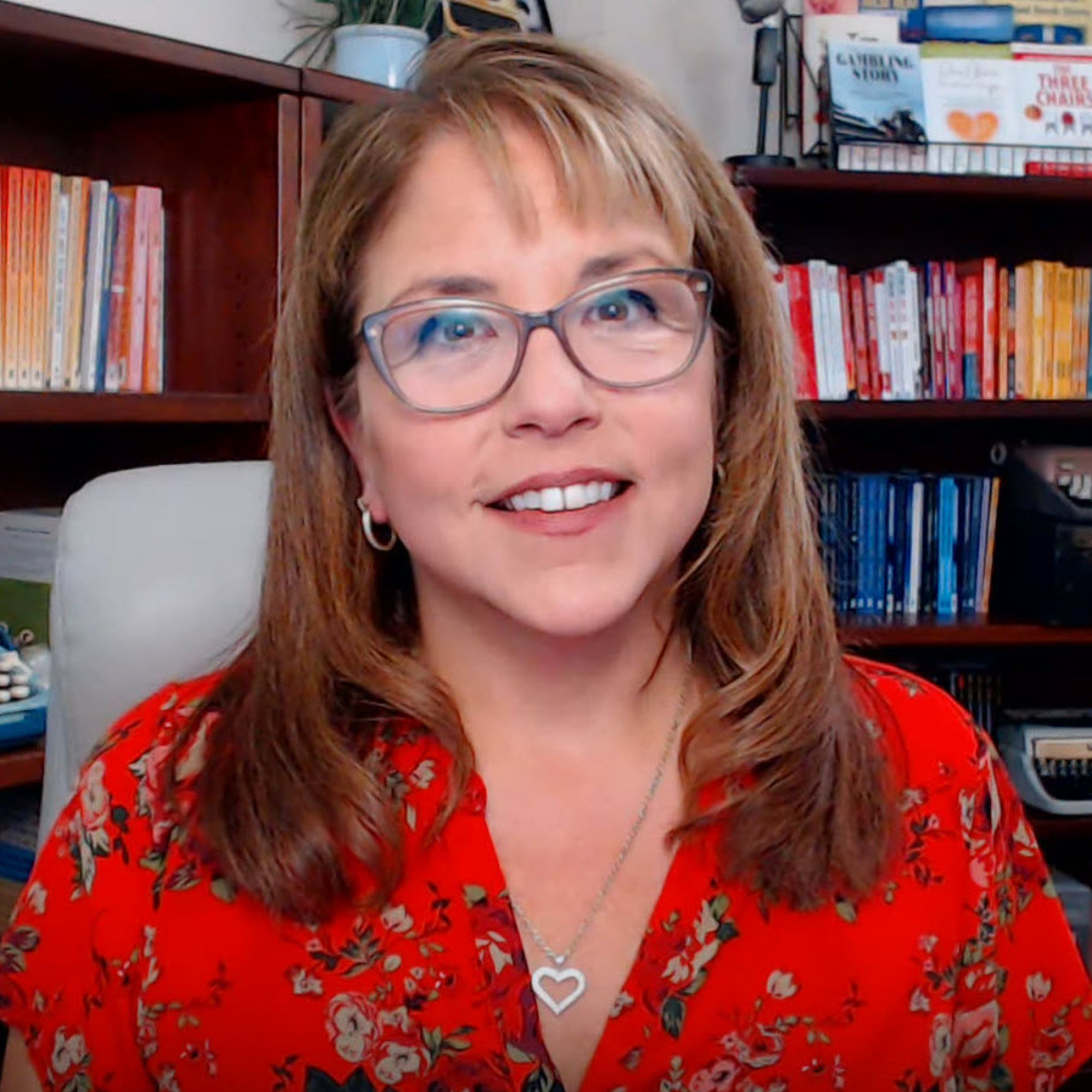
The bookstore was 2,800 square feet. The shelves were full. The author signing sold eight copies in three hours. Stephanie Chandler stood behind the table and took notes.
Not on the failure. On the lesson. By the time she sold that Sacramento bookstore in 2007, she'd already written her first book, launched a website, and figured out something most authors spend years missing: the book is not the product. The knowledge behind it is.
That reframe - deceptively simple, endlessly consequential - became the engine for everything that followed. Authority Publishing. The Nonfiction Writers Conference. The Nonfiction Authors Association. Ten books. A community spanning eight countries. A career that looks less like a plan and more like a series of very smart pivots.
From Software Sales to Bookseller to Publisher
Silicon Valley in the 1990s trained Stephanie in the fundamentals: sell something useful, explain it clearly, move fast. A decade of software sales and technical training left her competent and restless in equal measure. In 2003 she walked out and opened a bookstore.
She wanted to write fiction. She quickly discovered she was - her words - "a terrible fiction writer." The failure redirected her toward nonfiction, which turned out to suit her completely: direct, practical, structured, teachable. The bookstore lasted four years. The writing career never stopped.
"A compelling guide for anyone ready to stop dreaming about starting a business and actually do it." - On The Business Startup Checklist and Planning Guide, Book of the Year Silver, 2005.
Her first book won a Foreword Magazine Book of the Year award in 2005. Her second was published by Wiley in 2006. By 2008, she'd founded Authority Publishing - a custom publishing house for nonfiction authors that eventually counted Lenovo, Visa, The UPS Store, Dell, and American Express Open among its clients. The progression sounds inevitable in hindsight. It wasn't. It was iterative, attentive, and informed by a lot of cold book signings.
The Conference That Shouldn't Have Worked
In 2010, Stephanie launched the Nonfiction Writers Conference - entirely online. No venue, no hotel rooms, no airport shuttles. Just a screen and a speaker and authors logging in from their kitchens.
This was 2010. The concept of a virtual professional conference was not, to put it gently, mainstream. Nobody was telling aspiring authors to skip the in-person experience and boot up their laptops instead. Stephanie did it anyway, partly for practical reasons and partly because she trusted that writers - people who work alone, from home, on their own schedules - would adapt faster than most.
"A full decade before Zoom became the only word anyone knew, she built a virtual conference stage and invited the world to sit down."
She was right. The conference ran for a 16th annual edition in 2026. Past speakers have included Seth Godin and Cheryl Strayed - the latter a long-held personal ambition. She got Strayed on the speaker list and did not appear to take it lightly.
The Association She Built While Away
In 2013, Stephanie founded the Nonfiction Authors Association - a membership community offering writers templates, media leads for podcast interviews, private community, certification programs in book marketing and publishing, and monthly round tables.
Also in 2013, on October 31, her husband Chris died by suicide. He was kind. He was smart. He kept most of his pain to himself.
Stephanie became a suicide loss survivor at the same moment she was building her most ambitious project. She took an extended absence. The NFAA kept growing in her absence - a thing she finds remarkable and worth noting.
She has since spoken openly about the experience to reduce stigma around mental illness. She published a booklet - When Someone You Love Dies By Suicide - distributed free to first responders nationwide.
The fact that the association survived and expanded without her running point is not incidental. It is the proof that she built something structural, not personal. Communities that depend entirely on the founder's daily presence are fragile by definition. She built one that wasn't.
The Hype-Free Positioning
In marketing terms, "hype-free" is a brand promise that is extremely easy to say and very hard to maintain. Stephanie has maintained it consistently across a decade of books, keynotes, and curriculum design.
Her actual position on self-publishing: it makes more sense for 90% of nonfiction authors she talks to - faster to market, higher royalty per copy, full creative control. Not because traditional publishing is bad but because most nonfiction books are not primarily about book sales. They are about authority, speaking fees, consulting, community, credibility. The book is the calling card. The business is the business.
This kind of candor - here's what's actually true, not what makes the industry sound glamorous - is the thing that built her audience and has kept it. She tells writers what self-publishing contracts look like, how Amazon algorithms work, why email lists beat follower counts, and why a plan removes most of the fear from launching a book.
On the Email List
"That is an asset that you own. Nobody can take away your email list." She says this in interviews, in books, at conferences. She has been saying it since before Instagram existed. She is still saying it. She is not wrong.
On Niching
"Really focus on one niche. That will make this marketing job a whole lot easier." Simple to say. She has lived it: her niche is nonfiction authors, and she has never drifted from it.
On AI
"Rather than fearing AI and all the trends that are coming, I really believe that we should look for the benefits and the opportunities within these changes." This, from someone who spent 2025 running webinars on how to use AI to understand readers and supercharge book launches. Adaptation, not alarm.
The Books
Ten books over two decades, each one a practical companion for a specific stage of the author-entrepreneur journey:
The Career Arc
What She Actually Teaches
The curriculum of everything Stephanie has built is essentially this: your book is not the endpoint. It is the beginning of a business. Here is how that business works.
She teaches nonfiction authors how to identify their niche precisely enough that marketing stops feeling like shouting. How to build an audience before the book is finished. How to structure a book launch - from pre-launch sequences to media pitching to Amazon optimization - so the release window actually moves copies. How to think about speaking fees, consulting rates, and membership communities as the real revenue model behind a nonfiction book career.
She teaches this through live round tables, webinars, certification programs, a private community, weekly media leads for podcast and blog opportunities, and an annual conference. The NFAA does not sell the dream of being a famous author. It sells the practical infrastructure for becoming a working one.
"There is a lot of conflicting advice out there. Our mission for both the Nonfiction Writers Conference and the Nonfiction Authors Association is to empower our community with clear answers." - Stephanie Chandler
The difference matters. Most writing communities operate at the level of craft: how to write a good sentence, how to find your voice, how to survive rejection. Stephanie's operates at the level of business: how to get the book into readers' hands, how to turn those readers into clients, how to build an income that doesn't depend on New York saying yes.
Quotes Worth Keeping
"Give away all your best information. I'm such a believer in that."
"Don't wait to follow your dreams. Do it now. Life is short - do the fun stuff!"
"That is an asset that you own. Nobody can take away your email list."
"Those failures help lead you to the next step."
"Listen to the universal nudges about what you're supposed to be doing."
"A plan removes a lot of the fear. If you have that kind of clear path, you know exactly what steps to take."
What She's Doing Now
In 2024, she published her tenth book - a 250-page workbook on nonfiction book marketing and launch planning, formatted at 8.5x11 and designed for actual use rather than shelf decoration. In 2025 she ran webinars on Amazon optimization and using AI tools to understand reader behavior. In early 2026: a free webinar on how to promote a nonfiction book without a pre-existing platform, followed by an Author Brainstorm Exchange in February, followed by the 16th annual conference in May.
The pace suggests someone who does not believe in retiring a good system. The NFAA is still producing weekly media leads, running monthly round tables, certifying members in book marketing and publishing. Authority Publishing is still serving clients. Stephanie is still speaking, still writing, still answering the question that has organized her entire career: how does a writer with real expertise actually reach the people who need it?
She has been answering that question for twenty years. She has not run out of material.