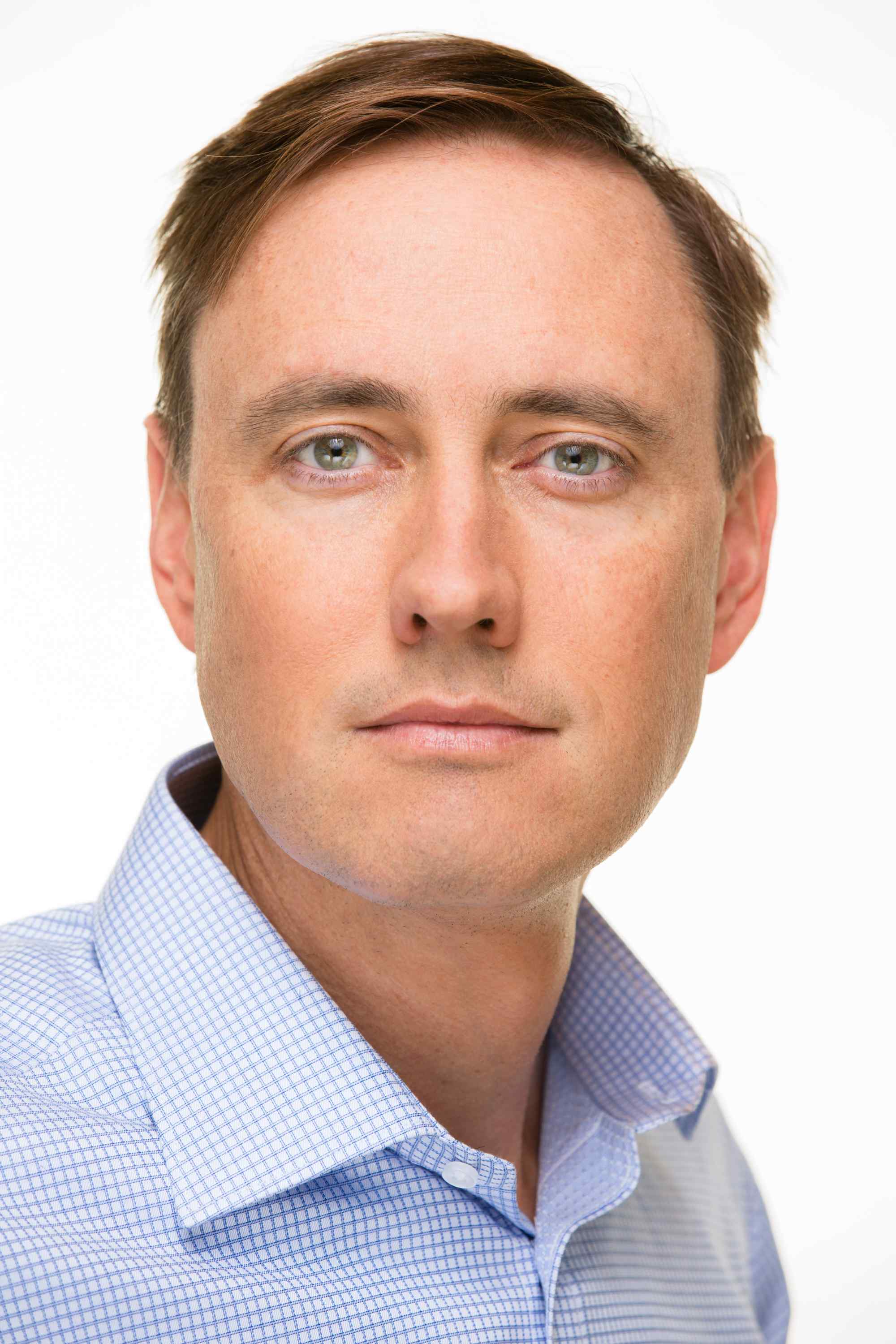
The Man Who Named Viral
In 1997, Steve Jurvetson wrote a newsletter paragraph about a small email startup's unusual growth curve. He called it "viral marketing." The phrase stuck. The startup was Hotmail. The $300,000 check DFJ wrote for it returned $400 million in fourteen months.
That is not a lucky break story. That is what happens when someone has already trained themselves to see the mechanism before everyone else sees the result. Jurvetson has been doing that same thing for thirty years - locating the hidden variable in a company that everyone else is looking past.
"People who don't know what can't be done."
Steve Jurvetson - on who impresses him mostHe graduated #1 in his Stanford Electrical Engineering class. Finished in 2.5 years instead of four. Then added a master's degree. Then an MBA. All from Stanford. The joke is that he was so efficient he had time left over - and he spent it building model rockets in the Nevada desert with his sons, photographing SpaceX launches on Flickr, and reading papers on synthetic biology at 6am. The hobbies are not separate from the work. They are the work, continued by other means.
The family origin matters here. His father, Tonu Jurvetson, fled Soviet-occupied Estonia through Germany just before the Iron Curtain fell in 1944. His parents spoke Estonian at home as a private language between themselves - Steve never learned it. That instinct for encoding, for private signal, for building a world with new rules inside an old one - it recurs in everything he has backed.
Hotmail put a six-line tagline in every outgoing email: "Get your free email at Hotmail." Every sent message was also an advertisement. The product grew itself. Jurvetson looked at that and named what he saw. The name made it real. That is what good investors do - they make the previously un-nameable thing legible. And once it's legible, everyone can use it.
DFJ grew under Jurvetson from a boutique operation to managing over $6 billion. He backed Skype. He backed Baidu before its IPO. He took an early position in SpaceX in 2004, before most of the financial establishment would let Elon Musk finish a sentence about reusable rockets. He joined Tesla's board in 2006, two years before the company shipped its first car. His philosophy was simple: find founders who don't know what can't be done, because they're the only ones who will do it anyway.
He talks about this without the usual VC chest-thumping. "To be an investor you have to be OK with vicarious accomplishment," he has said. "You haven't directly done anything." That kind of clarity about role boundaries is rare. Most investors in his position have rewritten the story so they're the hero. Jurvetson seems genuinely more interested in the signal than the credit.
"When you lower the cost of access to space, a boom of innovation follows, just as low-cost fiber optics paved the way for the Internet."
Steve JurvetsonIn November 2017, he left DFJ abruptly. The departure was tangled - an internal investigation, allegations of dishonesty with female colleagues, the kind of institutional upheaval that leaves everything uncertain. He took leave from the Tesla board. Then from SpaceX. What happened next is instructive: Elon Musk personally kept him on the SpaceX board throughout, and Jurvetson returned to Tesla's board in April 2019. By December 2020, he had stepped off Tesla permanently and launched Future Ventures with his partner Maryanna Saenko.
Future Ventures is a deliberate counter-argument to the venture industry's increasingly short attention span. Two partners. A 15-year fund life instead of the standard ten. Checks written into deep tech - fusion energy, synthetic biology, quantum computing, space infrastructure, AI. The first fund closed at $200 million. The second matched it. In May 2024, the firm closed a $169 million AI-focused fund. In April that year, Jurvetson joined The Metals Company as Vice Chairman, betting on deep-sea battery metals as a critical resource for the energy transition.
The thesis has remained unchanged for three decades: find the technology that rewrites the physics of a problem, and find the founder who doesn't need convincing that it's possible. Quantum computing for cryptography and drug discovery. Synthetic meat (Memphis Meats, now Upside Foods) before the term "cultivated protein" existed. D-Wave, the first commercial quantum computer company, when quantum was still a punchline at cocktail parties. Commonwealth Fusion Systems, betting on compact tokamak reactors that run on deuterium and tritium. Planet Labs, the satellite-imaging company that images the entire Earth daily. Verdant Robotics, bringing autonomous machine intelligence to farming.
The model rocketry deserves its own paragraph. He and his sons build rockets - real ones, with real motors - and launch them at events in Nevada's Black Rock Desert and California's Central Valley. He gave a TED Talk about it. Fortune ran a cover profile headlined "Just Call Steve Jurvetson Rocket Man." There is a photo somewhere of him at a Kennedy Space Center camp as a child, before Apollo 17, staring at hardware he would eventually fund successors to. The Flickr account (flickr.com/photos/jurvetson) has nearly 9,000 photographs - SpaceX launches, conferences, rocketry events, nature - all released Creative Commons, free to use with attribution. It is the nerdiest and most generous possible hobby.
Barack Obama appointed him a Presidential Ambassador for Global Entrepreneurship in 2016. In 2014, Estonia gave him the first-ever non-European e-residency card - a symbolic acknowledgment of his family's origin story and his own place in building the digital infrastructure that has made borders less relevant to how businesses operate.
He has been tagged "Mr. Nanotech" by Venture Capital Journal. He is on the board of B612, the asteroid-detection nonprofit. He contributes to Edge.org, the forum where the most serious scientists and thinkers publish for each other. He has said the goal is not money - money is a byproduct. The actual goal is the vector of progress. "How can we help facilitate human flourishing?" Not a rallying cry. A research question he has been running experiments on since 1994.
Net worth estimates put him around $1.2 billion, but that number is mostly SpaceX equity on paper - the kind of wealth that exists in a private company with a very high implied valuation and no liquid market. What's concrete is the track record: $300K into Hotmail, $400M out. An early SpaceX stake that has appreciated by multiples impossible to fully calculate. A fund architecture built for the next twenty years, not the next five.
He is 59. He is still writing checks into nuclear fusion and AI and synthetic biology. He photographs rocket launches for fun. He sits on SpaceX's board while launching model rockets in the desert. The word for what he does is not investing. It is witnessing, and then accelerating, the specific part of the future that can't be stopped anyway.