A lender can approve a loan in moments. The consequences take longer to arrive. Steve Cunningham has built a career around that interval: the space between a promising decision and the evidence that it was a good one. He became chief executive of Enova International on January 1, 2026, bringing an unusually relevant collection of previous jobs to a business that lends to people and small companies outside the comfortable center of banking.
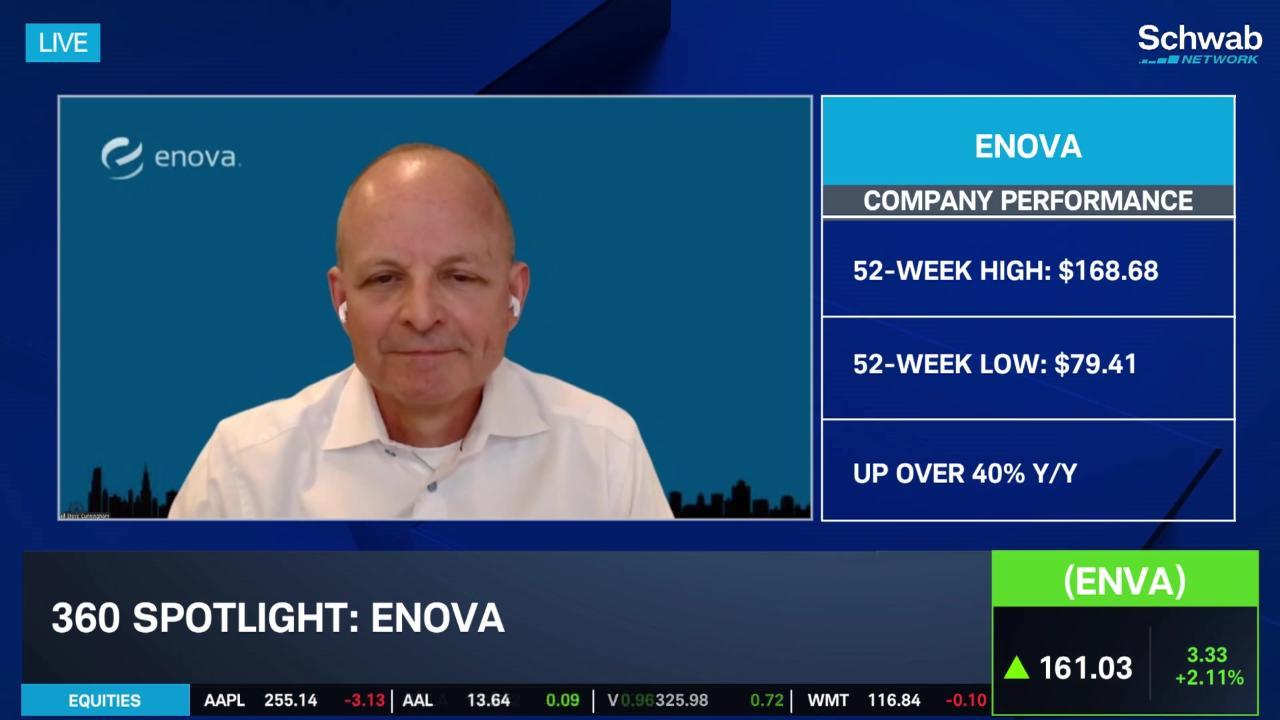
There was no founder’s unveiling to stage. Cunningham had already spent more than nine years as Enova’s chief financial officer. He knew the company from the side where ambition has to be funded, accounted for and explained. His promotion enlarged his responsibility for a business whose products can move quickly, while its obligations to borrowers, investors and regulators persist.
By October, the job had supplied a sharp illustration. Enova’s proposed acquisition of Grasshopper Bancorp, announced before Cunningham took over, had ended. The executive who had argued for the advantages of becoming a bank now had to lead without that transaction. A career spent considering what might happen next had acquired another practical examination.
The other side of the desk
Cunningham’s professional starting point was the Federal Deposit Insurance Corporation in the early 1990s, near the end of the savings-and-loan crisis. He worked in the field and spent five years in Washington. Later came Capital One, including a move to New Orleans after its acquisition of Hibernia, and then Harley-Davidson’s finance business in the aftermath of the financial crisis.
That sequence contains a useful reversal. First he examined financial institutions. Then he helped operate them. Asked to explain his background in an August 2026 conversation with Peter Renton, he described the different perspectives he had accumulated and offered a compact driving lesson: “I know when to brake, I know when to accelerate.”
It is a good line for someone whose résumé includes financing motorcycles. More seriously, it identifies the tension running through his work. Lending requires the willingness to advance money and the ability to recognize when advancing more would be a mistake. An executive who has occupied both sides of the regulatory desk brings experience of how those decisions are examined afterward.
- Early 1990sFDIC regulator
- Before 2009Capital One finance leadership
- 2009–2010Harley-Davidson Financial Services CFO
- 2010–2016Discover treasury, then risk leadership
- 2016–2025Enova CFO
- January 2026Enova CEO
A finance job with a view of the whole machine
At Discover, Cunningham became corporate treasurer in 2010, developing liquidity, market-risk and capital-management strategies. He subsequently became executive vice president and chief risk officer. His responsibilities included enterprise risk management, compliance, oversight of credit and other risks, and capital planning. These are the plumbing jobs of finance. The plumbing becomes fascinating when it stops working.
Enova hired him as CFO on June 20, 2016. His experience included eight years at Capital One and leadership of its auto-finance and banking finance functions. At Harley-Davidson Financial Services, he had been CFO of a business with $7 billion in receivables. The move to Enova put that background inside a company serving non-prime consumers and small businesses through online lending.
What attracted him, he said at the time, was its “entrepreneurial culture.” The phrase matters alongside the résumé. A former regulator and risk chief had chosen a company with an appetite to build. His assignment would involve making the financial architecture support that appetite, with all the ordinary complications that the word growth tends to leave out.
A handover, with the previous driver still aboard
Enova announced the succession in July 2025. David Fisher would leave the CEO role at the end of that year and become executive chairman. Cunningham joined the board immediately and would take over the operating leadership on January 1. Scott Cornelis, the company’s treasurer and vice president of finance, was named to succeed him as CFO.
The arrangement gave the transition a clear shape. Fisher expected to remain executive chairman for at least two years, subject to reelection. Cunningham’s move was therefore both a change of authority and a continuation of relationships. He inherited the company’s existing business, alongside a boardroom in which his predecessor would remain involved.
His former remit had extended beyond reporting the numbers. Accounting, treasury, financial planning, tax, facilities and investor relations had all sat within his CFO responsibilities. The title changed, but much of the organization was already familiar. That familiarity offers a practical advantage: fewer introductions before the difficult conversations begin.
The person behind the credit file
Cunningham’s argument for Enova starts with customers who do not fit traditional lending criteria. Its consumer and small-business businesses address different needs, but both require a judgment about someone whose financial circumstances may be more complicated than a conventional approval process accommodates. That judgment is the company’s commercial proposition, and its continuing test.
In August, discussing the proposed Grasshopper combination with Karen Webster, he described wanting customers to stay beyond their first borrowing need. A young borrower might begin with a modest loan and later need different products. His ambition was to offer a path toward more tailored, lower-cost credit and, under the proposed bank structure, adjacent services.
He also pointed to income arriving from multiple sources at irregular intervals. Bank-transaction information can help distinguish an uneven payment schedule from deteriorating repayment capacity. The distinction sounds technical until one remembers what is being decided: whether a person gets access to money, on what terms, and with what expectation that it can be repaid.
A better-informed approval still has to prove itself through the life of the loan. More information creates more questions to answer well. Cunningham’s emphasis on the details of cash flow makes his approach less cinematic than a promise to transform finance overnight. The borrower’s calendar, however, may be more useful than the slogan.
The bank deal that did not become a bank
Grasshopper was supposed to expand the range of possibilities. The proposed purchase was valued at approximately $369 million. The transaction plan envisaged Enova becoming a bank holding company, Grasshopper retaining its national bank charter, and Cunningham leading both Enova and the bank. Regulatory approvals and other closing conditions were required.
The proposed structure connected several ambitions: a wider product offering, a deposit-funding base and opportunities to combine the two companies’ capabilities. For a chief executive with a background in treasury and bank regulation, the appeal was intelligible. It also meant that an important part of the plan depended on decisions outside his own organization.
On September 14, Enova withdrew its applications with the Office of the Comptroller of the Currency and the Federal Reserve. Cunningham argued that regulatory standards for nonbanks seeking to become banks lacked clarity and that the process was vulnerable to political pressure. That was his explanation of the withdrawal, rather than a finding by the regulators.
“Our future growth and success do not depend on becoming a bank.”Steve Cunningham, September 14, 2026
Enova reaffirmed its financial guidance and said it intended to accelerate share repurchases. On October 16, the parties mutually terminated the merger agreement. Enova paid Grasshopper $4 million under the termination agreement; neither side would owe further fees or liabilities to the other related to the merger agreement.
The difference between a proposed acquisition and a completed one is easy to lose in a year’s worth of interviews. Here it defines the present story. Cunningham’s broader ambitions for customer relationships remain part of his public account of the business. The particular bank acquisition that was meant to help deliver them is over.
What the quarter actually said
Six days after the termination, Enova reported third-quarter results. Revenue increased 26% from the same quarter of 2025, while originations rose 31%. Diluted earnings per share were $4.06. Adjusted earnings per share, a separate non-GAAP measure, were $4.48. Keeping the two distinct is useful; the larger number does not replace the reported one.
Enova company results, Q3 2026. Growth compares with Q3 2025. The net charge-off ratio was 8.5% a year earlier.
The consolidated net charge-off ratio declined to 8.1% from 8.5% a year earlier. Liquidity, including available capacity on facilities, totaled $1.3 billion at September 30. These figures describe Enova’s operating and funding position. They also help explain why the company could continue presenting a growth plan after withdrawing the bank applications.
They are company results, produced by an organization, rather than a personal scorecard for its new CEO. Still, they establish the immediate setting for his leadership. The first year has required him to explain both a transaction that disappeared and a lending business that continued to expand.
A guitar somewhere beyond the spreadsheet
The public biography supplies a few details outside work: Cunningham plays guitar, follows college football and spends time with his family. He studied corporate finance and investment management at the University of Alabama and earned an MBA at George Washington University. He also holds the Chartered Financial Analyst designation.
His professional connections extend beyond Enova. He joined AgriBank’s board in January 2022 and the CFO Advisory Board of Bain Capital Ventures in May 2024. Agricultural banking, venture capital and online lending occupy different corners of finance. His participation in all three gives the career a wider setting than the consumer-loan screen alone.
Inside Enova, he has publicly emphasized employee development, including mentorship, management training and opportunities to learn across functions. In a March 2026 discussion of the company’s culture, he connected building a durable business with giving its people room to develop. The programs are practical mechanisms for an ambition that otherwise risks remaining a sentence in a recruitment advertisement.
Cunningham’s story is full of large institutions, capital and credit decisions, but its recurring problem is quite ordinary: how much confidence is enough to act? His roles have repeatedly placed him near that decision. Now he has the CEO’s responsibility for the answer, including the occasions when a carefully explained plan has to be set aside.
There is something fitting about a guitarist with a treasury background. Timing counts. So does listening. At Enova, the next passage will be judged in the same place as the last one: in what happens after the money goes out.