A sports highlight has a surprisingly long commute. Someone has to spot the play, cut the video, deliver it to the right people and get it onto a screen while fans still care. In December 2018, the America East Conference announced a partnership that joined two pieces of that journey. REELY automated the highlights. INFLCR helped distribute the content to athletes and other brand ambassadors. Stadia Ventures had invested in both.
The conference credited Stadia with helping cultivate the relationship. For a venture firm whose pitch rests heavily on its address book, this was a useful receipt. Two startups could offer complementary products to a shared customer. The customer could connect jobs that otherwise required separate tools and handoffs. An introduction had acquired a practical purpose.
That is the appealing proposition behind Stadia, the St. Louis sports investor and accelerator founded in 2015 by Tim Hayden and Art Chou. It puts money into young companies, helps sharpen their commercial plans and introduces them to people in the industry. The critical question is what happens after everyone exchanges contact details.
A coffee meeting becomes an investment thesis
Chou described the beginnings in a 2020 SportTechie interview. A woman contacted him on LinkedIn for advice about moving into sports. He agreed to coffee. By the end, she had suggested he meet her friend Tim. The introduction connected two people who recognized the same problem from different sides of the table.
At Titleist and Rawlings, Chou had seen how internal projects could consume the time needed to evaluate outside inventions. As a consultant, he met smaller companies struggling to reach decision-makers. Hayden brought sports entrepreneurship and experience running Saint Louis University’s entrepreneurship program. Their opportunity was to connect founders, industry buyers and investors who wanted exposure to sports.
Chou’s background also included a business that went under: golf startup Pixl, which he helped launch before returning to a larger sporting-goods company. That experience belongs to his pre-Stadia career. It gives the founding story some welcome texture: the people offering guidance had worked on products, inside established companies and in a startup that did not survive.
Hayden’s route included sports sponsorship, an agency connected with the St. Louis Cardinals and his own fan-facing technology ventures. In a Sports Geek interview, he described senior industry friends wanting to help the next generation. Stadia gave that impulse a schedule, a selection process and an investment attached to the advice.
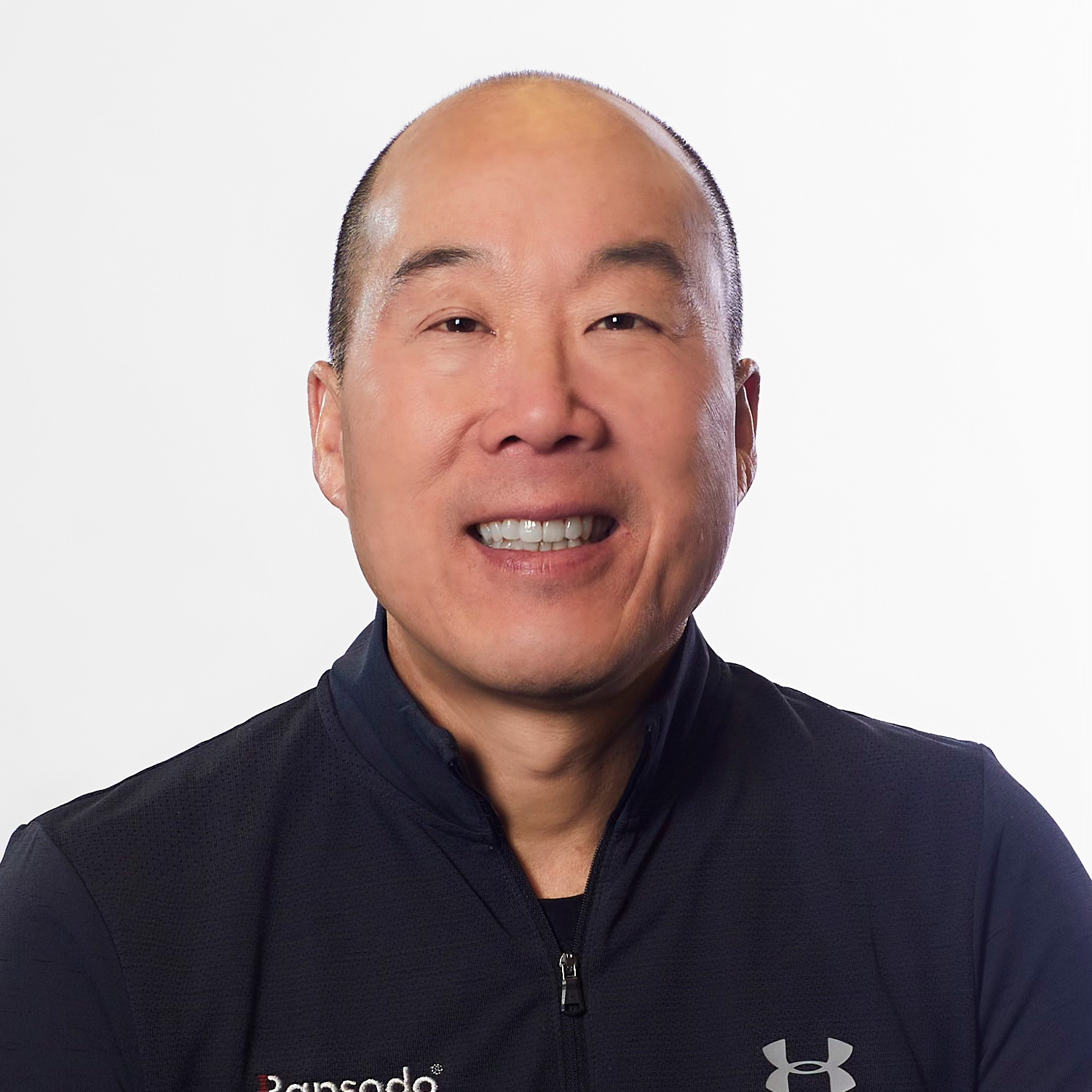
“We never had the time to vet the external projects.”Art Chou, on his corporate experience · 2020
The check comes with homework
Stadia’s published accelerator offer combines up to $100,000 in cash with a 14-week business development program. The application criteria favor businesses with evidence of demand: a pilot, customers, revenue or other traction. Founders need something the firm can help commercialize. A clever sketch on a napkin has more work to do before it fits.
The price is partly ownership. Stadia’s FAQ says the investment and corresponding equity depend on the company’s needs and valuation. Its accelerator page separately describes a sweat-equity component valued at three times the cash investment. That figure describes services, not additional money arriving in the startup’s bank account.
Time and travel matter too. The published commitment is about ten hours a week from at least one founder for fourteen weeks, with founders covering transportation and accommodation. That implies roughly 140 scheduled hours before allowing for the broader work of running the business. The sensible calculation includes dilution, expenses and the sales time the founder is giving up.
The curriculum resembles an executive education program. Sessions address positioning, product, sales, fundraising and marketing, with mentor check-ins between meetings. A published hybrid schedule places the opening in St. Louis and later gatherings in Frisco, Texas. This gives the program a rhythm: try an argument, hear objections, revise it and return with something more useful.
Its money is also organized for investment returns. Stadia describes an original five-year, $10 million accelerator fund and a subsequent Growth Fund, with opportunities to make follow-on investments. Those are venture investment vehicles. A fund’s size should not be confused with revenue earned by the management company or financing raised by a portfolio startup.
The buyer gets something out of this, too
Stadia serves several constituencies. Founders seek capital and customers. Sports organizations want useful technology without evaluating every unsolicited pitch. Investors want access to companies they can assess. Mentors contribute operating experience and contacts. The firm’s partnership offering includes screened deal flow and support for corporate innovation. The arrangement depends on each group finding a reason to return.
The America East example shows the commercial logic. REELY and INFLCR were addressing connected tasks, and the conference became a customer shared by both. An accelerator can create value by spotting that fit. The distinction matters because a crowded networking event can produce plenty of introductions without producing a working customer relationship.
A separate SportsEngine partnership announced in 2019 offered marketplace listings to Stadia’s portfolio companies. That gave startups another route to youth sports organizations and families already looking for services. For a small company, distribution through a relevant platform can be more useful than another afternoon explaining its technology to people who will never buy it.
The mentor roster illustrates the range of experience available, listing people associated with organizations including the Dallas Cowboys, Major League Baseball, Riot Games and the St. Louis Blues. Those affiliations describe individual mentors; they do not make every employer a Stadia customer. The practical attraction is the possibility of meeting someone who understands the actual purchasing problem.
Sports is a much bigger aisle than equipment
The company’s investment map stretches from outdoor recreation and wellness to fan experiences, media, esports and betting infrastructure. Its stated esports interest is in supporting technology rather than owning teams or publishing games. In betting, it emphasizes the systems underneath the activity. That makes the portfolio easier to understand as a collection of business problems surrounding sport.
Look at the companies selected in fall 2017. RockDaisy built data visualization software for front offices, coaches and scouts. UPGRADED worked on digital ticketing. The Relish targeted female sports fans with content. REELY handled automated highlights. Four companies could share an industry address while having quite different buyers and technical needs.
Later examples push beyond the stadium. Axle ai, which identifies Stadia among its investors, supplied media-management software to television producer Pie Town Productions. A company can develop a capability relevant to sports and sell it elsewhere. For founders, that is an invitation to define the problem carefully before letting a sector label define the entire market.
The field contains alternatives, including Comcast SportsTech, Plug and Play Sportstech and SeventySix Capital. All appeared alongside Stadia in reporting on the 2025 ACTIV Sports Summit. Their presence makes “we know sports” a starting point for comparison. Stadia’s case rests on its particular mentors, portfolio relationships and small-cohort commercial work. A founder should compare the people and customer access relevant to the next sale.
Then the customer’s field closed
The limits of an industry network became painfully concrete in 2020. Uplift Labs, a Stadia spring-cohort company, had been conducting pilots with Major League Baseball organizations and private training academies when the pandemic closed facilities. The immediate break was access to the setting where its technology was being tested. A promising customer relationship could not reopen a field.
Uplift’s response included Uplift Coach, a remote training product. Its production partner described features such as live annotation, replay and heart-rate tracking. The customer’s problem had changed: coaches needed to work with athletes who were elsewhere. The product followed that changed condition. This was a portfolio company’s adaptation, rather than proof of a Stadia-directed turnaround.
The lesson for anyone copying the model is specific. Introductions help when there is a buyer with a problem, a budget and the ability to act. If the place of use disappears, or the customer cannot purchase, access alone will not rescue the sale. The founder still has to decide whether to adjust the product, pursue another customer or wait.
Even in ordinary conditions, an accelerator is a demanding fit for someone who cannot spare regular time for it. The value also weakens when a company primarily needs fundamental research, or when its likely buyers sit outside the program’s network. Those are questions to settle before exchanging equity for help.
Count the introductions that turn into work
Stadia’s website reports 76 portfolio companies, 16 completed cohorts and 14 exits. It also describes a network of more than 7,000 sports and business leaders. These are company-reported totals, presented here as the firm’s published track record. An exit count is not a return multiple, and a network headcount cannot tell a founder which person will answer tomorrow.
The relationship-building continued beyond the cohorts. Stadia’s June 2023 London summit named partners including Genius Sports, Northridge and London & Partners. In January 2025, ACTIV announced Stadia as a foundational partner for its Frisco summit. These events extend the settings in which founders and potential partners can meet, though attendance itself is not a commercial outcome.
Leadership has changed along the way. In 2021, Hayden announced that he had completed a transition out of day-to-day operations while remaining involved through ownership, investing, selection and mentoring. He said he wanted to build again. The distinction between founding a firm and operating it every day matters in a business so closely associated with individual relationships.
A useful habit to borrow from Stadia is to make every request for help concrete. Identify the customer, the job the product performs and the evidence that it works. Ask for an introduction that can test a buying decision. Match mentors to an actual obstacle. Then track pilots, contracts and repeat purchases alongside the meetings.
For a founder, the best test is to revisit the America East example. Can two people in this network do something useful together that they were unlikely to do alone? Can a potential buyer explain where the product belongs in the workday? Stadia’s proposition becomes persuasive when the answers move beyond the pitch room. The highlight has to reach the screen.
76Portfolio companies
16Completed cohorts
14Exits
Keep the conversation going
Explore Stadia Ventures, its accelerator and mentor community. Follow the firm on LinkedIn, X, Instagram and Facebook.