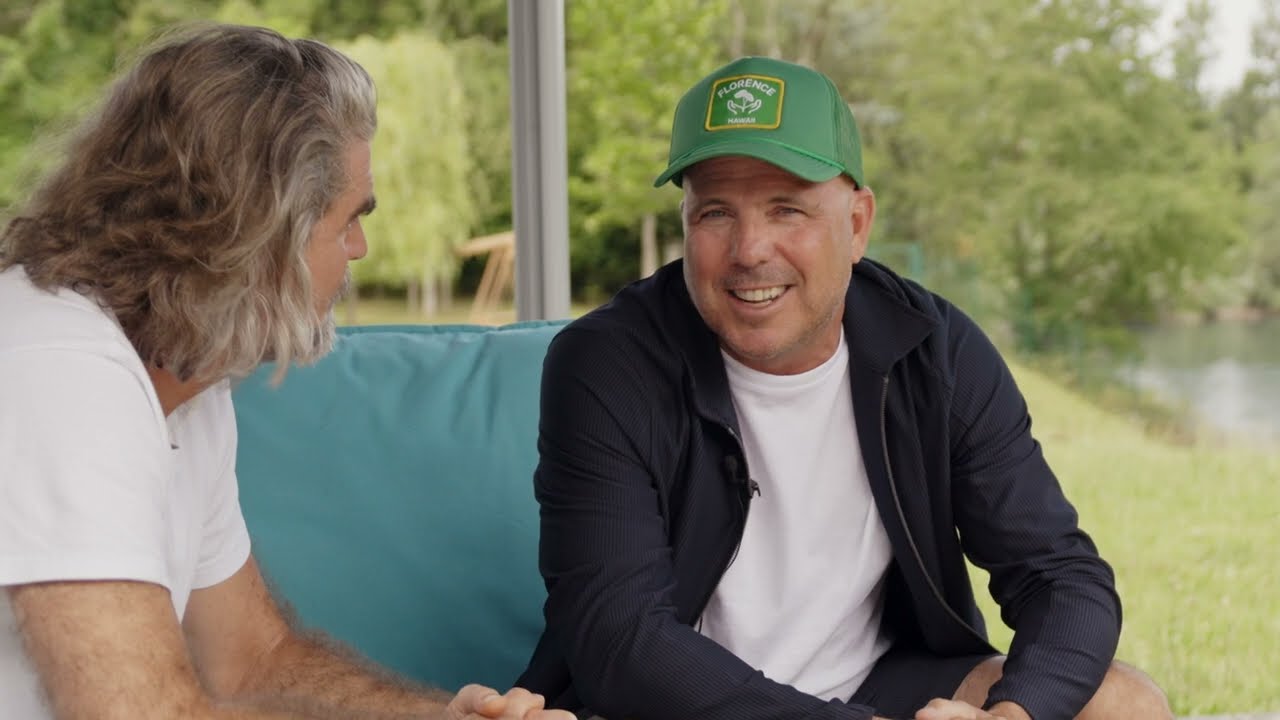
The ocean is an awkward business school. It offers no certificates, marks your homework immediately, and reserves the right to change the exam halfway through. Christoph Sonnen spent his teenage years learning there. By fourteen he wanted to become a professional big-wave windsurfer. Decades later, as a founder and investor, he still returns to the same question: when should you move?
His answer involves preparation, a feel for conditions and the patience to wait. Sonnen’s career has carried him through an early Red Bull team and into LEAD, the venture business he co-founded with partners from the family of adidas founder Adi Dassler. Sports run through those chapters, but so does a quieter preoccupation: finding people who can turn an opening into a working company.
A can of drink, a change of venue
In the 1990s, Red Bull was still a startup. Sonnen arrived through connections made in surfing. The business had a drink to sell and a culture to attach it to. Snowboarding, skateboarding and other extreme sports were finding audiences, and the company was working out how to reach them.
The early distribution effort included sports facilities and gyms. Progress proved difficult. The team turned toward bars, and Sonnen secured distribution in major Berlin accounts. A beverage intended for an active crowd had found another route into that crowd’s evenings. The practical lesson was wonderfully unglamorous: an idea needs somewhere to be bought.
That distinction matters in a career now associated with venture capital. Red Bull’s subsequent scale can make its beginning look inevitable. Sonnen remembers the mistakes and the unfinished organization. He describes it as his “first and last job.” Entrepreneurship followed. The employee experience gave him a close view of a young business trying to establish its place in people’s lives.
There is a useful continuity between selling a drink and assessing a startup. A product can be interesting before its distribution is convincing. A founder can explain a technology beautifully while struggling to explain who will pay. Sonnen’s early career put him on the side of the transaction where an answer had to survive contact with a customer.
The family name became a question
One of Sonnen’s frequently told stories begins on a golf course. He and a stranger took shelter during a thunderstorm. A lightning strike nearby sent them running for the locker room, where they introduced themselves. The stranger was Horst Bente, a grandson of Adi Dassler. It is an unusually forceful way to exchange business cards.
The relationship eventually led to LEAD. Its original spelling, leAD, carried the name’s explanation: legacy of Adi Dassler. The sporting connection came with a question about what that legacy should become. If Dassler were starting today, where would his attention go?
For Sonnen and his partners, sports technology offered an answer. Dassler’s work had been concerned with equipment suited to athletes and their particular demands. Applying that curiosity to a new generation meant looking beyond shoes. The family connection supplied a starting point for conversations with entrepreneurs rather than a finished product to sell.
In 2015, Sonnen and the family’s investment circle were examining a gap around sports technology. A yearlong feasibility study helped establish the opportunity. The accelerator began operating in 2017. Its task was concrete: select young companies, provide investment and connect founders with people who understood the sporting business.
A famous surname can open a meeting. The harder work begins after everyone has sat down. Sonnen’s role was to help turn the relationships around that name into an organization that could accompany a company through successive stages. The ambition would become more apparent as the accelerator acquired investment funds alongside it.
Berlin puts the idea on stage
The accelerator’s early years gave the proposition a public test. By 2019, LEAD had formed a strategic cooperation with the German sports broadcaster SPORT1. That brought a media business into the network around the startups, with a practical interest in what new companies might offer audiences and sporting customers.
In November that year, seven selected startups completed the three-month leAD SPORT1 program in Berlin. More than 200 guests attended Demo Day. Founders presented to investors, mentors, strategic partners and people from sport, technology and media. Former NBA All-Star Michael Redd was the evening’s special guest.
For a founder, a room like that has two audiences. One may supply capital. Another may help test a product, introduce a customer or challenge an assumption. SPORT1’s digital leadership described accompanying the companies with product knowledge and preparing to welcome some into a pilot phase. The pitch was a beginning to another piece of work.
This was Sonnen’s sports network becoming an operating arrangement. Mentoring could lead to a pilot. A presentation could produce a relationship with someone who had a use for the technology. The accelerator format made those encounters repeatable, even though the outcome for each company remained uncertain.
Money for the next chapter
An accelerator can help a startup begin. A growing company needs another kind of financing. In February 2018, OurCrowd and leAD announced ADvantage, a sports technology fund with a $50 million target. The announcement named Sonnen and OurCrowd’s Jeremy Pressman as its co-managers.
Its initial plan was to invest in fifteen early-stage companies. The areas included fan engagement and experience, connected athletes and communities, esports, fantasy sports and new sporting formats. These were different businesses, linked by a belief that technology was changing the way people participated in and followed sport.
The target was a fund ambition, rather than a statement of Sonnen’s personal wealth or money already invested. Its significance for his story lies in the progression it proposed. A company coming through an accelerator could have somewhere to turn as it developed. LEAD was beginning to assemble more than an annual intake of founders.
Announced fund target, with an initial plan for 15 early-stage investments.
By 2021, Sonnen was describing a structure designed to support companies from their first idea toward an exit. Academy programs, seed investment and later funding would perform different jobs. The organization’s ambition concerned the connections between those stages as much as any individual technology.
Orlando gives the network an address
The geographic expansion arrived through Lake Nona, the planned community in Orlando. A partnership announced in February 2020 would create LEAD’s first accelerator in the United States. The offer included a $75,000 pre-seed investment in exchange for eight percent equity, together with access to mentoring and the partner network.
Those terms show what an accelerator asks of both parties. Founders give up ownership for capital and assistance. The investor commits money before the business has much history. Everything depends on what follows the agreement: the quality of advice, the usefulness of introductions and the company’s ability to act on them.
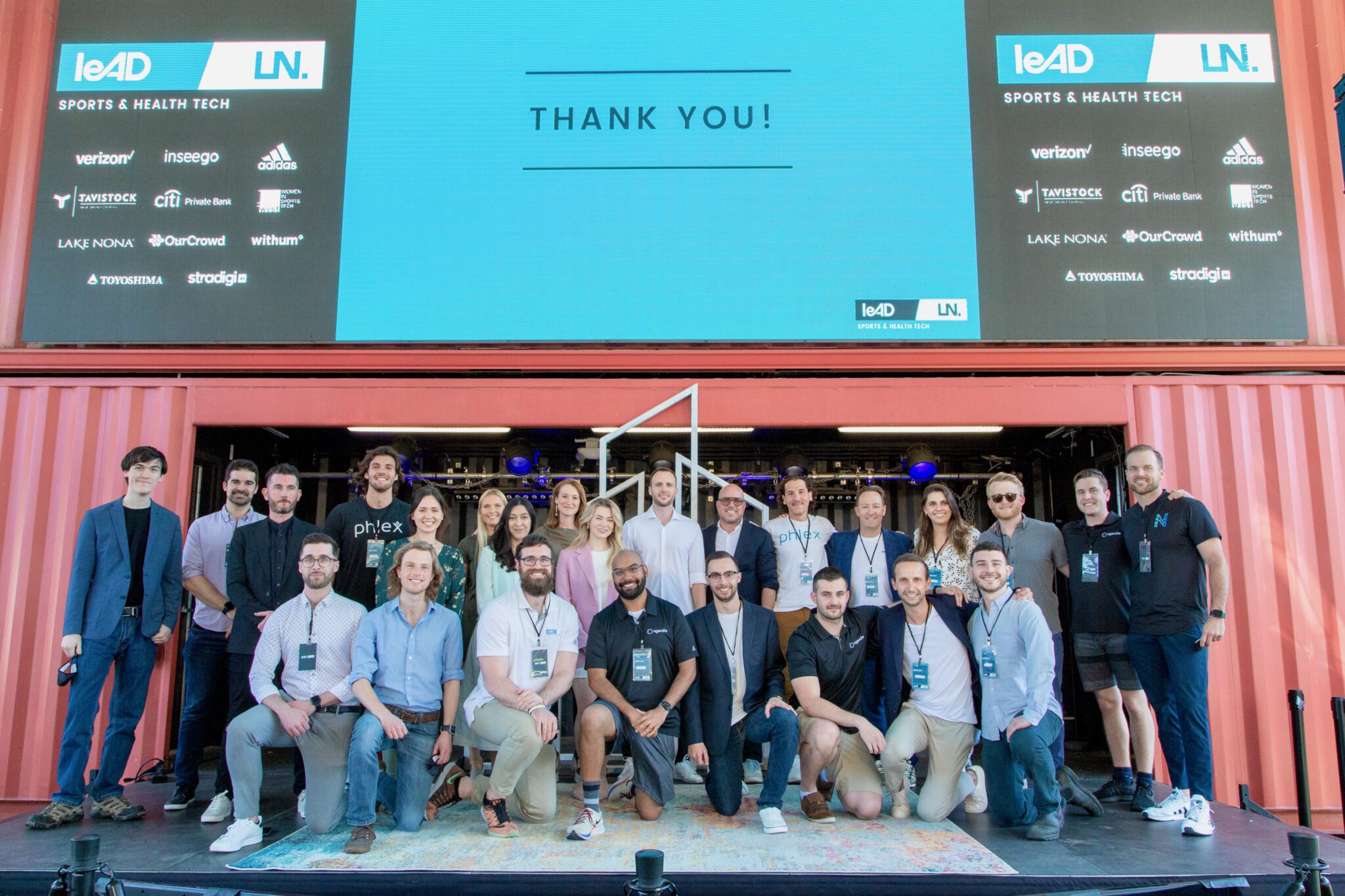
At the inaugural program’s Demo Day in 2021, the emphasis was on companies showing their work. Phlex, which used data to help understand swimming technique, was among them. Founder Ryan Rosenbaum described the value of experienced mentors and conversations with other participants. Guests could then visit the MS2 Innovation Lab and try the products.
LEAD moved its headquarters from Berlin to Lake Nona in September 2021. The move gave the U.S. operation a larger role in the business. Sonnen’s network now had an Orlando base alongside its European origins and international investment relationships. An enterprise built around introductions had acquired another place for those introductions to happen.
A classroom becomes another connection
One later partnership began in an executive education program. Sonnen and entrepreneur Danny Cortenraede first discussed working together while participating in Harvard’s Business of Entertainment, Media and Sports program. In July 2024, LEAD announced Cortenraede and his InStudio Ventures as a new general partner.
The setting fits Sonnen’s career without requiring any grand theory about networking. People working in adjacent fields spent time studying the same business questions, then explored a partnership. Education provided the occasion for a conversation that eventually became an organizational relationship.
A month later, LEAD announced its rebrand and an expanded family of funds, alongside a strategic advisory division. The August 2024 announcement reported more than seventy portfolio companies and $155 million in assets under management. Those are figures for the organization at that moment, and they show how far its scope had moved from the original accelerator.
The additional structures carry additional responsibilities. An accelerator, a fund and an advisory business have different customers, decisions and measures of progress. Sonnen’s work had grown to include keeping those activities connected while giving each enough definition to operate. The original sporting curiosity now had an administrative life of its own.
Waiting, with company
“You won’t make it if you’re too early.”
Christoph Sonnen, on surfing and business
“You won’t make it if you’re too early,” Sonnen says of surfing and business. The warning also works in reverse: leave a decision too long and the opening passes. The observation is modest enough to be useful. Preparation improves the chances; the conditions still get a vote.
His story offers several versions of that problem. Red Bull needed a workable route to its audience. LEAD needed partners and a reason to exist. Its startups needed assistance suited to their stage, and the organization needed ways to continue supporting them after Demo Day.
Sonnen began with ambitions of going professional on the water. He now works among founders, sporting families, athletes and investment partners. The ocean remains his reference point, but the business has become a collective undertaking. Waiting for the right moment is easier to describe than to organize. His career has increasingly been spent on the organization.