A laser cutter is an unusual answer to a question about opportunity. So is a milling machine. Yet both belong in Sreedevi Devireddy’s account of what aspiring entrepreneurs needed in Warangal. A founder could arrive with an idea and ambition in plentiful supply. Getting something made was another matter. Before a product could win a customer, somebody had to find the equipment, the expertise and enough room to discover what did not work.
As founding CEO of SR Innovation Exchange, or SRiX, Devireddy helped put those resources within reach. The incubator opened at SR Engineering College, now SR University, on 5 March 2018. It gave a smaller city in Telangana a place in a conversation that often defaults to India’s major business centres. The promise was practical: a person with a product idea should have somewhere to begin working on it.
Her career makes an interesting study in the work around other people’s businesses. There are founders in it, certainly, but also students, teachers, corporate teams and public institutions. Devireddy keeps appearing at the points where these groups need one another. An introduction, a workshop or a better question can seem a modest intervention. For somebody starting out, it can determine whether the next step happens at all.
The student gets another attempt
Before SRiX, she was executive director of TiE Hyderabad. In December 2017, the chapter announced the winners of its inaugural TiE GRAD Business Plan Competition. One team, from BITS Pilani’s Hyderabad campus, was developing robots to clean tall buildings. Another, from NALSAR, was working on access to legal education. Each received ₹2.5 lakh. The subjects were different; both required students to consider what a useful enterprise might look like.
Devireddy’s emphasis was on the learning available to a student founder. There was time to try something, get it wrong and work again. TiE GRAD connected institutional sessions and speakers with a competition, then brought selected teams to a finale. A business idea acquired a sequence of appointments with the outside world. There were people to explain it to, questions to answer and reasons to improve the explanation.
That is a more demanding invitation than simply telling young people to be entrepreneurial. It gives their enthusiasm a schedule. It also takes their work seriously enough to expose it to scrutiny. The student can practise being responsible for an idea before making a whole career depend on it. Devireddy would return to that territory through different institutions, with different tools available, but with the same interest in what young people could build.
What a workshop changes
At SRiX, the tools included 3D printers, laser cutters, lathes and milling machines. Its IoT and electronic systems facilities were intended to help connected-device ventures develop and refine products. Devireddy understood the expense behind such equipment. In her account of product startups, the development period could last two or three years, depending on the technology and sector. Revenue might arrive considerably later than the first bill.
A shared facility offers a useful answer to that awkward arithmetic. It lets a founder work with equipment without first assembling an entire private workshop. Machines also make a particular demand on an idea. A drawing must become dimensions; a design must tolerate materials. The conversation grows more specific. Even the disappointing version can be useful if it shows what the next version needs to change.
and makerspace
and mentors
and market support
In February 2020, she was visiting JNTU Jagtial to look for student innovators for SRiX’s Sprint programme. The planned intake was 80 students for a two-month internship. Here was the argument about opportunity translated into recruitment: go looking for people, invite them into the facility and give them time to work on prototypes. An incubator’s address mattered, but so did the effort to bring people through its door.
A Hyderabadi makes room in Warangal
Devireddy’s move carried a small personal irony. She described herself as a Hyderabadi, then made a case for building away from the familiar city. Asked about the adjustment in 2020, she pointed to the short drive back and said she did not miss Hyderabad much. She wanted young people to have reasons to develop their ideas closer to home, with support that could make staying a serious option.
She also gave credit to SR University’s A. Varadha Reddy and A. Madhukar Reddy for the institutional vision behind SRiX. Her own preparation included visits to Kerala Startup Mission and incubators at IIT Madras and IIT Bombay. That detail is telling. Before asking founders to do their research, she had gone looking at how the places around founders worked. The incubator itself required some customer discovery.
Her 2018 Chevening Research, Science and Innovation Leadership Programme fellowship at Oxford widened that enquiry. Visits to British catapult and innovation facilities informed her thinking about equipping an incubator early. The useful combination, as she later described it, brought innovators, faculty researchers, corporate experience and facilities together. Each supplied something the others could use. Her description left room for the uncertainty that comes with starting a business. Having all the ingredients together gave people a chance to make them work.
“When the four things come together, sometimes there is magic.”
Sreedevi Devireddy
The award with somebody else at its centre
In 2019, Devireddy received the National Entrepreneurship Award in the private mentor category. The distinction suited a career in which much of the work was directed towards somebody else’s enterprise. The official award biography recorded her involvement with the Atal Innovation Mission and the Cherie Blair Foundation, alongside her SRiX leadership and regional chamber work. It described initiatives that had directly reached around 400 women entrepreneurs over eight years.
Mentoring is a broad word. Here, it sat beside strategy advice, institutional connections and support for women working at the grassroots. Those details give it weight. A founder’s problem may involve much more than the product itself: access, confidence in a decision, knowledge of a market, or finding the person qualified to answer a technical question. Making useful expertise reachable is a form of work with very tangible consequences.
By 2022, Devireddy was also listed as vice president for startup ecosystem work at Xelpmoc Design & Tech. The setting had changed, but her public emphasis remained on links between academia, industry and startups. Her earlier management experience included TalentSprint and Globarena Technologies. Across these roles, the recurring material was people learning to work with institutions, and institutions learning how to become useful to people with plans.
First, ask who needs it
At GITAM’s Venture Development Centre, which she led as director, the enquiry became part of campus life across Hyderabad, Bengaluru and Visakhapatnam. The centre offered coaches and makerspaces. Its approach began with understanding a problem and validating the proposed customer. Devireddy described primary and secondary research, customer profiles and the progression from a prototype to something ready for a market. An attractive invention still had questions to answer.
She also discussed helping students work through differences within teams. Complementary abilities could come with different temperaments; useful disagreement needed conversation. Entrepreneurship education, in that account, included the ordinary difficulty of building with another person. A working partnership is its own small prototype. You learn which parts fit, where the strain appears and what needs adjusting before the undertaking grows more complicated.
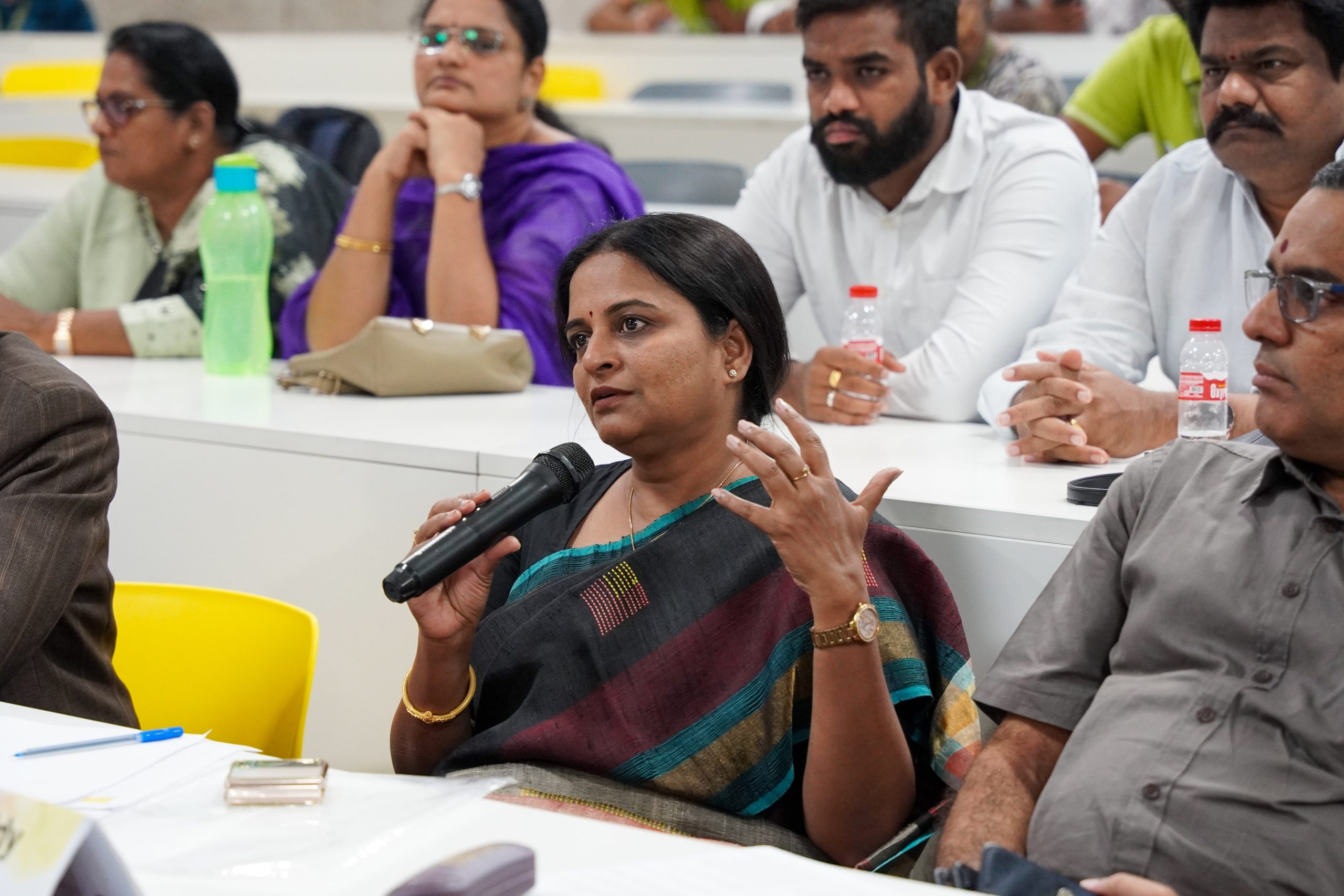
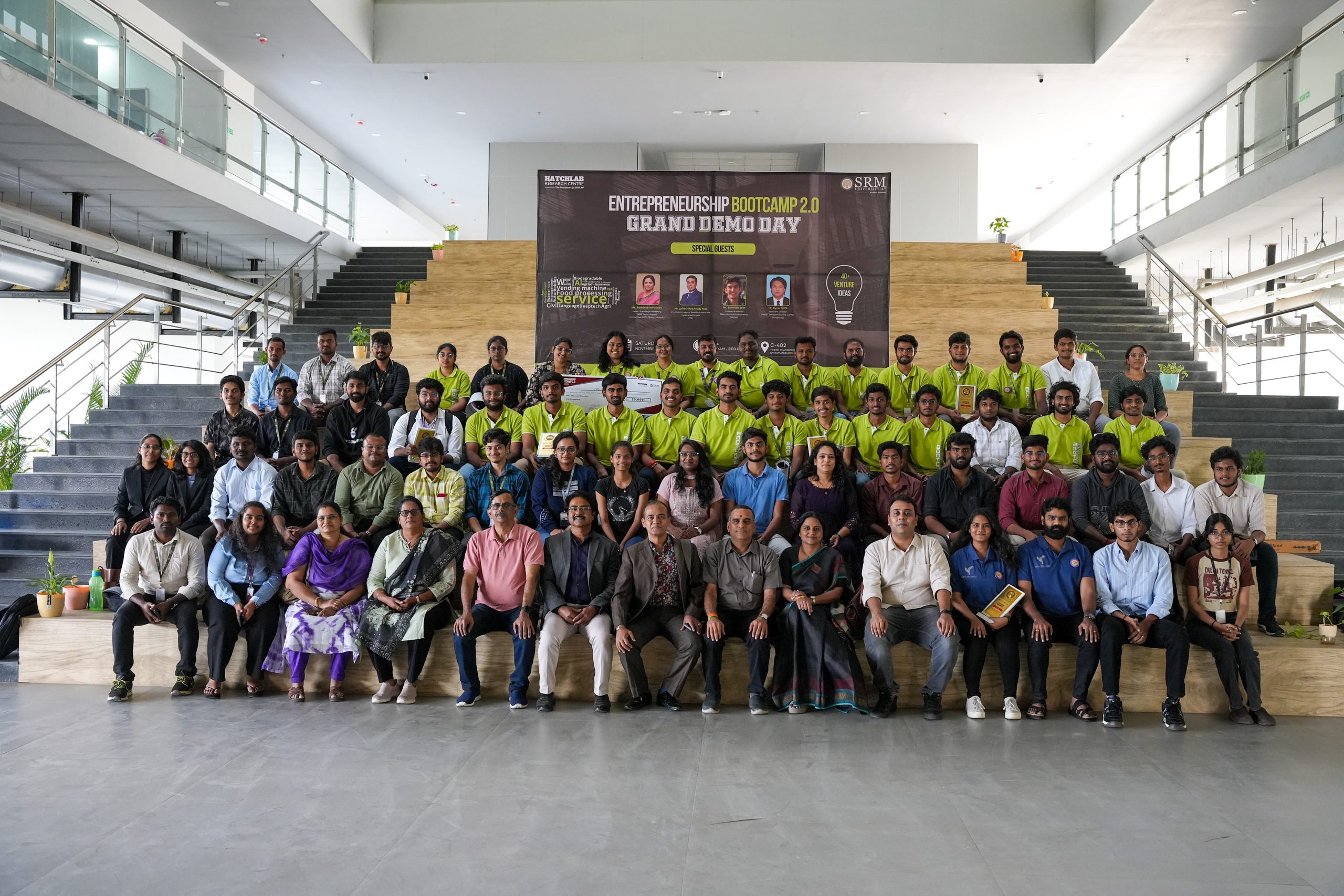
By November 2024, she was back among student ventures at SRM University-AP in Amaravati. Its Entrepreneurship Bootcamp 2.0 finished with a Demo Day after ten weeks of training. The programme had brought together 85 participants selected from more than 356 applicants. Devireddy joined mentors and investors responding to their presentations. The event placed her familiar interests in one room: young people, an idea under examination and experienced people prepared to give feedback.
She was identified there as ASIP Technologies’ head of branding and marketing and a former head of GITAM’s venture centre. Her encouragement to the students included a short instruction: “Keep that fire alive.” There was practical reinforcement too. Ten teams received incubation grants of ₹50,000 each. A finale could therefore become another beginning, with resources attached to the invitation to continue.
A different scale, a familiar job
ASIP’s current management roster lists Devireddy as VP for HR and corporate communication. Semiconductors bring a different industrial setting, with teams, specialist skills and relationships across government, industry and academia. Her place in that organisation draws on people management, communications and strategic partnerships. These are substantial parts of building a technology business, even when the machinery commands most of the attention.
In September 2025, she was appointed chairperson of the Indo-American Chamber of Commerce’s Andhra Pradesh and Telangana chapter for 2025-26, the first woman to hold that chapter’s chair. A career spent connecting founders with resources had acquired another forum for connecting businesses across borders. The responsibilities expanded. The underlying attention to relationships remained recognisable.
Recognition continued in 2026, when St Cross College celebrated her inclusion among NISAU’s Achievers. Her route through entrepreneurship, education and corporate leadership resists the neatness of a single job title. The Warangal chapter provides a useful way to understand it. Put the equipment close enough to use. Bring experienced people into the conversation. Give the student another attempt. Then let the person with the idea get on with making something.
Continue the conversation
Explore her LinkedIn and X profile, her Inc42 writing, and the ASIP leadership team.
Read the conversation with John Hoffmire, Chevening’s 2026 profile, and the Bootcamp Demo Day account.