There is a small but consequential difference between being seen and being believed. Advertising agencies are generally paid to solve the first problem. They buy the impression, place the video, polish the sentence, and report that some promising number of human beings scrolled past it. Spero Studio, an 11-person communications firm in Washington, D.C., has arranged its business around the second problem. Belief is harder. It requires a plausible messenger, a familiar setting, and the sense that whoever made the message understands the room.
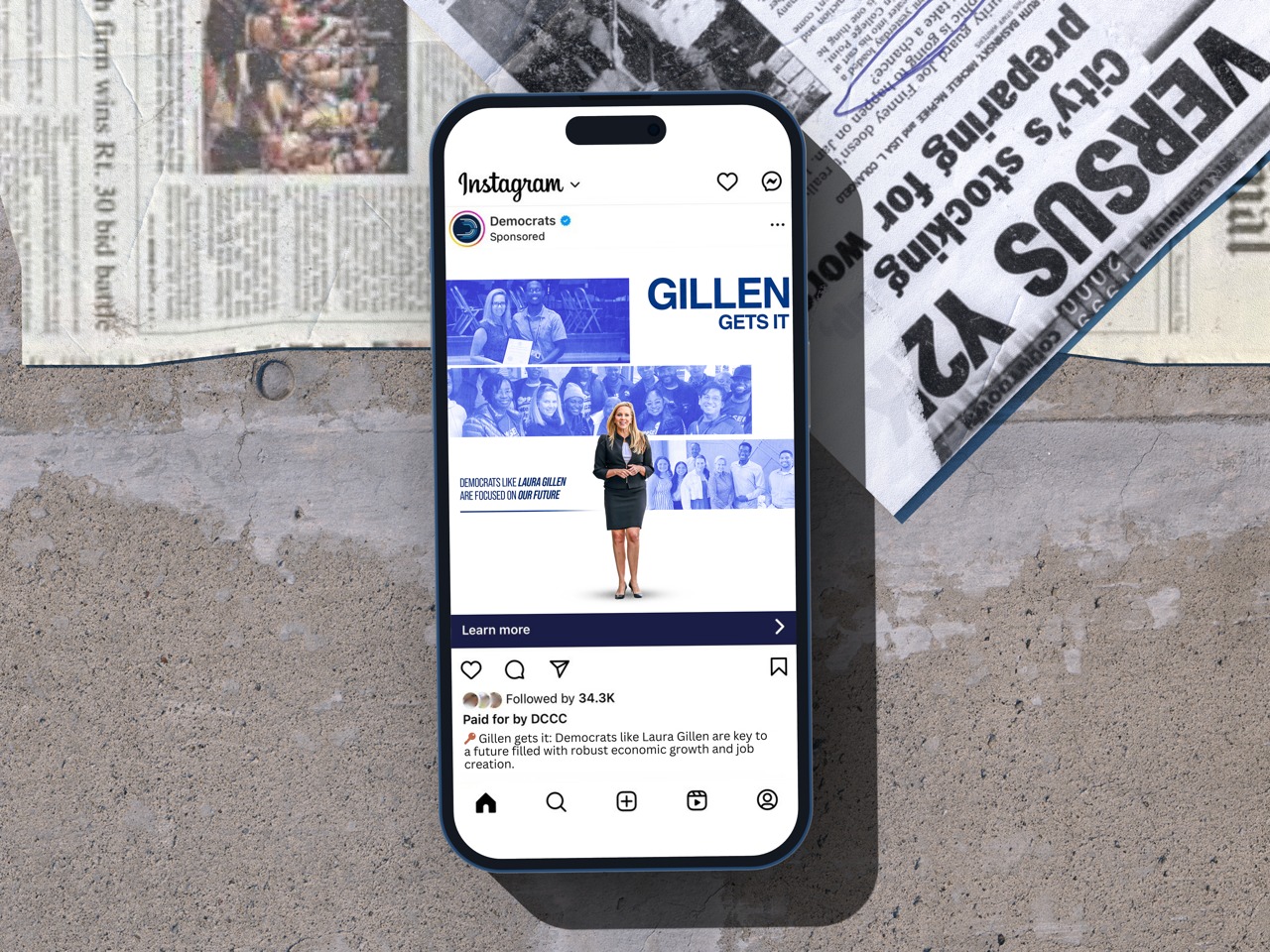
Consider a laptop displaying The Haitian Times. Across the screen is a political ad in Haitian Creole: Demokrat yo ap goumen pou avni nou - Democrats are fighting for our future. It was part of Spero's 2024 campaign work in New York's 4th Congressional District, where Democrat Laura Gillen was challenging Republican incumbent Anthony D'Esposito. The district's Black turnout had fallen sharply between 2020 and 2022. Generic outreach had not solved it. The response was not simply to translate the same old pitch. Spero worked with a publication the Haitian American community already knew, built in-language creative, then carried related economic and public-safety messages through streaming television, YouTube, display, social, radio, and audio.
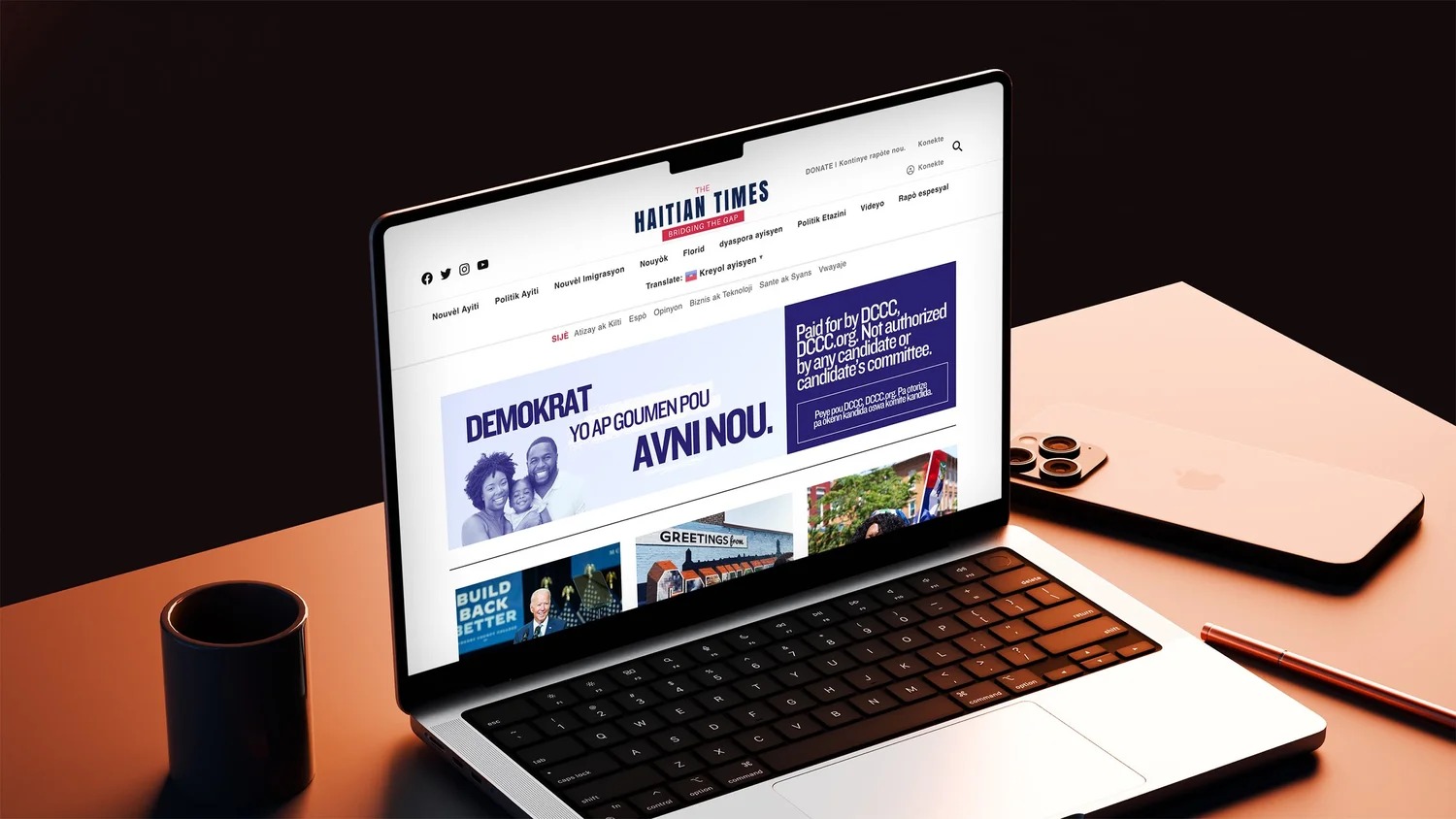
Gillen won 189,155 votes, or 51.11 percent, and finished 8,306 votes ahead. No honest analyst can assign an entire congressional result to one vendor or one audience. Elections are large, noisy systems. But the case illustrates the firm's central proposition with unusual clarity: reach is not trust, and translation is not cultural fluency. A message feels different when it arrives through a source that has already paid the cost of being credible.
The agency with a trust department
Jenelle Coy founded the business in 2014, just after graduating from Howard University. It began as Coy+, grew through corporate and government work, and became Spero Studio. The Latin root is a neat bit of naming: spero means "I hope." Hope, however, can become wallpaper on an agency website. Coy's more interesting move was to pair it with a deliverable. Spero speaks of trust not as a virtue the client already possesses, but as something that can be researched, designed, distributed, and measured.
The machinery is concrete. An engagement can include listening sessions, demographic research, media audits, audience models, influence maps, message development, visual identity, video production, paid media, public affairs, community partnerships, and analysis. In 2026 the firm described the sequence as discovery, strategy, identity, production, campaign, and analysis. The underlying economics are those of a full-service shop: project or ongoing agency fees for strategy, creative production, and often the management of paid media.
This makes Spero sit in an unusual patch of the market. It competes with public-affairs agencies, political consultancies, media buyers, design studios, and in-house communications teams, but its portfolio crosses the borders those categories enforce. The same shop has worked on federal programs, congressional races, maternal health, private equity, financial literacy, economic development, climate advocacy, foster care, and labor communications. That breadth is not incidental. Coy has said the advantage is cross-pollination - applying something learned on a State Department contract to an album release, or carrying the urgency of campaigning into institutional communications.
“Trust is built in the space between what's said and what's understood.”Spero Studio
The first thing to fail was the generic audience
Spero's case studies repeatedly begin with a familiar institutional surprise: a supposedly loyal group has stopped showing up. In Indiana's 1st District, Black turnout had fallen from 35.5 percent in 2016 to 8.5 percent in 2022, according to the firm's campaign account. Black voters were 18 percent of the voting-age population but only 11.1 percent of the 2022 electorate. Those numbers changed the brief. The campaign for Representative Frank Mrvan emphasized steel, local investment, infrastructure, and the visible return of tax dollars. It met voters through streaming, radio, social, and digital out-of-home advertising, while media placements were adjusted with pollsters and buyers. Mrvan won with 54 percent of the vote and a lead of about 27,000.
This is the quiet correction Spero makes to segmentation. "Black voters" is not a media plan. Neither is "young people" or "rural families." In Ohio, expensive Cleveland television pushed the Emilia Sykes campaign toward a digital-first mix focused on urban zip codes. In Michigan, the work had to speak to a suburban-rural coalition while addressing a reported rupture between Black leaders and the Democratic Party. In each case, the category became useful only after it was broken into place, history, issue, media habit, and degree of trust.
The useful failure
Then there is Nebraska's 2nd District. Spero and the DCCC supported Tony Vargas with messages about Medicaid expansion, postpartum coverage, public clinics, and economic security. The digital campaign targeted lower-propensity Black and Hispanic voters in and around Omaha. Vargas improved on his earlier performance and came within roughly 7,000 votes of the incumbent, Don Bacon. He still lost.
A Republican turnout advantage, incumbency, district composition, timing, and the wider political environment remain stubborn variables. Cultural relevance is leverage, not magic.
Leaving that result in the portfolio is revealing. An agency that promises narrative control also shows a narrative it could not completely control. The lesson is useful beyond politics. This model weakens when there is no credible messenger to recruit, when the audience data is stale, when the organization cannot change its behavior to match its message, or when the media budget cannot provide enough repetition. Trust strategy also fails when it is camouflage - a culturally specific wrapper around a proposition that does not survive contact with people's experience.
What a reader can steal
The copyable part is not the Creole headline or a fashionable claim about authenticity. It is the order of operations. For The Motley Fool, Spero conducted listening sessions, demographic research, and media audits before developing personas, financial-education curriculum, positioning guidance, and possible partnerships for reaching Black and Latino investors. The sequence prevented creative taste from masquerading as audience knowledge.
A practical brief for high-skepticism audiences
- Write down the behavior you need, not merely the attention you want.
- Interview the people with the strongest reasons to doubt you.
- Identify who already has permission to speak in that community.
- Build one core argument, then remake it for each native channel.
- Measure action and sentiment, not impressions alone.
- Change the offer if the research says the message is not the real problem.
The firm now applies that logic well beyond elections. A Robert Wood Johnson Foundation maternal-health campaign used creator partnerships and distribution across YouTube, TikTok, Instagram, podcasts, and earned media. Spero reports more than 119,000 people reached and more than 144,000 video views. A 30-day Texas Organizing Project campaign secured coverage from more than 90 outlets and engaged more than 21,000 voters. Climate advocacy with iHeartMedia and Charlamagne tha God produced more than one million on-air impressions and 2.7 million YouTube views. The tactics change; the recurring question does not: who will this audience listen to before they listen to us?
That question explains why Spero's most persuasive product may not be a beautiful ad at all. It is the moment before the ad, when a client realizes that its institutional voice is not automatically the authoritative one. Many organizations pay for communications because they want to say something louder. Spero's work suggests that the better first move is more humbling: decide whose voice has earned the right to say it.