In 1972, Southwest Airlines had a problem that would terrify any airline executive: it needed to sell an airplane. The young carrier was losing money. Selling the fourth jet would bring a $500,000 profit, according to its historical account. But the timetable had been built for four. Three would have to do the work.
The story in three points
- Fast turns and standardized aircraft made low fares possible.
- Growth exposed the cost of weak recovery systems.
- Assigned seats and bag fees are changing what passengers buy.
The airplane that wasn’t there
The answer came from the ground. To keep the schedule, Southwest would need to unload, reload, and dispatch a plane in ten minutes. Bill Franklin, its terminal operations chief, offered a compact response: “We can.” Then: “And we will.”
Think about what this meant. Southwest could not negotiate with the clock. Everyone around the aircraft had to coordinate differently. The missing airplane became an instruction to redesign the work. A financial emergency produced an operating habit.
to preserve the schedule
Historical turnaround target, not today’s boarding promise.
The company had been incorporated in 1967 by Herb Kelleher and Rollin King. Flights began in June 1971 between Dallas, Houston, and San Antonio. Its original geography was small enough to understand at a glance. Its ambition was to make flying affordable enough to change how people traveled.
The minutes were the product
Airplanes are expensive even when they are doing nothing. A quicker turn spreads ownership and operating costs across more flying. Put another way, the useful invention was partly a way to stop paying for an aircraft to sit still.
Other choices reinforced that arithmetic. Southwest’s current fleet consists of Boeing 737s. Standardization simplifies parts of training, maintenance, and scheduling, although it also ties the business closely to one manufacturer. Its emphasis on nonstop, point-to-point service gives travelers an alternative to routing every journey through a connecting hub.
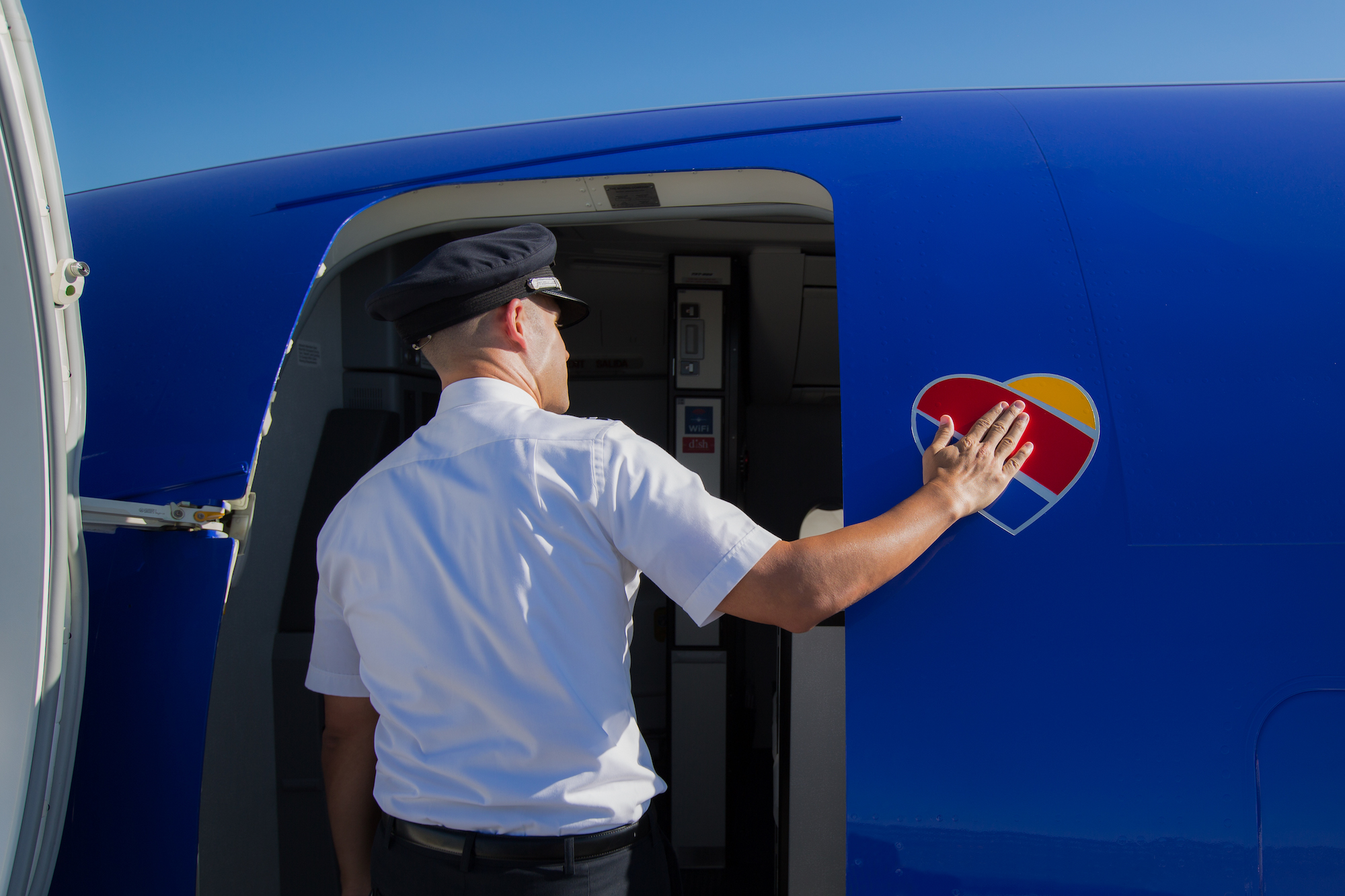
The customers include families, vacationers, people visiting relatives, and business travelers. Southwest reports carrying more than 134 million customers in 2025. The appeal depends on the route: a useful nonstop and a convenient departure can matter more than an elaborate cabin.
American, Delta, and United compete for many of those journeys; JetBlue, Alaska, and lower-fare carriers offer other alternatives. Southwest occupies an increasingly interesting middle ground: a low-cost heritage with a growing menu of paid distinctions.
A heart needs a recovery plan
Then there is the human equipment. Southwest’s career materials emphasize profit sharing, teamwork, and hospitality. An airline cannot turn quickly if the people handling its separate tasks behave as though they work for separate companies. The employee culture had an operational purpose.
It also supplied some comedy. In 1992, Kelleher arm-wrestled over a disputed advertising slogan. The companies eventually shared it. Even the stock symbol, LUV, carries the association with Dallas Love Field. This was a business willing to let the joke reach the balance-sheet conversation.
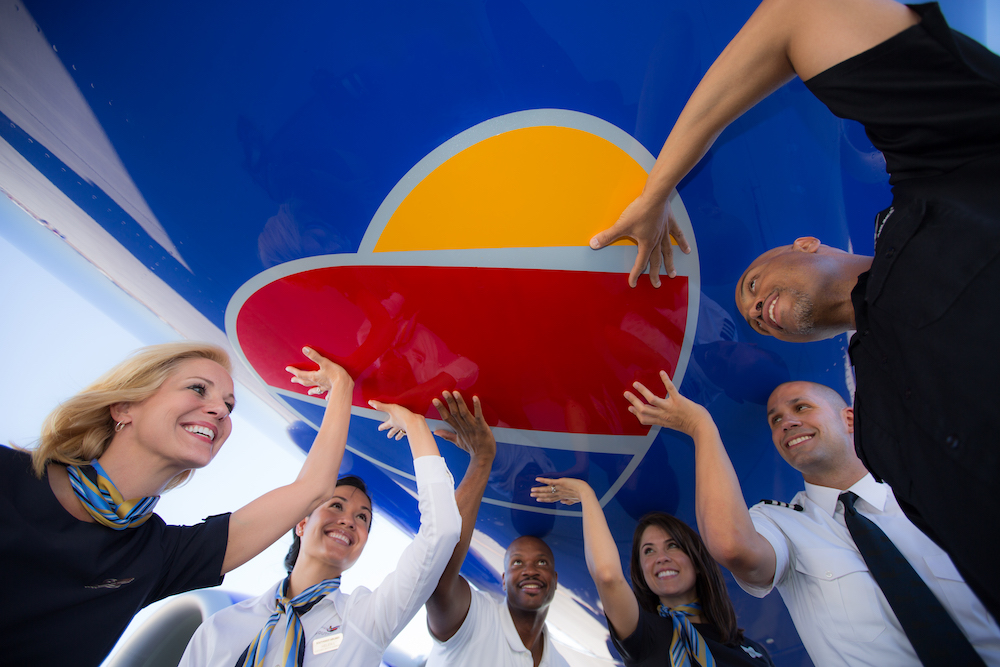
But goodwill cannot reschedule a stranded crew. During the December 2022 holiday collapse, winter weather cascaded into an operational recovery crisis. The Transportation Department counted 16,900 canceled flights and more than two million stranded passengers. Customer assistance and refunds also fell short.
In 2023, the department assessed a $140 million civil penalty, separate from more than $600 million in passenger refunds and reimbursements. The final $11 million Treasury installment was waived in December 2025. Those distinctions matter: an assessed penalty, compensation, and cash ultimately paid are different measures.
A fast timetable is only useful if the airline can recover when the timetable stops working.
The operational lesson
The customer changed the seat map
Another problem was quieter. Southwest’s own 2024 research found that 80 percent of its customers preferred an assigned seat. Among potential customers, the figure was 86 percent. A signature feature could also be a reason someone booked elsewhere.
Who wanted an assigned seat?
Company-reported research, 2024. Preference, not purchase intent.
Assigned seating began on January 27, 2026. Extra-legroom options created something additional to sell. Checked-bag fees had already arrived for many bookings in May 2025. Earnings pressure and activist investor Elliott accompanied the broader push to change.
The transition reached employees too. In February 2025, Southwest announced roughly 1,750 corporate job cuts. It projected $300 million in annual savings for 2026 and $60 million to $80 million in one-time charges. These were estimates at announcement, and the human cost does not fit neatly inside them.
Read the whole fare
For a passenger, the practical move is to compare the complete trip. Southwest now offers Basic, Choice, Choice Preferred, and Choice Extra. Basic generally assigns a seat at check-in; higher fares offer different seating and flexibility benefits. Eligibility exceptions matter.
For mainland tickets booked or changed from April 9, 2026, standard first- and second-checked-bag charges are $45 and $55 each way on the lower three fares. Qualifying cards, status, and fares can change that arithmetic. Two bags without a waiver can add $200 to a round trip.
Rapid Rewards and Chase cards connect travel with repeat spending. Getaways bundles flights with hotels and optional cars. Airline partners add connecting possibilities beyond Southwest’s own network. Check who sells the itinerary and which benefits apply before assuming a familiar name means familiar rules.
The next departure
October 2026 results offer evidence of progress, with limits. Third-quarter revenue reached $8.4 billion and net income was $270 million. Fuel expense rose $821 million year over year. Southwest also announced airport lounges, with first guests expected in 2027. The once-spare offer keeps acquiring furniture.
The lesson to borrow is specific: find the expensive idle asset, improve the handoffs, and keep asking what customers value. Tight schedules need recovery capacity. Standardization needs a supplier contingency. Selling choices works only while people accept the total price. Southwest’s next test is whether those choices still make the journey feel easy.
Keep exploring
Watch / Southwest explains its new seats
▶ Are You Sitting Down? - official seating preview▶ I Can Choose - the assigned-seat pitch