A good poker player knows when to leave the table. Isaac Heller found another use for that knowledge: deciding which business to enter. Years before he started Trullion, he played poker in Macau. By June 2026, he was explaining a lesson from those games to his friend and investor Alex Oppenheimer: choosing a less crowded table can matter more than outplaying everyone in a crowded room.
Accounting software was once such a table. It offered contracts, reconciliations and a conspicuous shortage of glamour. Heller arrived in 2019. Seven years later, with technology companies competing to put AI inside the finance department, the room had become considerably busier. The former poker player now had a different question to answer. When software gives you a number, how do you know where it came from?
That question connects the apparently mismatched chapters of his working life. Travel technology. Real estate software. Religious study in Jerusalem. A company whose name combines truth and millions. Heller has made a business out of asking for the paperwork, which is an unusual route to becoming interesting at dinner.
The history student in the finance department
Heller was born in Dallas and studied history at the University of Texas at Austin. An MBA at the University of Texas at Dallas followed. His professional record includes Anthony Travel, Sabre and Visual Lease. The route matters because he encountered corporate finance through operating businesses, with their contracts and reporting demands, before he tried to sell those businesses a remedy.
At Sabre, he worked on technology for the travel industry. Later, lease software put another set of financial obligations in view. He spent time around CFOs, controllers and auditors, watching information move between documents and spreadsheets. The same terms had to survive repeated handling. Someone extracted them; someone entered them; someone else checked them. Each handoff created another opportunity for the paperwork and the reported number to part company.
His early explanation for starting Trullion was practical. Finance teams and outside auditors approached the work with different responsibilities, yet both spent time collecting information scattered across systems and emails. A product could help both groups if it kept them connected to the underlying documents. The customer would buy relief from a specific task, rather than an abstract promise to improve accounting.

A year in Jerusalem, with an unfinished idea
Heller and his wife arrived in Israel intending to stay for a year. They stayed longer. Jerusalem supplied a daily rhythm of religious study and work on an early product. The company began in 2019, initially known as SMRT. The setting was an unlikely incubator only if an incubator must have beanbags and a reception desk.
He had experience of the problem and a view of what the system should do. Building it required other people. That distinction became part of Trullion’s development: the founder who understood the workflow needed an engineering partner who could turn that understanding into software. The eventual move of operations to Tel Aviv brought Heller together with Amir Boldo, whose background included engineering leadership at Silverfort and DriveNets.
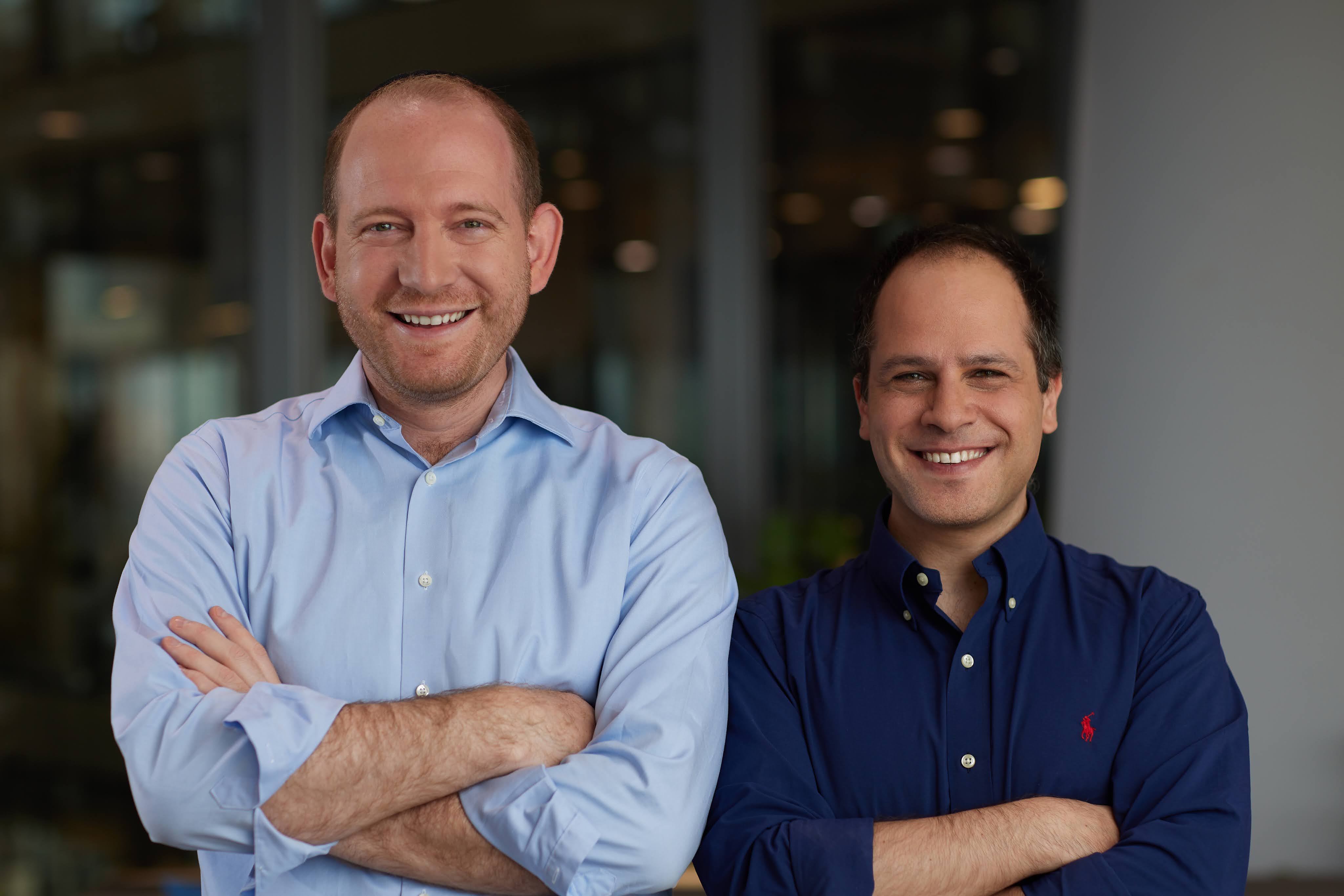
They shared an office, with Boldo seated and Heller at a standing desk. Their biographies differed, but their commercial diagnosis overlapped. Companies were paying for accounting work without always receiving the experience they expected. Both founders wanted to improve that transaction. An English-speaking office and a team that included immigrants made the company a meeting place for more than two professional backgrounds.
The contract has to come along
Trullion’s early entry point was lease accounting. A signed lease contains information that a finance team needs to turn into records and reports. Extracting that information is only part of the job. A reviewer also needs to inspect the document behind an entry. Heller’s proposition was to bring that connection inside the software, so the evidence would travel with the work.
In March 2021, as Trullion emerged from stealth, he demonstrated the idea in a video interview with Rick Telberg. The product translated unstructured material, including PDFs, into financial reporting workflows. Lease accounting and revenue recognition gave a broad ambition a narrow starting point. These were identifiable jobs with identifiable users, a useful discipline for any founder tempted to announce that the whole world needs fixing.
The naming was equally deliberate. Truth plus millions became Trullion. Even its logo carries an accounting explanation. Heller has described the top of the T as an Excel cell and the vertical stroke as an arrow pointing toward it. Balance is part of the design, too. Few corporate logos invite a conversation about spreadsheet cells. This one practically brings its own laptop.
- 01 / DOCUMENTThe contractKeep the underlying evidence.
- 02 / WORKFLOWThe calculationConnect the data and reasoning.
- 03 / REVIEWThe judgmentLet a person inspect the result.
A tweet opens a different door
One of Trullion’s consequential connections began in public. After Wirecard’s collapse in 2020, Aleph investor Michael Eisenberg was looking for technology that could change accounting. Heller answered that something was already being built in Jerusalem. Aleph and Greycroft went on to lead the seed investment. A problem that had looked specialized to prospective investors acquired a much wider audience.
By February 2022, the company had announced a $15 million Series A, co-led by Aleph and Third Point Ventures. Its investors also included people who knew the finance office from the inside, among them Artie Minson and Bob Mylod. The money supported hiring and development beyond the initial lease product. For Heller, it was a chance to extend a method he had already chosen.
Another $15 million followed in April 2023, led by StepStone Group. Trullion then reported $34 million in total funding. Those are company financing figures, rather than a measure of its founder’s personal wealth. The distinction is especially appropriate here. In a story about financial evidence, the labels ought to remain attached to the numbers.
- 2019
- Trullion founded
- No. 14
- Deloitte Technology Fast 500, 2024
- 3,000+
- Companies served, reported October 2025
The playlist survives the procurement meeting
There is a less solemn version of Heller alongside the talk of truth and audit trails. While setting up offices, he found himself fielding offers for murals, coffee machines and other startup furnishings. One proposal appealed: music in the bathroom. It gave him an outlet for Leonard Cohen, Talking Heads and a little country music for his Israeli colleagues.
The detail is funny because it is so small. A founder trying to modernize financial reporting still has to decide what happens when someone presses play. Heller’s taste also carries some of the geography of his life: American music, an Israeli workplace, Jerusalem at one end of the commute and Tel Aviv at the other. The two cities let him keep different parts of his life close enough to fit into a day.
His public conversations bring that range into the business, too. On GrowCFO in January 2024, he discussed AI costs, the risk of becoming dependent on a vendor and the possibility of different fee models for professional services. These are the questions that follow a demonstration, once someone has to decide whether the technology makes financial sense.
Giving up the CEO chair, keeping the product
On October 6, 2025, Trullion named Minson CEO. Heller became president and remained board chair. His remit centered on product development and strategic partnerships; Minson took responsibility for core business functions. The pairing joined a founder’s product experience with an executive who had been advising the company for more than five years.
The change also corrected the shorthand of Heller’s public identity. Many earlier interviews introduce him as CEO. His current work has a different title and a defined focus. At the time of the announcement, Trullion said its products served more than 3,000 companies worldwide. That scale made the division of responsibilities consequential: there was a growing organization to run alongside the next product to build.
The products had already expanded. In May 2025, Trullion introduced Trulli, an AI assistant designed for accountants. Its launch presented a practical ambition for the technology: help people work through documents and financial tasks while retaining the ability to verify the answer. Heller’s argument about evidence was now being tested in an era of conversational software.
What the machine should leave to the person
In February 2026, Heller returned to the principle behind the company. Calculations needed a traceable connection to contracts, ledger entries, memos and judgments. His formulation was concise: “A number is only as strong as its trail.” The appeal is easy to understand. A convincing answer can still be difficult to defend if the route to it has disappeared.
“A number is only as strong as its trail.”
Isaac Heller, February 2026
By June, he was writing about a particular danger: AI output that looks polished enough to discourage further questions. His concern was the human reviewer losing the habit of skepticism. Software could take on more mechanical work while leaving people responsible for judgments whose consequences remained very real. An attractive memo would never settle that responsibility by itself.
He has a related message for people starting their careers. Learn the fundamentals before relying on tools that perform them. In a January 2026 conversation with James Spiro, he argued that understanding basic work helps a professional investigate when AI goes wrong. The advice is more demanding than learning which button to press. It asks the next generation to understand the work well enough to repair it.
Heller’s own path makes that advice feel earned. He studied one subject, worked across several industries and built a company around a recurring nuisance. The table he chose has become crowded. His response is to keep asking what the answer rests on. Somewhere behind the clean number, there should still be a document a person can open.